
 A SCHOLARLY BOOK REPOSITORY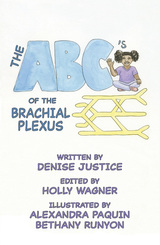
Medical terms used in the doctor’s office can be confusing, especially for the condition of Neonatal Brachial Plexus Palsy and/or Peripheral Nerve Injury. This book is written by a highly experienced therapist and formatted effectively for reference, review, or new learning of the medical terms. In addition, the accompanying hand-drawn illustrations offer attractive colorful pictorial representations of the technical concepts.
From the names and anatomy of individual nerves to multiple surgical treatment options, this book will help patients and caretakers decode the words of doctors, starting with every letter of the alphabet. If you are seeking the knowledge help with the diagnosis and treatment of your Brachial Plexus condition, this book is for you!
"Jonah Lehmann is an accidental teacher of others, including his family and friends. This personal and touching account of Jonah's life is enlightening, especially to those coming to terms with similar challenges with autism and other cognitive disabilities. It was written with love to support research on autism, and I recommend it to anyone and everyone touched by those of us who are different."
---Patricia E. Kefalas Dudek, Legal Advocate for People with Disabilities
"I have never read a book about a disabled person that caught me from page one. I could not put this one down. Lehmann offers a profound perspective on living with the reality of a severely disabled child. This book will be required reading for students who take my class in Special Education Administration."
---Frances LaPlante-Sosnowsky, Associate Professor of Education at Wayne State University
"A story of the astonishing power of human love and family triumph over hardship. Lehmann's story, engaging and at times both heartbreaking and joyful, offers an intimate view of one mother's journey as she works with professionals and a blur of caregivers to assist the ever-changing needs of her son. I highly recommend it to seasoned professionals in the field of autism and students preparing for careers in special education."
---Janet E. Graetz, Assistant Professor of Human Development and Child Studies at Oakland University
A child teaches without intending to . . .
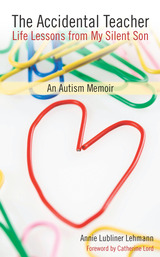
Having severe autism does not stop Annie Lehmann's son Jonah from teaching her some of life's most valuable lessons. The Accidental Teacher, a heartfelt memoir about self-discovery rather than illness, uses insight and humor to weave a tale rich with kitchen-table wisdom. It explains the realities of life with a largely nonverbal son and explores the frustrations and triumphs of the Lehmann family as Jonah grew into a young adult. This book is a must-read for anyone who has been personally touched by a major life challenge.
Annie Lubliner Lehmann, a freelance writer for more than twenty-five years, has published articles in many newspapers and magazines, including the New York Times and Detroit Free Press. She resides in Michigan with her husband and two of her three children. Her eldest son, who inspired this memoir, is now a young adult with autism who lives in a supervised home.


Throughout Africa, Asia, and Latin America public health professionals and paraprofessionals work to control serious, frequent and preventable causes of death and sickness among women and children. Despite international agreement about which health programs to implement and huge investments to support them, avoidable deaths remain high. One reason is the inadequate quality with which programs are implemented.
Assessing Child Survival Programs in Developing Countries provides local health system managers with basic principles for rapid precise program monitoring and evaluation in difficult tropical conditions. Joseph Valadez explains how to adapt Lot Quality Assurance Sampling (LQAS) as used in industrial quality control more than half a century ago, to assess health program coverage and technical quality of service providers. He shows that by examining no more than 19 children from a health facility catchment area a manager can judge whether coverage with child survival interventions has reached a minimal level, and how to observe health workers perform a task 6 times to judge their technical competency.
Joseph Valadez demonstrates that quick assessment is not necessarily dirty, and can provide the information needed to enhance child survival throughout the developing world. In that spirit Assessing Child Survival Programs in Developing Countries is a path breaking text book of modern health services research that both practitioners and students will find indispensable and understandable.
This biography of one of the most prominent pediatricians of the twentieth century describes his illustrious medical family and his remarkable tenure of nearly three decades as Thomas Morgan Rotch Professor of Pediatrics at Harvard Medical School and head of the department of medicine at Children's Hospital, Boston. During this period Janeway built the first department of pediatrics in the nation with subspecialties based upon the new developments in basic sciences. Janeway and his colleagues defined the gamma globulin disorders that resulted in children's increased susceptibility to infections and associated arthritic disorders.
Janeway was the most visible U.S. pediatrician on the world scene in the last half of the 20th century. He traveled widely, taught modern pediatrics to thousands of physicians throughout the developing world, and brought many of them to the U.S. for further training. He was instrumental in starting teaching hospitals in Shiraz, Iran, and Cameroon.
Janeway believed that through teaching by example he might further the cause of peace in the world. His life is an inspiration to everyone in medicine, and serves as a model that all can seek to improve the health of the world's millions and promote a more peaceful future.
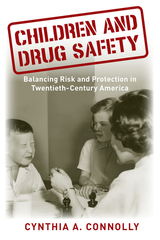
Children and Drug Safety traces the development, use, and marketing of drugs for children in the twentieth century, a history that sits at the interface of the state, business, health care providers, parents, and children. This book illuminates the historical dimension of a clinical and policy issue with great contemporary significance—many of the drugs administered to children today have never been tested for safety and efficacy in the pediatric population.
Each chapter of Children and Drug Safety engages with major turning points in pediatric drug development; themes of children’s risk, rights, protection and the evolving context of childhood; child-rearing; and family life in ways freighted with nuances of race, class, and gender. Cynthia A. Connolly charts the numerous attempts by Congress, the Food and Drug Administration, the American Academy of Pediatrics, and leading pediatric pharmacologists, scientists, clinicians, and parents to address a situation that all found untenable.
Open access edition funded by the National Endowment for the Humanities.
The text of this book is licensed under a Creative Commons Attribution NonCommercial-NoDerivatives 4.0 International License: https://creativecommons.org/licenses/by-nc-nd/4.0/
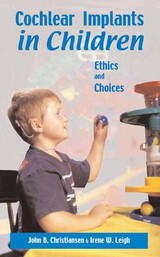
Cochlear Implants in Children: Ethics and Choices addresses every facet of the ongoing controversy about implanting cochlear hearing devices in children as young as 12 months old and in some cases, younger. Authors John B. Christiansen and Irene W. Leigh and contributors Jay Lucker and Patricia Elizabeth Spencer analyzed the sensitive issues connected with the procedure by reviewing 439 responses to a survey of parents with children who have cochlear implants. They followed up with interviews of the parents of children who have had a year's experience using their implants, and also the children themselves. Their findings shape the core of this useful and telling study.
Cochlear Implants begins with a history of their development and an explanation of how implants convert sound into electric impulses that stimulate the brain. The second section focuses on pediatric implants, starting with the ways parents coped with the discovery that their child was deaf. Parents share how they learned about cochlear implants and how they chose an implant center. They also detail their children's experiences with the implants after surgery, and their progress with language acquisition and in school.
The final part treats the controversy associated with cochlear implants, particularly the reaction of the Deaf community and the ethics of implanting young children without their consent. Cochlear Implants concludes with sage observations and recommendations for parents and professionals that complete it as the essential book on the pros and cons of this burgeoning technology.
Parents have known since time immemorial, and social scientists have agreed since the turn of the century, that adolescents are a people unto themselves--a "distinct developmental category." Yet it was not until the 1950s that a medical specialty specifically for teenagers came into being. In this book, Heather Munro Prescott shows how the mid-twentieth-century emergence of adolescent medicine resulted from a combination of social changes that reached far beyond the field of medicine--changes that placed teenagers themselves at the center of the national agenda.
The first book to trace the history of adolescent medicine, A Doctor of Their Own draws on oral histories of physicians in the field, patient records from adolescent medical facilities, medical and popular advice literature, and letters from teenagers and their parents. Prescott examines the interplay between the emergence of adolescent medicine and changes in American family relationships, youth culture, popular perceptions about young people, and the social experience of adolescence. With special attention to the role of young people themselves in the shaping of this new discipline, her book follows the development of adolescent medicine from its origins in the work of J. Roswell Gallagher at Boston Children's Hospital in the 1950s to its uncertain prospects today, when, despite heightened recognition of their specific medical needs, most teenagers still receive inadequate health care.
Much has changed in the lives of children, and in the health care provided to them, over the past century. Formative Years explores how children's lives have become increasingly medicalized, traces the emergence of the fields of pediatrics and child health, and offers fascinating case studies of important and timely issues.
With contributions from historians and physicians, this collection illuminates some of the most important transformations in children's health in the United States since the 1880s. Opening with a history of pediatrics as a medical specialty, the book addresses such topics as the formulation of normal growth curves, Better Babies contests at county fairs, the "discovery" of the sexual abuse of children, and the political radicalism of the founder of pediatrics, Dr. Abraham Jacobi.
One of the first long-term historical and analytical overviews of pediatrics and child health in the twentieth century, Formative Years will be a welcome addition to several fields, including the history of medicine and technology, the history of childhood, modern U.S. history, women's history, and American studies. It also has ramifications for policymakers concerned with child welfare and development and poses important questions about the direction of children's health in the twenty-first century.
A Greenhouse for the Mind continues the story of the school, focusing on how its teachers and counselors create an educational environment in which children will want and be able to learn. Jacquelyn Seevak Sanders worked closely with Bettelheim for thirteen years as a counselor and assistant principal and since 1973 has been director of the Orthogenic School. She offers her interpretation of Bettelheim's vision of a healing world for children, as well as her own ideas and new perspectives from the last decade.
In a warm and anecdotal style, Sanders relates the experiences and overarching theoretical principles that have shaped the school and its curriculum. She describes how the staff, schedules, and physical appearance of the school have been developed to create a stable and safe place to learn; how teachers confront their own emotional vulnerability; how the staff accepts the children themselves while disciplining unacceptable behavior; and how the attention of the inattentive can be gained. She chronicles the successes and setbacks of the staff in developing a curriculum that includes reading, science, and physical education, and she exemplifies the school's principles and practices through a story of an imaginary student's educational development.
In addition to her experience at the Orthogenic School, Sanders has worked with teachers at all levels from nursery schools to universities, and in A Greenhouse for the Mind she passes on what she has learned about educating difficult children—principles that have been helpful to both disturbed children in a unique setting and more typical children in ordinary settings. Her attention to the role of emotions in the learning process adds an often neglected dimension to traditional cognitive and instructional approaches.
Practitioners will be able to rely upon this complete volume as they would a trusted consultant thoroughly knowledgeable about indications and treatments for every condition. The Handbook of Pediatric Audiology offers contributions by Yash Pal Kapur, Franklin A. Katz, Robert J. Ruben, Allan O. Diefendorf and Judith S. Gravel, Jane R. Madell, Shlomo Silman and Carol A. Silverman, and Herbert Jay Gold and Maurice Mendel. Judith A. Brimacombe and Anne L. Beiter present the latest clinical information on cochlear implants in children, including the current debate on cultural considerations. Audiology and education are discussed by E. Harris Nober, and George T. Mencher advises audiologists on counseling families of deaf and hard of hearing children. Evelyn Cherow presents several models of service delivery. These well-known authorities and the many others within make The Handbook of Pediatric Audiology an indispensable resource for clinicians and students alike.
In the nineteenth century, infants were commonly breast-fed; by the middle of the twentieth century, women typically bottle-fed their babies on the advice of their doctors. In this book, Rima D. Apple discloses and analyzes the complex interactions of science, medicine, economics, and culture that underlie this dramatic shift in infant-care practices and women’s lives.
As infant feeding became the keystone of the emerging specialty of pediatrics in the twentieth century, the manufacture of infant food became a lucrative industry. More and more mothers reported difficulty in nursing their babies. While physicians were establishing themselves and the scientific experts and the infant-food industry was hawking the scientific bases of their products, women embraced “scientific motherhood,” believing that science could shape child care practices. The commercialization and medicalization of infant care established an environment that made bottle feeding not only less feared by many mothers, but indeed “natural” and “necessary.” Focusing on the history of infant feeding, this book clarifies the major elements involved in the complex and sometimes contradictory interaction between women and the medical profession, revealing much about the changing roles of mothers and physicians in American society.
“The strength of Apple’s book is her ability to indicate how the mutual interests of mothers, doctors, and manufacturers led to the transformation of infant feeding. . . . Historians of science will be impressed with the way she probes the connections between the medical profession and the manufacturers and with her ability to demonstrate how medical theories were translated into medical practice.”—Janet Golden, Isis
Around 1460, Michele Savonarola produced the extraordinary Mother’s Manual for the Women of Ferrara, a gynecological, obstetrical, and pediatric treatise composed in the vernacular so that it could be read not only by the learned but also by pregnant and nursing mothers and the midwives and wet nurses who presided over childbirth. Savonarola’s work is not merely a trivial set of instructions, but the work of a learned scholar who drew on, among others, the ancient Greek physicians Hippocrates and Galen, and Avicenna’s Canon of Medicine. The first of its kind, Savonarola’s Mother’s Manual helps readers understand both the development of late-medieval and early-modern obstetrics and gynecology, as well as the experiences of women who turn to advice books for help with reproductive issues. This book also provides a key to understanding why and how a new genre of book—the midwifery manual or advice book for pregnant women—arose in sixteenth-century Italy and eventually became a popular genre all over Europe from the early modern period to the present day.
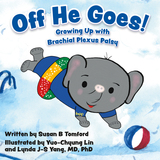
Attractive colorful multimedia images merge with easy-to-read text to make this young elephant’s story appeal to all pre-school children.
This board book is the product of the faculty and staff of the University of Michigan Brachial Plexus and Peripheral Nerve Program, inspired by the plight of orphan elephants in Africa and The David Sheldrick Wildlife Trust that helps orphaned calves reintegrate back into the wild as well as our patients who actively participate despite Brachial Plexus Palsy. Our clinical program strives to provide the best interdisciplinary care for patients through collaboration, research, and innovation – as we hope to improve the function and quality of life for all persons with brachial plexus and peripheral nerve dysfunction.
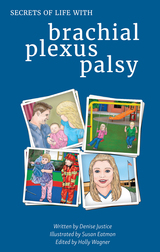
Secrets of Life with Brachial Plexus Palsy is the story of a baby girl who grows up with dreams and ambitions like everybody else. Some of her dreams are to play like other children, to show others that there is nothing that she cannot do, and to pursue any career that she chooses when she grows up. Life with this condition can be challenging, and as the years pass, Marie uncovers secrets that allow her to overcome the stigma of her Brachial Plexus Palsy – secrets she would like to share with you…
Let Marie show you that living life with Brachial Plexus Palsy is an exciting journey!
Twenty-Two Years presents the results of a unique longitudinal study of the first 22 years in the lives of more than 200 young people with varying degrees of mental retardation. By following their paths through available services, job histories, leisure activities, friendships, and marriages, the authors provide objective information about the quality of life of young people with mental retardation.
The book makes a unique contribution by determining what factors in childhood predict who will and who will not require mental retardation services and, for those who disappear from services, why some fare better than others. Most important, the results help answer a question that haunts parents: "What will happen when my child grows up?"
This study expands on an internationally acclaimed clinical and epidemiological study of children with mental retardation published in 1970. It provides prevalence rates by severity of mental retardation, gender, social class, and family stability, and shows how these change over time.
The authors confirm the central role of biomedical factors in the etiology of severe mental retardation. For the etiology of mild mental retardation, the book examines the relative contributions of biomedical and intergenerational genetic factors as well as psychosocial adversity. The book should be of interest to a broad range of clinicians, researchers, and students, as well as the families of people with mental retardation, and it will serve as a model for future epidemiological and follow-up research.
READERS
Browse our collection.
PUBLISHERS
See BiblioVault's publisher services.
STUDENT SERVICES
Files for college accessibility offices.
RECENTLY PUBLISHED


UChicago Accessibility Resources
home | accessibility | search | about | contact us
BiblioVault ® 2001 - 2024
The University of Chicago Press