
 A SCHOLARLY BOOK REPOSITORY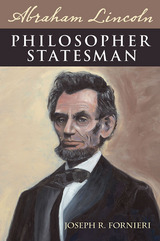
2015 ISHS Superior Achievement Award
What constitutes Lincoln’s political greatness as a statesman? As a great leader, he saved the Union, presided over the end of slavery, and helped to pave the way for an interracial democracy. His great speeches provide enduring wisdom about human equality, democracy, free labor, and free society. Joseph R. Fornieri contends that Lincoln’s political genius is best understood in terms of a philosophical statesmanship that united greatness of thought and action, one that combined theory and practice. This philosophical statesmanship, Fornieri argues, can best be understood in terms of six dimensions of political leadership: wisdom, prudence, duty, magnanimity, rhetoric, and patriotism. Drawing on insights from history, politics, and philosophy, Fornieri tackles the question of how Lincoln’s statesmanship displayed each of these crucial elements.
Providing an accessible framework for understanding Lincoln’s statesmanship, this thoughtful study examines the sixteenth president’s political leadership in terms of the traditional moral vision of statecraft as understood by epic political philosophers such as Aristotle and St. Thomas Aquinas. Fornieri contends that Lincoln’s character is best understood in terms of Aquinas’s understanding of magnanimity or greatness of soul, the crowning virtue of statesmanship. True political greatness, as embodied by Lincoln, involves both humility and sacrificial service for the common good. The enduring wisdom and timeless teachings of these great thinkers, Fornieri shows, can lead to a deeper appreciation of statesmanship and of its embodiment in Abraham Lincoln.
With the great philosophers and books of western civilization as his guide, Fornieri demonstrates the important contribution of normative political philosophy to an understanding of our sixteenth president. Informed by political theory that draws on the classics in revealing the timelessness of Lincoln’s example, his interdisciplinary study offers profound insights for anyone interested in the nature of leadership, statesmanship, political philosophy, political ethics, political history, and constitutional law.
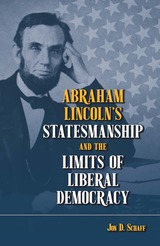
Though Lincoln’s presidency is inextricably linked to the Civil War, and he is best known for his defense of the Union and executive wartime leadership, Lincoln believed that Congress should be at the helm of public policy making. Likewise, Lincoln may have embraced limited government in vague terms, but he strongly supported effective rule of law and distribution of income and wealth. Placing the Lincoln presidency within a deeper and more meaningful historical context, Abraham Lincoln’s Statesmanship and the Limits of Liberal Democracy highlights Lincoln’s significance in the development of American power institutions and social movement politics.
Using Lincoln’s prepresidential and presidential words and actions, this book argues that decent government demands a balance of competing goods and the strong statesmanship that Lincoln exemplified. Instead of relying too heavily on the will of the people and institutional solutions to help prevent tyranny, Jon D. Schaff proposes that American democracy would be better served by a moderate and prudential statesmanship such as Lincoln’s, which would help limit democratic excesses.
Schaff explains how Lincoln’s views on prudence, moderation, natural rights, and economics contain the notion of limits, then views Lincoln’s political and presidential leadership through the same lens. He compares Lincoln’s views on governmental powers with the defense of unlimited government by twentieth-century progressives and shows how Lincoln’s theory of labor anticipated twentieth-century distributist economic thought. Schaff’s unique exploration falls squarely between historians who consider Lincoln a protoprogressive and those who say his presidency was a harbinger of industrialized, corporatized America.
In analyzing Lincoln’s approach, Abraham Lincoln’s Statesmanship and the Limits of Liberal Democracy rejects the idea he was a revolutionary statesman and instead lifts up Lincoln’s own affinity for limited presidential power, making the case for a modest approach to presidential power today based on this understanding of Lincoln’s statesmanship. As a counterpoint to the contemporary landscape of bitter, uncivil politics, Schaff points to Lincoln’s statesmanship as a model for better ways of engaging in politics in a democracy.
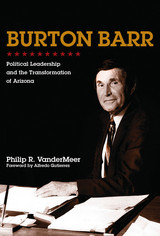
Considered perhaps the most influential person in Arizona’s political development, Burton Barr represented north central Phoenix in the Arizona House of Representatives for the twenty-two years from 1964 to 1986. As the Republican House Majority Leader for twenty of those years, he left his fingerprints on every major piece of legislation during those decades, covering such issues as air pollution, health care for indigents, school aid, the tax code, prison reform, child care, groundwater management, and freeway funding.
Burton Barr’s political life unfolded during the very time his state and region shifted from being outliers to trendsetters. His choices in policy making and his leadership style were both an outcome and a creator of his sociopolitical environment. Arizona politics in the 1960s and ’70s was a rich brew of key elements, a time when the economy was being transformed, the nature and distribution of populations shifted, partisan politics were in flux, and the very lifeblood of the West—water—was being contested under increasing pressures of usage and depletion.
How Barr successfully responded to those challenges is the story of Arizona’s development during those years. At the heart of it, Barr’s political life and personality are inextricably bound up with the life of the West.
Vasili Rukhadze examines the factors that contributed to post-uprising leadership durability in the Ukraine, Kyrgyzstan, and Georgia in 2004–12, after these countries underwent their so-called “Color Revolutions.” Using structured, focused comparison and process tracing, he argues that the key independent variable influencing post-mobilization leadership durability is ruling coalition size and cohesion. He demonstrates that if the ruling coalitions are large and fragmented, as in the Ukraine and Kyrgyzstan, the coalitions disintegrate, thus facilitating the downfall of the governments. Alternatively, if the ruling coalition is small and cohesive, as in Georgia, the coalition maintains unity, hence helping the government to stay in power.
This study advances the debate on regime changes. By drawing a clear distinction between political leaderships that come to power as a result of popular uprisings and governments that take power through normal democratic processes, military coup, or any other means, the research offers one of the first studies on post-mobilization leadership. Rukhadze helps scholars differentiate between the factors that affect durability of post-uprising leadership from those factors that impact durability of all other political leadership, in turn equipping researchers with new tools to study power politics.
Donald Trump has been a distinctive president, and his arrival in the Oval Office brought new questions. Could someone with his decades of experience as a self-promoter connect with the public and win its support? Could a president who is an experienced negotiator obtain the support in Congress needed to pass his legislative programs? Would we need to adjust the theory of presidential leadership to accommodate a president with unique persuasive skills?
Building on decades of research and employing extensive new data, George C. Edwards III addresses these questions. He finds that President Trump has been no different than other presidents in being constrained by his environment. He moved neither the public nor Congress. Even for an experienced salesman and dealmaker, presidential power is still not the power to persuade. Equally important was the fact that, as Edwards shows, Trump was not able to exploit the opportunities he had. In fact, we learn here that the patterns of the president’s rhetoric and communications and his approach to dealing with Congress ultimately lessened his chances of success. President Trump, it turns out, was often his own agenda’s undoing.
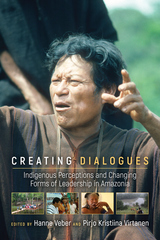
Creating Dialogues discusses contemporary forms of leadership in a variety of Amazonian indigenous groups. Examining the creation of indigenous leaders as political subjects in the context of contemporary state policies of democratization and exploitation of natural resources, the book addresses issues of resilience and adaptation at the level of local community politics in lowland South America.
Contributors investigate how indigenous peoples perceive themselves as incorporated into the structures of states and how they tend to see the states as accomplices of the private companies and non-indigenous settlers who colonize or devastate indigenous lands. Adapting to the impacts of changing political and economic environments, leaders adopt new organizational forms, participate in electoral processes, become adept in the use of social media, experiment with cultural revitalization and new forms of performance designed to reach non-indigenous publics, and find allies in support of indigenous and human rights claims to secure indigenous territories and conditions for survival. Through these multiple transformations, the new styles and manners of leadership are embedded in indigenous notions of power and authority whose shifting trajectories predate contemporary political conjunctures.
Despite the democratization of many Latin American countries and international attention to human rights efforts, indigenous participation in political arenas is still peripheral. Creating Dialogues sheds light on dramatic, ongoing social and political changes within Amazonian indigenous groups. The volume will be of interest to students and scholars of anthropology, ethnology, Latin American studies, and indigenous studies, as well as governmental and nongovernmental organizations working with Amazonian groups.
Contributors: Jean-Pierre Chaumeil, Gérard Collomb, Luiz Costa, Oscar Espinosa, Esther López, Valéria Macedo, José Pimenta, Juan Pablo Sarmiento Barletti, Terence Turner, Hanne Veber, Pirjo Kristiina Virtanen
Rogenhofer shows how his theoretical approach allows us to reinterpret a range of crisis situations beyond the irregular migration context, including democracies’ initial responses to Covid-19, the European Sovereign Debt Crisis, and United States climate politics. These additional case studies help position concerns with decisiveness amid the challenges that populism and technocracy increasingly pose to representative democracies.

Raby argues passionately that the way forward for progressives is not the dogmatic formulae of the Old Left, nor in the spontaneous autonomism of Antonio Negri. Instead, it is to be found in broad popular movements with bold leadership. Examining key leaders, including Hugo Chávez and the Sandinistas in Nicaragua, Raby shows that it is more necessary than ever to take power, peacefully where possible, but in all cases with the strength that comes from popular unity backed by force where necessary. In this way it is possible to build democratic power, which may or may not be socialist depending on one's definition, but which represent the real anti-capitalist alternative for the twenty-first century.
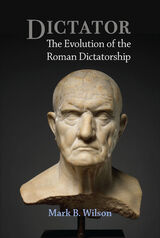
Roman consuls were routinely trained by background and experience to handle the usual problems of a twelve-month turn in office. But what if a crisis arose that wasn’t best met by whoever happened to be in office that year? The Romans had a mechanism for that: the dictatorship, an alternative emergency executive post that granted total, unanswerable power to that man who was best suited to resolve the crisis and then stand down, restoring normality. This office was so useful and effective that it was invoked at least 85 times across three centuries against every kind of serious problem, from conspiracies and insurgencies to the repelling of invaders to propitiation of the gods.
In Dictator: The Evolution of the Roman Dictatorship, Mark B. Wilson makes the first detailed and comprehensive examination of the role and evolution of the dictatorship as an integral element of the Roman Republic. Each stage of a dictatorship—need, call, choice, invocation, mandate, imperium, answerability, colleague, and renunciation—is explored, with examples and case studies illustrating the dictators’ rigorous adherence to a set of core principles, or, in rare cases of deviation, showing how exceptions tended to demonstrate the rule as vividly as instances. Wilson also charts the flexibility of the dictatorship as it adapted to the needs of the Republic, reshaping its role in relation to the consuls, the senate, and the people.
The routine use of the dictatorship is only part of the story. The abandonment and disuse of the dictatorship for 120 years, its revival under Sulla, and its appropriation and transformation under Caesar are all examined in detail, with attention paid to what the dictatorship meant to the Romans of the late Republic, alternative means of crisis resolution in contrast with the dictatorship, and the groundwork laid in those last two centuries for that which was to come. Dictator provides a new basis for discussion and debate relating to the Roman dictatorship, Roman crisis management, and the systems and institutions of the Roman Republic.
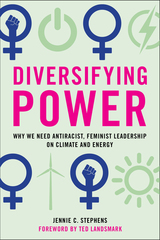
During the Trump era, connections among white supremacy; environmental destruction; and fossil fuel dependence have become more conspicuous. Many of the same leadership deficiencies that shaped the inadequate response in the United States to the coronavirus pandemic have also thwarted the US response to the climate crisis. The inadequate and ineffective framing of climate change as a narrow, isolated, discrete problem to be “solved” by technical solutions is failing. The dominance of technocratic, white, male perspectives on climate and energy has inhibited investments in social change and social innovations. With new leadership and diverse voices, we can strengthen climate resilience, reduce racial and economic inequities, and promote social justice.
In Diversifying Power, energy expert Jennie Stephens argues that the key to effectively addressing the climate crisis is diversifying leadership so that antiracist, feminist priorities are central. All politics is now climate politics, so all policies, from housing to health, now have to integrate climate resilience and renewable energy.
Stephens takes a closer look at climate and energy leadership related to job creation and economic justice, health and nutrition, housing and transportation. She looks at why we need to resist by investing in bold diverse leadership to curb the “the polluter elite.” We need to reclaim and restructure climate and energy systems so policies are explicitly linked to social, economic, and racial justice.
Inspirational stories of diverse leaders who integrate antiracist, feminist values to build momentum for structural transformative change are woven throughout the book, along with Stephens’ experience as a woman working on climate and energy. The shift from a divided, unequal, extractive, and oppressive society to a just, sustainable, regenerative, and healthy future has already begun.
But structural change needs more bold and ambitious leaders at all levels, like Alexandria Ocasio-Cortez with the Green New Deal, or the Secwepemc women of the Tiny House Warriors resisting the Trans Mountain pipeline.
Diversifying Power offers hope and optimism. Stephens shows how the biggest challenges facing society are linked and anyone can get involved to leverage the power of collective action. By highlighting the creative individuals and organizations making change happen, she provides inspiration and encourages transformative action on climate and energy justice.

Essays reveal the multiplicity of ways "compulsory masculinity" is imposed upon female leaders who wish to succeed in a man's world, and analyzes the use of interpersonal means to ensure masculine advantage. For example, only one woman in Congress was able to have a direct effect on any reproductive policy; other women experienced sexual harassment by offensive men, which resulted in their being distracted from performing as leaders.
Until now, studies of gender within the field of political science have focused centrally on women. Men have been studied as gendered beings whose thinking has shaped politics in ways advantageous to them, but this volume is unique in crossing multiple levels of analysis and demonstrating the interactive and reinforcing effects of gender power. The book is required reading for political scientists who have frequently been blind to masculinist assumptions and cultural belief systems when gender roles collide with leadership demands for women. It will also appeal to those in public administration and policy, sociology, and business studies.
"An important book that challenges the ways empirical research is done and the ways social scientists think about gender."--Nancy Hartsock, University of Washington
"A very useful book on gender and political leadership that weaves together scholarly research with practical applications and suggestions for change."--Virginia Sapiro, University of Wisconsin, Madison
"A very ambitious book, attempting no less than a paradigm shift in social science thinking."--Marcia Lynn Whicker, Rutgers University
Georgia Duerst-Lahti is Associate Dean and Associate Professor of Government, Beloit College. Rita Mae Kelly is Director and Chair of the School of Justice Studies, and Professor of Justice Studies, Political Science, and Women's Studies, Arizona State University.
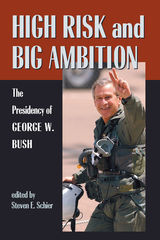
High Risk and Big Ambition brings together leading presidency scholars and journalists to assess the trajectory and character of Bush’s time in office. The common theme running through their contributions is that this presidency is best characterized by a series of bold political and policy risks in the service of two primary goals: the transformation of American foreign policy and the creation of a lasting Republican dominance of domestic politics.
Included are discussions of foreign policy, national security, the war in Iraq, Bush’s leadership style, religious politics, and economic policy. George W. Bush emerges as an "orthodox innovator" who skillfully deploys both personal politics and the power of his office in an effort to complete the conservative governmental agenda initiated by Ronald Reagan. Yet because of the size of his ambitions, each success sets up a greater risk of failure. That alone makes his presidency one of the most interesting and consequential in decades.
The African National Congress (ANC) is Africa’s most famous liberation movement. It has recently celebrated its centenary, a milestone that has prompted partisans to detail a century of unparalleled achievement in the struggle against colonialism and racial discrimination. Critics paint a less flattering portrait of the historical ANC as a communist puppet, a moribund dinosaur, or an elitist political parasite. For such skeptics, the ANC—now in government for two decades—has betrayed South Africans rather than liberating them.
South Africans endure deep inequality and unemployment, violent community protests, murders of foreign residents, major policy blunders, an AIDS crisis, and deepening corruption. Inside the ANC there are episodes of open rebellion against the leadership, conflicts over the character of a postliberation movement, and debilitating battles for succession to the movement’s presidency. The ANC is nevertheless likely to remain the party of government for the foreseeable future.
This remarkable book explores how ANC intellectuals and leaders interpret the historical project of their movement. It investigates three interlocking ideas: a conception of power, a responsibility for promoting unity, and a commitment to human liberation. Anthony Butler explores how these notions have shaped South African politics in the past and how they will inform ANC leaders’ responses to the challenges of the future.
Based on years of intensive research, including unusually candid interviews with members of Puerto Rico's political elite, The Last Cacique offers the first in-depth study of local politics in Puerto Rico and one of the very few available for the Caribbean region.
How can public officials move large government agencies to produce significant results? In Leadership Counts, Robert Behn explains exactly what managers in the inherently political environment of government need to do to obtain such performance.
In 1983 the leadership of the Massachusetts Department of Public Welfare—Charles M. Atkins, Thomas P. Glynn, Barbara Burke-Tatum, and Jolie Bain Pillsbury—set out to educate and train welfare recipients, place them in good jobs, and move them from dependency to self-sufficiency. From these efforts to accomplish a specific and important public purpose, Behn extracts the fundamental ingredients of successful public leadership.
Behn’s analysis spans the spectrum of managerial tasks—from the almost spiritual responsibility to create and communicate a public mission to the seemingly mundane chore of motivating specific individuals to accomplish specific tasks. He describes how to manage for performance, examines how effective leaders can use external success to build internal morale, and analyzes the dilemmas of evaluating ongoing and evolving public policies. He explains in detail how accomplishing specific purposes requires “management by groping along.” And he analyzes three different metastrategies for government executives—strategies that emphasize policy, administration, or leadership.
Leadership Counts is more than an intriguing success story. It offers specific lessons that the nominal head of any government agency can employ to become the organization’s true leader. This insightful book will be of interest not only to students and teachers of public management but to leaders at all levels of government—from the principal of a school to the secretary of defense.
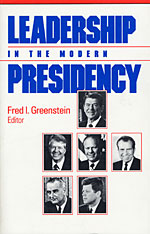
In presidential election years the leadership qualities of occupants of the Oval Office become yardsticks for aspiring candidates. What profile of qualities, both positive and negative, helps explain the performance of chief executives? In this book about the White House, nine eminent political scientists and historians present their assessments of the leadership styles and organizational talents of presidents from Franklin D. Roosevelt to Ronald Reagan. Filled with anecdote and insight, this is an unprecedented opportunity to observe how the running of the office of President has been changed, subtly and not so subtly, by the management and personal styles of the various incumbents within their historical contexts.
The book vividly depicts each president. There is Roosevelt, “a real artist in government”; Truman, a strong executive who always managed to appear weak; Eisenhower, who cultivated the image of being “above the fray” of politics but was actually fully occupied with getting political results; Kennedy, who successfully projected the symbolic grandeur of his office; Johnson, a figure from classical tragedy; Nixon, who preferred a corporate to a political mode of operation; Ford, who placed healing the nation’s wounds from Vietnam and Watergate above his personal political future; Carter, whose fall was as stunning as his rise was meteoric. The chapter on Reagan is an impassioned encomium of the president as a folk philosopher that is bound to be controversial.
These accounts of leadership by modern presidents are acute studies of how the presidency has become the first among equals in our tripartite system of government. This book will be important to political scientists, historians, and government officials, and the liveliness of its presentation and the quotidian impact of the men it describes will make it attractive to everyone interested in how we are governed and who is doing the governing.
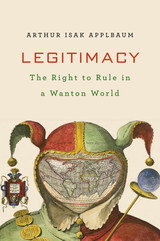
At an unsettled time for liberal democracy, with global eruptions of authoritarian and arbitrary rule, here is one of the first full-fledged philosophical accounts of what makes governments legitimate.
What makes a government legitimate? The dominant view is that public officials have the right to rule us, even if they are unfair or unfit, as long as they gain power through procedures traceable to the consent of the governed. In this rigorous and timely study, Arthur Isak Applbaum argues that adherence to procedure is not enough: even a properly chosen government does not rule legitimately if it fails to protect basic rights, to treat its citizens as political equals, or to act coherently.
How are we to reconcile every person’s entitlement to freedom with the necessity of coercive law? Applbaum’s answer is that a government legitimately governs its citizens only if the government is a free group agent constituted by free citizens. To be a such a group agent, a government must uphold three principles. The liberty principle, requiring that the basic rights of citizens be secured, is necessary to protect against inhumanity, a tyranny in practice. The equality principle, requiring that citizens have equal say in selecting who governs, is necessary to protect against despotism, a tyranny in title. The agency principle, requiring that a government’s actions reflect its decisions and its decisions reflect its reasons, is necessary to protect against wantonism, a tyranny of unreason.
Today, Applbaum writes, the greatest threat to the established democracies is neither inhumanity nor despotism but wantonism, the domination of citizens by incoherent, inconstant, and incontinent rulers. A government that cannot govern itself cannot legitimately govern others.
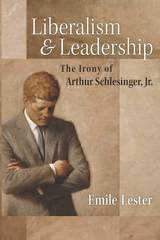
Most scholars and pundits today view Franklin Delano Roosevelt and John F. Kennedy as aggressive liberal leaders, while viewing Schlesinger’s famous histories of their presidencies as celebrations of their steadfast progressive leadership. A more careful reading of Schlesinger’s work demonstrates that he preferred an ironic political outlook emphasizing the virtues of restraint, patience, and discipline. For Schlesinger, Roosevelt and Kennedy were liberal heroes and models as much because they respected the constraints on their power and ideals as because they tested traditional institutions and redefined the boundaries of presidential power.
Aggressive liberalism involves the use of inspirational rhetoric and cunning political tactics to expand civil liberties and insure economic equality. Schlesinger’s emphasis on the crucial role that irony has played and should play in liberalism poses a challenge to the aggressive liberalism advocated by liberal activists, political thinkers, and pundits. That his counsel was grounded in conservative insights as well as liberal values makes it accessible to leaders across the political spectrum.
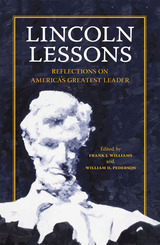
In Lincoln Lessons, seventeen of today’s most respected academics, historians, lawyers, and politicians provide candid reflections on the importance of Abraham Lincoln in their intellectual lives. Their essays, gathered by editors Frank J. Williams and William D. Pederson, shed new light on this political icon’s remarkable ability to lead and inspire two hundred years after his birth.
Collected here are glimpses into Lincoln’s unique ability to transform enemies into steadfast allies, his deeply ingrained sense of morality and intuitive understanding of humanity, his civil deification as the first assassinated American president, and his controversial suspension of habeas corpus during the Civil War. The contributors also discuss Lincoln’s influence on today’s emerging democracies, his lasting impact on African American history, and his often-overlooked international legend—his power to instigate change beyond the boundaries of his native nation. While some contributors provide a scholarly look at Lincoln and some take a more personal approach, all explore his formative influence in their lives. What emerges is the true history of his legacy in the form of first-person testaments from those whom he has touched deeply.
Lincoln Lessons brings together some of the best voices of our time in a unique combination of memoir and history. This singular volume of original essays is a tribute to the enduring inspirational powers of an extraordinary man whose courage and leadership continue to change lives today.
Contributors
Jean H. Baker
Mario M. Cuomo
Joan L. Flinspach
Sara Vaughn Gabbard
Doris Kearns Goodwin
Harold Holzer
Harry V. Jaffa
John F. Marszalek
James M. McPherson
Edna Greene Medford
Sandra Day O’Connor
Mackubin Thomas Owens
William D. Pederson
Edward Steers Jr.
Craig L. Symonds
Thomas Reed Turner
Frank J. Williams
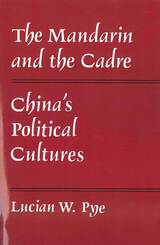
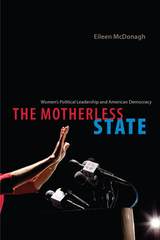
American women attain more professional success than most of their counterparts around the world, but they lag surprisingly far behind in the national political arena. Women held only 15 percent of U.S. congressional seats in 2006, a proportion that ranks America behind eighty-two other countries in terms of females elected to legislative office. A compelling exploration of this deficiency, TheMotherless State reveals why the United States differs from comparable democracies that routinely elect far more women to their national governing bodies and chief executive positions.
Explaining that equal rights alone do not ensure equal access to political office, Eileen McDonagh shows that electoral gender parity also requires public policies that represent maternal traits. Most other democracies, she demonstrates, view women as more suited to govern because their governments have taken on maternal roles through social welfare provisions, gender quotas, or the continuance of symbolic hereditary monarchies. The United States has not adopted such policies, and until it does, McDonagh insightfully warns, American women run for office with a troubling disadvantage.
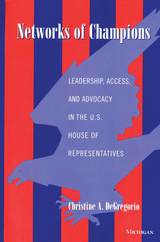
In Networks of Champions Christine A. DeGregorio identifies who in the U.S. House of Representatives took the lead in shepherding six major bills, dealing with welfare reform, drug control, international trade, farm policy, nuclear weapons testing, and assistance to the Contras, through Congress and how these champions of legislation worked with outside advocacy groups. DeGregorio finds that the champions of this legislation were drawn from a diverse group that included individuals both within and outside the formal hierarchy of leadership. The champions, who were not necessarily the prominent holders of important positions, are characterized by having knowledge of the subject matter, experience in the House, a facility for bargaining and compromise, the right committee assignments, and a commitment to hard work.
DeGregorio traces how these groups become influential and how the groups affect the policy-making process. She finds a reciprocal process in which advocacy groups use champions to express their views while champions use the resources of advocacy groups to gain influence in the House.
Based on extensive interviews with key congressional staff members and the leaders of advocacy groups, DeGregorio provides critical new insights into the legislative process. This book will be of interest to those who study the legislative process and the role of interest groups in making American policy.
". . . a substantial contribution to our understanding of advocacy in Congress." --Barbara Sinclair, University of California, Los Angeles
Christine A. DeGregorio is Associate Professor, Department of Government, School of Public Affairs, American University.

With enormous numbers of new immigrants, America is becoming dramatically more diverse racially, culturally, and ethnically. As a result, the United States faces questions that have profound consequences for its future. What does it mean to be an American? Is a new American identity developing? At the same time, the coherence of national culture has been challenged by the expansion of—and attacks on—individual and group rights, and by political leaders who prefer to finesse rather than engage cultural controversies. Many of the ideals on which the country was founded are under intense, often angry, debate, and the historic tension between individuality and community has never been felt so keenly.
In One America?, distinguished contributors discuss the role of national leadership, especially the presidency, at a time when a fragmented and dysfunctional national identity has become a real possibility. Holding political views that encompass the thoughtful left and right of center, they address fundamental issues such as affirmative action, presidential engagement in questions of race, dual citizenship, interracial relationships, and English as the basic language.
This book is the first examination of the role of national political leaders in maintaining or dissipating America’s national identity. It will be vital reading for political scientists, historians, policymakers, students, and anyone concerned with the future of American politics and society.
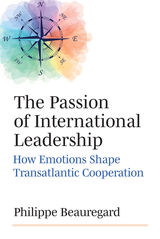
How do international leaders emerge and why are they successful in bringing followers to converge on their positions? The Passion of International Leadership draws on recent advances in political psychology and state-of-the-art research in International Relations to go beyond current knowledge and simplistic accounts of international leadership. It tells surprising and intense stories of policymakers at the head of great powers attempting to cooperate during crisis moments, and uses these stories to challenge commonly held beliefs and intuitions about international leadership.
Beauregard explores international leadership in four cases of transatlantic cooperation when Western policymakers were confronted with foreign conflicts, like civil or secessionist wars. He provides a fascinating study of the recognition of Slovenia, Croatia, and Bosnia during the wars in Yugoslavia; the peace mediation during the Russia-Georgia war in 2008; the adoption of economic sanctions against Russia over the conflict in Ukraine; and finally, cooperation on striking against the Islamic State in Iraq and Syria. The book argues that leaders are driven by their convictions, and that they must strike a balance between the intense emotions associated with their beliefs and their need to represent a broader community. At the same time as they seek to bring followers on board by persuading them, they need to pay attention to emotionally contagious and resonant events that can alter the course of international cooperation.
This collection of essays draws on writings from mythologists, sociologists, philosophers, historians, and political activists, to present perspectives on the techniques, philosophies, and theories of political leadership throughout history. The forty-three selections offer a broad range of thought and provide a uniquely comprehensive reference.
During more than twenty years of field research, Roderic Ai Camp built a monumental database of biographical information on more than 3,000 leading national figures in Mexico. In this major contribution to Mexican political history, he draws on that database to present a definitive account of the paths to power Mexican political leaders pursued during the period 1884 to 1992.
Camp’s research clarifies the patterns of political recruitment in Mexico, showing the consequences of choosing one group over another. It calls into question numerous traditional assumptions, including that upward political mobility was a cause of the Mexican Revolution of 1910.
Comparing Mexican practices with those in several East Asian countries also allows Camp to question many of the tenets of political recruitment theory. His book will be of interest to students not only of Mexican politics but also of history, comparative politics, political leadership, and Third World development.
In this provocative and engagingly written book, the authors argue that the reality is quite the opposite. In fact, when not facing election, contemporary presidents and members of Congress routinely ignore the public's policy preferences and follow their own political philosophies, as well as those of their party's activists, their contributors, and their interest group allies. Politicians devote substantial time, effort, and money to tracking public opinion, not for the purposes of policymaking, but to change public opinion—to determine how to craft their public statements and actions to win support for the policies they and their supporters want.
Taking two recent, dramatic episodes—President Clinton's failed health care reform campaign, and Newt Gingrich's "Contract with America"—as examples, the authors show how both used public opinion research and the media to change the public's mind. Such orchestrated displays help explain the media's preoccupation with political conflict and strategy and, the authors argue, have propelled levels of public distrust and fear of government to record highs.
Revisiting the fundamental premises of representative democracy, this accessible book asks us to reexamine whether our government really responds to the broad public or to the narrower interests and values of certain groups. And with the 2000 campaign season heating up, Politicians Don't Pander could not be more timely.
"'Polling has turned leaders into followers,' laments columnist Marueen Dowd of The New York Times. Well, that's news definitely not fit to print say two academics who have examined the polls and the legislative records of recent presidents to see just how responsive chief executives are to the polls. Their conclusion: not much. . . . In fact, their review and analyses found that public opinion polls on policy appear to have increasingly less, not more, influence on government policies."—Richard Morin, The Washington Post

As America’s first truly postmodern president, Bill Clinton experienced both great highs and stunning lows in office that will shape the future course of American politics. Clinton will forever be remembered as the first elected president to be impeached, but will his tarnished legacy have lasting effects on America’s political system?
Including the conflict in Kosovo, the World Trade Organization meeting in Seattle, and new developments in the 2000 presidential campaign, The Postmodern Presidency is the most comprehensive and current assessment of Bill Clinton’s presidency available in print.
The book examines Clinton’s role in redefining the institution of the presidency, and his affect on future presidents’ economic and foreign policies. The contributors highlight the president’s unprecedented courtship of public opinion; how polls affected policy; how the president gained “celebrity” status; how Clinton’s “postmodern” style of public presidency helped him survive the 1994 elections and impeachment; and how all of this might impact future presidents.
This new text also demonstrates how the Clinton presidency changed party politics in the public and in Congress, with long-term implications and costs to both Republicans and his own Democratic party, while analyzing Clinton’s effect on the 1990s “culture wars,” the politics and importance of gender, and the politics and policy of race.
In January 1995, fighting broke out between Ecuadorian and Peruvian military forces in a remote section of the Amazon. It took more than three years and the interplay of multiple actors and factors to achieve a definitive peace agreement, thus ending what had been the region's oldest unresolved border dispute. This conflict and its resolution provide insights about other unresolved and/or disputed land and sea boundaries which involve almost every country in the Western Hemisphere.
Drawing on extensive field research at the time of the dispute and during its aftermath, including interviews with high-ranking diplomats and military officials, Power, Institutions, and Leadership in War and Peace is the first book-length study to relate this complex border dispute and its resolution to broader theories of conflict. The findings emphasize an emerging leadership approach in which individuals are not mere captives of power and institutions. In addition, the authors illuminate an overlap in national and international arenas in shaping effective articulation, perception, and selection of policy.
In the “new” democratic Latin America that emerged in the late 1970s through the early 1990s, historical memory remains influential in shaping the context of disputes, in spite of presumed U.S. post–Cold War influence. This study offers important, broader perspectives on a hemisphere still rife with boundary disputes as a rising number of people and products (including arms) pass through these borderlands.
George W. Bush called it "the best job in the world," yet many would argue that the Texas governorship is a weak office. Given few enumerated powers by the Texas Constitution, the governor must build a successful relationship with the state legislature—sometimes led by a powerful lieutenant governor or speaker of the opposing party—to advance his or her policy agenda. Yet despite the limitations on the office and the power of the legislative branch, many governors have had a significant impact on major aspects of Texas's public life—government, economic development, education, and insurance reform among them. How do Texas governors gain the power to govern effectively?
The Power of the Texas Governor takes a fresh look at the state's chief executives, from John Connally to George W. Bush, to discover how various governors have overcome the institutional limitations of the office. Delving into the governors' election campaigns and successes and failures in office, Brian McCall makes a convincing case that the strength of a governor's personality—in particular, his or her highly developed social skills—can translate into real political power. He shows, for example, how governors such as Ann Richards and George W. Bush forged personal relationships with individual legislators to achieve their policy goals. Filled with revealing insights and anecdotes from key players in each administration, The Power of the Texas Governor offers new perspectives on leadership and valuable lessons on the use of power.
Larocca develops a theoretical model that explains how the president can raise the public salience of issues in his major addresses, long accepted as one of the president’s strongest agenda-setting tools. He also develops a theoretical model that explains how control over executive agency expertise yields a more reliable and persistent influence on the congressional agenda than presidential addresses.
The Presidential Agenda tests these theoretical models with an innovative empirical study of presidential agenda setting. Using data from all House and Senate Commerce Committee bills from 1979 to 2002, Larocca converts information about bills into information about policy issues and then traces the path of presidential influence through the committee and floor stages of legislative consideration.
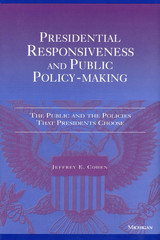
Cohen examines the way presidents from Eisenhower through Clinton have dealt with public opinion in policy making. He uses case studies of issues such as Clinton and gays in the military, Bush and the extension of unemployment benefits, and Kennedy and cutting the income tax, to explore the relationship between presidents and public opinion. In addition Cohen uses a quantitative analysis of State of the Union addresses and positions on roll call votes of presidents from Eisenhower through George Bush to test his theories.
This book should appeal to political scientists and historians interested in the presidency and in public opinion, as well as general readers interested in the history of the American presidency.
Jeffrey Cohen is Professor of Political Science, Fordham University.
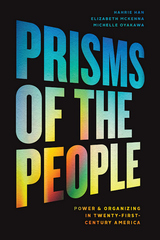
Prisms of the People addresses those questions and more. Using data from six movement organizations—including a coalition that organized a 104-day protest in Phoenix in 2010 and another that helped restore voting rights to the formerly incarcerated in Virginia—Hahrie Han, Elizabeth McKenna, and Michelle Oyakawa show that the power of successful movements most often is rooted in their ability to act as “prisms of the people,” turning participation into political power just as prisms transform white light into rainbows. Understanding the organizational design choices that shape the people, their leaders, and their strategies can help us understand how grassroots groups achieve their goals.
Linking strong scholarship to a deep understanding of the needs and outlook of activists, Prisms of the People is the perfect book for our moment—for understanding what’s happening and propelling it forward.
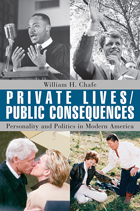
A political leader's decisions can determine the fate of a nation, but what determines how and why that leader makes certain choices? William H. Chafe, a distinguished historian of twentieth century America, examines eight of the most significant political leaders of the modern era in order to explore the relationship between their personal patterns of behavior and their political decision-making process. The result is a fascinating look at how personal lives and political fortunes have intersected to shape America over the past fifty years.
One might expect our leaders to be healthy, wealthy, genteel, and happy. In fact, most of these individuals--from Franklin Delano Roosevelt to Martin Luther King, Jr., from John F. Kennedy to Bill Clinton--came from dysfunctional families, including three children of alcoholics; half grew up in poor or only marginally secure homes; most experienced discord in their marriages; and at least two displayed signs of mental instability. What links this extraordinarily diverse group is an intense ambition to succeed, and the drive to overcome adversity. Indeed, adversity offered a vehicle to develop the personal attributes that would define their careers and shape the way they exercised power.
Chafe probes the influences that forged these men's lives, and profiles the distinctive personalities that molded their exercise of power in times of danger and strife. The history of the United States from the Depression into the new century cannot be understood without exploring the dynamic and critical relationship between personal history and political leadership that these eight life stories so poignantly reveal.
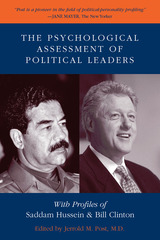
In an age when world affairs are powerfully driven by personality, politics require an understanding of what motivates political leaders such as Hussein, Bush, Blair, and bin Laden. Through exacting case studies and the careful sifting of evidence, Jerrold Post and his team of contributors lay out an effective system of at-a-distance evaluation. Observations from political psychology, psycholinguistics and a range of other disciplines join forces to produce comprehensive political and psychological profiles, and a deeper understanding of the volatile influences of personality on global affairs.
Even in this age of free-flowing global information, capital, and people, sovereign states and boundaries remain the hallmark of the international order -- a fact which is especially clear from the events of September 11th and the War on Terrorism.
Jerrold M. Post, M.D., is Professor of Psychiatry, Political Psychology, and International Affairs, and Director of the Political Psychology Program at George Washington University. He is the founder of the CIA's Center for the Analysis of Personality and Political Behavior.
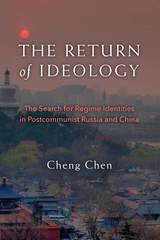
As a nation makes the transition from communism to democracy or another form of authoritarianism, its regime must construct not only new political institutions, but also a new political ideology that can guide policy and provide a sense of mission. The new ideology is crucial for legitimacy at home and abroad, as well as the regime’s long-term viability. In The Return of Ideology, Cheng Chen compares post-communist regimes, with a focus on Russia under Putin and post-Deng China, investigating the factors that affect the success of an ideology-building project and identifies the implications for international affairs.
Successful ideology-building requires two necessary—but not sufficient—conditions. The regime must establish a coherent ideological repertoire that takes into account the nation’s ideological heritage and fresh surges of nationalism. Also, the regime must attract and maintain a strong commitment to the emerging ideology among the political elite.
Drawing on rich primary sources, including interviews, surveys, political speeches, writings of political leaders, and a variety of publications, Chen identifies the major obstacles to ideology-building in modern Russia and China and assesses their respective long-term prospects. Whereas creating a new regime ideology has been a protracted and difficult process in China, it has been even more so in Russia. The ability to forge an ideology is not merely a domestic concern for these two nations, but a matter of international import as these two great powers move to assert and extend their influence in the world.
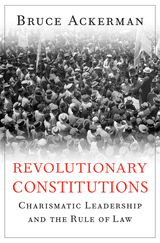
A robust defense of democratic populism by one of America’s most renowned and controversial constitutional scholars—the award-winning author of We the People.
Populism is a threat to the democratic world, fuel for demagogues and reactionary crowds—or so its critics would have us believe. But in his award-winning trilogy We the People, Bruce Ackerman showed that Americans have repeatedly rejected this view. Now he draws on a quarter century of scholarship in this essential and surprising inquiry into the origins, successes, and threats to revolutionary constitutionalism around the world. He takes us to India, South Africa, Italy, France, Poland, Burma, Israel, and Iran and provides a blow-by-blow account of the tribulations that confronted popular movements in their insurgent campaigns for constitutional democracy. Despite their many differences, populist leaders such as Nehru, Mandela, and de Gaulle encountered similar dilemmas at critical turning points, and each managed something overlooked but essential. Rather than deploy their charismatic leadership to retain power, they instead used it to confer legitimacy to the citizens and institutions of constitutional democracy.
Ackerman returns to the United States in his last chapter to provide new insights into the Founders’ acts of constitutional statesmanship as they met very similar challenges to those confronting populist leaders today. In the age of Trump, the democratic system of checks and balances will not survive unless ordinary citizens rally to its defense. Revolutionary Constitutions shows how activists can learn from their predecessors’ successes and profit from their mistakes, and sets up Ackerman’s next volume, which will address how elites and insiders co-opt and destroy the momentum of revolutionary movements.
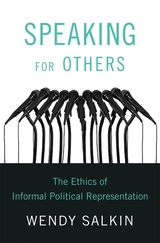
A political philosopher dissects the duties and dilemmas of the unelected spokesperson, from Martin Luther King, Jr., to Greta Thunberg.
Political representation is typically assumed to be the purview of formal institutions and elected officials. But many of the people who represent us are not senators or city councilors—think of Martin Luther King, Jr., or Malala Yousafzai or even a neighbor who speaks up at a school board meeting. Informal political representatives are in fact ubiquitous, often powerful, and some bear enormous responsibility. In Speaking for Others, political philosopher Wendy Salkin develops the first systematic conceptual and moral analysis of informal political representation.
Salkin argues that informal representation can be a political lifeline, particularly for oppressed and marginalized groups that are denied representation in formal political institutions. Yet informal political representatives exert outsized influence over the ways these groups’ interests are understood by the public, without the represented having much recourse to hold them accountable. And many informal political representatives are selected not by the groups they represent but by outsiders, sticking these groups with representatives they would not choose but cannot shake. The role of informal political representatives is therefore fraught with moral questions. What exactly are their duties and to whom are they owed? Should they be members of the groups they represent? When is informal representation permissible and when is it best avoided?
Informal political representation is taking place all around us. In fact, you yourself may be an informal political representative without knowing it. Speaking for Others explores the tensions central to this pervasive yet underexamined practice, bringing light to both its perils and its promise.
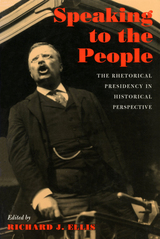
Taking the Initiative shows that majority party leaders in Congress have set and successfully pushed their own policy agendas for decades—revealing the 'Contract With America' as only the most recent, and certainly not the most successful, example of independent policy making.
Cutting deeply into the politics and personalities of three decades of party leadership, John B. Bader probes the strategies and evaluates the effectiveness of House and Senate leaders operating in a divided government, when Congress and the presidency are controlled by different political parties. He provides a historical context for analyzing the"Contract" and shows that aggressive agenda-setting has long been a regular feature of majority party leadership.
Bader interviewed more than seventy congressional leaders, staff members, party officials, and political consultants, including speakers Thomas "Tip" O'Neill and Jim Wright, for this book. He supplemented these interviews with research in largely unexplored archival materials such as press conference transcripts, notes from White House leadership meetings, and staff memoranda on strategy.
Once described by Trygve Lie as the "most impossible job on earth," the position of UN Secretary-General is as frustratingly constrained as it is prestigious. The Secretary-General's ability to influence global affairs often depends on how the international community regards his moral authority. In relation to such moral authority, past office-holders have drawn on their own ethics and religious backgrounds—as diverse as Lutheranism, Catholicism, Buddhism, and Coptic Christianity—to guide the role that they played in addressing the UN's goals in the international arena, such as the maintenance of international peace and security and the promotion of human rights. In The UN Secretary-General and Moral Authority, contributors provide case studies of all seven former secretaries-general, establishing a much-needed comparative survey of each office-holder's personal religious and moral values. From Trygve Lie's forbearance during the UN's turbulent formative years to the Nobel committee's awarding Kofi Annan and the United Nations the prize for peace in 2001, the case studies all follow the same format, first detailing the environmental and experiential factors that forged these men's ethical frameworks, then analyzing how their "inner code" engaged with the duties of office and the global events particular to their terms.
Balanced and unbiased in its approach, this study provides valuable insight into how religious and moral leadership functions in the realm of international relations, and how the promotion of ethical values works to diffuse international tensions and improve the quality of human life around the world.
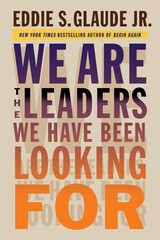
From the author of the New York Times bestseller Begin Again, a politically astute, lyrical meditation on how ordinary people can shake off their reliance on a small group of professional politicians and assume responsibility for what it takes to achieve a more just and perfect democracy.
“Like attending a jazz concert with all of one’s favorite musicians…James Baldwin, Martin Luther King, Jr., Malcolm X, Ella Baker, Toni Morrison, and more…Glaude brilliantly takes us on an epic tour through their lives and work.”
―Henry Louis Gates, Jr., author of The Black Box: Writing the Race
We are more than the circumstances of our lives, and what we do matters. In We Are the Leaders We Have Been Looking For, one of the nation’s preeminent scholars and a New York Times bestselling author, Eddie S. Glaude Jr., makes the case that the hard work of becoming a better person should be a critical feature of Black politics. Through virtuoso interpretations of Martin Luther King, Jr., Malcolm X, and Ella Baker, Glaude shows how we have the power to be the heroes that our democracy so desperately requires.
Based on the Du Bois Lectures delivered at Harvard University, the book begins with Glaude’s unease with the Obama years. He felt then, and does even more urgently now, that the excitement around the Obama presidency constrained our politics as we turned to yet another prophet-like figure. He examines his personal history and the traditions that both shape and overwhelm his own voice.
Glaude weaves anecdotes about his evolving views on Black politics together with the writings of Ralph Waldo Emerson, John Dewey, Toni Morrison, James Baldwin, and Ralph Ellison, encouraging us to reflect on the lessons of these great thinkers and address imaginatively the challenges of our day in voices uniquely our own.
Narrated with passion and philosophical intensity, this book is a powerful reminder that if American democracy is to survive, we must step out from under the shadows of past giants to build a better society—one that derives its strength from the pew, not the pulpit.
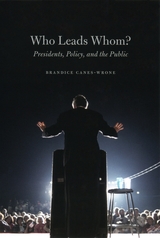
Analyzing the actions of modern presidents ranging from Eisenhower to Clinton, Brandice Canes-Wrone demonstrates that presidents' involvement of the mass public, by putting pressure on Congress, shifts policy in the direction of majority opinion. More important, she also shows that presidents rarely cater to the mass citizenry unless they already agree with the public's preferred course of action. With contemporary politics so connected to the pulse of the American people, Who Leads Whom? offers much-needed insight into how public opinion actually works in our democratic process. Integrating perspectives from presidential studies, legislative politics, public opinion, and rational choice theory, this theoretical and empirical inquiry will appeal to a wide range of scholars of American political processes.
READERS
Browse our collection.
PUBLISHERS
See BiblioVault's publisher services.
STUDENT SERVICES
Files for college accessibility offices.
RECENTLY PUBLISHED




UChicago Accessibility Resources
home | accessibility | search | about | contact us
BiblioVault ® 2001 - 2024
The University of Chicago Press