
 A SCHOLARLY BOOK REPOSITORY
No Peer Rivals takes a major staple of International Relations scholarship—the offensive realist paradigm—and develops a comprehensive and practical grand strategy for the United States in this new era of Great Power Competition. The No Peer Rival framework is grounded in a realistic assessment of the most likely courses of action adopted by China, Russia, and other important regional powers. It prioritizes great power rivalry over other strategic goals, and identifies China as the biggest threat to America’s unique position in the international system. This grand strategic approach carefully aligns the domestic sources of national power (economic strength, energy security, and technological prowess) to America’s foreign policy and national security objectives. In addition to recommending necessary changes to America’s military and diplomatic strategies, No Peer Rivals also demonstrates that a realistic approach to industrial policy, international trade, energy production, and technological superiority offers the best chance for developing the sinews of power needed to outcompete Beijing in the long run.
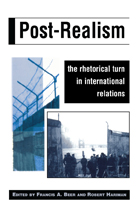
These essays demonstrate how realism operates rhetorically and point the way toward a richer understanding of world politics.
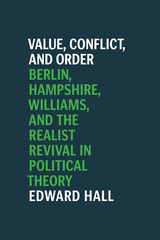
Is the purpose of political philosophy to articulate the moral values that political regimes would realize in a virtually perfect world and show what that implies for the way we should behave toward one another? That model of political philosophy, driven by an effort to draw a picture of an ideal political society, is familiar from the approach of John Rawls and others. Or is political philosophy more useful if it takes the world as it is, acknowledging the existence of various morally non-ideal political realities, and asks how people can live together nonetheless?
The latter approach is advocated by “realist” thinkers in contemporary political philosophy. In Value, Conflict, and Order, Edward Hall builds on the work of Isaiah Berlin, Stuart Hampshire, and Bernard Williams in order to establish a political realist’s theory of politics for the twenty-first century. The realist approach, Hall argues, helps us make sense of the nature of moral and political conflict, the ethics of compromising with adversaries and opponents, and the character of political legitimacy. In an era when democratic political systems all over the world are riven by conflict over values and interests, Hall’s conception is bracing and timely.
READERS
Browse our collection.
PUBLISHERS
See BiblioVault's publisher services.
STUDENT SERVICES
Files for college accessibility offices.
RECENTLY PUBLISHED



UChicago Accessibility Resources
home | accessibility | search | about | contact us
BiblioVault ® 2001 - 2025
The University of Chicago Press