
 A SCHOLARLY BOOK REPOSITORY
33 start with A start with A
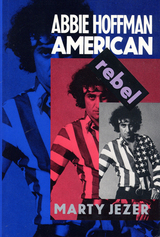
"... Abbie, more than any other radical, showed potheads how to demonstrate and radicals how to dance." -- Chicago Tribune
"... deeply sympathetic and scrupulously detached-a triumph of judicious empathy." -- MARTIN DUBERMAN, Distinguished Professor of History, Lehman/The Graduate School, C.U.N.Y.
"... details Hoffman's humor, manic energy, depressive spells, political skills, and above all, his Incurable and still contagious optimism." -- Entertainment Weekly
"Here's the Abbie I knew and loved! Marty Jezer has captured him in all his complexity, dedication, humor, and heart." -- ANITA HOFFMAN

Contemporary popular culture, from books to film to television to music to the deepest corners of the internet, has provoked much criticism, some of it well deserved. Yet, popular culture is culture for many Americans—particularly younger Americans. It is the only kind of cultural experience they seek and the currency in which they trade.
In Acculturated, twenty-three thinkers examine the rituals, the myths, the tropes, the peculiar habits, the practices, and the neuroses of our modern era. Every culture finds a way for people to tell stories about themselves. We rely on these stories to teach us why we do the things we do, to test the limits of our experience, to reaffirm deeply felt truths about human nature, and to teach younger generations about vice and virtue, honor and shame, and a great deal more. A phenomenon like the current crop of reality television shows, for example, with their bevy of “real” housewives, super-size families, and toddler beauty-pageant candidates, seems an unlikely place to find truths about human nature or examples of virtue. And yet, on these shows, and in much else of what passes for popular culture these days, a surprising theme emerges: Move beyond the visual excess and hyperbole, and you will find the makings of classic morality tales.
As the title suggests, readers will find in these pages “A-Culture Rated.” This lively roundtable of “raters” includes renowned cultural critics like Caitlin Flannigan and Chuck Colson and celebrated culture creators like the producers of the hit ABC comedy Modern Family and the host of TLC’s What Not to Wear. Editors Christine Rosen and Naomi Schaefer Riley have tasked these contributors—both the critics and the insiders—with taking a step or two back from the unceasing din of popular culture so that they might better judge its value and its values and help readers think more deeply about the meaning of the narratives with which they are bombarded every waking minute. In doing so, the editors hope to foster a wide-reaching public conversation to help us think more clearly about our culture.
CONTRIBUTORS INCLUDE Judy Bachrach, Megan Basham, Mark Bauerlein, Pia Catton, Chuck Colson, Paul Corrigan, Caitlin Flanagan, Meghan Cox Gurdon, Margo Howard, Kay S. Hymowitz, Jonathan V. Last, Herb London, Stacy London, Rob Long, Megan McArdle, Wilfred M. McClay, Caitrin Nicol, Joe Queenan, Emily Esfahani Smith, Brad Walsh, and Tony Woodlief.

In this ear-opening journey into the sound-worlds of Shakespeare's contemporaries, Bruce R. Smith explores both the physical aspects of human speech (ears, lungs, tongue) and the surrounding environment (buildings, landscape, climate), as well as social and political structures. Drawing on a staggeringly wide range of evidence, he crafts a historical phenomenology of sound, from reconstructions of the "soundscapes" of city, country, and court to detailed accounts of the acoustic properties of the Globe and Blackfriars theaters and how scripts designed for the two spaces exploited sound very differently.
Critical for anyone who wants to understand the world of early modern England, Smith's pathbreaking "ecology" of voice and listening also has much to offer musicologists and acoustic ecologists.


Popular representations of the past are everywhere in Japan, from cell phone charms to manga, from television dramas to video games to young people dressed as their favorite historical figures hanging out in the hip Harajuku district. But how does this mass consumption of the past affect the way consumers think about history and what it means to be Japanese?
By analyzing representations of the famous sixteenth-century samurai leader Toyotomi Hideyoshi in historical fiction based on Taikōki, the original biography of him, this book explores how and why Hideyoshi has had a continued and ever-changing presence in popular culture in twentieth- and twenty-first-century Japan. The multiple fictionalized histories of Hideyoshi published as serial novels and novellas before, during, and after World War II demonstrate how imaginative re-presentations of Japan’s past have been used by various actors throughout the modern era.
Using close reading of several novels and short stories as well as the analysis of various other texts and paratextual materials, Susan Furukawa discovers a Hideyoshi who is always changing to meet the needs of the current era, and in the process expands our understanding of the powerful role that historical narratives play in Japan.
Popular representations of the past are everywhere in Japan, from cell phone charms to manga, from television dramas to video games to young people dressed as their favorite historical figures hanging out in the hip Harajuku district. But how does this mass consumption of the past affect the way consumers think about history and what it means to be Japanese?
By analyzing representations of the famous sixteenth-century samurai leader Toyotomi Hideyoshi in historical fiction based on Taikōki, the original biography of him, this book explores how and why Hideyoshi has had a continued and ever-changing presence in popular culture in twentieth- and twenty-first-century Japan. The multiple fictionalized histories of Hideyoshi published as serial novels and novellas before, during, and after World War II demonstrate how imaginative re-presentations of Japan’s past have been used by various actors throughout the modern era.
Using close reading of several novels and short stories as well as the analysis of various other texts and paratextual materials, Susan Furukawa discovers a Hideyoshi who is always changing to meet the needs of the current era, and in the process expands our understanding of the powerful role that historical narratives play in Japan.
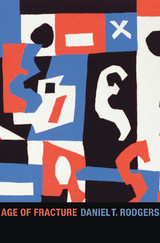
In the last quarter of the twentieth century, the ideas that most Americans lived by started to fragment. Mid-century concepts of national consensus, managed markets, gender and racial identities, citizen obligation, and historical memory became more fluid. Flexible markets pushed aside Keynesian macroeconomic structures. Racial and gender solidarity divided into multiple identities; community responsibility shrank to smaller circles. In this wide-ranging narrative, Daniel T. Rodgers shows how the collective purposes and meanings that had framed social debate became unhinged and uncertain.
Age of Fracture offers a powerful reinterpretation of the ways in which the decades surrounding the 1980s changed America. Through a contagion of visions and metaphors, on both the intellectual right and the intellectual left, earlier notions of history and society that stressed solidity, collective institutions, and social circumstances gave way to a more individualized human nature that emphasized choice, agency, performance, and desire. On a broad canvas that includes Michel Foucault, Ronald Reagan, Judith Butler, Charles Murray, Jeffrey Sachs, and many more, Rodgers explains how structures of power came to seem less important than market choice and fluid selves.
Cutting across the social and political arenas of late-twentieth-century life and thought, from economic theory and the culture wars to disputes over poverty, color-blindness, and sisterhood, Rodgers reveals how our categories of social reality have been fractured and destabilized. As we survey the intellectual wreckage of this war of ideas, we better understand the emergence of our present age of uncertainty.
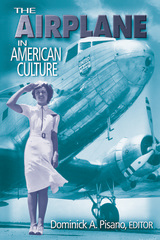
Although countless books for aviation buffs have appeared since World War II, none has attempted to place the airplane in its full social, cultural, and interdisciplinary context until now. The first book of its kind, The Airplane in American Culture presents essays by distinguished contributors including historians, literary scholars, scholars of American studies, art historians, and museum professionals that explore a range of topics, including the connections between flying and race and gender; aviation's role in forming perceptions of the landscape; the airplane's significance to the culture of war; and the influence of flight on literature and art.
A must-read collection for anyone fascinated by the airplane, The Airplane in American Culture represents a dramatic new approach to writing the history of aviation, and makes an important contribution to American social and cultural history.
Dominick A. Pisano is Curator of the Aeronautics Department at the National Air and Space Museum, Smithsonian Institution.
This interdisciplinary collection brings together contributors working in Asian American studies, English, anthropology, sociology, and art history. They consider issues of cultural authenticity raised by Asian American participation in hip hop and jazz, the emergence of an orientalist “Indo-chic” in U.S. youth culture, and the circulation of Vietnamese music variety shows. They examine the relationship between Chinese restaurants and American culture, issues of sexuality and race brought to the fore in the video performance art of a Bruce Lee–channeling drag king, and immigrant television viewers’ dismayed reactions to a Chinese American chef who is “not Chinese enough.” The essays in Alien Encounters demonstrate the importance of scholarly engagement with popular culture. Taking popular culture seriously reveals how people imagine and express their affective relationships to history, identity, and belonging.
Contributors. Wendy Hui Kyong Chun, Kevin Fellezs, Vernadette Vicuña Gonzalez, Joan Kee, Nhi T. Lieu, Sunaina Maira, Martin F. Manalansan IV, Mimi Thi Nguyen, Robyn Magalit Rodriguez, Sukhdev Sandhu, Christopher A. Shinn, Indigo Som, Thuy Linh Nguyen Tu, Oliver Wang
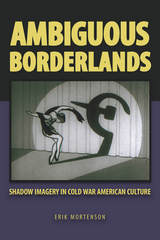
After contextualizing the postwar use of shadow imagery in the wake of the atomic bomb, Ambiguous Borderlands looks at shadows in print works, detailing the reemergence of the pulp fiction crime fighter the Shadow in the late-1950s writings of Sylvia Plath, Amiri Baraka, and Jack Kerouac. Using Freudian and Jungian conceptions of the unconscious, Mortenson then discusses Kerouac’s and Allen Ginsberg’s shared dream of a “shrouded stranger” and how it shaped their Beat aesthetic. Turning to the visual, Mortenson examines the dehumanizing effect of shadow imagery in the Cold War photography of Robert Frank, William Klein, and Ralph Eugene Meatyard. Mortenson concludes with an investigation of the use of chiaroscuro in 1950s film noir and the popular television series The Twilight Zone, further detailing how the complexities of Cold War society were mirrored across these media in the ubiquitous imagery of light and dark.
From comics to movies, Beats to bombs, Ambiguous Borderlands provides a novel understanding of the Cold War cultural context through its analysis of the image of the shadow in midcentury media. Its interdisciplinary approach, ambitious subject matter, and diverse theoretical framing make it essential reading for anyone interested in American literary and popular culture during the fifties and sixties.
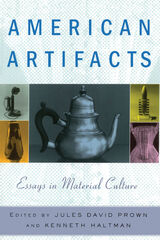
When defining culture, one must indeed take into account even the minutest of details. What of a lighter, for example, or a telephone? The essays in this new collection examine just that. The contributors pose not only a historical, pragmatic use for the items, but also delve into more imaginative aspects of what defines us as Americans. Both the lighter and the telephone are investigated, as well as how the lava lamp represents sixties counterculture and containment. The late nineteenth-century corset is discussed as an embodiment of womanhood, and an Amish quilt is used as an illustration of cultural continuity. These are just a few of the artifacts discussed. Scholars will be intrigued by the historical interpretations that contributors proposed concerning a teapot, card table, and locket; students will not only find merit in the expositions, but also by learning from the models how such interpretation can be carried out. This collection helps us understand that very thing that makes us who we are. Viewing these objects from both our past and our present, we can begin to define what it is to be American.

Lieu examines how live music variety shows and videos, beauty pageants, and Web sites created by and for Vietnamese Americans contributed to the shaping of their cultural identity. She shows how popular culture forms repositories for conflicting expectations of assimilation, cultural preservation, and invention, alongside gendered and classed dimensions of ethnic and diasporic identity.
The American Dream in Vietnamese demonstrates how the circulation of images manufactured by both Americans and Vietnamese immigrants serves to produce these immigrants’ paradoxical desires. Within these desires and their representations, Lieu finds the dramatization of the community’s struggle to define itself against the legacy of the refugee label, a classification that continues to pathologize their experiences in American society.
This collection of essays taken from a series of papers given at the Popular Culture division of the MLA convention in 1987 consists of a serious investigation of Popular Culture and in simplest terms investigates what people do and why they do it. Rolin's collection deals with the national identity of consumer countries and comes to grips with the fact that the consumption of foreign products could generate emoions of disjunction and displacement.
Cultural diplomacy—“winning hearts and minds” through positive portrayals of the American way of life—is a key element in U.S. foreign policy, although it often takes a backseat to displays of military might. Americans All provides an in-depth, fine-grained study of a particularly successful instance of cultural diplomacy—the Office of the Coordinator of Inter-American Affairs (CIAA), a government agency established by President Franklin D. Roosevelt in 1940 and headed by Nelson A. Rockefeller that worked to promote hemispheric solidarity and combat Axis infiltration and domination by bolstering inter-American cultural ties.
Darlene J. Sadlier explores how the CIAA used film, radio, the press, and various educational and high-art activities to convince people in the United States of the importance of good neighbor relations with Latin America, while also persuading Latin Americans that the United States recognized and appreciated the importance of our southern neighbors. She examines the CIAA’s working relationship with Hollywood’s Motion Picture Society of the Americas; its network and radio productions in North and South America; its sponsoring of Walt Disney, Orson Welles, John Ford, Gregg Toland, and many others who traveled between the United States and Latin America; and its close ties to the newly created Museum of Modern Art, which organized traveling art and photographic exhibits and produced hundreds of 16mm educational films for inter-American audiences; and its influence on the work of scores of artists, libraries, book publishers, and newspapers, as well as public schools, universities, and private organizations.
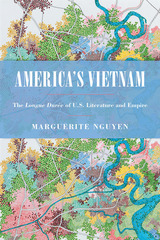
America’s Vietnam challenges the prevailing genealogy of Vietnam’s emergence in the American imagination—one that presupposes the Vietnam War as the starting point of meaningful Vietnamese-U.S. political and cultural involvements. Examining literature from as early as the 1820s, Marguerite Nguyen takes a comparative, long historical approach to interpreting constructions of Vietnam in American literature. She analyzes works in various genres published in English and Vietnamese by Monique Truong and Michael Herr as well as lesser-known writers such as John White, Harry Hervey, and Võ Phiến. The book’s cross-cultural prism spans Paris, Saigon, New York, and multiple oceans, and its departure from Cold War frames reveals rich cross-period connections.
America’s Vietnam recounts a mostly unexamined story of Southeast Asia’s lasting and varied influence on U.S. aesthetic and political concerns. Tracking Vietnam’s transition from an emergent nation in the nineteenth century to a French colony to a Vietnamese-American war zone, Nguyen demonstrates that how authors represent Vietnam is deeply entwined with the United States’ shifting role in the world. As America’s longstanding presence in Vietnam evolves, the literature it generates significantly revises our perceptions of war, race, and empire over time.
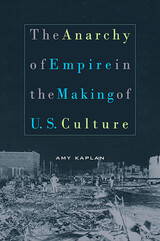
The United States has always imagined that its identity as a nation is insulated from violent interventions abroad, as if a line between domestic and foreign affairs could be neatly drawn. Yet this book argues that such a distinction, so obviously impracticable in our own global era, has been illusory at least since the war with Mexico in the mid-nineteenth century and the later wars against Spain, Cuba, and the Philippines. In this book, Amy Kaplan shows how U.S. imperialism--from "Manifest Destiny" to the "American Century"--has profoundly shaped key elements of American culture at home, and how the struggle for power over foreign peoples and places has disrupted the quest for domestic order.
The neatly ordered kitchen in Catherine Beecher's household manual may seem remote from the battlefields of Mexico in 1846, just as Mark Twain's Mississippi may seem distant from Honolulu in 1866, or W. E. B. Du Bois's reports of the East St. Louis Race Riot from the colonization of Africa in 1917. But, as this book reveals, such apparently disparate locations are cast into jarring proximity by imperial expansion. In literature, journalism, film, political speeches, and legal documents, Kaplan traces the undeniable connections between American efforts to quell anarchy abroad and the eruption of such anarchy at the heart of the empire.
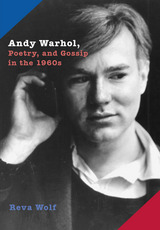
Wolf investigates the underground culture of poets, artists, and filmmakers who interacted with Warhol regularly. She claims that Warhol understood the literary imagination of his generation and that recognizing Warhol's literary activities is essential to understanding his art. Drawing on a wealth of unpublished material, including interviews, personal and public archives, tape recordings, documentary photographs, and works of art, Wolf offers dramatic evidence that Warhol's interactions with writers functioned like an extended conversation and details how this process impacted his work. This highly original and fascinating study gives us fresh insight into Warhol's art as practice and reformulates the myth that surrounds this popular American artist.
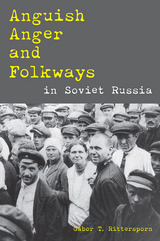
For Rittersporn, citizens’ conscious and unreflected actions at all levels of society defined a distinct Soviet universe. Terror, faith, disillusionment, evasion, folk customs, revolt, and confusion about regime goals and the individual’s relation to them were all integral to the development of that universe and the culture it engendered. Through a meticulous reading of primary documents and materials uncovered in numerous archives located in Russia and Germany, Rittersporn identifies three related responses—anguish, anger, and folkways—to the pressures people in all walks of life encountered, and shows how these responses in turn altered the way the system operated.
Rittersporn finds that the leadership generated widespread anguish by its inability to understand and correct the reasons for the system’s persistent political and economic dysfunctions. Rather than locate the sources of these problems in their own presuppositions and administrative methods, leaders attributed them to omnipresent conspiracy and wrecking, which they tried to extirpate through terror.
He shows how the unrelenting pursuit of enemies exacerbated systemic failures and contributed to administrative breakdowns and social dissatisfaction. Anger resulted as the populace reacted to the notable gap between the promise of a self-governing egalitarian society and the actual experience of daily existence under the heavy hand of the party-state. Those who had interiorized systemic values demanded a return to what they took for the original Bolshevik project, while others sought an outlet for their frustrations in destructive or self-destructive behavior.
In reaction to the system's pressure, citizens instinctively developed strategies of noncompliance and accommodation. A detailed examination of these folkways enables Rittersporn to identify and describe the mechanisms and spaces intuitively created by officials and ordinary citizens to evade the regime's dictates or to find a modus vivendi with them. Citizens and officials alike employed folkways to facilitate work, avoid tasks, advance careers, augment their incomes, display loyalty, enjoy life’s pleasures, and simply to survive. Through his research, Rittersporn uncovers a fascinating world consisting of peasant stratagems and subterfuges, underground financial institutions, falsified Supreme Court documents, and associations devoted to peculiar sexual practices.
As Rittersporn shows, popular and elite responses and tactics deepened the regime’s ineffectiveness and set its modernization project off down unintended paths. Trapped in a web of behavioral patterns and social representations that eluded the understanding of both conservatives and reformers, the Soviet system entered a cycle of self-defeat where leaders and led exercised less and less control over the course of events. In the end, a new system emerged that neither the establishment nor the rest of society could foresee.
Contributors. Takiyah Nur Amin, Patricia Hill Collins, Kelly Jo Fulkerson-Dikuua, Simone C. Drake, Dwan K. Henderson, Imani Kai Johnson, Ralina L. Joseph, David J. Leonard, Emily J. Lordi, Nina Angela Mercer, Mark Anthony Neal, H. Ike Okafor-Newsum, Kinohi Nishikawa, Eric Darnell Pritchard, Richard Schur, Tracy Sharpley-Whiting, Vincent Stephens, Lisa B. Thompson, Sheneese Thompson
Ingenious automatons which appeared to think on their own. Dubious mermaids and wild men who resisted classification. Elegant sleight-of-hand artists who routinely exposed the secrets of their trade. These were some of the playful forms of fraud which astonished, titillated, and even outraged nineteenth-century America's new middle class, producing some of the most remarkable urban spectacles of the century.
In The Arts of Deception, James W. Cook explores this distinctly modern mode of trickery designed to puzzle the eye and challenge the brain. Championed by the "Prince of Humbug," P. T. Barnum, these cultural puzzles confused the line between reality and illusion. Upsetting the normally strict boundaries of value, race, class, and truth, the spectacles offer a revealing look at the tastes, concerns, and prejudices of America's very first mass audiences. We are brought into the exhibition halls, theaters, galleries, and museums where imposture flourished, and into the minds of the curiosity-seekers who eagerly debated the wonders before their eyes. Cook creates an original portrait of a culture in which ambiguous objects, images, and acts on display helped define a new value system for the expanding middle class, as it confronted a complex and confusing world.
From every quarter we hear of a new global culture, postcolonial, hybrid, announcing the death of nationalism, the arrival of cosmopolitanism. But under the drumbeat attending this trend, Timothy Brennan detects another, altogether different sound. Polemical, passionate, certain to provoke, his book exposes the drama being played out under the guise of globalism. A bracing critique of the critical self-indulgence that calls itself cosmopolitanism, it also takes note of the many countervailing forces acting against globalism in its facile, homogenizing sense.
The developments Brennan traces occur in many places--editorial pages, policy journals, corporate training manuals, and, primarily, in the arts. His subject takes him from George Orwell to Julia Kristeva, from Subcommandante Marcos to Julio Cortázar, from Ernst Bloch to contemporary apologists for transnational capitalism and "liberation management," from "third world" writing to the Nobel Prize, with little of critical theory or cultural studies left untouched in between. Brennan gives extended treatment to two exemplary figures: the Trinidadian writer C. L. R. James, whose work suggests an alternative approach to cultural studies; and the Cuban writer Alejo Carpentier, whose appreciation of Cuban popular music cuts through the usual distinctions between mass and elite culture.
A critical call to arms, At Home in the World summons intellectuals and scholars to reinvigorate critical cultural studies. In stripping the false and heedless from the new cosmopolitanism, Brennan revitalizes the idea.
In a study that is at once an analysis of popular culture, a polemic on religious and secular rhetoric, and an ethics of representation, Edward Ingebretsen searches for answers. At Stake explores the social construction of monstrousness in public discourse-tabloids, television, magazines, sermons, and popular fiction. Ingebretsen argues that the monster serves a moralizing function in our culture, demonstrating how not to be in order to enforce prevailing standards of behavior and personal conduct. The boys who shot up Columbine High School, for instance, personify teen rebellion taken perilously too far. Susan Smith, the South Carolinian who murdered her two children, embodies the hazards of maternal neglect. Andrew Cunanan, who killed Gianni Versace, among others, characterizes the menace of predatory sexuality. In a biblical sense, monsters are not unlike omens from the gods. The dreadful consequences of their actions inspire fear in our hearts, and warn us by example.
Despite the growing interest in atomic culture and history, the body of relevant scholarship is relatively sparse. Atomic Culture opens new doors into the field by providing a substantive, engaging, and historically based consideration of the topic that will appeal to students and scholars of the Atomic Age as well as general readers.
Contributors include Michael A. Amundson, Mick Broderick, Peter Goin, John Hunner, Ferenc M. Szasz, A. Costandina Titus, Peter C. van Wyck, and Scott C. Zeman.
Blending cultural studies and the history of communication technology, Sterne follows modern sound technologies back through a historical labyrinth. Along the way, he encounters capitalists and inventors, musicians and philosophers, embalmers and grave robbers, doctors and patients, deaf children and their teachers, professionals and hobbyists, folklorists and tribal singers. The Audible Past tracks the connections between the history of sound and the defining features of modernity: from developments in medicine, physics, and philosophy to the tumultuous shifts of industrial capitalism, colonialism, urbanization, modern technology, and the rise of a new middle class.
A provocative history of sound, The Audible Past challenges theoretical commonplaces such as the philosophical privilege of the speaking subject, the visual bias in theories of modernity, and static descriptions of nature. It will interest those in cultural studies, media and communication studies, the new musicology, and the history of technology.
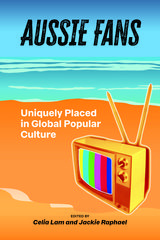
Australia holds a unique place in the global scheme of fandom. Much of the media consumed by Australian audiences originates from either the United States or the United Kingdom, yet several Australian productions have also attracted international fans in their own right. This first-ever academic study of Australian fandom explores the national popular culture scene through themes of localization and globalization.
The essays within reveal how Australian audiences often seek authentic imports and eagerly embrace different cultures, examining both Hollywood’s influence on Australian fandom and Australian fan reactions to non-Western content. By shining a spotlight on Australian fandom, this book not only provides an important case study for fan studies scholars, it also helps add nuance to a field whose current literature is predominantly U.S. and U.K. focused.Contributors: Kate Ames, Ahmet Atay, Jessica Carniel, Toija Cinque, Ian Dixon, Leigh Edmonds, Sharon Elkind, Jacqui Ewart, Lincoln Geraghty, Sarah Keith, Emerald L. King, Renee Middlemost
READERS
Browse our collection.
PUBLISHERS
See BiblioVault's publisher services.
STUDENT SERVICES
Files for college accessibility offices.
RECENTLY PUBLISHED





UChicago Accessibility Resources
home | accessibility | search | about | contact us
BiblioVault ® 2001 - 2024
The University of Chicago Press