
 A SCHOLARLY BOOK REPOSITORY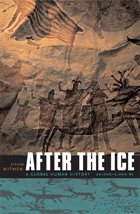
20,000 BC, the peak of the last ice age—the atmosphere is heavy with dust, deserts, and glaciers span vast regions, and people, if they survive at all, exist in small, mobile groups, facing the threat of extinction.
But these people live on the brink of seismic change—10,000 years of climate shifts culminating in abrupt global warming that will usher in a fundamentally changed human world. After the Ice is the story of this momentous period—one in which a seemingly minor alteration in temperature could presage anything from the spread of lush woodland to the coming of apocalyptic floods—and one in which we find the origins of civilization itself.
Drawing on the latest research in archaeology, human genetics, and environmental science, After the Ice takes the reader on a sweeping tour of 15,000 years of human history. Steven Mithen brings this world to life through the eyes of an imaginary modern traveler—John Lubbock, namesake of the great Victorian polymath and author of Prehistoric Times. With Lubbock, readers visit and observe communities and landscapes, experiencing prehistoric life—from aboriginal hunting parties in Tasmania, to the corralling of wild sheep in the central Sahara, to the efforts of the Guila Naquitz people in Oaxaca to combat drought with agricultural innovations.
Part history, part science, part time travel, After the Ice offers an evocative and uniquely compelling portrayal of diverse cultures, lives, and landscapes that laid the foundations of the modern world.
Volume I shows the surprising effects of the encounter with the imperial forces of commerce and Christianity—the distinctive ways the Hawaiian people culturally organized the experience, from the structure of the kingdom to the daily life of ordinary people. Volume II examines the material record of changes in local social organization, economy and production, population, and domestic settlement arrangements.
Volume 2, by Patrick V. Kirch, examines the material record of changes in local social organization, economy and production, population, and domestic settlement arrangements.

A leader in world archaeology argues that the archaeological record can and should be used to reconstruct the social structure of past societies, that archaeology ought, in effect, to become social archaeology. Colin Renfrew believes that the goal is to discover how and why cultures change through time and space. In the thirteen essays collected in this volume he examines various approaches to the problem.
Renfrew begins with specific demonstrations of what can be learned about social organization from the archaeological record. He looks for regularities in the spatial organization of societies and shows what they reveal about social dominance and power. He considers trade and exchange in the broadest context as human interaction. He relates chiefdoms and monument building to the mobilization of labor. Renfrew next moves to the dynamic issue of how cultures change. He examines the use of systems thinking in archaeology, proposing it as a way to avoid overly simple explanations, and demonstrates the power of new statistical techniques and computer programs.
In a final provocative section Renfrew suggests that sudden changes in the archaeological record—the "collapse" of civilizations—should not be seen as anomalies to be explained by the action of some outside agent but rather as predictable instances of "systems collapse."
By using the theoretical tension that has arisen between archaeology and cultural anthropology, the contributors illustrate the effectiveness of concepts and methods that have little, if any, overlap with those of the mother discipline.
Archaeological Concepts for the Study of the Cultural Past examines the degree to which the historically close relationship between archaeology and cultural anthropology may actually have inhibited archaeological investigations—particularly of those aspects of the cultural past that may be ethnographically undocumented or incompletely described.
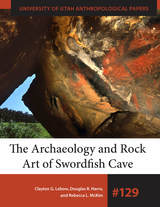
Swordfish Cave is a well-known rock art site located on Vandenberg Air Force Base in south central California. Named for the swordfish painted on its wall, the cave is a sacred Chumash site. It was under threat from various processes and required measures to conserve it. Nearly all of the cave’s interior was excavated to create a rock art viewing area. That effort revealed previously unknown rock art and made it possible to closely examine how early occupants used the space inside the cave. They identified three periods of human use, including an initial occupation around 3,550 years ago, an occupation about 660 years later, and a final Native American occupation that occurred much later, between A.D. 1787 and 1804. The discovery of tools used to make the pictographs linked the art to the two early occupations, pushing back the generally understood antiquity of rock art on California’s Central Coast by more than 2,000 years.
Two aspects make this study unusual: datable materials associated with rock art and complete removal of cave deposits. Well illustrated with photographs, maps, and drawings of both the art itself and the excavations and materials revealed therein, the book presents a rare opportunity to directly link archaeology and rock art and to examine the spatial organization of prehistoric human habitation.
Our early ancestors lived in small groups and worked actively to preserve social equality. As they created larger societies, however, inequality rose, and by 2500 bce truly egalitarian societies were on the wane. In The Creation of Inequality, Kent Flannery and Joyce Marcus demonstrate that this development was not simply the result of population increase, food surplus, or the accumulation of valuables. Instead, inequality resulted from conscious manipulation of the unique social logic that lies at the core of every human group.
A few societies allowed talented and ambitious individuals to rise in prestige while still preventing them from becoming a hereditary elite. But many others made high rank hereditary, by manipulating debts, genealogies, and sacred lore. At certain moments in history, intense competition among leaders of high rank gave rise to despotic kingdoms and empires in the Near East, Egypt, Africa, Mexico, Peru, and the Pacific.
Drawing on their vast knowledge of both living and prehistoric social groups, Flannery and Marcus describe the changes in logic that create larger and more hierarchical societies, and they argue persuasively that many kinds of inequality can be overcome by reversing these changes, rather than by violence.
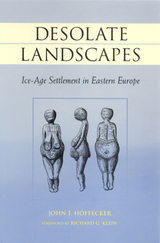
Ice-Age Eastern Europe was an inhospitable place, isolated from the moderating influence of oceans. Unlike Western Europe, which was settled over half a million years ago, Eastern Europe remained largely unoccupied until the appearance of the cold-adapted Neanderthals. When modern humans arrived from southern latitudes, they were anatomically less suited to colder climates, but successfully colonized Eastern Europe with the aid of innovative technologies that their Neanderthal predecessors lacked.
John F. Hoffecker provides an overview of Pleistocene or Ice-Age settlement in Eastern Europe with a heavy focus on the adaptations of Neanderthals and modern humans to this harsh environmental setting. Hoffecker argues that the Eastern European record reveals a stark contrast between Neanderthals and modern humans with respect to technology and social organization, both of which are tied to the development of language and the use of symbols. Desolate Landscapes will bring readers up to date with the rich archaeological record in this significant region and its contribution to our understanding of one of our most important events in human evolution - the rise of modern humans and the extinction of the Neanderthals.
The book is divided into seven chapters. The first discusses general anthropological principles and theories pertaining to human adaptation and development in cold environments. The second outlines the environmental conditions of the specific area under study in the book.
The next two chapters focus on Neanderthal finds in the area. The following two chapters discuss the replacement of the local Neanderthal population by the Cro-magnons, and the development of their way of life in the cold Loess Steppe environment. The final chapter summarizes the discussion and is followed by an extremely valuable and extensive bibliography, more than half of which consists of non-English (primarily Russian) sources.
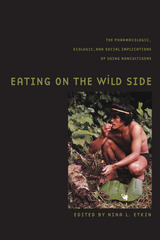
Drawing on nonhuman primate studies, evidence from prehistoric human populations, and field research among contemporary peoples practicing a range of subsistence strategies, the book focuses on the processes and human ecological implications of gathering, semidomestication, and cultivation of plants that are unfamiliar to most of us. Contributions by distinguished cultural and biological anthropologists, paleobotanists, primatologists, and ethnobiologists explore a number of issues such as the consumption of unpalatable and famine foods, the comparative assessment of aboriginal diets with those of colonists and later arrivals, and the apparent self-treatment by sick chimpanzees with leaves shown to be pharmacologically active.
Collectively, these articles offer a theoretical framework emphasizing the cultural evolutionary processes that transform plants from wild to domesticated—with many steps in between—while placing wild plant use within current discussions surrounding biodiversity and its conservation. Eating on the Wild Side makes an important contribution to our understanding of the links between biology and culture, describing the interface between diet, medicine, and natural products. By showing how various societies have successfully utilized wild plants, it underscores the growing concern for preserving genetic diversity as it reveals a fascinating chapter in the human ecology.
CONTENTS
1. The Cull of the Wild, Nina L. Etkin
2. Agriculture and the Acquisition of Medicinal Plant Knowledge, Michael H. Logan & Anna R. Dixon
3. Ambivalence to the Palatability Factors in Wild Food Plants, Timothy Johns
4. Wild Plants as Cultural Adaptations to Food Stress, Rebecca Huss-Ashmore & Susan L. Johnston
Physiologic Implications of Wild Plant Consumption
5. Pharmacologic Implications of "Wild" Plants in Hausa Diet, Nina L. Etkin & Paul J. Ross
6. Wild Plants as Food and Medicine in Polynesia, Paul Alan Cox
7. Characteristics of "Wild" Plant Foods Used by Indigenous Populations in Amazonia, Darna L. Dufour & Warren M. Wilson
8. The Health Significance of Wild Plants for the Siona and Secoya, William T. Vickers
9. North American Food and Drug Plants, Daniel M. Moerman
Wild Plants in Prehistory
10. Interpreting Wild Plant Foods in the Archaeological Record, Frances B. King
11. Coprolite Evidence for Prehistoric Foodstuffs, Condiments, and Medicines, Heather B. Trigg, Richard I. Ford, John G. Moore & Louise D. Jessop
Plants and Nonhuman Primates
12. Nonhuman Primate Self-Medication with Wild Plant Foods, Kenneth E. Glander
13. Wild Plant Use by Pregnant and Lactating Ringtail Lemurs, with Implications for Early Hominid Foraging, Michelle L. Sauther
Epilogue
14. In Search of Keystone Societies, Brien A. Meilleur
Gregg examines anthropological, ecological, and archaeological dimensions of prehistoric population interaction. She then examines the ecological requirements of both crops and livestock and, in order to identify an optimal farming strategy for Early Neolithic populations, develops a computer simulation to examine various resource mixes. Turning to the foragers, she models the effects that interaction with the farmers would have had on the foragers' subsistence-settlement system.
Supporting her model with archaeological, ecological, and ethnobotanical evidence from southwest Germany, Gregg shows that when foragers and farmers occur contemporaneously, both need to be considered before either can be understood. Theoretically and methodologically, her work builds upon earlier studies of optimal diet and foraging strategy, extending the model to food-producing populations. The applicability of Gregg's generalized model for both wild and domestic resources reaches far beyond her case study of Early Neolithic Germany; it will interest both Old and New World archaeologists.
Well-established and young scholars present new prehistoric data and describe new methods and theories to investigate ancient forager lifeways and document hunter-gatherer variability across the globe. The authors use relationships established by cross-cultural data as a background for examining the empirical patterns of prehistory. Covering underwater sites in North America, the peaks of the Andes, Asian rainforests, and beyond, chapters are data rich, methodologically sound, and theoretically nuanced, effectively exploring the latest evidence for behavioral diversity in the fundamental process of hunting and gathering.
Foraging in the Past establishes how hunter-gatherers can be considered archaeologically, extending beyond the reach of ethnographers and historians to argue that only through archaeological research can the full range of hunter-gatherer variability be documented. Presenting a comprehensive and integrated approach to forager diversity in the past, the volume will be of significance to both students and scholars working with or teaching about hunter-gatherers.
Contributors: Nicholas J. Conard, Raven Garvey, Keiko Kitagawa, John Krigbaum, Petra Krönneck, Steven Kuhn, Julia Lee-Thorp, Peter Mitchell, Katherine Moore, Susanne C. Münzel, Kurt Rademaker, Patrick Roberts, Britt Starkovich, Brian A. Stewart, Mary Stiner
Three main themes link these papers: the role of the environment in shaping prehistoric behavior, flexibility in foraging and farming adaptations, and diversity in settlement strategies. Contributors cover a range of topics including the varied ways hunter-gatherers adapted to arid environments, the transition from hunting and gathering to farming and the reasons for it, the variation in early farmers across the Southwest and Great Basin, and the differing paths followed as they developed settled villages.
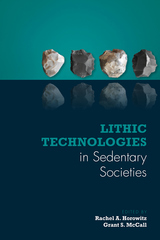
Lithic analysis focused on sedentary societies, especially in places like Mesoamerica, has previously been neglected mostly because of the high frequency of informal tools, but such bias limits the ways in which both lithic production and economic organization are investigated. Bringing the importance of studying such technologies to the fore and emphasizing the vital anthropological questions that lithics can answer, Lithic Technologies in Sedentary Societies is a valuable resource for scholars and students of lithic technology and sedentary, complex societies.
Contributors: Fumi Arakawa, Mary A. Davis, James Enloe, Dan Healan, Francesca Manclossi, Theodore Marks, Jayur Madhusudan Mehta, Jason S. R. Paling, Steve Rosen, John Whittaker

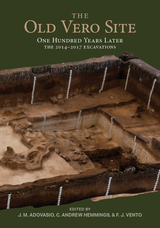
The Old Vero Site details the course of the recent re-excavations of the site while also summarizing the original excavations from a century ago. The volume lays out the sequence and results of the recent project, using new data to conclude that Sellards’s claims are not supported by the evidence. Adovasio, Hemmings, and Vento provide the data to settle the matter definitively: human remains at the site were intrusive from a later time horizon, as critics of the original work had vociferously argued.
The eight case studies in this book -- each a synthesis of available knowledge about the origins of agriculture in a specific region of the globe -- enable scholars in diverse disciplines to examine humanity's transition to agricultural societies. Contributors include: Gary W. Crawford, Robin W. Dennell, and Jack R. Harlan.
The domestication of the potato serves as the focus of Timothy Johns’s interdisciplinary study, which forges a bold synthesis of ethnobotany and chemical ecology. The Aymara of highland Bolivia have long used varieties of potato containing potentially toxic levels of glycoalkaloids, and Johns proposes that such plants can be eaten without harm owing to human genetic modification and cultural manipulation. Drawing on additional fieldwork in Africa, he considers the evolution of the human use of plants, the ways in which humans obtain foods from among the myriad poisonous and unpalatable plants in the environment, and the consequences of this history for understanding the basis of the human diet. A natural corollary to his investigation is the origin of medicine, since the properties of plants that make them unpalatable and toxic are the same properties that make them useful pharmacologically.
As our species has adapted to the use of plants, plants have become an essential part of our internal ecology. Recovering the ancient wisdom regarding our interaction with the environment preserves a fundamental part of our human heritage.
Originally published in hardcover as With Bitter Herbs They Shall Eat It: Chemical Ecology and the Origins of Human Diet and Medicine

This is the most comprehensive and up-to-date book on the topic. Intended for students and professionals, it describes the nature of paleonutrition studies, reviews the history of paleonutrition research, discusses methodological issues in the reconstruction of prehistoric diets, presents theoretical frameworks frequently used in paleonutrition research, and showcases examples in which paleonutritional analyses have been successfully conducted on prehistoric individuals, groups, and populations. It offers an integrative approach to understanding state-of-the-art anthropological dietary, health, and nutritional assessments. The most recent and innovative methods used to reconstruct prehistoric diets are discussed, along with the major ways in which paleonutrition data are recovered, analyzed, and interpreted.
Paleonutrition includes five contemporary case studies that provide useful models of how to conduct paleonutrition research. Topics range from ancient diets in medieval Nubia to children’s health in the prehistoric American Southwest to honey use by an ethnographic group of East African foragers. As well as providing interesting examples of applying paleonutrition techniques, these case studies illustrate the mutually beneficial linkages between ethnography and archaeology.
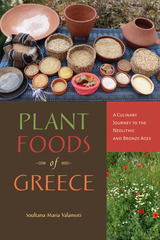
In Plant Foods of Greece, Greek archaeologist Soultana Maria Valamoti takes readers on a culinary journey, reconstructing the plant foods and culinary practices of Neolithic and Bronze Age Greece. For more than thirty years, she has been analyzing a large body of archaeobotanical data that was retrieved from nearly twenty sites in mainland Greece and the Greek islands, with an additional analysis of other sites as referenced by published colleagues. Plant foods were the main ingredients of daily meals in prehistoric Greece and most likely of special dishes prepared for feasts and rituals.
Valamoti’s approach allows an exploration of culinary variability through time. The thousands of charred seeds identified from occupation debris correspond to minuscule time capsules. She is able to document changes from the cooking of the first farmers to the sophisticated cuisines of the elites who inhabited palaces in the first cities of Europe in the south of Greece during the Late Bronze Age. Along the way, she explains the complex processes for the addition of new ingredients (such as millet and olives), condiments, sweet tastes, and complex recipes. Valamoti also addresses regional variability and diversity as well as detailing experimentation and research using occasional input from ancient written sources.
Comprehensive and synthetic coverage encompasses bread/cereals, pulses, oils, fruit and nuts, fermented brews, healing foods, cooking, and identity. In addition, Valamoti offers insight into engaging in public archaeology and provides recipes that incorporate ancient plant ingredients and connect prehistory to the present in a critical way. A definitive source for a range of food scientists and scholars, it will also appeal to foodies.
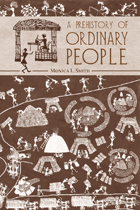
Even after the advent of “civilization” about 6,000 years ago, human culture has for the most part been created and maintained not by the actions of elites—as is commonly proclaimed by many archaeological theorists—but by the many thousands of daily actions carried out by average citizens.
With this book, Monica L. Smith examines how the archaeological record of ordinary objects—used by ordinary people—constitutes a manifestation of humankind’s cognitive and social development. A Prehistory of Ordinary People offers an impressive synthesis and accessible style that will appeal to archaeologists, cultural anthropologists, and others interested in the long history of human decision-making.
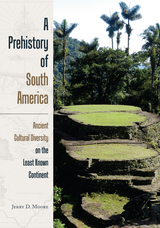
For more than 12,000 years, South American cultures ranged from mobile hunters and gatherers to rulers and residents of colossal cities. In the process, native South American societies made advancements in agriculture and economic systems and created great works of art—in pottery, textiles, precious metals, and stone—that still awe the modern eye. Organized in broad chronological periods, A Prehistory of South America explores these diverse human achievements, emphasizing the many adaptations of peoples from a continent-wide perspective. Moore examines the archaeologies of societies across South America, from the arid deserts of the Pacific coast and the frigid Andean highlands to the humid lowlands of the Amazon Basin and the fjords of Patagonia and beyond.
Illustrated in full color and suitable for an educated general reader interested in the Precolumbian peoples of South America, A Prehistory of South America is a long overdue addition to the literature on South American archaeology.
Early humans did not simply drift northward from their African origins as their abilities to cope with cooler climates evolved. The initial settlement of places like Europe and northern Asia, as well as the later movement into the Arctic and the Americas, actually occurred in relatively rapid bursts of expansion. A Prehistory of the North is the first full-length study to tell the complex story, spanning almost two million years, of how humans inhabited some of the coldest places on earth.
In an account rich with illustrations, John Hoffecker traces the history of anatomical adaptations, diet modifications, and technological developments, such as clothing and shelter, which allowed humans the continued ability to push the boundaries of their habitation. The book concludes by showing how in the last few thousand years, peoples living in the circumpolar zone—with the exception of western and central Siberia—developed a thriving maritime economy.
Written in nontechnical language, A Prehistory of the North provides compelling new insights and valuable information for professionals and students.
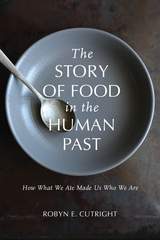
The Story of Food in the Human Past: How What We Ate Made Us Who We Are uses case studies from recent archaeological research to tell the story of food in human prehistory. Beginning with the earliest members of our genus, Robyn E. Cutright investigates the role of food in shaping who we are as humans during the emergence of modern Homo sapiens and through major transitions in human prehistory such as the development of agriculture and the emergence of complex societies.
This fascinating study begins with a discussion of how food shaped humans in evolutionary terms by examining what makes human eating unique, the use of fire to cook, and the origins of cuisine as culture and adaptation through the example of Neandertals. The second part of the book describes how cuisine was reshaped when humans domesticated plants and animals and examines how food expressed ancient social structures and identities such as gender, class, and ethnicity. Cutright shows how food took on special meaning in feasts and religious rituals and also pays attention to the daily preparation and consumption of food as central to human society.
Cutright synthesizes recent paleoanthropological and archaeological research on ancient diet and cuisine and complements her research on daily diet, culinary practice, and special-purpose mortuary and celebratory meals in the Andes with comparative case studies from around the world to offer readers a holistic view of what humans ate in the past and what that reveals about who we are.
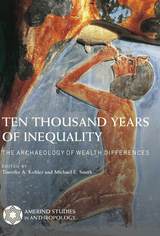
Ten Thousand Years of Inequality addresses these and other questions by presenting the first set of consistent quantitative measurements of ancient wealth inequality. The authors are archaeologists who have adapted the Gini index, a statistical measure of wealth distribution often used by economists to measure contemporary inequality, and applied it to house-size distributions over time and around the world. Clear descriptions of methods and assumptions serve as a model for other archaeologists and historians who want to document past patterns of wealth disparity.
The chapters cover a variety of ancient cases, including early hunter-gatherers, farmer villages, and agrarian states and empires. The final chapter synthesizes and compares the results. Among the new and notable outcomes, the authors report a systematic difference between higher levels of inequality in ancient Old World societies and lower levels in their New World counterparts.
For the first time, archaeology allows humanity’s deep past to provide an account of the early manifestations of wealth inequality around the world.
Contributors
Nicholas Ames
Alleen Betzenhauser
Amy Bogaard
Samuel Bowles
Meredith S. Chesson
Abhijit Dandekar
Timothy J. Dennehy
Robert D. Drennan
Laura J. Ellyson
Deniz Enverova
Ronald K. Faulseit
Gary M. Feinman
Mattia Fochesato
Thomas A. Foor
Vishwas D. Gogte
Timothy A. Kohler
Ian Kuijt
Chapurukha M. Kusimba
Mary-Margaret Murphy
Linda M. Nicholas
Rahul C. Oka
Matthew Pailes
Christian E. Peterson
Anna Marie Prentiss
Michael E. Smith
Elizabeth C. Stone
Amy Styring
Jade Whitlam
James Feathers, Gayle J. Fritz, Michael L. Galaty, S. Homes Hogue, H. Edwin Jackson, Jay K. Johnson, Carl P. Lipo, Hector Neff, Evan Peacock, Janet Rafferty, James H. Turner, John R. Underwood, Amy L. Young
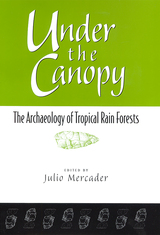
Did our ancestors live in tropical forests? Although we see the rainforest as a bountiful environment teeming with life forms, most anthropologists and archaeologists have long viewed these areas as too harsh for human occupation during the pre-agricultural stages of hominid development.
Under the Canopy turns conventional wisdom on its head by providing a well-documented, geographically diverse overview of Stone Age sites in the wet tropics. New research indicates that, as humanity and its precursors increased their geographical and ecological ranges, rainforests were settled at a much earlier period than had previously been thought.
Featuring the work of leading scholars from Australia, Brazil, Canada, Colombia, France, Malaysia, Panama, Spain, and the United States, Under the Canopy creates a new niche in paleolithic studies: the archaeology of tropical rainforests. This book provides the first synthesis of archaeological research in early foraging sites across the rainforest zone, and indicates that tropical forests could harbor important clues to human evolution, origins of modern behavior, cultural diversity, and human impact on tropical ecosystems.
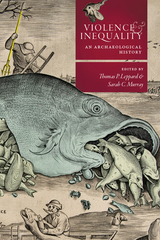
The assumption that violence and its threat buttressed elite social control is now challenged from various perspectives. This volume incorporates new models of the relationship between violence and social inequalities into the archaeology of social complexity, building more complicated and nuanced understandings of how different modes of social violence can militate different types of social constitution. Contributions from a variety of methodological angles—such as the bioarchaeology of health and trauma and radiogenic isotope studies and the aesthetics of violence—use a comparative perspective, drawing on data from the Southwestern US, Bronze Age China, early dynastic Egypt, ancient Mesopotamia, Roman Britain, and the Andes.
Violence and Inequality offers an original and deep history of violence and inequality. Understanding the long-term intersection of violence and inequality and how they support or erode one another is of intrinsic importance, making this work significant to the study of archaeology, economic history, and collective action.
READERS
Browse our collection.
PUBLISHERS
See BiblioVault's publisher services.
STUDENT SERVICES
Files for college accessibility offices.
RECENTLY PUBLISHED






UChicago Accessibility Resources
home | accessibility | search | about | contact us
BiblioVault ® 2001 - 2024
The University of Chicago Press