
 A SCHOLARLY BOOK REPOSITORY
6 start with U start with U
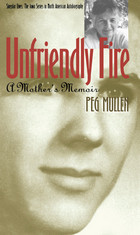
In 1968 Michael Mullen, a graduate student in biochemistry, was drafted; in 1969 he was sent to Vietnam as a foot soldier in Colonel Norman Schwarzkopf's Charlie Company; and in 1970 he was killed by the same “friendly fire” that destroyed thousands of other lives during the Vietnam War.
Back home on the family farm in Iowa, his parents made his death a crusade to awaken all parents to the insanity of war. C. D. B. Bryan's Friendly Fire and the TV movie of the same name documented these dramatic years, and Peg Mullen became a national symbol of grassroots activism. Now Peg Mullen shifts from symbol to reality as she tells her story in print for the first time.
Outspoken, fearless, and wickedly humorous, Peg Mullen had a duel mission in the years after Michael's death: to penetrate the lies and evasions behind the artillery misfire that killed her oldest son and to publicize the senseless horror of the Vietnam War. Unfriendly Fire draws on the many letters sent to the Mullens after Michael's death; in addition, Michael's own bitter, weary letters home are reprinted. In these the voices of parents, brothers, sisters, comrades, teachers, and Michael himself echo Peg Mullen's call for truth and peace.
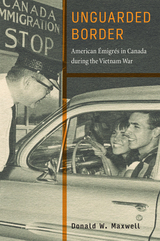
Unguarded Border tells their stories and, in the process, describes a migrant experience that does not fit the usual paradigms. Rather than treating these American refugees as unwelcome foreigners, Canada embraced them, refusing to extradite draft resisters or military deserters and not even requiring passports for the border crossing. And instead of forming close-knit migrant communities, most of these émigrés sought to integrate themselves within Canadian society.
Historian Donald W. Maxwell explores how these Americans in exile forged cosmopolitan identities, coming to regard themselves as global citizens, a status complicated by the Canadian government’s attempts to claim them and the U.S. government’s eventual efforts to reclaim them. Unguarded Border offers a new perspective on a movement that permanently changed perceptions of compulsory military service, migration, and national identity.
Brooks analyzes a two-pronged problem in consumer boycott campaigns against labor abuse in the garment industry. First, how are we to understand the political necessities of local protest such as the right to unionize against the emphasis placed on consumer boycotts? Second, what and whose agency is privileged or obscured within the symbolic economies and the politics of information deployed by these campaigns? Tying both of these questions together is a commitment to seeing globalization as embedded in the everyday realities of the local.
Drawing attention to the race, class, and gender assumptions central to powerful consumer boycotts, Brooks reveals how these movements unintentionally reinforce the global economic forces they denounce.
Ethel C. Brooks is assistant professor of women’s and gender studies and sociology at Rutgers University.
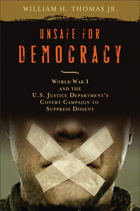
“Recommended for all libraries.”—Frederic Krome, Library Journal
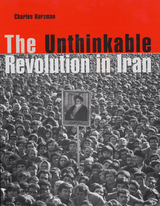
The shah of Iran, Mohammad Reza Pahlavi, would remain on the throne for the foreseeable future: This was the firm conclusion of a top-secret CIA analysis issued in October 1978. One hundred days later the shah--despite his massive military, fearsome security police, and superpower support was overthrown by a popular and largely peaceful revolution. But the CIA was not alone in its myopia, as Charles Kurzman reveals in this penetrating work; Iranians themselves, except for a tiny minority, considered a revolution inconceivable until it actually occurred. Revisiting the circumstances surrounding the fall of the shah, Kurzman offers rare insight into the nature and evolution of the Iranian revolution and into the ultimate unpredictability of protest movements in general.
As one Iranian recalls, "The future was up in the air." Through interviews and eyewitness accounts, declassified security documents and underground pamphlets, Kurzman documents the overwhelming sense of confusion that gripped pre-revolutionary Iran, and that characterizes major protest movements. His book provides a striking picture of the chaotic conditions under which Iranians acted, participating in protest only when they expected others to do so too, the process approaching critical mass in unforeseen and unforeseeable ways. Only when large numbers of Iranians began to "think the unthinkable," in the words of the U.S. ambassador, did revolutionary expectations become a self-fulfilling prophecy. A corrective to 20-20 hindsight, this book reveals shortcomings of analyses that make the Iranian revolution or any major protest movement seem inevitable in retrospect.
READERS
Browse our collection.
PUBLISHERS
See BiblioVault's publisher services.
STUDENT SERVICES
Files for college accessibility offices.
RECENTLY PUBLISHED


UChicago Accessibility Resources
home | accessibility | search | about | contact us
BiblioVault ® 2001 - 2024
The University of Chicago Press