
 A SCHOLARLY BOOK REPOSITORY
Despite being heralded as the answer to racial conflict in the post–civil rights United States, the principal political effect of multiracialism is neither a challenge to the ideology of white supremacy nor a defiance of sexual racism. More accurately, Jared Sexton argues in Amalgamation Schemes, multiculturalism displaces both by evoking long-standing tenets of antiblackness and prescriptions for normative sexuality.
In this timely and penetrating analysis, Sexton pursues a critique of contemporary multiracialism, from the splintered political initiatives of the multiracial movement to the academic field of multiracial studies, to the melodramatic media declarations about “the browning of America.” He contests the rationales of colorblindness and multiracial exceptionalism and the promotion of a repackaged family values platform in order to demonstrate that the true target of multiracialism is the singularity of blackness as a social identity, a political organizing principle, and an object of desire. From this vantage, Sexton interrogates the trivialization of sexual violence under chattel slavery and the convoluted relationship between racial and sexual politics in the new multiracial consciousness.
An original and challenging intervention, Amalgamation Schemes posits that multiracialism stems from the conservative and reactionary forces determined to undo the gains of the modern civil rights movement and dismantle radical black and feminist politics.
Jared Sexton is assistant professor of African American studies and film and media studies at the University of California, Irvine.
This powerful and disturbing book clearly links persistent poverty among blacks in the United States to the unparalleled degree of deliberate segregation they experience in American cities.
American Apartheid shows how the black ghetto was created by whites during the first half of the twentieth century in order to isolate growing urban black populations. It goes on to show that, despite the Fair Housing Act of 1968, segregation is perpetuated today through an interlocking set of individual actions, institutional practices, and governmental policies. In some urban areas the degree of black segregation is so intense and occurs in so many dimensions simultaneously that it amounts to "hypersegregation."
The authors demonstrate that this systematic segregation of African Americans leads inexorably to the creation of underclass communities during periods of economic downturn. Under conditions of extreme segregation, any increase in the overall rate of black poverty yields a marked increase in the geographic concentration of indigence and the deterioration of social and economic conditions in black communities. As ghetto residents adapt to this increasingly harsh environment under a climate of racial isolation, they evolve attitudes, behaviors, and practices that further marginalize their neighborhoods and undermine their chances of success in mainstream American society. This book is a sober challenge to those who argue that race is of declining significance in the United States today.
Covered in this expanded edition are the post–9/11 efforts of the CRS to prevent violence and hate crimes against those perceived as Middle Eastern. Also discussed are the cross-border Elián González custody dispute and the notable tragedies of Trayvon Martin and Michael Brown, both of which brought police interaction with communities of color back into the spotlight.
The 2009 Matthew Shepard and James Byrd, Jr., Hate Crimes Prevention Act substantially altered CRS’s jurisdiction, which began to focus on gender, gender identity, religion, sexual orientation, and disability in addition to race, color, and national origin. Lum’s documentation of this expanded jurisdiction provides insight into the progression of civil rights. The ongoing story of the Community Relations Service is a crucial component of the national narrative on civil rights and conflict resolution. This new edition will be highly informative to all readers and useful to professionals and academics in the civil rights, dispute resolution, domestic and international peacemaking, and law enforcement-community relations fields.
Speaking wisely and provocatively about the political economy of race, Glenn C. Loury has become one of our most prominent black intellectuals—and, because of his challenges to the orthodoxies of both left and right, one of the most controversial. A major statement of a position developed over the past decade, this book both epitomizes and explains Loury’s understanding of the depressed conditions of so much of black society today—and the origins, consequences, and implications for the future of these conditions.
Using an economist’s approach, Loury describes a vicious cycle of tainted social information that has resulted in a self-replicating pattern of racial stereotypes that rationalize and sustain discrimination. His analysis shows how the restrictions placed on black development by stereotypical and stigmatizing racial thinking deny a whole segment of the population the possibility of self-actualization that American society reveres—something that many contend would be undermined by remedies such as affirmative action. On the contrary, this book persuasively argues that the promise of fairness and individual freedom and dignity will remain unfulfilled without some forms of intervention based on race.
Brilliant in its account of how racial classifications are created and perpetuated, and how they resonate through the social, psychological, spiritual, and economic life of the nation, this compelling and passionate book gives us a new way of seeing—and, perhaps, seeing beyond—the damning categorization of race in America.
“Lifts and transforms the discourse on ‘race’ and racial justice to an entirely new level.”
—Orlando Patterson
“Intellectually rigorous and deeply thoughtful…An incisive, erudite book by a major thinker.”
—Gerald Early, New York Times Book Review
Why are black Americans so persistently confined to the margins of society? And why do they fail across so many metrics—wages, unemployment, income levels, test scores, incarceration rates, health outcomes? Known for his influential work on the economics of racial inequality and for pioneering the link between racism and social capital, Glenn Loury is not afraid of piercing orthodoxies and coming to controversial conclusions. In this now classic work, reconsidered in light of recent events, he describes how a vicious cycle of tainted social information helped create the racial stereotypes that rationalize and sustain discrimination, and suggests how this might be changed.
Brilliant in its account of how racial classifications are created and perpetuated, and how they resonate through the social, psychological, spiritual, and economic life of the nation, this compelling and passionate book gives us a new way of seeing—and of seeing beyond—the damning categorization of race.
“Paints in chilling detail the distance between Martin Luther King’s dream and the reality of present-day America.”
—Anthony Walton, Harper’s
“Loury provides an original and highly persuasive account of how the American racial hierarchy is sustained and reproduced over time. And he then demands that we begin the deep structural reforms that will be necessary to stop its continued reproduction.”
—Michael Walzer
“He is a genuine maverick thinker…The Anatomy of Racial Inequality both epitomizes and explains Loury’s understanding of the depressed conditions of so much of black society today.”
—New York Times Magazine

Miriam Cooke, Professor, Duke University
"An impassioned and deeply compelling look at the origins, evolution, manifestations and implications of anti-Arab racism today. ... A tour-de-force."
Lisa Suhair Majaj, co-editor, Etel Adnan: Critical Reflections on the Arab-American Writer and Artist and Intersections: Gender, Nation, and Community in Arab Women¹s Novels
"Salaita dives head-first into the heart of racism in America and uses his personal experiences to help readers understand the mechanics of racism as it applies to Arabs, Muslims and people who look Middle Eastern in the post-Sept. 11 world."
Ray Hanania, journalist and filmmaker, author of I¹m Glad I Look Like a Terrorist: Growing up Arab in America and Arabs of Chicagoland
"A highly recommended read, not only for students of Middle East history, but for the average American who wants to know how we have become so intimately and yet so bitterly entwined with the people of the Middle East. ... Salaita has thoughtfully articulated a very regretful era of unabashed racism in American history."
Ramzy Baroud, editor, Palestine Chronicle and author of Searching Jenin
Today is a difficult time to be both Arab and American. Since 9/11 there has been a lot of criticism of America¹s involvement in the middle east. Yet there has been little analysis of how America treats citizens of Arab or middle eastern origin within its own borders.
Steven Salaita explores the reality of Anti-Arab racism in America. He blends personal narrative, theory and polemics to show how this deep-rooted racism affects everything from legislation to cultural life, shining a light on the consequences of Anti-Arab racism both at home and abroad.
Uniquely, the book shows how ingrained racist attitudes can be found within the progressive movements on the political left, as well as the right. Salaita argues that, under the guise of patriotism, Anti-Arab racism fuels support for policies such as the Patriot Act.
Salaita breaks down the façade of Anti-Arab racism with an insightful analysis, arguing for the urgency of a commitment to openness and inclusion in today¹s political climate.
Steven Salaita is Assistant Professor of English at the University of Wisconsin -Whitewater. He writes frequently about Arab America and the Arab World.
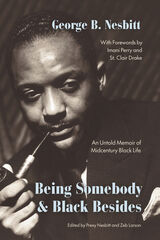
The late Chicagoan George Nesbitt could perhaps best be described as an ordinary man with an extraordinary gift for storytelling. In his newly uncovered memoir—written fifty years ago, yet never published—he chronicles in vivid and captivating detail the story of how his upwardly mobile Midwestern Black family lived through the tumultuous twentieth century.
Spanning three generations, Nesbitt’s tale starts in 1906 with the Great Migration and ends with the Freedom Struggle in the 1960s. He describes his parents’ journey out of the South, his struggle against racist military authorities in World War II, the promise and peril of Cold War America, the educational and professional accomplishments he strove for and achieved, the lost faith in integration, and, despite every hardship, the unwavering commitment by three generations of Black Americans to fight for a better world. Through all of it—with his sharp insights, nuance, and often humor—we see a family striving to lift themselves up in a country that is working to hold them down.
Nesbitt’s memoir includes two insightful forewords: one by John Gibbs St. Clair Drake (1911–90), a pioneer in the study of African American life, the other a contemporary rumination by noted Black studies scholar Imani Perry. A rare first-person, long-form narrative about Black life in the twentieth century, Being Somebody and Black Besides is a remarkable literary-historical time capsule that will delight modern readers.
A compelling insider's account of the fight for educational desegregation, from one of its most dedicated and outspoken heroes. A new afterword explains the author's controversial belief that the moment for litigating educational equality has passed, clear-sightedly critiquing his own courtroom strategies and the courts' responses, before closing with an assessment of the economic and social changes that he feels have already moved us "beyond busing."
"An extraordinarily informative and thoughtful book describing the process of bringing Brown [v. Board of Education] North and the impact this process had upon national attitudes toward desegregation."
--Drew S. Days III, Yale Law Journal
"An original analysis of a tough subject. A must-read for all who care about opportunity for all our children."
--Donna E. Shalala, President, University of Miami
"Paul Dimond remains a passionate and caring voice for inner-city students, whether in his advocacy of school desegregation, school choice plans, or school finance reform. He illuminates these issues as one who participated in the major education cases and as a perceptive scholar."
--Mark Yudof, Chancellor, The University of Texas System
"A must-read for anyone who wants to understand America's continued failure to give inner-city children a quality education or to do something about it!"
--Sheryll Cashin, Author of The Failures of Integration: How Race and Class Are Undermining the American Dream
"Dimond is particularly good at relating his slice of legal history to the broader developments of the 1970s, and his occasional remarks about trial tactics are amusing and instructive. Dimond's
honesty about both his successes and failures makes his book required reading for civil rights lawyers."
--Lawrence T. Gresser, Michigan Law Review
"A fascinating first-hand account of 1970s northern school desegregation decisions."
--Neal E. Devins, American Bar Foundation Research Journal
"Dimond reminds the liberal reader of the promise that lies in the empowerment of ordinary families to choose their own schools."
--John E. Coons, Professor of Law, Emeritus, University of California, Berkeley
Paul R. Dimond is counsel to Miller, Canfield, Paddock and Stone, Michigan's largest law firm; chairman of McKinley, a national commercial real estate investment and management firm; and chairman or member of the board of trustees of numerous education, community, and civic organizations. He spent four years as President Clinton's Special Assistant for Economic Policy.
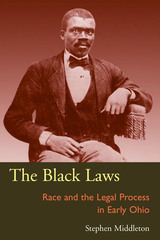
The fastest-growing state in antebellum America and the destination of whites from the North and the South, Ohio also became the destination for thousands of southern blacks, both free and runaway. Thus, nineteenth-century Ohio became a legal battleground for two powerful and far-reaching impulses in the history of race and law in America. One was the use of state power to further racial discrimination, and the other was the thirst of African Americans and their white allies for equality under the law for all Americans.
Written in a clear and compelling style, this pathbreaking study will be required reading for historians, legal scholars, students, and those interested in the struggle for civil rights in America.
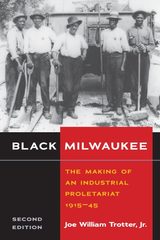
Other historians have tended to treat black urban life mainly in relation to the ghetto experience, but in Black Milwaukee, Joe William Trotter Jr. offers a new perspective that complements yet also goes well beyond that approach. The blacks in Black Milwaukee were not only ghetto dwellers; they were also industrial workers. The process by which they achieved this status is the subject of Trotter’s ground-breaking study.
This second edition features a new preface and acknowledgments, an essay on African American urban history since 1985, a prologue on the antebellum and Civil War roots of Milwaukee’s black community, and an epilogue on the post-World War II years and the impact of deindustrialization, all by the author. Brief essays by four of Trotter’s colleagues--William P. Jones, Earl Lewis, Alison Isenberg, and Kimberly L. Phillips--assess the impact of the original Black Milwaukee on the study of African American urban history over the past twenty years.
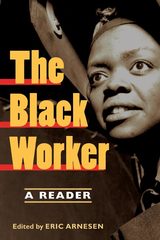
Uniting the latest scholarship on race, labor, and civil rights, The Black Worker aims to establish the richness of the African American working-class experience, and the indisputable role of black workers in shaping the politics and history of labor and race in the United States.
To capture the complexity of African Americans’ experiences in the workplace, this reader examines workers engaged in a wide array of jobs, including sharecropping, coal mining, domestic service, longshoring, automobile manufacturing, tobacco processing, railroading, prostitution, lumbering, and municipal employment. The essays’ subjects include black migration, strikebreaking, black conservatism, gender, and the multiple forms of employment discrimination in the South and North. Other contributions deal explicitly with state policy and black workers during the transition from slavery to freedom, World Wars I and II, and the 1960s.
The variety of challenges made by these workers, both quiet and overt, served as clear reminders to the supporters of white supremacy that, despite their best efforts through violence, fraud, and the law, as long as they insisted on racial inequality, the “race question” would never be fully resolved.
Contributors: Eric Arnesen, Beth Tompkins Bates, Cynthia M. Blair, Tera W. Hunter, William Powell Jones, Brian Kelly, Robert Korstad, Nelson Lichtenstein, Joseph A. McCartin, Steven A. Reich, Leslie A. Schwalm, Nan Elizabeth Woodruff
For much of the twentieth century Brazil enjoyed an international reputation as a “racial democracy,” but that image has been largely undermined in recent decades by research suggesting the existence of widespread racial inequality. George Reid Andrews provides the first thoroughly documented history of Brazilian racial inequality from the abolition of slavery in 1888 up to the late 1980s, showing how economic, social, and political changes in Brazil during the last one hundred years have shaped race relations.
No laws of segregation or apartheid exist in Brazil, but by looking carefully at government policies, data on employment, mainstream and Afro-Brazilian newspapers, and a variety of other sources, Andrews traces pervasive discrimination against Afro-Brazilians over time. He draws his evidence from the country’s largest and most economically important state, São Paulo, showing how race relations were affected by its transformation from a plantation-based economy to South America’s most urban, industrialized society.
The book focuses first on Afro-Brazilians' entry into the agricultural and urban working class after the abolition of slavery. This transition, Andrews argues, was seriously hampered by state policies giving the many European immigrants of the period preference over black workers. As immigration declined and these policies were overturned in the late 1920s, black laborers began to be employed in agriculture and industry on nearly equal terms with whites. Andrews then surveys efforts of blacks to move into the middle class during the 1900s. He finds that informal racial solidarity among middle-class whites has tended to exclude Afro-Brazilians from the professions and other white-collar jobs.
Andrews traces how discrimination throughout the century led Afro-Brazilians to mobilize, first through the antislavery movement of the 1880s, then through such social and political organizations of the 1920s and 1930s as the Brazilian Black Front, and finally through the anti-racism movements of the 1970s and 1980s. These recent movements have provoked much debate among Brazilians over their national image as a racial democracy. It remains to be seen, Andrews concludes, whether that debate will result in increased opportunities for black Brazilians.
Winner of the 1993 Arthur P. Whitaker Prize
Throughout much of the twentieth century, Mexican Americans experienced segregation in many areas of public life, but the structure of Mexican segregation differed from the strict racial divides of the Jim Crow South. Factors such as higher socioeconomic status, lighter skin color, and Anglo cultural fluency allowed some Mexican Americans to gain limited access to the Anglo power structure. Paradoxically, however, this partial assimilation made full desegregation more difficult for the rest of the Mexican American community, which continued to experience informal segregation long after federal and state laws officially ended the practice.
In this historical ethnography, Jennifer R. Nájera offers a layered rendering and analysis of Mexican segregation in a South Texas community in the first half of the twentieth century. Using oral histories and local archives, she brings to life Mexican origin peoples’ experiences with segregation. Through their stories and supporting documentary evidence, Nájera shows how the ambiguous racial status of Mexican origin people allowed some of them to be exceptions to the rule of Anglo racial dominance. She demonstrates that while such exceptionality might suggest the permeability of the color line, in fact the selective and limited incorporation of Mexicans into Anglo society actually reinforced segregation by creating an illusion that the community had been integrated and no further changes were needed. Nájera also reveals how the actions of everyday people ultimately challenged racial/racist ideologies and created meaningful spaces for Mexicans in spheres historically dominated by Anglos.
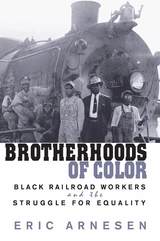
From the time the first tracks were laid in the early nineteenth century, the railroad has occupied a crucial place in America's historical imagination. Now, for the first time, Eric Arnesen gives us an untold piece of that vital American institution—the story of African Americans on the railroad.
African Americans have been a part of the railroad from its inception, but today they are largely remembered as Pullman porters and track layers. The real history is far richer, a tale of endless struggle, perseverance, and partial victory. In a sweeping narrative, Arnesen re-creates the heroic efforts by black locomotive firemen, brakemen, porters, dining car waiters, and redcaps to fight a pervasive system of racism and job discrimination fostered by their employers, white co-workers, and the unions that legally represented them even while barring them from membership.
Decades before the rise of the modern civil rights movement in the mid-1950s, black railroaders forged their own brand of civil rights activism, organizing their own associations, challenging white trade unions, and pursuing legal redress through state and federal courts. In recapturing black railroaders' voices, aspirations, and challenges, Arnesen helps to recast the history of black protest and American labor in the twentieth century.
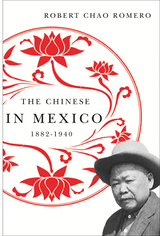
An estimated 60,000 Chinese entered Mexico during the late nineteenth and early twentieth centuries, constituting Mexico's second-largest foreign ethnic community at the time. The Chinese in Mexico provides a social history of Chinese immigration to and settlement in Mexico in the context of the global Chinese diaspora of the era.
Robert Romero argues that Chinese immigrants turned to Mexico as a new land of economic opportunity after the passage of the U.S. Chinese Exclusion Act of 1882. As a consequence of this legislation, Romero claims, Chinese immigrants journeyed to Mexico in order to gain illicit entry into the United States and in search of employment opportunities within Mexico's developing economy. Romero details the development, after 1882, of the "Chinese transnational commercial orbit," a network encompassing China, Latin America, Canada, and the Caribbean, shaped and traveled by entrepreneurial Chinese pursuing commercial opportunities in human smuggling, labor contracting, wholesale merchandising, and small-scale trade.
Romero's study is based on a wide array of Mexican and U.S. archival sources. It draws from such quantitative and qualitative sources as oral histories, census records, consular reports, INS interviews, and legal documents. Two sources, used for the first time in this kind of study, provide a comprehensive sociological and historical window into the lives of Chinese immigrants in Mexico during these years: the Chinese Exclusion Act case files of the U.S. Immigration and Naturalization Service and the 1930 Mexican municipal census manuscripts. From these documents, Romero crafts a vividly personal and compelling story of individual lives caught in an extensive network of early transnationalism.
Winner of the Ray Allen Billington Prize
Winner of the Ellis W. Hawley Prize
Winner of the Sally and Ken Owens Award
Winner of the Vincent P. DeSantis Book Prize
Winner of the Caroline Bancroft History Prize
“A powerful argument about racial violence that could not be more timely.”
—Richard White
“A riveting, beautifully written account…that foregrounds Chinese voices and experiences. A timely and important contribution to our understanding of immigration and the border.”
—Karl Jacoby, author of Shadows at Dawn
In 1885, following the massacre of Chinese miners in Wyoming Territory, communities throughout California and the Pacific Northwest harassed, assaulted, and expelled thousands of Chinese immigrants. The Chinese Must Go shows how American immigration policies incited this violence, and how this gave rise to the concept of the “alien” in America.
Our story begins in the 1850s, before federal border control established strict divisions between citizens and aliens—and long before Congress passed the Chinese Restriction Act, the nation’s first attempt to bar immigration based on race and class. When this unprecedented experiment failed to slow Chinese migration, armed vigilante groups took the matter into their own hands. Fearing the spread of mob violence, policymakers redoubled their efforts to seal the borders, overhauling immigration law and transforming America’s relationship with China in the process. By tracing the idea of the alien back to this violent era, Lew-Williams offers a troubling new origin story of today’s racialized border.
“The Chinese Must Go shows how a country that was moving, in a piecemeal and halting fashion, toward an expansion of citizenship for formerly enslaved people and Native Americans, came to deny other classes of people the right to naturalize altogether…The stories of racist violence and community shunning are brutal to read.”
—Rebecca Onion, Slate


From 1840 to 1960 the profoundest claim of Americans who fought the institution of segregation was that the government had no business sorting citizens by the color of their skin. During these years the moral and political attractiveness of the antidiscrimination principle made it the ultimate legal objective of the American civil rights movement. Yet, in the contemporary debate over the politics and constitutional law of race, the vital theme of antidiscrimination has been largely suppressed. Thus a strong line of argument laying down one theoretical basis for the constitutional protection of civil rights has been lost.
Andrew Kull provides us with the previously unwritten history of the color-blind idea. From the arguments of Wendell Phillips and the Garrisonian abolitionists, through the framing of the Fourteenth Amendment and Justice Harlan's famous dissent in Plessy, civil rights advocates have consistently attempted to locate the antidiscrimination principle in the Constitution. The real alternative, embraced by the Supreme Court in 1896, was a constitutional guarantee of reasonable classification. The government, it said, had the power to classify persons by race so long as it acted reasonably; the judiciary would decide what was reasonable.
In our own time, in Brown v. Board of Education and the decisions that followed, the Court nearly avowed the rule of color blindness that civil rights lawyers continued to assert; instead, it veered off for political and tactical reasons, deciding racial cases without stating constitutional principle. The impoverishment of the antidiscrimination theme in the Court's decision prefigured the affirmative action shift in the civil rights agenda. The social upheaval of the 1960s put the color-blind Constitution out of reach for a quartercentury or more; but for the hard choices still to be made in racial policy, the colorblind tradition of civil rights retains both historical and practical significance.
This edition contains treatment of all the topics covered in the first edition, along with provocative and probing questions for discussion and detailed suggestions for additional reading, all of which set this fine volume apart from the field. In addition, this edition contains five new substantive units -- crime, critical race practice, intergroup tensions and alliances, gay/lesbian issues, and transcending the black-white binary paradigm of race. In each of these areas, groundbreaking scholarship by the movement's founding figures as well as the brightest new stars provides immediate entre to current trends and developments in critical civil rights thought.
The contributions, from a stellar roster of established and emerging scholars, address new topics, such as intersectionality and black men on the "down low." Essays also confront much-discussed issues of discrimination, workplace dynamics, affirmative action, and sexual politics. Also new to this volume are updated section introductions, author notes, questions for discussion, and reading lists for each unit. The volume also covers the spread of the movement to other disciplines such as education.
Offering a comprehensive and stimulating snapshot of current race jurisprudence and thought, this new edition of Critical Race Theory is essential for those interested in law, the multiculturalism movement, political science, education, and critical thought.
But what is Critical Race Theory? How did it develop? Where does it stand now? Where should it go in the future? In this volume, thirty-one CRT scholars present their views on the ideas and methods of CRT, its role in academia and in the culture at large, and its past, present, and future.
Critical race theorists assert that both the procedures and the substance of American law are structured to maintain white privilege. The neutrality and objectivity of the law are not just unattainable ideals; they are harmful actions that obscure the law's role in protecting white supremacy. This notion—so obvious to some, so unthinkable to others—has stimulated and divided legal thinking in this country and, increasingly, abroad.
The essays in Crossroads, Directions, and a New Critical Race Theory—all original—address this notion in a variety of helpful and exciting ways. They use analysis, personal experience, historical narrative, and many other techniques to explain the importance of looking critically at how race permeates our national consciousness.
Ellen Berrey digs deep into those questions in The Enigma of Diversity. Drawing on six years of fieldwork and historical sources dating back to the 1950s and making extensive use of three case studies from widely varying arenas—housing redevelopment in Chicago’s Rogers Park neighborhood, affirmative action in the University of Michigan’s admissions program, and the workings of the human resources department at a Fortune 500 company—Berrey explores the complicated, contradictory, and even troubling meanings and uses of diversity as it is invoked by different groups for different, often symbolic ends. In each case, diversity affirms inclusiveness, especially in the most coveted jobs and colleges, yet it resists fundamental change in the practices and cultures that are the foundation of social inequality. Berrey shows how this has led racial progress itself to be reimagined, transformed from a legal fight for fundamental rights to a celebration of the competitive advantages afforded by cultural differences.
Powerfully argued and surprising in its conclusions, The Enigma of Diversity reveals the true cost of the public embrace of diversity: the taming of demands for racial justice.
An intensely personal, and philosophical, account of why white America’s racial unconscious is not so unconscious
An Essay for Ezra is a critique of terror that begins but by no means ends with the presidency of Donald J. Trump. A father addresses his son and a boy shares his observations in a dynamic dialogistic exchange that is a commentary of and for its time, taking the measure of racial terror and of white supremacy both in our moment and as a historical phenomenon.
Framed through the experiences of the author’s biracial son, An Essay for Ezra is intensely personal while also powerfully universal. Drawing on the social and political thought of James Baldwin and Martin Luther King, Grant Farred examines the temptation and the perils of essentialism and the need to discriminate—to engage the black mind as much as the black body. With that dialectic as his starting point, Farred engages the ideas of Jameson, Barthes, Derrida, Adorno, Kant, and other thinkers to derive an ethics of being in our time of social peril. His antiessentialist racial analysis is salient, especially when he deploys Dave Chappelle as a counterpoint to Baldwin—and Chappelle’s brilliant comic philosophic voice jabs at both racial and gender identity.
Standing apart for its willingness to explore terror in all its ambivalence, this theoretical reflection on racism, knowledge, ethics, and being in our neofascist present brings to bear the full weight of philosophical inquiry and popular cultural critique on black life in the United States.

European Others offers an interrogation into the position of racialized communities in the European Union, arguing that the tension between a growing nonwhite, non-Christian population and insistent essentialist definitions of Europeanness produces new forms of identity and activism. Moving beyond disciplinary and national limits, Fatima El-Tayeb explores structures of resistance, tracing a Europeanization from below in which migrant and minority communities challenge the ideology of racelessness that places them firmly outside the community of citizens.
Using a notable variety of sources, from drag performances to feminist Muslim activism and Euro hip-hop, El-Tayeb draws on the largely ignored archive of vernacular culture central to resistance by minority youths to the exclusionary nationalism that casts them as threatening outcasts. At the same time, she reveals the continued effect of Europe’s suppressed colonial history on the representation of Muslim minorities as the illiberal Other of progressive Europe.
Presenting a sharp analysis of the challenges facing a united Europe seen by many as a model for twenty-first-century postnational societies, El-Tayeb combines theoretical influences from both sides of the Atlantic to lay bare how Europeans of color are integral to the continent’s past, present, and, inevitably, its future.
What does it mean to be an Asian-American in the United States today? Are Asian-Americans considered "honorary whites" or forever thought of as "foreigners?"
Mia Tuan examines the salience and meaning of ethnicity for later generation Chinese- and Japanese-Americans, and asks how their concepts of ethnicity differ from that of white ethnic Americans. She interviewed 95 middle-class Chinese and Japanese Californians and analyzes the importance of ethnic identities and the concept of becoming a "real" American for both Asian and white ethnics. She asks her subjects about their early memories and experiences with Chinese/Japanese culture; current lifestyle and emerging cultural practices; experiences with racism and discrimination; and attitudes toward current Asian immigration.
From Chinese Exclusion to Guantánamo Bay also provides a larger context for understanding problems resulting from the exercise of plenary power. Saito explains how the rights of individuals and groups deemed Other by virtue of race or national origin have been violated under both the Constitution and international law. The differing treatment of José Padilla and John Walker Lindh - both Americans accused of terrorism - provides an example of such disparate approaches. Such executive actions and their sanction by Congress and the judiciary, Saito argues, undermine not just individual rights but the very foundations of our national security - democracy and the rule of law.
From Chinese Exclusion to Guantánamo Bay will interest readers concerned with the historical background of constitutional protection in times of war and peace and will provide fascinating new material for scholars, teachers, and students of law, history, and ethnic studies
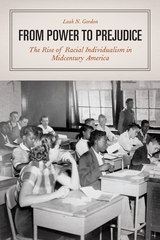
To answer these questions, From Power to Prejudice examines American academia—both black and white—in the 1940s and ’50s. Gordon presents four competing visions of “the race problem” and documents how an individualistic paradigm, which presented white attitudes as the source of racial injustice, gained traction. A number of factors, Gordon shows, explain racial individualism’s postwar influence: individuals were easier to measure than social forces; psychology was well funded; studying political economy was difficult amid McCarthyism; and individualism was useful in legal attacks on segregation. Highlighting vigorous midcentury debate over the meanings of racial justice and equality, From Power to Prejudice reveals how one particular vision of social justice won out among many contenders.
The contributors illuminate the breadth of developments that led to Brown, from the parallel struggles for social justice among African Americans in the South and Mexican, Asian, and Native Americans in the West during the late nineteenth century to the political and legal strategies implemented by the National Association for the Advancement of Colored People (naacp) in the twentieth century. Describing the decision’s impact on local communities, essayists explore the conflict among African Americans over the implementation of Brown in Atlanta’s public schools as well as understandings of the ruling and its relevance among Puerto Rican migrants in New York City. Assessing the legacy of Brown today, contributors analyze its influence on contemporary law, African American thought, and educational opportunities for minority children.
Contributors
Tomiko Brown-Nagin
Davison M. Douglas
Raymond Gavins
Laurie B. Green
Christina Greene
Blair L. M. Kelley
Michael J. Klarman
Peter F. Lau
Madeleine E. Lopez
Waldo E. Martin Jr.
Vicki L. Ruiz
Christopher Schmidt
Larissa M. Smith
Patricia Sullivan
Kara Miles Turner
Mark V. Tushnet

Historian Gilad Margalit eloquently fills a tragic gap in the historical record with this sweeping examination of the plight of Gypsies in Germany before, during, and since the era of the Third Reich.
Germany and Its Gypsies reveals the painful record of the official treatment of the German Gypsies, a people whose future, in the shadow of Auschwitz, remains uncertain. Margalit follows the story from the heightened racism of the nineteenth century to the National Socialist genocidal policies that resulted in the murder of most German Gypsies, from the shifting attitudes in the two Germanys in 1945 through reunification and up to the present day.
Drawing upon a rich variety of sources, Margalit considers the pivotal historic events, legal arguments, debates, and changing attitudes toward the status of the German Gypsies and shines a vitally important light upon the issue of ethnic groups and their victimization in society. The result is a powerful and unforgettable testament.
The intellectual history of race, one of the most pernicious and enduring ideas in American history, has remained segregated into studies of black or white traditions. Bruce Dain breaks this separatist pattern with an integrated account of the emergence of modern racial consciousness in the United States from the Revolution to the Civil War. A Hideous Monster of the Mind reveals that ideas on race crossed racial boundaries in a process that produced not only well-known theories of biological racism but also countertheories that were early expressions of cultural relativism, cultural pluralism, and latter-day Afrocentrism.
From 1800 to 1830 in particular, race took on a new reality as Americans, black and white, reacted to postrevolutionary disillusionment, the events of the Haitian Revolution, the rise of cotton culture, and the entrenchment of slavery. Dain examines not only major white figures like Thomas Jefferson and Samuel Stanhope Smith, but also the first self-consciously "black" African-American writers. These various thinkers transformed late-eighteenth-century European environmentalist "natural history" into race theories that combined culture and biology and set the terms for later controversies over slavery and abolition. In those debates, the ethnology of Samuel George Morton and Josiah Nott intertwined conceptually with important writing by black authors who have been largely forgotten, like Hosea Easton and James McCune Smith. Scientific racism and the idea of races as cultural constructions were thus interrelated aspects of the same effort to explain human differences.
In retrieving neglected African-American thinkers, reestablishing the European intellectual background to American racial theory, and demonstrating the deep confusion "race" caused for thinkers black and white, A Hideous Monster of the Mind offers an engaging and enlightening new perspective on modern American racial thought.
Winner, Massachusetts Book Award
A Book of the Year pick from Kirkus, BuzzFeed, and Literary Hub
“The essays in this collection are restless, brilliant and short.…The brevity suits not just Walker’s style but his worldview, too.…Keeping things quick gives him the freedom to move; he can alight on a truth without pinning it into place.” —Jennifer Szalai, the New York Times
For the black community, Jerald Walker asserts in How to Make a Slave, “anger is often a prelude to a joke, as there is broad understanding that the triumph over this destructive emotion lay in finding its punchline.” It is on the knife’s edge between fury and farce that the essays in this exquisite collection balance. Whether confronting the medical profession’s racial biases, considering the complicated legacy of Michael Jackson, paying homage to his writing mentor James Alan McPherson, or attempting to break free of personal and societal stereotypes, Walker elegantly blends personal revelation and cultural critique. The result is a bracing and often humorous examination by one of America’s most acclaimed essayists of what it is to grow, parent, write, and exist as a black American male. Walker refuses to lull his readers; instead his missives urge them to do better as they consider, through his eyes, how to be a good citizen, how to be a good father, how to live, and how to love.

“I regularly decide to quit talking to white people about racism,” writes Joof. Such discussions often feel unproductive, the occasional spark of hope coming at enormous personal cost. But not talking about it is impossible, a betrayal of self. The book is a self-examination as well as societal indictment. It is an open challenge to readers, to hear her as she talks about it, all the time.

Inconvenient Strangers: Transnational Subjects and the Politics of Citizenship draws attention to how intersecting networks of power—particularly race and ethnicity, gender, and social class—marginalize transnational subjects who find themselves outside a dominant citizenship that privileges familiarity and socioeconomic and racial superiority. In this study of how neoliberal ideas limit citizenship for marginalized populations in Hong Kong, Shui-yin Sharon Yam examines how three transnational groups—mainland Chinese maternal tourists, Southeast Asian migrant domestic workers, and South Asian permanent residents—engage with the existing citizenry and gain recognition through circulating personal narratives.
Coupling transnational feminist studies with research on emotions, Yam analyzes court cases, interviews, social media discourse, and the personal narratives of Hong Kong’s marginalized groups to develop the concept of deliberative empathy—critical empathy that prompts an audience to consider the structural sources of another’s suffering while deliberating one’s own complicity in it. Yam argues that storytelling and familial narratives can promote deliberative empathy among the audience as both a political and ethical response—carrying the affective power to jolt the dominant citizenry out of their usual xenophobic attitudes and ultimately prompt them to critically consider the human conditions they share with the marginalized and move them toward more ethical coalitions.
Winner, Humanities Book Prize, Mexico Section of the Latin American Studies Association, 2018
Many scholars believe that the modern concentration camp was born during the Cuban war for independence when Spanish authorities ordered civilians living in rural areas to report to the nearest city with a garrison of Spanish troops. But the practice of spatial concentration—gathering people and things in specific ways, at specific places, and for specific purposes—has a history in Latin America that reaches back to the conquest. In this paradigm-setting book, Daniel Nemser argues that concentration projects, often tied to urbanization, laid an enduring, material groundwork, or infrastructure, for the emergence and consolidation of new forms of racial identity and theories of race.
Infrastructures of Race traces the use of concentration as a technique for colonial governance by examining four case studies from Mexico under Spanish rule: centralized towns, disciplinary institutions, segregated neighborhoods, and general collections. Nemser shows how the colonial state used concentration in its attempts to build a new spatial and social order, and he explains why the technique flourished in the colonies. Although the designs for concentration were sometimes contested and short-lived, Nemser demonstrates that they provided a material foundation for ongoing processes of racialization. This finding, which challenges conventional histories of race and mestizaje (racial mixing), promises to deepen our understanding of the way race emerges from spatial politics and techniques of population management.
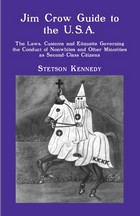
Jim Crow Guide documents the system of legally imposed American apartheid that prevailed during what Stetson Kennedy calls "the long century from Emancipation to the Overcoming." The mock guidebook covers every area of activity where the tentacles of Jim Crow reached. From the texts of state statutes, municipal ordinances, federal regulations, and judicial rulings, Kennedy exhumes the legalistic skeleton of Jim Crow in a work of permanent value for scholars and of exceptional appeal for general readers.
“[A] learned and thoughtful portrayal of the history of race relations in America…authoritative and highly readable…[An] impressive work.”
—Randall Kennedy, The Nation
“This comprehensive history…reminds us that the fight for justice requires our constant vigilance.”
—Ibram X. Kendi
“Remarkable for the breadth and depth of its historical and legal analysis…makes an invaluable contribution to our understanding of the US Supreme Court’s role in America’s difficult racial history.”
—Tomiko Brown-Nagin, author of Civil Rights Queen: Constance Baker Motley and the Struggle for Equality
From the Cherokee Trail of Tears to Brown v. Board of Education to the dismantling of the Voting Rights Act, Orville Vernon Burton and Armand Derfner shine a powerful light on the Supreme Court’s race record—uplifting, distressing, and even disgraceful. Justice Deferred is the first book that comprehensively charts the Supreme Court’s race jurisprudence, detailing the development of legal and constitutional doctrine, the justices’ reasoning, and the impact of individual rulings.
In addressing such issues as the changing interpretations of the Reconstruction amendments, Japanese internment in World War II, the exclusion of Mexican Americans from juries, and affirmative action, the authors bring doctrine to life by introducing the people and events at the heart of the story of race in the United States. Much of the fragility of civil rights in America is due to the Supreme Court, but as this sweeping history reminds us, the justices still have the power to make good on the country’s promise of equal rights for all.
Beginning with Chief Justice John Marshall’s foundational opinions in the early nineteenth century and continuing today in the judgments of the Rehnquist Court, Williams shows how undeniably racist language and precedent are still used in Indian law to justify the denial of important rights of property, self-government, and cultural survival to Indians. Building on the insights of Malcolm X, Thurgood Marshall, and Frantz Fanon, Williams argues that racist language has been employed by the courts to legalize a uniquely American form of racial dictatorship over Indian tribes by the U.S. government.
Williams concludes with a revolutionary proposal for reimagining the rights of American Indians in international law, as well as strategies for compelling the current Supreme Court to confront the racist origins of Indian law and for challenging bigoted ways of talking, thinking, and writing about American Indians.
Robert A. Williams Jr. is professor of law and American Indian studies at the James E. Rogers College of Law, University of Arizona. A member of the Lumbee Indian Tribe, he is author of The American Indian in Western Legal Thought: The Discourses of Conquest and coauthor of Federal Indian Law.
The Brotherhood of Sleeping Car Porters (BSCP) was the first national trade union for African Americans. Standard BSCP histories focus on the men who built the union. Yet the union's Ladies' Auxiliary played an essential role in shaping public debates over black manhood and unionization, setting political agendas for the black community, and crafting effective strategies to win racial and economic justice.
Melinda Chateauvert explores the history of the Ladies' Auxiliary and the wives, daughters, and sisters of Pullman porters who made up its membership and used the union to claim respectability and citizenship. As she shows, the Auxiliary actively educated other women and children about the labor movement, staged consumer protests, and organized local and national civil rights campaigns ranging from the 1941 March on Washington to school integration to the Montgomery Bus Boycott. Chateauvert also sheds light on the plight of Pullman maids, who—relegated to the Auxiliary—found their problems as working women neglected in favor of the rhetoric of racial solidarity.

Jack Santino's interviews with retired porters provide extensive firsthand accounts of their work, the job inequities they faced, the formation of the Brotherhood of Sleeping Car Porters, and the aborted Pullman porter strike of 1928. Through the testimony of ran-and-file workers as well as key figures such as E. D. Nixon, the porter who initiated the Montgomery bus boycott and helped launch the career of Martin Luther King, Jr. and C.L. Dellums, the only surviving founding member of the BSCP, Miles of Smiles, Years of Struggle illuminates the Pullman porters' struggle for dignity.
World War II shaped the United States in profound ways, and this new book--the first in the Legacies of War series--explores one of the most significant changes it fostered: a dramatic increase in ethnic and religious tolerance. A Nation Forged in War is the first full-length study of how large-scale mobilization during the Second World War helped to dissolve long-standing differences among white soldiers of widely divergent backgrounds.
Never before or since have so many Americans served in the armed forces at one time: more than 15 million donned uniforms in the period from 1941 to 1945. Thomas Bruscino explores how these soldiers' shared experiences--enduring basic training, living far from home, engaging in combat--transformed their views of other ethnic groups and religious traditions. He further examines how specific military policies and practices worked to counteract old prejudices, and he makes a persuasive case that throwing together men of different regions, ethnicities, religions, and classes not only fostered a greater sense of tolerance but also forged a new American identity. When soldiers returned home after the war with these new attitudes, they helped reorder what it meant to be white in America.
Using the presidential campaigns of Al Smith in 1928 and John F. Kennedy in 1960 as bookend events, Bruscino notes a key change in religious bias. Smith's defeat came at the end of a campaign rife with anti-Catholic sentiment; Kennedy's victory some three decades later proved that such religious bigotry was no longer an insurmountable obstacle. Despite such advances, Bruscino notes that the growing broad-mindedness produced by the war had limits: it did not extend to African Americans, whose own struggle for equality would dramatically mark the postwar decades.
Extensively documented, A Nation Forged in War is one of the few books on the social and cultural impact of the World War II years. Scholars and students of military, ethnic, social, and religious history will be fascinated by this groundbreaking new volume.
Examining the intersection of Palestine solidarity movements and antiracist activism in France from the 1970s to the present
For the pasty fifty years, the Palestinian question has served as a rallying cry in the struggle for migrant rights in postcolonial France, from the immigrant labor associations of the 1970s and Beur movements of the 1980s to the militant decolonial groups of the 2000s. In Natives against Nativism, Olivia C. Harrison explores the intersection of anticolonial solidarity and antiracist activism from the 1970s to the present.
Natives against Nativism analyzes a wide range of texts—novels, memoirs, plays, films, and militant archives—that mobilize the twin figures of the Palestinian and the American Indian in a crossed critique of Eurocolonial modernity. Harrison argues that anticolonial solidarity with Palestinians and Indigenous Americans has been instrumental in developing a sophisticated critique of racism across imperial formations—in this case, France, the United States, and Israel.
Serving as the first relational study of antiracism in France, Natives against Nativism observes how claims to indigeneity have been deployed in multiple directions, both in the ongoing struggle for migrant rights and racial justice, and in white nativist claims in France today.

Michela Marcatelli unravels this inequality paradox through an ethnography of water in a rural region of the country. The Waterberg Plateau is a space where agriculture, conservation, and extraction coexist and intersect. Marcatelli examines the connections between neoliberalism, race, and the environment by showing that racialized property relations around water and land are still recognized and protected by the post-apartheid state to sustain green growth. She argues that the government depicts growth as the best, if not only, solution to inequality. While white landowners maintain access to water, however, black ex-farmworkers are dispossessed once again of this essential-to-life resource.
If the promise of growth serves to normalize inequality, the call to save nature has the effect of naturalizing it even further.
Katrina was not just a hurricane. The death, destruction, and misery wreaked on New Orleans cannot be blamed on nature’s fury alone. This volume of essays locates the root causes of the 2005 disaster squarely in neoliberal restructuring and examines how pro-market reforms are reshaping life, politics, economy, and the built environment in New Orleans.
The authors—a diverse group writing from the disciplines of sociology, political science, education, public policy, and media theory—argue that human agency and public policy choices were more at fault for the devastation and mass suffering experienced along the Gulf Coast than were sheer forces of nature. The harrowing images of flattened homes, citizens stranded on rooftops, patients dying in makeshift hospitals, and dead bodies floating in floodwaters exposed the moral and political contradictions of neoliberalism—the ideological rejection of the planner state and the active promotion of a new order of market rule.
Many of these essays offer critical insights on the saga of postdisaster reconstruction. Challenging triumphal narratives of civic resiliency and universal recovery, the authors bring to the fore pitched battles over labor rights, gender and racial justice, gentrification, the development of city master plans, the demolition of public housing, policing, the privatization of public schools, and roiling tensions between tourism-based economic growth and neighborhood interests. The contributors also expand and deepen more conventional critiques of “disaster capitalism” to consider how the corporate mobilization of philanthropy and public good will are remaking New Orleans in profound and pernicious ways.
Contributors: Barbara L. Allen, Virginia Polytechnic U; John Arena, CUNY College of Staten Island; Adrienne Dixson, Ohio State U; Eric Ishiwata, Colorado State U; Avis Jones-Deweever, National Council of Negro Women; Chad Lavin, Virginia Polytechnic U; Paul Passavant, Hobart and William Smith Colleges; Linda Robertson, Hobart and William Smith Colleges; Chris Russill, Carleton U; Kanchana Ruwanpura, U of Southampton; Nicole Trujillo-Pagán, Wayne State U; Geoffrey Whitehall, Acadia U.
Palestinians in Israel considers a key issue ignored by the official 'peace process' and most mainstream commentators: that of the growing Palestinian minority within Israel itself.
What the Israeli right-wing calls 'the demographic problem' Ben White identifies as 'the democratic problem' which goes to the heart of the conflict. Israel defines itself not as a state of its citizens, but as a Jewish state, despite the substantial and increasing Palestinian population. White demonstrates how the consistent emphasis on privileging one ethno-religious group over another cannot be seen as compatible with democratic values and that, unless addressed, will undermine any attempts to find a lasting peace.
Individual case studies are used to complement this deeply informed study into the great, unspoken contradiction of Israeli democracy. It is a pioneering contribution which will spark debate amongst all those concerned with a resolution to the Israel/Palestine conflict.
In Pervasive Prejudice? Ian Ayres confronts these questions and more. In a series of important studies he finds overwhelming evidence that in a variety of markets—retail car sales, bail bonding, kidney transplantation, and FCC licensing—blacks and females are consistently at a disadvantage. For example, when Ayres sent out agents of different races and genders posing as potential buyers to more than 200 car dealerships in Chicago, he found that dealers regularly charged blacks and women more than they charged white men. Other tests revealed that it is commonly more difficult for blacks than whites to receive a kidney transplant because of federal regulations. Moreover, Ayres found that minority male defendants are frequently required to post higher bail bonds than their Caucasian counterparts.
Traditional economic theory predicts that free markets should drive out discrimination, but Ayres's startling findings challenge that position. Along with empirical research, Ayres offers game—theoretic and other economic methodologies to show how prejudice can enter the bargaining process even when participants are supposedly acting as rational economic agents. He also responds to critics of his previously published studies included here. These studies suggest that race and gender discrimination is neither a thing of the past nor merely limited to the handful of markets that have been the traditional focus of civil rights laws.
Although they are in many respects very different countries, India and the United States are important countries in which to study the implementation of ascriptive policies like affirmative action, according to Parikh. They are both large, heterogeneous societies with democratic political systems in which previously excluded groups were granted benefits by the majorities that had historically oppressed them. Parikh argues that these policies were the product of democratic politics--which required political parties to mobilize existing groups as voters--and the ethnically heterogeneous nature of Indian and U.S. society--where ethnic markers are particularly salient sources of identification as groups. Affirmative action in both countries was introduced because it could be used to solidify and expand electoral coalitions by giving benefits to defined minority groups, according to Parikh. As the policy became better known, it became more disliked by non-targeted groups, and it was no longer an appeal which was cost free for politicians.
This book will be of interest to social scientists concerned with race and ethnic relations and with the comparative study of political and social systems.
Sunita Parikh is Assistant Professor of Political Science, Columbia University.
This intriguing volume focuses on a “racially friendly” suburban charter school called Excellence Academy, highlighting the ways that students and teachers think about race and act out racial identity. Modica finds that even in an environment where students of all racial backgrounds work and play together harmoniously, race affects the daily experiences of students and teachers in profound but unexamined ways. Some teachers, she notes, feared that talking about race in the classroom would open them to charges of racism, so they avoided the topic. And rather than generate honest and constructive conversations about race, student friendships opened the door for insensitive racial comments by whites, resentment and silence by blacks, and racially biased administrative practices. In the end, the school’s friendly environment did not promote—and may have hindered—serious discussion of race and racial inequity.
The desire to ignore race in favor of a “colorblind society,” Modica writes, has become an entrenched part of American culture. But as Race Among Friends shows, when race becomes a taboo subject, it has serious ramifications for students and teachers of all ethnic origins.
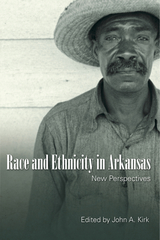
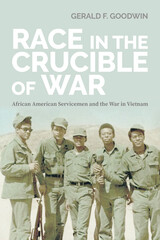
When African American servicemen went to fight in the Vietnam War, discrimination and prejudice followed them. Even in a faraway country, their military experiences were shaped by the racial environment of the home front. War is often viewed as a crucible that can transform society, but American race relations proved remarkably durable.
In Race in the Crucible of War, Gerald F. Goodwin examines how Black servicemen experienced and interpreted racial issues during their time in Vietnam. Drawing on more than fifty new oral interviews and significant archival research, as well as newspapers, periodicals, memoirs, and documentaries, Goodwin reveals that for many African Americans the front line and the home front were two sides of the same coin. Serving during the same period as the civil rights movement and the race riots in Chicago, Detroit, and dozens of other American cities, these men increasingly connected the racism that they encountered in the barracks and on the battlefields with the tensions and violence that were simmering back home.
Black and white Americans have occupied separate spaces since the days of "the big house" and "the quarters." But the segregation and racialization of American society was not a natural phenomenon that "just happened." The decisions, enacted into laws, that kept the races apart and restricted blacks to less desirable places sprang from legal reasoning which argued that segregated spaces were right, reasonable, and preferable to other arrangements.
In this book, David Delaney explores the historical intersections of race, place, and the law. Drawing on court cases spanning more than a century, he examines the moves and countermoves of attorneys and judges who participated in the geopolitics of slavery and emancipation; in the development of Jim Crow segregation, which effectively created apartheid laws in many cities; and in debates over the "doctrine of changed conditions," which challenged the legality of restrictive covenants and private contracts designed to exclude people of color from white neighborhoods. This historical investigation yields new insights into the patterns of segregation that persist in American society today.
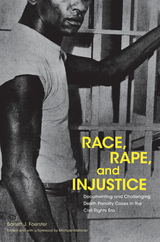
The 1965 project was organized by the NAACP Legal Defense and Educational Fund, which sought to prove statistically whether capital punishment in southern rape cases had been applied discriminatorily over the previous twenty years. If the research showed that a disproportionate number of African Americans convicted of raping white women had received the death penalty regardless of nonracial variables (such as the degree of violence used), then capital punishment in the South could be abolished as a clear violation of the Fourteenth Amendment’s Equal Protection Clause.
Targeting eleven states, the students cautiously made their way past suspicious court clerks, lawyers, and judges to secure the necessary data from dusty courthouse records. Trying to attract as little attention as possible, they managed—amazingly—to complete their task without suffering serious harm at the hands of white supremacists. Their findings then went to University of Pennsylvania criminologist Marvin Wolfgang, who compiled and analyzed the data for use in court challenges to death penalty convictions. The result was powerful evidence that thousands of jurors had voted on racial grounds in rape cases.
This book not only tells Barrett Foerster’s and his teammates story but also examines how the findings were used before a U.S. Supreme Court resistant to numbers-based arguments and reluctant to admit that the justice system had executed hundreds of men because of their skin color. Most important, it illuminates the role the project played in the landmark Furman v. Georgia case, which led to a four-year cessation of capital punishment and a more limited set of death laws aimed at constraining racial discrimination.
A Virginia native who studied law at UCLA, BARRETT J. FOERSTER (1942–2010) was a judge in the Superior Court in Imperial County, California.
MICHAEL MELTSNER is the George J. and Kathleen Waters Matthews Distinguished Professor of Law at Northeastern University. During the 1960s, he was first assistant counsel to the NAACP Legal Defense Fund. His books include The Making of a Civil Rights Lawyer and Cruel and Unusual: The Supreme Court and Capital Punishment.
Challenging what we think we know about race and politics, LaFleur Stephens-Dougan argues that candidates across the racial and political spectrum engage in “racial distancing,” or using negative racial appeals to communicate to racially moderate and conservative whites—the overwhelming majority of whites—that they will not disrupt the racial status quo. Race to the Bottom closely examines empirical data on racialized partisan stereotypes to show that engaging in racial distancing through political platforms that do not address the needs of nonwhite communities and charged rhetoric that targets African Americans, immigrants, and others can be politically advantageous. Racialized communication persists as a well-worn campaign strategy because it has real electoral value for both white and black politicians seeking to broaden their coalitions. Stephens-Dougan reveals that claims of racial progress have been overstated as our politicians are incentivized to employ racial prejudices at the expense of the most marginalized in our society.
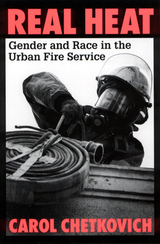
In the struggle over affirmative action, no employment setting has seen more friction than urban fire departments. Thirty years of legal and political efforts have opened the doors of this historically white male preserve, but men of color have yet to consolidate their gains, and women's progress has been even more tenuous. In this unique and compelling account of affirmative action at the "street level," Carol Chetkovich explores the ways in which this program has succeeded and failed.
Chetkovich follows the men and women of the Oakland Fire Department Class 1-91 through their academy training and eighteen-month probation. In vivid and sometimes surprising narratives, newcomers tell of their first battle with a full-fledged fire, their reactions to hazing rituals, and their relationships with veterans and fellow trainees. Real Heat explores how the process of becoming a firefighter interacts with the dimensions of race and gender to support some and discourage others. The book examines the implications of these interactions for public policy and social justice.

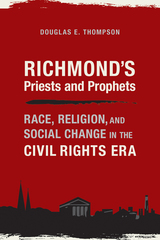
Douglas E. Thompson’s Richmond’s Priests and Prophets: Race, Religion, and Social Change in the Civil Rights Era presents a compelling study of religious leaders’ impact on the political progression of Richmond, Virginia, during the time of desegregation. Scrutinizing this city as an entry point into white Christians’ struggles with segregation during the 1950s, Thompson analyzes the internal tensions between ministers, the members of their churches, and an evolving world.
In the mid-twentieth-century American South, white Christians were challenged repeatedly by new ideas and social criteria. Neighborhood demographics were shifting, public schools were beginning to integrate, and ministers’ influence was expanding. Although many pastors supported the transition into desegregated society, the social pressure to keep life divided along racial lines placed Richmond’s ministers on a collision course with forces inside their own congregations. Thompson reveals that, to navigate the ideals of Christianity within a complex historical setting, white religious leaders adopted priestly and prophetic roles.
Moreover, the author argues that, until now, the historiography has not viewed white Christian churches with the nuance necessary to understand their diverse reactions to desegregation. His approach reveals the ways in which desegregationists attempted to change their communities’ minds, while also demonstrating why change came so slowly—highlighting the deeply emotional and intellectual dilemma of many southerners whose worldview was fundamentally structured by race and class hierarchies.
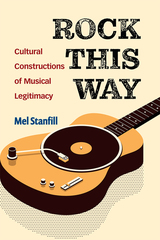
Any and all songs are capable of being remixed. But not all remixes are treated equally. Rock This Way examines transformative musical works—cover songs, remixes, mash-ups, parodies, and soundalike songs—to discover what contemporary American culture sees as legitimate when it comes to making music that builds upon other songs. Through examples of how popular discussion talked about such songs between 2009 and 2018, Mel Stanfill uses a combination of discourse analysis and digital humanities methods to interrogate our broader understanding of transformative works and where they converge at the legal, economic, and cultural ownership levels.
Rock This Way provides a new way of thinking about what it means to re-create and borrow music, how the racial identity of both the reusing artist and the reused artist matters, and the ways in which the law polices artists and their works. Ultimately, Stanfill demonstrates that the extent to which a work is seen as having new expression or meaning is contingent upon notions of creativity, legitimacy, and law, all of which are shaped by white supremacy.
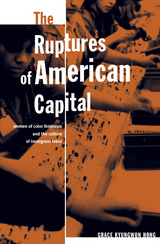
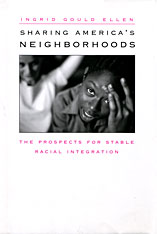
The first part of this book presents a fresh and encouraging report on the state of racial integration in America's neighborhoods. It shows that while the majority are indeed racially segregated, a substantial and growing number are integrated, and remain so for years.
Still, many integrated neighborhoods do unravel quickly, and the second part of the book explores the root causes. Instead of panic and "white flight" causing the rapid breakdown of racially integrated neighborhoods, the author argues, contemporary racial change is driven primarily by the decision of white households not to move into integrated neighborhoods when they are moving for reasons unrelated to race. Such "white avoidance" is largely based on the assumptions that integrated neighborhoods quickly become all black and that the quality of life in them declines as a result.
The author concludes that while this explanation may be less troubling than the more common focus on racial hatred and white flight, there is still a good case for modest government intervention to promote the stability of racially integrated neighborhoods. The final chapter offers some guidelines for policymakers to follow in crafting effective policies.
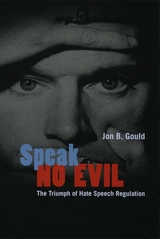
Although college speech codes have been overturned by the courts, Speak No Evil argues that their rise has still had a profound influence on curtailing speech in other institutions such as the media and has also shaped mass opinion and common understandings of constitutional norms. Ultimately, Gould contends, this kind of informal law can have just as much power as the Constitution.

Rukmini Pande’s examination of race in fan studies is sure to make an immediate contribution to the growing field. Until now, virtually no sustained examination of race and racism in transnational fan cultures has taken place, a lack that is especially concerning given that current fan spaces have never been more vocal about debating issues of privilege and discrimination.
Pande’s study challenges dominant ideas of who fans are and how these complex transnational and cultural spaces function, expanding the scope of the field significantly. Along with interviewing thirty-nine fans from nine different countries about their fan practices, she also positions media fandom as a postcolonial cyberspace, enabling scholars to take a more inclusive view of fan identity. With analysis that spans from historical to contemporary, Pande builds a case for the ways in which non-white fans have always been present in such spaces, though consistently ignored.
Blauner launched his concept of internal colonialism in the turbulent 1960's, a period in which many Americans worried that racial conflicts would propel the country into another civil war. The notion that the systematic oppression of people of color in the United States resembles the situation of colonized populations in Third World countries still informs much of the academic research on race as well as public discourse. Indeed, today's critical race and whiteness studies are deeply indebted to Blauner's work on internal colonialism and the pervasiveness of white privilege. Offering a radical perspective on the United States' racial landscape, Bob Blauner forcefully argues that we ignore the persistence of oppression and our continuing failure to achieve equality at our own peril.


Doris Marie Provine’s engaging analysis traces the history of race in anti-drug efforts from the temperance movement of the early 1900s to the crack scare of the late twentieth century, showing how campaigns to criminalize drug use have always conjured images of feared minorities. Explaining how alarm over a threatening black drug trade fueled support in the 1980s for a mandatory minimum sentencing scheme of unprecedented severity, Provine contends that while our drug laws may no longer be racist by design, they remain racist in design. Moreover, their racial origins have long been ignored by every branch of government. This dangerous denial threatens our constitutional guarantee of equal protection of law and mutes a much-needed national discussion about institutionalized racism—a discussion that Unequal under Law promises to initiate.
The authors chronicle how millions of Palestinians have been denationalised through the bureaucratic tools of census, population registration, blacklisting and a discriminatory legal framework. They show how identity documents are used by Israel as a means of coercion, extortion, humiliation and informant recruitment. Movement restrictions tied to IDs and population registers threaten Palestinian livelihoods, freedom of movement and access to basic services such as health and education.
Unfree in Palestine is a masterful expose of the web of bureaucracy used by Israel to deprive the Palestinians of basic rights and freedoms, and calls for international justice and inclusive security in place of discrimination and division.

The Space Age began just as the struggle for civil rights forced Americans to confront the long and bitter legacy of slavery, discrimination, and violence against African Americans. Presidents John F. Kennedy and Lyndon Johnson utilized the space program as an agent for social change, using federal equal employment opportunity laws to open workplaces at NASA and NASA contractors to African Americans while creating thousands of research and technology jobs in the Deep South to ameliorate poverty. We Could Not Fail tells the inspiring, largely unknown story of how shooting for the stars helped to overcome segregation on earth.
Richard Paul and Steven Moss profile ten pioneer African American space workers whose stories illustrate the role NASA and the space program played in promoting civil rights. They recount how these technicians, mathematicians, engineers, and an astronaut candidate surmounted barriers to move, in some cases literally, from the cotton fields to the launching pad. The authors vividly describe what it was like to be the sole African American in a NASA work group and how these brave and determined men also helped to transform Southern society by integrating colleges, patenting new inventions, holding elective office, and reviving and governing defunct towns. Adding new names to the roster of civil rights heroes and a new chapter to the story of space exploration, We Could Not Fail demonstrates how African Americans broke the color barrier by competing successfully at the highest level of American intellectual and technological achievement.

Is race something we know when we see it? In 1857, Alexina Morrison, a slave in Louisiana, ran away from her master and surrendered herself to the parish jail for protection. Blue-eyed and blond, Morrison successfully convinced white society that she was one of them. When she sued for her freedom, witnesses assured the jury that she was white, and that they would have known if she had a drop of African blood. Morrison’s court trial—and many others over the last 150 years—involved high stakes: freedom, property, and civil rights. And they all turned on the question of racial identity.
Over the past two centuries, individuals and groups (among them Mexican Americans, Indians, Asian immigrants, and Melungeons) have fought to establish their whiteness in order to lay claim to full citizenship in local courtrooms, administrative and legislative hearings, and the U.S. Supreme Court. Like Morrison’s case, these trials have often turned less on legal definitions of race as percentages of blood or ancestry than on the way people presented themselves to society and demonstrated their moral and civic character.
Unearthing the legal history of racial identity, Ariela Gross’s book examines the paradoxical and often circular relationship of race and the perceived capacity for citizenship in American society. This book reminds us that the imaginary connection between racial identity and fitness for citizenship remains potent today and continues to impede racial justice and equality.
This study reads the already canonical works of nineteenth- and twentieth-century black literature in the context of their responses to and critiques of American legal history. At the same time, it examines little known texts of African American life, from the urban humor of James D. Corrothers, through the early political essays of Chester Himes, to the adventures of black comic book heroes like Steel, Wise Son, and Xero. These are contextualized within specific legislation and case law, from the slave laws of early Virginia to the Civil Rights Act of 1964, from the case of Phillis and Mark in 1755 to the Simpson trials of the mid 1990s.
Finally, the legal texts presented are themselves critiqued by the fictions and legal analyses of the African Americans who lived out their implications in their daily lives. Through a positing of the legal and cultural concepts of privacy, property, identity, desire and citizenship, and the romantic ideals of authenticity, irony, and innocence, Suggs is able to show how our understanding of American law should be influenced by African American conceptions of it as depicted through literature.
This book will appeal to students and scholars of literary and cultural studies, law and literature, American history, as well as to scholars of African American literature and culture.
Jon-Christian Suggs is Professor of English, John Jay College, City University of New York.
Ignacio García’s White But Not Equal explores this historic but mostly forgotten case, which became the first to recognize discrimination against Mexican Americans. Led by three dedicated Mexican American lawyers, the case argued for recognition of Mexican Americans under the 14th Amendment as a “class apart.” Despite a distinct history and culture, Mexican Americans were considered white by law during this period, yet in reality they were subjected to prejudice and discrimination. This was reflected in Hernández’s trial, in which none of the selected jurors were Mexican American. The concept of Latino identity began to shift as the demand for inclusion in the political and judicial system began.
García places the Hernández v. Texas case within a historical perspective and examines the changing Anglo-Mexican relationship. More than just a legal discussion, this book looks at the whole case from start to finish and examines all the major participants, placing the story within the larger issue of the fight for Mexican American civil rights.
Costaguta charts the socialist movement’s journey through the conflict and down a path that ultimately abandoned scientific racism in favor of an internationalist class-focused and racial-conscious American socialism. As he shows, the shift relied on a strong immigrant influence personified by the cosmopolitan Marxist thinker and future IWW cofounder Daniel De Leon. The class-focused movement that emerged became American socialism’s most common approach to race in the twentieth century and beyond.
READERS
Browse our collection.
PUBLISHERS
See BiblioVault's publisher services.
STUDENT SERVICES
Files for college accessibility offices.
RECENTLY PUBLISHED



UChicago Accessibility Resources
home | accessibility | search | about | contact us
BiblioVault ® 2001 - 2024
The University of Chicago Press