
 A SCHOLARLY BOOK REPOSITORY
12 start with U start with U
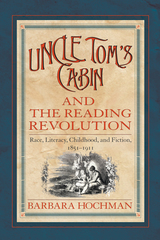
During the 1850s, men, women, and children avidly devoured Stowe's novel. White adults wept and could not put the book down, neglecting work and other obligations to complete it. African Americans both celebrated and denounced the book. By the 1890s, readers understood Uncle Tom's Cabin in new ways. Prefaces and retrospectives celebrated Stowe's novel as a historical event that led directly to emancipation and national unity. Commentaries played down the evangelical and polemical messages of the book.
Illustrations and children's editions projected images of entertaining and devoted servants into an open-ended future. In the course of the 1890s, Uncle Tom's Cabin became both a more viciously racialized book than it had been and a less compelling one. White readers no longer consumed the book at one sitting; Uncle Tom's Cabin was now more widely known than read. However, in the growing silence surrounding slavery at the turn of the century, Stowe's book became an increasingly important source of ideas, facts, and images that the children of ex-slaves and other free-black readers could use to make sense of their position in U.S. culture.
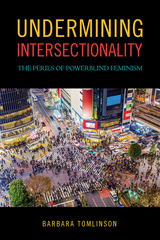
In this provocative book, esteemed scholar Barbara Tomlinson asserts that intersectionality—the idea that categories such as gender, race, and class create overlapping systemsof oppression—is consistently misinterpreted in feminist argument. Despite becoming a central theme in feminist scholarship and activism, Tomlinson believes dominant feminism has failed to fully understand the concept.
Undermining Intersectionality reveals that this apparent paradox is the result of the disturbing racial politics underlying more than two decades of widely-cited critiques of intersectionality produced by prominent white feminist scholars who have been insufficiently attentive to racial dynamics. As such, feminist critiques of intersectionality repeatedly reinforce racial hierarchies, undermining academic feminism’s supposed commitment to social justice. Tomlinson offers a persuasive analysis of the rhetorics and conventions of argument used in these critiques to demonstrate their systematic reliance on “powerblind” discursive practices.
Undermining Intersectionality concludes by presenting suggestions about concrete steps feminist researchers, readers, authors, and editors can take to promote more productive and principled engagements with intersectional thinking.
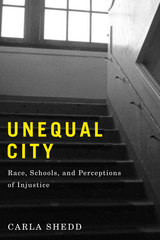
Shedd draws from an array of data and in-depth interviews with Chicago youth to offer new insight into this understudied group. Focusing on four public high schools with differing student bodies, Shedd reveals how the predominantly low-income African American students at one school encounter obstacles their more affluent, white counterparts on the other side of the city do not face. Teens often travel long distances to attend school which, due to Chicago’s segregated and highly unequal neighborhoods, can involve crossing class, race, and gang lines. As Shedd explains, the disadvantaged teens who traverse these boundaries daily develop a keen “perception of injustice,” or the recognition that their economic and educational opportunities are restricted by their place in the social hierarchy.
Adolescents’ worldviews are also influenced by encounters with law enforcement while traveling to school and during school hours. Shedd tracks the rise of metal detectors, surveillance cameras, and pat-downs at certain Chicago schools. Along with police procedures like stop-and-frisk, these prison-like practices lead to distrust of authority and feelings of powerlessness among the adolescents who experience mistreatment either firsthand or vicariously. Shedd finds that the racial composition of the student body profoundly shapes students’ perceptions of injustice. The more diverse a school is, the more likely its students of color will recognize whether they are subject to discriminatory treatment. By contrast, African American and Hispanic youth whose schools and neighborhoods are both highly segregated and highly policed are less likely to understand their individual and group disadvantage due to their lack of exposure to youth of differing backgrounds.

Doris Marie Provine’s engaging analysis traces the history of race in anti-drug efforts from the temperance movement of the early 1900s to the crack scare of the late twentieth century, showing how campaigns to criminalize drug use have always conjured images of feared minorities. Explaining how alarm over a threatening black drug trade fueled support in the 1980s for a mandatory minimum sentencing scheme of unprecedented severity, Provine contends that while our drug laws may no longer be racist by design, they remain racist in design. Moreover, their racial origins have long been ignored by every branch of government. This dangerous denial threatens our constitutional guarantee of equal protection of law and mutes a much-needed national discussion about institutionalized racism—a discussion that Unequal under Law promises to initiate.
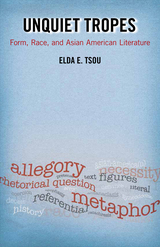
In Unquiet Tropes, Tsou reconceptualizes the literature as a set of highly particular classical rhetorical tropes including antanaclasis, rhetorical question, apophasis, catachresis, and allegory. Looking at five canonical works—Aiiieeeee!, No-No Boy, China Men, Blu’s Hanging, and Native Speaker—Tsou shows how these texts use figurative means to confront the problem of race. She also explores how traces of Asian American history live on through these figures.
Each case study in Unquiet Tropes considers a different scenario—defiance, coercion, necessity, error, and deceit—to show how literary representation from the 1950s through 1997 has responded to a specific political condition.
How the Great Recession revealed a system of school choice built on crisis, precarity, and exclusion
What do universal rights to public goods like education mean when codified as individual, private choices? Is the “problem” of school choice actually not about better choices for all but, rather, about the competition and exclusion that choice engenders—guaranteeing a system of winners and losers? Unsettling Choice addresses such questions through a compelling ethnography that illuminates how one path of neoliberal restructuring in the United States emerged in tandem with, and in response to, the Civil Rights movement.
Drawing on ethnographic research in one New York City school district, Unsettling Choice traces the contestations that surfaced when, in the wake of the 2007–2009 Great Recession, public schools navigated austerity by expanding choice-based programs. Ujju Aggarwal argues that this strategy, positioned as “saving public schools,” mobilized mechanisms rooted in market logics to recruit families with economic capital on their side, thereby solidifying a public sphere that increasingly resembled the private—where contingency was anticipated and rights for some were marked by intensified precarity for poor and working-class Black and Latinx families.
As Unsettling Choice shows, these struggles over public schools—one of the last remaining universal public goods in the United States—were entrapped within neoliberal regimes that exceeded privatization and ensured exclusion even as they were couched in language of equity, diversity, care, and rights. And yet this richly detailed and engaging book also tracks an architecture of expansive rights, care, and belonging built among poor and working-class parents at a Head Start center, whose critique of choice helps us understand how we might struggle for—and reimagine—justice, and a public that remains to be won.
Retail e-book files for this title are screen-reader friendly with images accompanied by short alt text and/or extended descriptions.
Uprooted: Race, Public Housing, and the Archaeology of Four Lost New Orleans Neighborhoods uses archaeological research on four neighborhoods that were razed during the construction of public housing in World War II–era New Orleans. Although each of these neighborhoods was identified as a “slum” historically, the material record challenges the simplicity of this designation. D. Ryan Gray provides evidence of the inventiveness of former residents who were marginalized by class, color, or gender and whose everyday strategies of survival, subsistence, and spirituality challenged the city’s developing racial and social hierarchies.
These neighborhoods initially appear to have been quite distinct, ranging from the working-class Irish Channel, to the relatively affluent Creole of Color–dominated Lafitte area, to the former location of Storyville, the city’s experiment in semilegal prostitution. Archaeological and historical investigations suggest that race was the crucial factor in the areas’ selection for clearance. Each neighborhood manifested a particular perceived racial disorder, where race intersected with ethnicity, class, or gender in ways that defied the norms of Jim Crow segregation.
Gray’s research makes use of both primary documents—including census records, city directories, and even the brothel advertising guides called “Blue Books”—and archaeological data to examine what this entailed at a variety of scales, reconstructing narratives of the households and communities affected by clearance. Public housing, both in New Orleans and elsewhere, imposed a new kind of control on urban life that had the effect of making cities both more segregated and less equal. The story of the neighborhoods that were destroyed provides a reminder that their erasure was not an inevitable outcome, and that a more equitable and just city is still possible today. A critical examination of the rise of public housing helps inform the ongoing debates over its demise, especially in light of the changing face of post-Katrina New Orleans.
This book begins with an examination of the literature of the "Barbary" Orient generated by the U.S. Algerian conflict in the late eighteenth century in the works of such writers as Royall Tyler, Susanna Rowson, and Washington Irving. It then moves on to the Near East Orientalist literature of the nineteenth century in light of Egyptology, theories of race, and the growth of missionary fervor in writers such as John DeForest, Maria Susanna Cummins, Herman Melville, Edgar Allan Poe, and Harriet Prescott Spofford. Finally, Schueller considers the Indic Orientalism of the period in the context of Indology, British colonialism, and the push for Asian trade in the United States, focusing particularly on Emerson and Whitman. U.S. Orientalisms demonstrates how these writers strove to create an Orientalism premised on the idea of civilization and empire moving West, from Asia, through Europe, and culminating in the New World.
Schueller draws on the work of Michel Foucault, Edward Said, Homi Bhabha, Rey Chow, and Judith Butler and compellingly demonstrates how a raced, compensatory "Orientalist" discourse of empire was both contested and evoked in the literary works of a wide variety of writers. The book will be of interest to readers in American history, postcolonial studies, gender studies, and literary theory.
Malini Johar Schueller is Associate Professor, Department of English, University of Florida. She is the author of The Politics of Voice: Liberalism and Social Criticism from Franklin to Kingston.
READERS
Browse our collection.
PUBLISHERS
See BiblioVault's publisher services.
STUDENT SERVICES
Files for college accessibility offices.
RECENTLY PUBLISHED


UChicago Accessibility Resources
home | accessibility | search | about | contact us
BiblioVault ® 2001 - 2024
The University of Chicago Press