How aesthetic religious experiences can create solidarity in marginalized communities
Latine Catholics have used Our Lady of Guadalupe as a symbol in democratic campaigns ranging from the Chicano movement and United Farm Workers’ movements to contemporary calls for just immigration reform. In diverse ways, these groups have used Guadalupe’s symbol and narrative to critique society’s basic structures—including law, policy, and institutions—while seeking to inspire broader participation and representation among marginalized peoples in US democracy.
Yet, from the outside, Guadalupe’s symbol is illegible within a liberal political framework that seeks to protect society’s basic structures from religious encroachment by relegating religious speech, practices, and symbols to the background.
The Aesthetics of Solidarity argues for the capacity of Our Lady of Guadalupe—and similar religious symbols—to make democratic claims. Author Nichole M. Flores exposes the limitations of political liberalism’s aesthetic responses to religious difference, turning instead to Latine theological aesthetics and Catholic social thought to build a framework for interpreting religious symbols in our contemporary pluralistic and participatory democratic life. By offering a lived theology of Chicanx Catholics in Denver, Colorado, and their use of Guadalupe in the pursuit of justice in response to their neighborhood’s gentrification, this book provides an important framework for a community of interpretation where members stand in solidarity to respond to justice claims made from diverse religious and cultural communities.
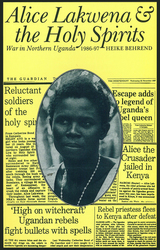
In August 1986, Alice Auma, a young Acholi woman in northern Uganda, proclaiming herself under the orders of a Christian spirit named Lakwena, raised an army called the “Holy Spirit Mobile Forces.” With it she waged a war against perceived evil, not only an external enemy represented by the National Resistance Army of the government, but internal enemies in the form of “impure” soldiers, witches, and sorcerers. She came very close to her goal of overthrowing the government but was defeated and fled to Kenya.
This book provides a unique view of Alice’s movement, based on interviews with its members and including their own writings, examining their perceptions of the threat of external and internal evil. It concludes with an account of the successor movements into which Alice’s forces fragmented and which still are active in the civil wars of the Sudan and Uganda.
The relationship between religious belief and sexuality as personal attributes exhibits some provocative comparisons. Despite the nonestablishment of religion in the United States and the constitutional guarantee of free exercise, Christianity functions as the religious and moral standard in America. Ethical views that do not fit within this consensus often go unrecognized as moral values. Similarly, in the realm of sexual orientation, heterosexuality is seen as the yardstick by which sexual practices are measured. The notion that "alternative" sexual practices like homosexuality could possess ethical significance is often overlooked or ignored.
In her new book, An Argument for Same-Sex Marriage, political scientist Emily Gill draws an extended comparison between religious belief and sexuality, both central components of one’s personal identity. Using the religion clause of the First Amendment as a foundation, Gill contends that, just as US law and policy ensure that citizens may express religious beliefs as they see fit, it should also ensure that citizens may marry as they see fit. Civil marriage, according to Gill, is a public institution, and the exclusion of some couples from a state institution is a public expression of civic inequality.
An Argument for Same-Sex Marriage is a passionate and timely treatment of the various arguments for and against same-sex marriage and how those arguments reflect our collective sense of morality and civic equality. It will appeal to readers who have an interest in gay and lesbian studies, political theory, constitutional law, and the role of religion in the contemporary United States.
Civil war and conflict within countries is the most prevalent threat to peace and security in the opening decades of the twenty-first century. A pivotal factor in the escalation of tensions to open conflict is the role of elites in exacerbating tensions along identity lines by giving the ideological justification, moral reasoning, and call to violence. Between Terror and Tolerance examines the varied roles of religious leaders in societies deeply divided by ethnic, racial, or religious conflict. The chapters in this book explore cases when religious leaders have justified or catalyzed violence along identity lines, and other instances when religious elites have played a critical role in easing tensions or even laying the foundation for peace and reconciliation.
This volume features thematic chapters on the linkages between religion, nationalism, and intolerance, transnational intra-faith conflict in the Shi’a-Sunni divide, and country case studies of societal divisions or conflicts in Egypt, Israel and Palestine, Kashmir, Lebanon, Nigeria, Northern Ireland, Sri Lanka, Sudan, and Tajikistan. The concluding chapter explores the findings and their implications for policies and programs of international non-governmental organizations that seek to encourage and enhance the capacity of religious leaders to play a constructive role in conflict resolution.
This volume offers a nuanced picture with specific instances of religion and politics in Muslim, Jewish, Christian, Buddhist, and Hindu contexts, broadly presenting the phenomenon of religion and politics via country and thematic case studies. Qualitative, quantitative, material, philosophical, and theological analyses draw upon social theory to show how (and why) religion matters deeply in each time and place.
The authors and contributors demonstrate that religion is a significant force that drives societies and polities around the world, and that a radical change in the Western understanding of value-driven global politics is needed. Beyond the Death of God offers new, local voices to Western audiences—through essays that suggest the need for an appreciation of Divinity as a quintessence holding a significant place in the hearts, minds, social orders, and political organization of polities around the world.
Church and State in the City provides the first comprehensive analysis of the city’s long debate about the public interest. Historian William Issel explores the complex ways that the San Francisco Catholic Church—and its lay men and women—developed relationships with the local businesses, unions, other community groups, and city government to shape debates about how to define and implement the common good. Issel’s deeply researched narrative also sheds new light on the city’s socialists, including Communist Party activists—the most important transnational challengers of both capitalism and Catholicism during the twentieth century.
Moreover, Church and State in the City is revisionist in challenging the notion that the history of urban politics and policy can best be understood as the unfolding of a progressive, secular modernization of urban political culture. Issel shows how tussles over the public interest in San Francisco were both distinctive to the city and shaped by its American character.
In the series Urban Life, Landscape, and Policy, edited by Zane L. Miller, David Stradling, and Larry Bennett
Scholars of history, anthropology, religion, politics, law, philosophy, and media studies take on a broad range of concerns. Some consider the history of secularism in India; others explore theoretical issues such as the relationship between secularism and democracy or the shortcomings of the categories “majority” and “minority.” Contributors examine how the debates about secularism play out in schools, the media, and the popular cinema. And they address two of the most politically charged sites of crisis: personal law and the right to practice and encourage religious conversion. Together the essays inject insightful analysis into the fraught controversy about the shortcomings and uncertain future of secularism in the world today.
Contributors. Flavia Agnes, Upendra Baxi, Shyam Benegal, Akeel Bilgrami, Partha Chatterjee, V. Geetha, Sunil Khilnani, Nivedita Menon, Ashis Nandy, Anuradha Dingwaney Needham, Gyanendra Pandey, Gyan Prakash, Arvind Rajagopal, Paula Richman, Sumit Sarkar, Dwaipayan Sen, Rajeswari Sunder Rajan, Shabnum Tejani, Romila Thapar, Ravi S. Vasudevan, Gauri Viswanathan
Finally, Demerath examines America’s status as the world’s most religious nation. He places that claim within a comparative context and argues that our country is not “more religious” but “differently religious.” He argues that it represents a unique combination of congregational religion, religious pluralism, and civil religion. But the United States also illustrates the universal tendency for the sacred to give way to the secular and for the secular to generate new forms of the sacred.
Whether illuminating the narratives that have been used to legitimate the war on terror, reflecting on the power of American consumer culture to transform the attack sites into patriotic tourist attractions, or insisting that to be a Christian is to be a pacifist, these essays refuse easy answers. They consider why the Middle East harbors a deep-seated hatred for the United States. They argue that the U.S. drive to win the cold war made the nation more like its enemies, leading the government to support ruthless anti-Communist tyrants such as Mobutu, Suharto, and Pinochet. They urge Americans away from the pitfall of national self-righteousness toward an active peaceableness—an alert, informed, practiced state of being—deeply contrary to both passivity and war. Above all, the essays assembled in Dissent from the Homeland are a powerful entreaty for thought, analysis, and understanding. Originally published as a special issue of the journal South Atlantic Quarterly, Dissent from the Homeland has been expanded to include new essays as well as a new introduction and postscript.
Contributors. Srinivas Aravamudan, Michael J. Baxter, Jean Baudrillard, Robert N. Bellah, Daniel Berrigan, Wendell Berry, Vincent J. Cornell, David James Duncan, Stanley Hauerwas, Fredric Jameson, Frank Lentricchia, Catherine Lutz, Jody McAuliffe, John Milbank, Peter Ochs, Donald E. Pease, Anne R. Slifkin, Rowan Williams, Susan Willis, Slavoj Zizek
Advance your understanding of divination’s role in supporting or undermining imperial aspirations in the ancient Near East
This collection examines the ways that divinatory texts in the Hebrew Bible and the ancient Near East undermined and upheld the empires in which the texts were composed, edited, and read. Nine essays and an introduction engage biblical scholarship on the Prophets, Assyriology, the Dead Sea Scrolls, and the critical study of Ancient Empires.
Features:
Divined Intervention provides an innovative institutionalist account for why religion enables political activism in some settings, but not others. Christopher W. Hale argues that decentralized religious institutions facilitate grassroots collective action, and he uses a multimethod approach to test this explanation against several theoretical alternatives. Utilizing nationally representative Mexican survey data, the book’s statistical analyses demonstrate that decentralization by the Catholic Church is positively associated with greater individual political activism across the country. Using case studies centered in the Mexican states of Chiapas, Yucatán, and Morelos, the author shows that religious decentralization encourages reciprocal cooperative interactions at a local level. This then increases the ability of religion to provide goods and services to its local adherents. These processes then prompt the growth of organizational capacities at the grassroots, enabling secular political activism.
Because this theoretical framework is grounded in human behavior, it shows how local institutions politically organize at the grassroots level. Divined Intervention also offers an improved understanding of religion’s relationship with political activism, a topic of ever-increasing significance as religion fuels political engagement across the globe. The book further synthesizes seemingly disparate approaches to the study of collective action into a cohesive framework. Finally, there is some debate as to the impact of ethnic diversity on the provision of public goods, and this study helps us understand how local institutional configurations can enable collective action across ethnic boundaries.
In 1552, Muscovite Russia conquered the city of Kazan on the Volga River. It was the first Orthodox Christian victory against Islam since the fall of Constantinople, a turning point that, over the next four years, would complete Moscow’s control over the river. This conquest provided a direct trade route with the Middle East and would transform Muscovy into a global power. As Matthew Romaniello shows, however, learning to manage the conquered lands and peoples would take decades.
Russia did not succeed in empire-building because of its strength, leadership, or even the weakness of its neighbors, Romaniello contends; it succeeded by managing its failures. Faced with the difficulty of assimilating culturally and religiously alien peoples across thousands of miles, the Russian state was forced to compromise in ways that, for a time, permitted local elites of diverse backgrounds to share in governance and to preserve a measure of autonomy. Conscious manipulation of political and religious language proved more vital than sheer military might. For early modern Russia, empire was still elusive—an aspiration to political, economic, and military control challenged by continuing resistance, mismanagement, and tenuous influence over vast expanses of territory.
Though not all people are religious believers, religion has played important historic roles in developing political systems, parties, and policies—affecting believers and nonbelievers alike. This is particularly true in the United States, where scholars have devoted considerable attention to a variety of political phenomena at the intersection of religious belief and identity, including social movements, voting behavior, public opinion, and public policy. These outcomes are motivated by “identity boundary-making” among the religiously affiliated. The contributors to this volume examine two main factors that influence religious identity: the communication of religious ideas and the perceptions of people (including elites) in communicating said ideas.
Exploring the Public Effects of Religious Communication on Politics examines an array of religious communication phenomena. These include the media’s role in furthering religious narratives about minority groups, religious strategies that interest groups use to advance their appeal, the variable strength of Islamophobia in cross-national contexts, what qualifies as an “evangelical” identity, and clergy representation of religious and institutional teachings. The volume also provides ways for readers to think about developing new insights into the influence religious communication has on political outcomes.
Faith and Political Philosophy consists of fifty-three letters between Leo Strauss and Eric Voegelin, two of the most important political theorists of the twentieth century. In this correspondence, Strauss and Voegelin explore the nature of their similarities and differences, offering insightful observations about one another's work, about the state of the discipline, and about the influences working on them. The letters shed light on many assumptions made in their published writings, often with an openness that removes all vestiges of uncertainty.
This book explores the role of religion, especially religious extremism, in American culture. In particular, it examines the development of the Judeo-Christian tradition, its impact on America's self-image, and the way it has influenced America's attitude to the Arab World.
The Christian Right has become a very powerful force in American politics. Its basic belief in Christian Zionism has resulted in a steadfast commitment to the establishment of the state of Israel and to its aggressive expansion, and has made Zionism a central part of government policy, for both Republicans and Democrats.
Fuad Sha'ban shows how this is not a new phenomenon: what he terms the 'Vision of Zion' in American life has its roots in literature, the arts and internal politics from colonial times until today. Looking in detail at a wealth of resources, including religious and literary texts, as well as official political statements, he pieces together a subtle account of how America's Puritan roots have fostered a specifically religious political culture that encourages hatred and suspicion of the Muslim World in domestic and foreign policy.
Unique among readers in American political and social thought, From Many, One is a broad and balanced anthology that explores the problem of diversity and American political identity throughout American history. From the classic texts of the American political tradition to diverse minority writings, this book offers a wide spectrum of ideas about identity, gender, immigration, race, and religion, and addresses how these issues relate to the concept of national unity.
Covering the gamut of viewpoints from majority to minority, from conservative to radical, from assimilationist to separatist, the authors range from the Founding Fathers to Frederick Jackson Turner, from Abigail Adams to bell hooks and Catharine MacKinnon; from Abraham Lincoln to Malcolm X; from Roger Williams to Ralph E. Reed.
Sinopoli's extensive introductory and concluding essays set the context for and draw out the implications of the fifty readings. The conclusion includes case studies of three minority groups—homosexuals, Mexican-Americans, and Chinese-Americans—to illustrate further the themes of the volume. Brief introductions to each reading and to each of the five sections provide background information.
In examining one of the central questions of American public life—the issue of national diversity—From Many, One will be a useful text for courses in American political thought, sociology, American Studies, and American history.
Does religion promote political mobilization? Are individuals motivated by their faith to focus on issues of social justice, personal morality, or both? What is the relationship between religious conviction and partisanship? Does religious identity reinforce or undermine other political identifications like race, ethnicity, and class?
The answers to these questions are hardly monolithic, varying between and within major American religious groups. With an electoral climate increasingly shaped by issues of faith, values, and competing moral visions, it is both fascinating and essential to examine the religious and political currents within America's major religious traditions.
J. Matthew Wilson and a group of prominent religion and politics scholars examine these topics and assess one question central to these issues: How does faith shape political action in America's diverse religious communities? From Pews to Polling Places seeks to cover a rich mosaic of religious and ethnic perspectives with considerable breadth by examining evangelical Christians, the religious left, Catholics, Mormons, African Americans, Latinos, Jews, and Muslims. Along with these groups, the book takes a unique look at the role of secular and antifundamentalist positions, adding an even wider outlook to these critical concerns.
The contributors demonstrate how different theologies, histories, and social situations drive distinct conceptualizations of the relationship between religious and political life. At the same time, however, the book points to important commonalities across traditions that can inform our discussions on the impact of religion on political life. In emphasizing these similarities, the authors explore the challenges of political mobilization, partisanship, and the intersections of religion and ethnicity.
Resisting the tendency to separate the study of religion and politics, editor Jacob Neusner pulls together a collection of ten essays in which various authors explain and explore the relationship between the world's major religions and political power. As William Scott Green writes in the introduction, "Because religion is so comprehensive, it is fundamentally about power; it therefore cannot avoid politics."
Beginning with the classical sources and texts of Judaism, Christianity, Buddhism, Islam, Confucianism and Hinduism, God's Rule begins to explore the complex nature of how each religion shapes political power, and how religion shapes itself in relation to that power. The corresponding attention to differing theories of politics and views towards non-believers are important not only to studies in comparative religion, but to foreign policy, history and governance as well. From early Christianity's relationship to the Roman Empire to Hinduism's relationship to Gandhi and the caste system, God's Rule provides a basis of understanding from which undergraduates, seminarians and others can begin asking questions of relationships "both unavoidable and systematically uneasy."
Social and political history of the modern South.
This collection of essays on the social and political history of the modern South consider the region’s poor, racial mores and race relations, economic opportunity, Protestant activism, political coalitions and interest groups, social justice, and progressive reform. History and Hope in the Heart of Dixie illuminates the dual role of historian and public advocate in modern America. In a time when the nation’s eyes have been focused by Hurricanes Katrina and Rita onto the vulnerability and dire condition of poor people in the South, the applicability of research, teaching, and activism for this voiceless element seems all the more relevant.
Responding to the example of Wayne Flynt, whose fierce devotion to his state of Alabama and its region has not blinded his recognition of the inequities and despair that define southern life for so many, the scholars assembled in this work present contributions to the themes Flynt so passionately explored in his own work.Two seasoned observers of southern history and culture—John Shelton Reed and Dan T. Carter—offer assessments of Flynt’s influence on the history profession as a whole and on the region of the South in particular.
Political mobilization tends to take different forms in contemporary Catholic- and Sunni-majority countries. Luis Felipe Mantilla attributes this dynamic to changes taking place in religious communities and the political institutions that govern religious political engagement.
In How Political Parties Mobilize Religion, Mantillaevenhandedly traces the emergence and success of religious parties in Mexico and Turkey, two countries shaped by assertive secular regimes. In doing so, he demonstrates that religious parties are highly responsive to political institutions, such as electoral laws, as well as to the structure of broader religious communities.
Whereas in both countries, the electoral success of religious mobilizers was initially a boon for democracy, in Mexico it was marred by political mismanagement and became entangled with persistent corruption and escalating violence. In Turkey, the democratic credentials of religious mobilizers were profoundly eroded as the government became increasingly autocratic, concentrating power in very few hands and rolling back basic liberal rights.
Mantilla investigates the role religious mobilization plays in the evolution of electoral politics and democratic institutions, and to what extent their trajectories reflect broader trends in political Catholicism and Islam.
Invisible Agents shows how personal and deeply felt spiritual beliefs can inspire social movements and influence historical change. Conventional historiography concentrates on the secular, materialist, or moral sources of political agency. Instead, David M. Gordon argues, when people perceive spirits as exerting power in the visible world, these beliefs form the basis for individual and collective actions. Focusing on the history of the south-central African country of Zambia during the nineteenth and twentieth centuries, his analysis invites reflection on political and religious realms of action in other parts of the world, and complicates the post-Enlightenment divide of sacred and profane.
The book combines theoretical insights with attention to local detail and remarkable historical sweep, from oral narratives communicated across slave-trading routes during the nineteenth century, through the violent conflicts inspired by Christian and nationalist prophets during colonial times, and ending with the spirits of Pentecostal rebirth during the neoliberal order of the late twentieth century. To gain access to the details of historical change and personal spiritual beliefs across this long historical period, Gordon employs all the tools of the African historian. His own interviews and extensive fieldwork experience in Zambia provide texture and understanding to the narrative. He also critically interprets a diverse range of other sources, including oral traditions, fieldnotes of anthropologists, missionary writings and correspondence, unpublished state records, vernacular publications, and Zambian newspapers.
Invisible Agents will challenge scholars and students alike to think in new ways about the political imagination and the invisible sources of human action and historical change.
No Church is monolithic—this is the preliminary premise of this volume on the public place of religion in a representative number of post-communist countries. The studies confirm that within any religious organization we can expect to find fissures, factions, theological or ideological quarrels, and perhaps even competing interest groups, such as missionary workers, regular clergy versus secular clergy, and sometimes even competing ecclesiastical hierarchies. The main focus of the book rests on the divisions arising within select Christian Churches, as they confront the processes of secularization and atheization. The coverage area includes Russia and the Ukraine, East-Central Europe and South-Eastern Europe. Some chapters focus on individual clergy who challenge the mainstream of their given Church either from a more liberal or from a more conservative perspective, while others deal with the divisive forces impacting the religious organizations.
This festschrift to honor Sabrina Ramet’s seminal contribution to the study of religion in the politics of the communist and post-communist world, brings together several generations of scholars from a variety of countries, both those well established in their fields of study as well as young promising academics.
A new perspective on how beliefs about abortion and gay rights reshaped American politics.
Many believe that religious and partisan identities undergird American public opinion. However, when it comes to abortion and gay rights, the reverse may be closer to the truth.
Drawing on wide-ranging evidence, Paul Goren and Christopher Chapp show that views on abortion and gay rights are just as durable and politically impactful—and often more so—than political and religious identities. Goren and Chapp locate the lasting strength of stances on abortion and gay rights in the automatic, visceral emotions that the media has primed since the late 1980s. Moral Issues examines how attitudes toward these moralized issues affect, and can sometimes even disrupt, religious and partisan identities. Indeed, over the last thirty years, these attitudes have accelerated the rise of the religious “nones,” who have no religious affiliation, and promoted moral sorting into the Democratic and Republican parties.
It is a common belief that scripture has no place in modern, secular politics. Graham Hammill challenges this notion in The Mosaic Constitution, arguing that Moses’s constitution of Israel, which created people bound by the rule of law, was central to early modern writings about government and state.
How Barbara Jordan used sacred and secular scriptures in her social activism
US Congresswoman Barbara Jordan is well-known as an interpreter and defender of the Constitution, particularly through her landmark speech during Richard Nixon’s 1974 impeachment hearings. However, before she developed faith in the Constitution, Jordan had faith in Christianity. In “My Faith in the Constitution is Whole”: Barbara Jordan and the Politics of Scripture, Robin L. Owens shows how Jordan turned her religious faith and her faith in the Constitution into a powerful civil religious expression of her social activism.
Owens begins by examining the lives and work of the nineteenth-century Black female orator-activists Maria W. Stewart and Anna Julia Cooper. Stewart and Cooper fought for emancipation and women’s rights by “scripturalizing,” or using religious scriptures to engage in political debate. Owens then demonstrates how Jordan built upon this tradition by treating the Constitution as an American “scripture” to advocate for racial justice and gender equality. Case studies of key speeches throughout Jordan’s career show how she quoted the Constitution and other founding documents as sacred texts, used them as sociolinguistic resources, and employed a discursive rhetorical strategy of indirection known as “signifying on scriptures.”
Jordan’s particular use of the Constitution—deeply connected with her background and religious, racial, and gender identity—represents the agency and power reflected in her speeches. Jordan’s strategies also illustrate a broader phenomenon of scripturalization outside of institutional religion and its rhetorical and interpretive possibilities.
A broad and accessible history of religion in Texas, from prehistory to the present.
From sprawling megachurches to religious billboards and towering steel crosses, religion quite literally looms over Texas. Christian nationalism determines the state’s politics and, every school day, more than five million Texas children pledge allegiance to “one state under God.” But it wasn’t always this way.
In this wide-ranging chronicle, Joseph Locke uncovers the breadth of Texas’s religious history, from Indigenous painters of cosmological cave art and Spanish invaders who constructed missions to irreligious Anglo colonists, freethinking frontiersmen, Tejano folk saints, evangelical culture warriors, and Muslim immigrants. Locke traces the state’s religious transformations across the centuries, bringing them to life through his depiction of compelling figures, like enslaved preacher Anderson Edwards, fighting fundamentalist J. Frank Norris, and celebrated humanitarian Sister Norma Pimentel, and gripping moments, such as the murder of atheist newspaperman William Cowper Brann and the siege of the Branch Davidian compound in Waco. Comprehensive, fast-paced, and highly readable, One State Under God reveals how the Lone Star State’s spiritual path was blazed.
Apocalypse. To most, the word signifies destruction, death, the end of the world, but the literal definition is "revelation" or "unveiling," the basis from which renowned theologian René Girard builds his own view of Biblical apocalypse. Properly understood, Girard explains, Biblical apocalypse has nothing to do with a wrathful or vengeful God punishing his unworthy children, and everything to do with a foretelling of what future humans are making for themselves now that they have devised the instruments of global self-destruction. In this volume, some of the major thinkers about the interpretation of politics and religion— including Eric Voegelin, Leo Strauss, and Carl Schmitt— are scrutinized by some of today's most qualified scholars, all of whom are thoroughly versed in Girard’s groundbreaking work.
Including an important new essay by Girard, this volume enters into a philosophical debate that challenges the bona fides of philosophy itself by examining three supremely important philosopher of the twentieth century. It asks how we might think about politics now that the attacks of 9/11 have shifted our intellectual foundations and what the outbreak of rabid religion might signify for international politics.
In our time, we require a religion, ethics, and politics adequate to confront the global crises we face. In our scientific era of “progress,” we might expect to look with confidence to the “scientific” disciplines of political science, sociology, and economics to solve the problems of our civilization. We might also look to the older disciplines of religion and ethics to determine our values and to tell us what we ought to do. But the sad truth is that the dominant paradigms, methods, and conclusions of the social sciences and humanities are inadequate to this task. We need a new “politics of compassion and transformation.”
A comparison of the faith and politics of former Confederate chaplains with intriguing insights about the evolution of their postwar beliefs and the Lost Cause
Pulpits of the Lost Cause: The Faith and Politics of Former Confederate Chaplains during Reconstruction is the first in-depth study of former chaplains that juxtaposes their religion and politics, thereby revealing important insights about the Lost Cause movement. Steve Longenecker demonstrates that while some former chaplains vigorously defended the Lost Cause and were predictably conservative in the pulpit, embracing orthodoxy and resisting religious innovation, others were unexpectedly progressive and advocated on behalf of evolution, theological liberalism, and modern biblical criticism.
Former Confederate chaplains embodied both the distinctive white, Southern, regional identity and the variation within it. Most were theologically conservative and Lost Cause racists. But as with the larger South, variation abounded. The Lost Cause, which Longenecker interprets as a broad popular movement with numerous versions, meant different things to different chaplains. It ranged from diehard-ism to tempered sectional forgiveness to full reconciliation to a harmless once-a-year Decoration Day ritual.
This volume probes the careers of ten former chaplains, including their childhoods, wartime experiences, Lost Cause personas, and theologies, making use of manuscripts and published sermons as well as newspapers, diaries, memoirs, denominational periodicals, letters, and the books they themselves produced. In theology, many former chaplains were predictably conservative, while others were unexpectedly broad-minded and advocated evolution, theological liberalism, and modern Biblical criticism. One former chaplain became a social-climbing Harvard progressive. Another wrote innovative, liberal theology read by European scholars. Yet another espoused racial equality, at least in theory if not full practice. Additionally, former chaplains often exhibited the fundamental human trait of compartmentalization, most notably by extolling the past as they celebrated the Lost Cause while simultaneously looking to the future as religious progressives or New South boosters. The stereotypical preacher of the Lost Cause—a gray-clad Bible thumper—existed sufficiently to create the image but hardly enough to be universally accurate.
As early as the sixteenth century the liberal democratic state has been forced to confront the question of religion in politics. The result has been a tense and uncomfortable balancing act. Today, in the public square of liberal democracy, a number of religious confessions and beliefs compete for attention. In the American experience, some sense of religious pluralism and relative social harmony has been maintained. However, for this relationship to prevail, a tension must continue to exist—one that balances the political and social pursuits of self-interest with meeting the objectives of the common good.
In Reaping the Whirlwind, John R. Pottenger shows how this process began in the modern world, and how societies attempt to manage this ongoing conflict. The first part of the book lays the groundwork of his analysis by using examples from history to demonstrate the genesis of political and religious "whirlwinds." It goes on to explore contemporary case studies, such as conflicts between Mormons and Evangelicals in the United States, liberation theology in Latin America, Islam and the state in Uzbekistan, and radical Christian reconstructionism.
Pottenger believes that the formal institutions of liberal democracy should maintain this turbulence, even as religious activism threatens to upset the balance. He concludes by advocating religious liberty and recognizing the individual and social need for expression. At the same time, he maintains that the survival of liberal democracy requires that these religious traditions not dominate the public sphere.
Religious activities have been of continuing importance in the rise of protest against postcolonial governments in Eastern Africa. Governments have attempted to “manage“ religious affairs in both Muslim and Christian areas. Religious denominations have acted as advocates of human rights and in opposition to one-party-state regimes. Islamic fundamentalism changed with the ending of the Cold War.
The book is divided into four parts: The Challenge of Islam; Christianity, Sectarianism, and Politics in Uganda; Christians and Muslim in Kenyan Politics; and Cross-cultural Complications. An introductory essay by Michael Twaddle provides and overview of the changing character of politico-religious conflict in Eastern Africa. Holger Bernt Hansen summarizes the presentation with a discussion of dilemmas and challenges in the study of religion and politics.
Students and scholars will find in this volume a level of comprehensiveness rarely achieved in Cold War studies. Each chapter reveals that the power and influence of ideas are just as important as military might in the struggles between superpowersand that few ideas, then as now, carry as much force as religious ideology. As Muehlenbeck and his contributors demonstrate, no area of the world, and no religious tenet, was safe from the manipulations of a powerful set of players focused solely on their own sphere of influence.
In Religion and the Struggle for European Union, Brent F. Nelsen and James L. Guth delve into the powerful role of religion in shaping European attitudes on politics, political integration, and the national and continental identities of its leaders and citizens.
Nelsen and Guth contend that for centuries Catholicism promoted the universality of the Church and the essential unity of Christendom. Protestantism, by contrast, esteemed particularity and feared Catholic dominance. These differing visions of Europe have influenced the process of postwar integration in profound ways. Nelsen and Guth compare the Catholic view of Europe as a single cultural entity best governed as a unified polity against traditional Protestant estrangement from continental culture and its preference for pragmatic cooperation over the sacrifice of sovereignty. As the authors show, this deep cultural divide, rooted in the struggles of the Reformation, resists the ongoing secularization of the continent. Unless addressed, it threatens decades of hard-won gains in security and prosperity.
Farsighted and rich with data, Religion and the Struggle for European Union offers a pragmatic way forward in the EU's attempts to solve its social, economic, and political crises.
Prayer in public schools, abortion, gay and lesbian rights—these bitterly divisive issues dominate American politics today, revealing deep disagreements over basic moral values. In a highly readable account that draws on legal arguments, political theory, and philosophy, Ronald F. Thiemann explores the proper role of religious convictions in American public life. He proposes that religion can and should play an active, positive part in our society even as it maintains a fundamental commitment to pluralist, democratic values.
Arguing that both increased secularism and growing religious diversity since the 1960s have fragmented commonly held values, Thiemann observes that there has been an historical ambivalence in American attitudes towards religion in public life. He proposes abandoning the idea of an absolute wall between church and state and all the conceptual framework built around that concept in interpreting the first amendment. He returns instead to James Madison's views and the Constitutional principles of liberty, equality, and toleration. Refuting both political liberalism (as too secular) and communitarianism (as failing to meet the challenge of pluralism), Thiemann offers a new definition of liberalism that gives religions a voice in the public sphere as long as they heed the Constitutional principles of liberty, equality, and toleration or mutual respect.
The American republic, Thiemann notes, is a constantly evolving experiment in constructing a pluralistic society from its many particular communities. Religion can act as a positive force in its moral renewal, by helping to shape common cultural values.
All those interested in finding solutions to today's divisive political discord, in finding ways to disagree civilly in a democracy, and in exploring the extent to which religious convictions should shape the development of public policies will find that this book offers an important new direction for religion and the nation.
Recent events—from strife in Tibet and the rapid growth of Christianity in China to the spectacular expansion of Chinese Buddhist organizations around the globe—vividly demonstrate that one cannot understand the modern Chinese world without attending closely to the question of religion. The Religious Question in Modern China highlights parallels and contrasts between historical events, political regimes, and cultural movements to explore how religion has challenged and responded to secular Chinese modernity, from 1898 to the present.
Vincent Goossaert and David A. Palmer piece together the puzzle of religion in China not by looking separately at different religions in different contexts, but by writing a unified story of how religion has shaped, and in turn been shaped by, modern Chinese society. From Chinese medicine and the martial arts to communal temple cults and revivalist redemptive societies, the authors demonstrate that from the nineteenth century onward, as the Chinese state shifted, the religious landscape consistently resurfaced in a bewildering variety of old and new forms. The Religious Question in Modern China integrates historical, anthropological, and sociological perspectives in a comprehensive overview of China’s religious history that is certain to become an indispensible reference for specialists and students alike.
After more than 500 years of marginalization, Latin America’s forty million Indians have recently made major strides in gaining political recognition and civil rights. In this book, social scientists explore the important role of religion in indigenous activism, showing the ways that religion has strengthened indigenous identity and contributed to the struggle for indigenous rights in the region.
Drawing on case studies from Bolivia, Peru, Guatemala, Ecuador, Paraguay, and Mexico, the contributors explore four key questions. How have traditional religions interacted with Christianity to produce new practices and beliefs? What resources, motivations, and ideological legitimacies do religious institutions provide for indigenous social movements? How effective are these movements in achieving their goals? Finally, as new religious groups continue to compete for adherents in the region, how will individuals’ religious choices affect political outcomes?
Resurgent Voices in Latin America offers new insight into the dynamics of indigenous social movements and into the complex and changing world of Latin American religions. The essays show that religious beliefs, practices, and institutions have both affected and been affected by political activism.
The effect of religious factors on politics has been a key issue since the end of the Cold War and the subsequent rise of religious terrorism. However, the systematic investigations of these topics have focused primarily on the effects of religion on domestic and international conflict. Scriptures, Shrines, Scapegoats, and World Politics offers a comprehensive evaluation of the role of religion in international relations, broadening the scope of investigation to such topics as the relationship between religion and cooperation, religion and conflict, and the relationship between religion and the quality of life. Religion is often manipulated by political elites to advance their principal goal of political survival. Zeev Maoz and Errol A. Henderson find that no specific religion is either consistently more bellicose or consistently more cooperative than other religions. However, religious similarity between states tends to reduce the propensity of conflict and increase the opportunity for security cooperation. The authors find a significant relationship between secularism and human security.
In the best micro-historical tradition, Carlo Ginzburg, himself one of the founders and icons of this genre of historiography, dissects four moments of European intellectual history. This book relives the experience that participants in the Natalie Zemon Davis Lecture Series at the Budapest campus of Central European University had in 2019 listening to Ginzburg's eloquent and engaging discourses. For the purposes of this volume he has re-edited and completed the leporello of cases charged with the inherent ambiguity between secularism and religions.
Secularism is often identified with rejection or at least distancing from the sacred. However, if one assumes that secularism also appropriates and reworks the sacred, its ambiguities come to the fore. The dilemma accompanies the reception of La Boétie's Servitude volontaire between 1574 and today. Before Walter Benjamin, the lesser-known 19th-century Léon de Laborde defended the profanity of reproducing the arts. The tension around the secular pervades the case of the College de Sociologie (Paris, 1937-1939), an attempt to analyze the ideological components of fascism. The fourth lecture approaches a much-discussed contemporary phenomenon – fake news – from a long-term perspective. To what extent are some disturbing features of the world we live in the result of a long, tortuous, unpredictable trajectory?
A crucial text for any university course on the interaction of archaeology and the Bible
The world of early Christians was not a world lived in texts; it was a world saturated with material reality and concerns: what, where and when to eat or drink; how to present oneself in the space of bodily life and that of death; how to move from one place to another; what impacted status or the adjudication of legal charges. All these and more controlled so much of life in the ancient world. The Christians were not immune from the impact of these realities. Sometimes they absorbed their surrounds; sometimes they quite explicitly rejected the material practices bearing in on them; frequently they modified the practice and the rationale to create a significant Christian alternative. The collection of essays in this volume come from a range of international scholars who, for all their different interests and critical commitments, are yet united in treasuring research into the Greek and Roman worlds in which Christians sought to make their way. They offer these essays in honor of one who has made a lifetime's work in mining ancient material culture to extract nuggets of insight into early Christian dining practices: Dennis E. Smith.
Features
The field of bioethics was deeply influenced by religious thinkers as it emerged in the 1960s and early 1970s. Since that time, however, a seemingly neutral political liberalism has pervaded the public sphere, resulting in a deep suspicion of those bringing religious values to bear on questions of bioethics and public policy.
As a theological ethicist and progressive Catholic, Lisa Sowle Cahill does not want to cede the "religious perspective" to fundamentalists and the pro-life movement, nor does she want to submit to the gospel of a political liberalism that champions individual autonomy as holy writ. In Theological Bioethics, Cahill calls for progressive religious thinkers and believers to join in the effort to reclaim the best of their traditions through jointly engaging political forces at both community and national levels.
In Cahill's eyes, just access to health care must be the number one priority for this type of "participatory bioethics." She describes a new understanding of theological bioethics that must go beyond decrying injustice, beyond opposing social practices that commercialize human beings, beyond painting a vision of a more egalitarian future. Such a participatory bioethics, she argues, must also take account of and take part in a global social network of mobilization for change; it must seek out those in solidarity, those involved in a common calling to create a more just social, political, and economic system.
During the past two decades Cahill has made profound contributions to theological ethics and bioethics. This is a magisterial and programmatic statement that will alter how the religiously inclined understand their role in the great bioethics debates of today and tomorrow that yearn for clear thinking and prophetic wisdom.
Contributors. Anthony Baker, Daniel M. Bell Jr., Phillip Blond, Simon Critchley, Conor Cunningham, Creston Davis, William Desmond, Hent de Vries, Terry Eagleton, Rocco Gangle, Philip Goodchild, Karl Hefty, Eleanor Kaufman, Tom McCarthy, John Milbank, Antonio Negri, Catherine Pickstock, Patrick Aaron Riches, Mary-Jane Rubenstein, Regina Mara Schwartz, Kenneth Surin, Graham Ward, Rowan Williams, Slavoj Žižek
Thick Moralities, Thin Politics grapples with the work of theorists from both sides of the Atlantic, including Jürgen Habermas, Anthony Giddens, and Niklas Luhmann, as well as George Herbert Mead, Erving Goffman, and Harold Garfinkel. Gregg develops a model of validity for arguments made in the public sphere, for understanding among competing worldviews, and for adjudicating disputes generated by normative differences. He applies his theory of politics to specific issues of contemporary social life, including those relating to the place of women, minorities, and multiculturalism in American and European society today. He also addresses the scientific study of religion, issues of legal interpretation, and the critique of ideology, in each case illuminating how different epistemic systems, as well as competing value systems, can achieve some understanding of one another. Gregg demonstrates, ultimately, that thin politics actually further, rather than reduce, citizens' engagement in the political process.
Over the past two decades secular polities across the globe have witnessed an increasing turn to religion-based political movements, such as the rise of political Islam and Hindu nationalism, which have been fueling new and alternative notions of nationhood and national ideologies. The rise of such movements has initiated widespread debates over the meaning, efficacy, and normative worth of secularism. Visualizing Secularism and Religion examines the constitutive role of religion in the formation of secular-national public spheres in the Middle East and South Asia, arguing that in order to establish secularism as the dominant national ideology of countries such as Turkey, Lebanon, and India, the discourses, practices, and institutions of secular nation-building include rather than exclude religion as a presence within the public sphere. The contributors examine three fields---urban space and architecture, media, and public rituals such as parades, processions, and commemorative festivals---with a view to exploring how the relation between secularism, religion, and nationalism is displayed and performed. This approach demands a reconceptualization of secularism as an array of contextually specific practices, ideologies, subjectivities, and "performances" rather than as simply an abstract legal bundle of rights and policies.
Barack Obama has called him “one of my favorite philosophers.” John McCain wrote that he is “a paragon of clarity about the costs of a good war.” Andrew Sullivan has said, “We need Niebuhr now more than ever.” For a theologian who died in 1971, Reinhold Niebuhr is maintaining a remarkably high profile in the twenty-first century.
In Why Niebuhr Now? acclaimed historian John Patrick Diggins tackles the complicated question of why, at a time of great uncertainty about America’s proper role in the world, leading politicians and thinkers are turning to Niebuhr for answers. Diggins begins by clearly and carefully working through Niebuhr’s theology, which focuses less on God’s presence than his absence—and the ways that absence abets the all-too-human sin of pride. He then shows how that theology informed Niebuhr’s worldview, leading him to be at the same time a strong opponent of fascism and communism and a leading advocate for humility and caution in foreign policy.
Turning to the present, Diggins highlights what he argues is a misuse of Niebuhr’s legacy on both the right and the left: while neoconservatives distort Niebuhr’s arguments to support their call for an endless war on terror in the name of stopping evil, many liberal interventionists conveniently ignore Niebuhr’s fundamental doubts about power. Ultimately, Niebuhr’s greatest lesson is that, while it is our duty to struggle for good, we must at the same time be wary of hubris, remembering the limits of our understanding.
The final work from a distinguished writer who spent his entire career reflecting on America’s history and promise, Why Niebuhr Now? is a compact and perceptive book that will be the starting point for all future discussions of Niebuhr.
READERS
Browse our collection.
PUBLISHERS
See BiblioVault's publisher services.
STUDENT SERVICES
Files for college accessibility offices.
UChicago Accessibility Resources
home | accessibility | search | about | contact us
BiblioVault ® 2001 - 2026
The University of Chicago Press