
 A SCHOLARLY BOOK REPOSITORY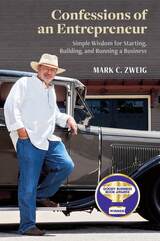
Finalist, 2022 Goody Business Book Awards, Entrepreneur, Start Ups / New Business Category
With more than fifty years of professional experience, Mark C. Zweig has seen it all—from the fear and excitement of starting a new business to the joys and challenges of life as an entrepreneur. In Confessions of an Entrepreneur: Simple Wisdom for Starting, Building, and Running a Business, Zweig draws upon this wealth of experience to offer practical, easy-to-understand guidance for bringing a business to life and cultivating success at every stage of its development. The candid stories he shares from his career provide insight into the realities of business ownership and illustrate proven principles for both personal and professional success. Written by an entrepreneur for entrepreneurs, this book is an indispensable guide filled with wisdom for new and seasoned business leaders alike.
An Essential Book for Runners of All Abilities
All of the Author’s Proceeds Go to Shoes4Africa to Support the Construction of Children’s Hospitals in Kenya
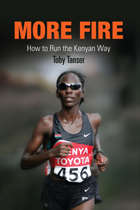
Kenya has produced the greatest concentration of world-class runners, and fellow athletes have long been intrigued by their remarkable success. Toby Tanser has devoted much of his professional career living and training among Kenyan runners in order to better understand the unique status of East African athletes. In More Fire: How to Run the Kenyan Way, the author builds upon the success of his acclaimed Train Hard, Win Easy, the first book to provide insights into the Kenyan "magic" that so many runners and coaches had sought. Instead of special foods or secret techniques, Tanser found that Kenyan runners simply trained incredibly hard, much harder than anyone had realized. By adapting their training regime—which includes three workouts a day—and following their example, runners, whether novices or champions, are able to improve both their performance and enjoyment in running. For those training for a marathon or any other distance race, this book is both practical and inspirational.
Divided into four parts, the book begins with a description of running in Kenya, the landscape, the physical conditions, and the people; the second part concentrates on details of Kenyan training camps, training methods, and their typical training diet; the third profiles individual runners and coaches from the past and present, with each explaining their approach to running so that readers can gain further insight into their methods. The book ends with a discussion on how the reader can adapt Kenyan training practices for their own running requirements. More Fire: How to Run the Kenyan Way is essential reading for runners of all levels and experience.
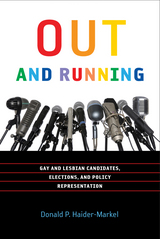
Out and Running is the first systematic analysis of lesbian, gay, bisexual, and transgender (LGBT) political representation that explores the dynamics of state legislative campaigns and the influence of lesbian and gay legislators in the state policymaking process. By examining state legislative elections from 1992 to 2006 and state policymaking from 1992 to 2009, Donald Haider-Markel suggests that the LGBT community can overcome hurdles and win elections; and, once in office, these officials can play a critical role in the policy representation of the community.
However, he also discovers that there are limits to where and when LGBT candidates can run for office and that, while their presence in office often enhances policy representation, it can also create backlash. But even with some of these negative consequences, Out and Running provides compelling evidence that gays and lesbians are more likely to see beneficial legislation pass by increasing the number of LGBT state legislators. Indeed, grassroots politics in the states may allow the LGBT community its best opportunity for achieving its policy goals.
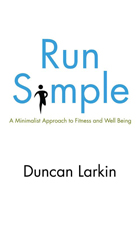
In this age of instant information and new technologies, marathoner and fitness instructor Duncan Larkin recommends that runners get rid of their iPods, pace calculators, and heart monitors while exercising. Rather than helping a runner to improve, the author contends that these devices can be a detriment to both performance and the benefits of a training program. Written in direct, clear language, Run Simple: A Minimalist Approach to Fitness and Well-Being is a practical and inspirational pocket guide for runners of all abilities. The author’s goal is to share with his fellow runners the principles he has discovered that prevent burn out and promote the maximum physical and mental benefits of running. Beginning with a discussion about the role of electronic devices and other equipment that have become commonplace among the millions of persons who run every day, the author explains how to return to a simpler way of exercising and training, including running plans that demonstrate the benefits of watch-free running. He also recommends replacing a gym membership with alternative exercises that can be done at home as well as taking better control of individual nutrition. In addition, the author shows ways to economize expenses associated with running, how to dress properly for different weather conditions, and mental exercises for motivation. By following the author’s advice, runners will improve their running experience and maintain a healthy exercise regimen.
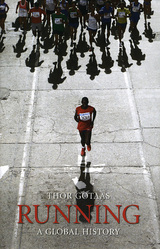
In the past decade, the number of Americans who consider themselves runners more than doubled—in 2008, more than 16 million Americans claimed to have run or jogged at least 100 days in the year. Though now running thrives as a convenient and accessible form of exercise, it is no surprise to learn that the modern craze is not truly new; humans have been running as long as they could walk. What may be surprising however are the myriad reasons why we have performed this exhausting yet exhilarating activity through the ages. In this humorous and unique world history, Thor Gotaas collects numerous unusual and curious stories of running from ancient times to modern marathons and Olympic competitions.
Amongst the numerous examples that illustrate Gotaas’s history are King Shulgi of Mesopotamia, who four millennia ago boasted of running from Nippur to Ur, a distance of not less than 100 miles. Gotaas’s account also includes ancient Egyptian pharaohs who ran to prove their vitality and maintain their power, Norwegian Vikings who exercised by running races against animals, as well as little-known naked runs, bar endurance tests, backward runs, monk runs, snowshoe runs, and the Incas’ ingenious infrastructure of professional runners.
The perfect gift for the sprinter, the marathoner, or the daily jogger, this intriguing world history will appeal to all who wish to know more about why the ancients shared our love—and hatred—of this demanding but rewarding pastime.

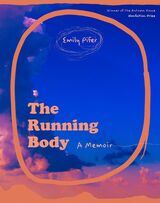
Emily Pifer’s debut memoir, The Running Body, wrestles and reckons with power and agency, language and story, body dysphoria and beauty standards, desire and addiction, loss and healing. Pifer employs multiple modes of storytelling—memoir, meditation, and cultural analysis—interweaving research, argument, and experience as she describes how, during her time as a collegiate distance runner, she began to run more while eating less. Many around her, including her coaches, praised her for these practices. But as she became faster, and as her body began to resemble the bodies that she had seen across start-lines and on the covers of running magazines, her bones began to fracture. Pifer tells her story alongside the stories of her teammates, competitors, and others as they all face trouble regarding their bodies.
Through the lens of long-distance running, Pifer examines the effects of idolization and obsession, revealing the porous boundaries between what counts as success and what is considered failure. While grounded in truth, The Running Body interrogates its relationship to magical thinking, the stories we tell ourselves, and the faultiness of memory. Fractures, figurative and literal, run through the narrative as Pifer explores the ways bodies become entangled in stories.
The Running Body was selected by Steve Almond as the winner of the 2021 Autumn House Nonfiction Prize.
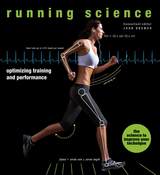
As a sports scientist and Running Fitness columnist, John Brewer has reviewed hundreds of scientific studies, and he offers runners the benefit of their findings in Running Science. Each chapter explores a different aspect of the sport through a series of questions. Many of the questions address practical matters: Do you really need to stretch? Which running shoes best suit your form and foot strike? Does carbo-loading lore stand up to scientific scrutiny—could a big bowl of spaghetti be the difference between a PR and a DNF? Other questions enhance appreciation for the incredible feats of the sport’s great athletes. (What would it take to run a two-hour marathon? Perfect weather, a straight, flat course, competition, and a lot of luck!) The answer to each question is presented in a straightforward, accessible manner, with accompanying infographics.
Whether you’re a beginner or a seasoned runner with many miles and medals behind you, Running Science is a must-have for anyone interested in the fascinating science behind the sport.
As Vaz highlights, early urban gamblers favored low-stakes games built around combinations of winning numbers. When these games became one of the largest economic engines in nonwhite areas like Harlem and Chicago’s south side, police took notice of the illegal business—and took advantage of new opportunities to benefit from graft and other corrupt practices. Eventually, governments found an unusual solution to the problems of illicit gambling and abusive police tactics: coopting the market through legal state-run lotteries, which could offer larger jackpots than any underground game. By tracing this process and the tensions and conflicts that propelled it, Vaz brilliantly calls attention to the fact that, much like education and housing in twentieth-century America, the gambling economy has also been a form of disputed terrain upon which racial power has been expressed, resisted, and reworked.
These poems teem with life, a life rich with many selves and many histories that populate in the voice of Reyes’s poetic narrator. They sway between negotiations of hypervisibility and erasure, the inevitable and the chosen, and the perceived and the constructed. Reyes’s poems offer sharp observations and lyrical movement to guide us in a ballad of reconciliation and becoming.
Running to the Fire focuses on the turbulent year the Bascom family experienced upon traveling into revolutionary Ethiopia. The teenage Bascom finds a paradoxical exhilaration in living so close to constant danger. At boarding school in Addis Ababa, where dorm parents demand morning devotions and forbid dancing, Bascom bonds with other youth due to a shared sense of threat. He falls in love for the first time, but the young couple is soon separated by the politics that affect all their lives. Across the country, missionaries are being held under house arrest while communist cadres seize their hospitals and schools. A friend’s father is imprisoned as a suspected CIA agent; another is killed by raiding Somalis.
Throughout, the teenaged Bascom struggles with his faith and his role within the conflict as a white American Christian missionary’s child. Reflecting back as an adult, he explores the historical, cultural, and religious contexts that led to this conflict, even though in doing so he is forced to ask himself questions that are easier left alone. Why, he wonders, did he find such strange fulfillment in being young and idealistic in the middle of what was essentially a kind of holy war?
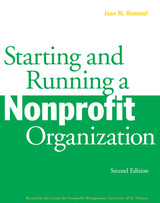
Starting and Running a Nonprofit Organization is a book for people who are forming new small nonprofits; thinking about converting an informal, grassroots group into tax-exempt status; reorganizing an existing agency; or currently managing a nonprofit. It provides practical and basic how-to information on legal, tax, organizational, and other issues particular to nonprofits.
This one-of-a-kind resource has been a valuable guide to nonprofit management for decades. While much of the information originated in an earlier era of nonprofit formation, it remains highly useful for gaining an overview and creating an action plan for people entering this realm of organizational management. Its compact format provides information in an easy-to-understand style. The book describes, step-by-step, the typical phases of creating and operating a new nonprofit, including incorporation, establishing a board of directors, writing bylaws, obtaining tax-exempt status, creating a strategic plan, budgeting and grant seeking, understanding accounting principles, managing human resources, and creating a community relations plan.
The Center for Nonprofit Management is a department of the Graduate School of Business at the University of St. Thomas in Minneapolis and St. Paul. It provides training and guidance in all aspects of the nonprofit sector to existing organizations as well as individuals or groups who are seeking help in starting a nonprofit.
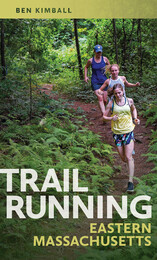
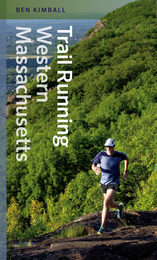
Eastern Massachusetts offers incredible trail-running opportunities, ranging from popular long-distance routes like the Bay Circuit Trail to lesser-known loops that run through the mountains and forests of the Quabbin watershed and Merrimack Valley region, and trails that pass alongside the shores of Cape Cod. All over the Bay State, there are trails suitable for runners of all levels waiting to be discovered and explored.
Avid trail runner Ben Kimball offers a selection of fifty-one of eastern Massachusetts’s most spectacular trail sites, including detailed trail descriptions, topographic maps, directions, parking information, safety tips, and much more. Both experienced and novice trail runners will find Trail Running Eastern Massachusetts to be an invaluable resource for exploring nature and getting a good workout, in the Boston area and beyond.
READERS
Browse our collection.
PUBLISHERS
See BiblioVault's publisher services.
STUDENT SERVICES
Files for college accessibility offices.
RECENTLY PUBLISHED


UChicago Accessibility Resources
home | accessibility | search | about | contact us
BiblioVault ® 2001 - 2024
The University of Chicago Press