
 A SCHOLARLY BOOK REPOSITORY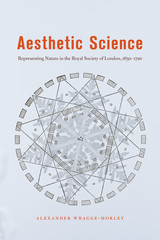
To show how early modern naturalists conceived of the interplay between sensory experience and the production of knowledge, Aesthetic Science explores natural-historical and anatomical works of the Royal Society through the lens of the aesthetic. By underscoring the importance of subjective experience to the communication of knowledge about nature, Wragge-Morley offers a groundbreaking reconsideration of scientific representation in the early modern period and brings to light the hitherto overlooked role of aesthetic experience in the history of the empirical sciences.
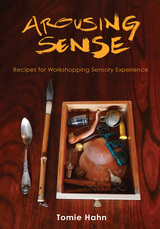
User-friendly and practical, Arousing Sense is a guide to how teaching through sensory experience can lead to positive, transformative impact in the classroom and everyday life.
The Forgotten Sense gives touch its due, addressing it in multifarious ways through a series of six essays. Literary in feel, ambitious in conception, admirable in their range of reference and insight, these meditations address questions fundamental to the understanding of touch: What do we mean when we say that an artwork touches us? How does language affect our understanding of touch? Is the skin the deepest part of the human body? Can we philosophize about a kiss? To aid him in answering these questions, Pablo Maurette recruits an impressive roster of cultural figures from throughout history: Homer, Lucretius, Chrétien de Troyes, Melville, Sir Thomas Browne, Knausgaard, Michel Henry and many others help him unfurl the underestimated importance of the sense of touch and tactile experience.
The resulting book is essay writing at its best—exploratory, surprising, dazzling, a reading experience like no other. You will come away from it with a new appreciation of touch, and a new way of understanding our interactions with the world around us.

How does sense perception contribute to human cognition? How did the Byzantines understand that contribution? Byzantine culture in all its domains showed deep appreciation for sensory awareness and sensory experience. The senses were reckoned as modes of knowledge—intersecting realms both human and divine, bodily and spiritual, physical and intellectual.
Scholars have attended to aspects of sight and sound in Byzantine culture, but have generally left smell, taste, and touch undervalued and understudied. Through collected essays that redress the imbalance, the contributors explore how the Byzantines viewed the senses; how they envisaged sensory interactions within their world; and how they described, narrated, and represented the senses at work. The result is a fresh charting of the Byzantine sensorium as a whole.
We experience art with our whole bodies, yet traditional approaches to Persian literature overemphasize the mind—the political, allegorical, or didactic—and ignore the feelings that uniquely characterize aesthetics. Losing Our Minds, Coming to Our Senses rediscovers the sensuality of Persian art across period, genre, and artist. Through readings of such well-known writers as Rumi and lesser-known artists as Hossein Abkenar, the authors demonstrate the significance of sensoria to the rich history of Persian letters.
In ancient Peru, a site provides sensory surprises as voices resound beneath the ground and hidden carvings slowly reveal their secrets. In Canada and New Zealand, the flicker of reflected light from a lake dances on the faces of painted rocks and may have influenced when and why the pigment was applied. In Mesopotamia, vessels for foodstuffs build a picture of a past cuisine that encompasses taste and social activity in the building of communities. While perfume and flowers are examined in various cultures, in the chamber tombs of ancient Roman Palestine, we are reminded that not all smells are pleasant. Making Senses of the Past explores alternative ways to perceive past societies and offers a new way of wiring archaeology that incorporates the senses.
This twentieth anniversary edition includes a new preface in which Massumi situates the book in relation to developments since its publication and outlines the evolution of its main concepts. It also includes two short texts, “Keywords for Affect” and “Missed Conceptions about Affect,” in which Massumi explicates his approach to affect in ways that emphasize the book's political and philosophical stakes.
Renewing and assessing William James's radical empiricism and Henri Bergson's philosophy of perception through the filter of the post-war French philosophy of Deleuze, Guattari, and Foucault, Massumi links a cultural logic of variation to questions of movement, affect, and sensation. If such concepts are as fundamental as signs and significations, he argues, then a new set of theoretical issues appear, and with them potential new paths for the wedding of scientific and cultural theory. Replacing the traditional opposition of literal and figural with new distinctions between stasis and motion and between actual and virtual, Parables for the Virtual tackles related theoretical issues by applying them to cultural mediums as diverse as architecture, body art, the digital art of Stelarc, and Ronald Reagan's acting career. The result is an intriguing combination of cultural theory, science, and philosophy that asserts itself in a crystalline and multi-faceted argument.
Panagia claims that the rule of narrative governs our inherited notions of political subjectivity and agency, such that reading and writing are the established modes of political deliberation. Yet the contemporary citizen-subject is a viewing subject, influenced by film, photos, and other perceptual stimuli as much as by text. Challenging the rule of narrative, Panagia analyzes diverse sites of cultural engagement including the visual dynamics portrayed in the film The Ring, the growth of festival culture in late-fifteenth-century Florence, the practices of convivium espoused by the Slow Food movement, and the architectural design of public newsstands. He then ties these occasions for sensation to notable moments in the history of political thought and shows the political potential of a dislocated subjectivity therein. Democratic politics, Panagia concludes, involves a taking part in those everyday practices that interrupt our common modes of sensing and afford us an awareness of what had previously been insensible.
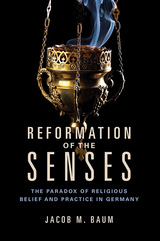
In The Senses of Democracy, Francine R. Masiello traces a history of perceptions expressed in literature, the visual arts, politics, and history from the start of the nineteenth century to the present day. A wide transnational landscape frames the book along with an original and provocative thesis: when the discourse on democracy is altered—when nations fall into crisis or the increased weight of modernity tests minds and nerves—the representation of our sensing bodies plays a crucial role in explaining order and rebellion, cultural innovation, and social change.
Taking a wide arc of materials—periodicals, memoirs, political proclamations, and travel logs, along with art installations and fiction—and focusing on the technologies that supplement and enhance human perception, Masiello looks at the evolution of what she calls “sense work” in cultural texts, mainly from Latin America, that wend from the heights of romantic thought to the startling innovations of modernism in the early twentieth century and then to times of posthuman experience when cyber bodies hurtle through globalized space and human senses are reproduced by machines. Tracing the shifting debates on perceptions, The Senses of Democracy offers a new paradigm with which to speak of Latin American cultural history and launches a field for the comparative study of bodies, experience, pleasure, and pain over the continental divide. In the end, sense work helps us to understand how culture finds its location.
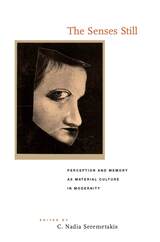
The contributors are Susan Buck-Morss, Allen Feldman, Jonas Frykman, C. Nadia Seremetakis, and Paul Stoller.
C. Nadia Seremetakis is Advisor to the Minister of Public Health in Greece and visiting professor at the National School of Public Heath in Athens. She is the author of The Last Word: Women, Death, and Divination in Inner Mani, available from the University of Chicago Press.
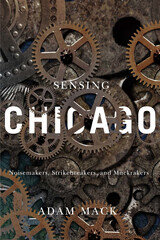
In Sensing Chicago, Adam Mack lets fresh air into the sensory history of Chicago in the nineteenth and early twentieth centuries by examining five case studies: the Chicago River, the Great Fire, the 1894 Pullman Strike, the publication of Upton Sinclair's The Jungle, and the rise and fall of the White City amusement park. His vivid recounting of the smells, sounds, and tactile miseries of city life reveals how input from the five human senses influenced the history of class, race, and ethnicity in the city. At the same time, he transports readers to an era before modern refrigeration and sanitation, when to step outside was to be overwhelmed by the odor and roar of a great city in progress.
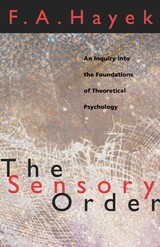
"A most encouraging example of a sustained attempt to bring together information, inference, and hypothesis in the several fields of biology, psychology, and philosophy."—Quarterly Review of Biology
F. A. Hayek (1899-1992), recipient of the Medal of Freedom in 1991 and co-winner of the Nobel Memorial Prize in Economics in 1974, taught at the University of London, the University of Chicago, and the University of Freiburg.
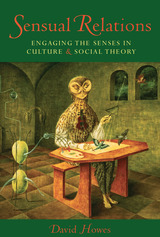
David Howes is Professor of Anthropology, Concordia University, Montreal, Quebec.
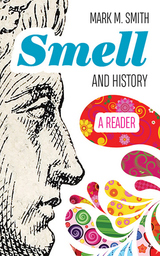
Smell and History collects many of the most important recent essays on the history of scent, aromas, perfumes, and ways of smelling. With an introduction by Mark M. Smith—one of the leading social and cultural historians at work today and the preeminent champion in the United States of the emerging field of sensory history—the volume introduces to undergraduate and graduate students as well as to historians of all fields the richness, relevance, and insightfulness of the olfactory to historical study.
Ranging from antiquity to the present, these ten essays, most of them published since 2003, consider how olfaction and scent have shaped the history of medicine, gender, race-making, class formation, religion, urbanization, colonialism, capitalism, and industrialization; how habits and practices of smelling informed ideas about the Enlightenment, modernity, and memory; how smell shaped perceptions of progress and civilization; and how people throughout history have used smell as a way to organize categories and inform worldviews.
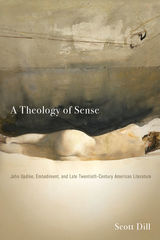
Dill explores Updike’s unique literary legacy in order to argue for a genuinely postsecular theory of aesthetic experience. Each chapter takes up one of the five senses and its relation to broader theoretical concerns: affect, subjectivity, ontology, ethics, and theology. While placing Updike’s work in relation to other late twentieth-century American writers, Dill explains their notions of embodiment and uses them to render a new account of postsecular aesthetics. No other novelist has portrayed mere sense experience as carefully, as extensively, or as theologically—repeatedly turning to the doctrine of creation as his stylistic justification. Across this examination of his many stories, novels, poems, and essays, Dill proves that Updike forces us to reconsider the power of literature to revitalize sense experience as a theological question.
READERS
Browse our collection.
PUBLISHERS
See BiblioVault's publisher services.
STUDENT SERVICES
Files for college accessibility offices.
RECENTLY PUBLISHED


UChicago Accessibility Resources
home | accessibility | search | about | contact us
BiblioVault ® 2001 - 2024
The University of Chicago Press