
 A SCHOLARLY BOOK REPOSITORY
By juxtaposing the voices of women and men from all walks of life, Sigel finds that women's perceptions of gender relations are complex and often contradictory. Although most women see gender discrimination pervading nearly all social interactions—private as well as public—they do not invariably feel that they personally have been its victims. They want to see discrimination ended, but believe that men do not necessarily share this goal. Women are torn, according to Sigel, between the desire to improve their positions relative to men and the desire to avoid open conflict with them. Their desire not to jeopardize their relations with men, Sigel holds, helps explain women's willingness to accommodate a less-than-egalitarian situation by, for example, taking on the second shift at home or by working harder than men on the job. Sigel concludes that, although men and women agree on the principle of gender equality, definitions as well as practice differ by gender.
This complex picture of how women, while not always content with the status quo, have chosen to accommodate to the world they must face every day is certain to provoke considerable debate.


In the early 1970s, David Copus, a young, long-haired lawyer, teamed up with his government colleagues to confront the mature and staid executives of AT&T over the company’s treatment of its female and minority employees. Their disagreement resulted in a $38 million settlement that benefited 15,000 employees, more than 13,000 of them women, and changed our perceptions of women’s and men’s roles in the workplace forever.
Copus, who worked for the Equal Employment Opportunity Commission (EEOC), was charged with representing American citizens who suffered from employment discrimination. Time and again he saw young, black women in the South being turned down for available jobs in local phone companies—usually as telephone operators—often for no valid reason at all. He and the EEOC decided to challenge AT&T’s company-wide sex discrimination practices. Eventually, AT&T’s corporate colleagues, witnessing AT&T’s capitulation, began to hire and promote women into better jobs themselves. At the same time, the EEOC started to more aggressively push corporate America to give women better opportunities.
The Bellwomen recounts the history of this case in a novelistic style, illuminating the motivations, strengths, and weaknesses of all the players, from AT&T corporate leaders, to the lawyers of the EEOC, to the female activists fighting for what they believed. Stockford also profiles three beneficiaries of the case, presenting their ambitions and achievements.
Combined with the power of America’s civil rights laws and the influence of the second wave women’s movement, this case provided a catalyst that drove many more women into the paid workforce in non-traditional jobs. By the late twentieth century, when women could be seen working everywhere, from construction sites to corporate offices, it appeared that they belonged there and always had.
Frader’s analysis moves between the everyday lives of ordinary working women and men and the actions of national policymakers, political parties, and political movements, including feminists, pro-natalists, and trade unionists. In the years following World War I, the many women and an increasing number of immigrant men in the labor force competed for employment and pay. Family policy was used not only to encourage reproduction but also to regulate wages and the size of the workforce. Policies to promote married women’s and immigrants’ departure from the labor force were more common when jobs were scarce, as they were during the Depression. Frader contends that gender and ethnicity exerted a powerful and unacknowledged influence on French social policy during the Depression era and for decades afterward.

The minuscule motion of a butterfly’s wings can trigger a tornado half a world away, according to chaos theory. Under the right conditions, small simple actions can produce large complex effects. In this timely and provocative book, Catharine A. MacKinnon argues that the right seemingly minor interventions in the legal realm can have a butterfly effect that generates major social and cultural transformations.
Butterfly Politics brings this incisive understanding of social causality to a wide-ranging exploration of gender relations. The pieces collected here—many published for the first time—provide a new perspective on MacKinnon’s career as a pioneer of legal theory and practice and an activist for women’s rights. Its central concerns of gender inequality, sexual harassment, rape, pornography, and prostitution have defined MacKinnon’s intellectual, legal, and political pursuits for over forty years. Though differing in style and approach, the selections all share the same motivation: to end inequality, including abuse, in women’s lives. Several mark the first time ideas that are now staples of legal and political discourse appeared in public—for example, the analysis of substantive equality. Others urge changes that have yet to be realized.
The butterfly effect can animate political activism and advance equality socially and legally. Seemingly insignificant actions, through collective recursion, can intervene in unstable systems to produce systemic change. A powerful critique of the legal and institutional denial of reality that perpetuates practices of gender inequality, Butterfly Politics provides a model of what principled, effective, socially conscious engagement with law looks like.
“Sometimes ideas change the world. This astonishing, miraculous, shattering, inspiring book captures the origins and the arc of the movement for sex equality. It’s a book whose time has come—always, but perhaps now more than ever.”
—Cass Sunstein, coauthor of Nudge
Under certain conditions, small simple actions can produce large and complex “butterfly effects.” Butterfly Politics shows how Catharine A. MacKinnon turned discrimination law into an effective tool against sexual abuse—grounding and predicting the worldwide #MeToo movement—and proposes concrete steps that could have further butterfly effects on women’s rights. Thirty years after she won the U.S. Supreme Court case establishing sexual harassment as illegal, this timely collection of her previously unpublished interventions on consent, rape, and the politics of gender equality captures in action the creative and transformative activism of an icon.
“MacKinnon adapts a concept from chaos theory in which the tiny motion of a butterfly’s wings can trigger a tornado half a world away. Under the right conditions, she posits, small actions can produce major social transformations.”
—New York Times
“MacKinnon [is] radical, passionate, incorruptible and a beautiful literary stylist… Butterfly Politics is a devastating salvo fired in the gender wars… This book has a single overriding aim: to effect global change in the pursuit of equality.”
—The Australian
“Sexual Harassment of Working Women was a revelation. It showed how this anti-discrimination law—Title VII—could be used as a tool… It was the beginning of a field that didn’t exist until then.”
—U.S. Supreme Court Justice Ruth Bader Ginsburg

Works of Distinction, LDEI M.F.K. Fisher Prize for Excellence in Culinary Media Content, 2022
A rare woman’s-eye-view of working in the professional French kitchen
Though women enter France’s culinary professions at higher rates than ever, men still receive the lion’s share of the major awards and Michelin stars. Rachel E. Black looks at the experiences of women in Lyon to examine issues of gender inequality in France’s culinary industry. Known for its female-led kitchens, Lyon provides a unique setting for understanding the gender divide, as Lyonnais women have played a major role in maintaining the city’s culinary heritage and its status as a center for innovation. Voices from history combine with present-day interviews and participant observation to reveal the strategies women use to navigate male-dominated workplaces or, in many cases, avoid men in kitchens altogether. Black also charts how constraints imposed by French culture minimize the impact of #MeToo and other reform-minded movements.
Evocative and original, Cheffes de Cuisine celebrates the successes of women inside the professional French kitchen and reveals the obstacles women face in the culinary industry and other male-dominated professions.

Galvanized by their shared experiences with sex discrimination, the Ann Arbor women organized a group called FOCUS on Equal Employment for Women, led by activist Jean Ledwith King. Working with Bernice Sandler of the Women’s Equity Action League, they developed a strategy to unleash the power of another powerful institution—the federal government—to demand change at U-M and, they hoped, across the world of higher education. Prompted by a complaint filed by FOCUS, the U.S. Department of Health, Education, and Welfare soon documented egregious examples of discrimination in Michigan’s practices toward women and threatened to withhold millions of dollars in contracts unless the school adopted remedies. Among the hundreds of similar complaints filed against U.S. colleges in 1970–1971, the one brought by the Michigan women achieved the breakthrough that provided the historic template for settlements with other institutions.
Drawing on oral histories from archives as well as new interviews with living participants, Conquering Heroines chronicles this pivotal period in the histories of the University of Michigan and the women’s movement. An incredible story of grassroots activism and courageous women, the book highlights the kind of relentless effort that has helped make inclusivity an ongoing goal at U-M.
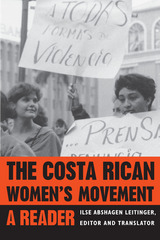
This reader reflects the genesis, scope, and direction of women’s activism in a single Latin American country. It collects the voices of forty-one diverse women who live in Costa Rica, some radical, others strongly conservative, and most ranging inbetween, as they write about their lives, their problems, their aspirations.
Unlike the comparative studies of women’s issues that look at several different countries, the reader provides an insider’s view of one small, but quintessentially Latin American, society. These women write of their own experience in organizing and working for change within the Costa Rican community. Some represent groups fitting into traditional “women’s movement” that wants to improve certain aspects of women’s and families’ daily lives. Still others, the “feminists,” argue forcefully that true improvement requires a profound change of power relations in society, of women’s access to power and decision making.
The articles are organized into thematic groups that range from the definitions of Feminism in Costa Rica to women in Costa Rican history, women’s legal equality, discrimination against women, and the status of Women’s Studies. The brief biographies that identify each author underscore the leadership of Costa Rican women in Latin American Feminism. The founders and editors of Mujer, one of the most influential Feminist journals in Latin America, are among the authors represented in the reader.
The audience for this book will include specialists interested in Latin America, in women in Latin America, and in the international women’s movement.
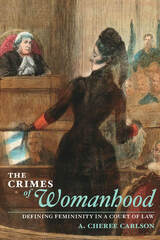
Carlson analyzes the situations of several women of varying historical stature, from the insanity trials of Mary Todd Lincoln and Lizzie Borden's trial for the brutal slaying of her father and stepmother, to lesser-known trials involving insanity, infidelity, murder, abortion, and interracial marriage. The insanity trial of Elizabeth Parsons Ware Packard, the wife of a minister, resulted from her attempts to change her own religion, while a jury acquitted Mary Harris for killing her married lover, suggesting that loss of virginity to an adulterous man was justifiable grounds for homicide. The popular conception of abortion as a "woman's crime" came to the fore in the case of Ann Loman (also known as Madame Restell), who performed abortions in New York both before and after it became a crime. Finally, Alice Rhinelander was sued for fraud by her new husband Leonard for "passing" as white, but the jury was more moved by the notion of Alice being betrayed as a woman by her litigious husband than by the supposed defrauding of Leonard as a white male. Alice won the case, but the image of womanhood as in need of sympathy and protection won out as well.
At the heart of these cases, Carlson reveals clearly just how narrow was the line that women had to walk, since the same womanly virtues that were expected of them--passivity, frailty, and purity--could be turned against them at any time. These trials of popular status are especially significant because they reflect the attitudes of the broad audience, indicate which forms of knowledge are easily manipulated, and allow us to analyze how the verdict is argued outside the courtroom in the public and press. With gripping retellings and incisive analysis of these scandalous criminal and civil cases, this book will appeal to historians, rhetoricians, feminist researchers, and anyone who enjoys courtroom drama.

The Indian village of Deorala in Rajasthan, the northwestern Indian state that borders Pakistan, is neither remote nor feudal in the strictest sense. A tarmac road links the population of 10,000 to neighboring villages and towns, there is running water and electricity, and the villagers have had television for more than twenty years. On September 4, 1987, Deorala found itself in the center of a furor that awoke age-old conflicts in Indian society. Before a crowd of several thousand people, mostly men, a young woman dressed in her bridal finery was burned alive on her husband’s funeral pyre. The apparent revival of an ancient tradition opened old wounds in Indian society and focused world attention on the status and treatment of women in modern India.
The ancient practice of sati — the self-immolation of a woman on her husband’s funeral pyre — was outlawed by the British administration in India in 1829, and sati was widely believed to have died out. The fate of 18-year-old Roop Kanwar changed that perception. Mala Sen explores the reality of life and death for women in modern India in a study that is both illuminating and terrifying. The book is part journey through the India that the author knows and loves, and part exploration of the enigma that India still remains in the minds of many. Starting with Kanwar, Sen enters the worlds of three women: a goddess, a burned bride, and a woman accused of killing her daughter, and shows how, in this society in which ancient and modern apparently co-exist comfortably, there is increasingly cause for real alarm. She creates an image of a state in which political turmoil is constantly at the surface, and in which the role of women is constantly being redefined.
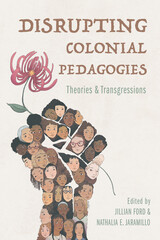
Jillian Ford and Nathalia E. Jaramillo edit a collection of writings by women that examine womanist worldviews in philosophy, theory, curriculum, public health, and education. Drawing on thinkers like bell hooks and Cynthia Dillard, the essayists challenge the colonizing hegemonies that raise and sustain patriarchal and male-centered systems of teaching and learning. Part One examines how womanist theorizing and creative activity offer a space to study the impact of conquest and colonization on the Black female body and spirit. In Part Two, the contributors look at ways of using text, philosophy, and research methodologies to challenge colonizing and colonial definitions of womanhood, enlightenment, and well-being. The essays in Part Three undo the colonial pedagogical project and share the insights they have gained by freeing themselves from its chokehold.
Powerful and interdisciplinary, Disrupting Colonial Pedagogies challenges colonialism and its influence on education to advance freer and more just forms of knowledge making.
Contributors: Silvia García Aguilár, Khalilah Ali, Angela Malone Cartwright, Adriana Diego, LeConté Dill, Sameena Eidoo, Genevieve Flores-Haro, Jillian Ford, Leena Her, Nathalia E. Jaramillo, Patricia Krueger-Henney, Claudia Lozáno, Liliana Manriquez, Alberta Salazár, León Salazár, and Lorri Santamaría

Doing Comparable Worth is the first empirical study of the actual process of attempting to translate into reality the idea of equal pay for work of equal value. This political ethnography documents a large project undertaken by the state of Oregon to evaluate 35,000 jobs of state employees, identify gender-based pay inequities, and remedy these inequities. The book details both the technical and political processes, showing how the technical was always political, how management manipulated and unions resisted wage redistribution, and how initial defeat was turned into partial victory for pay equity by labor union women and women's movement activists.
As a member of the legislative task force that was responsible for implementing the legislation requiring a pay equity study in Oregon, Joan Acker gives an insider's view of how job evaluation, job classification, and the formulation of an equity plan were carried out. She reveals many of the political and technical problems in doing comparable worth that are not evident to outsiders. She also places comparable worth within a feminist theoretical perspective.
In the series Women in the Political Economy, edited by Ronnie J. Steinberg.

In TheEnd of Equality, renowned feminist Beatrix Campbell argues that even as the patriarchy has lost some of its legitimacy, new inequalities are emerging in our culture. We are living, Campbell writes, in an era of neo-patriarchy in which violence has proliferated; body anxiety and self-hatred have flourished; rape is committed with impunity; sex trafficking thrives, and the struggle for equal pay is at an end. After four decades observing society, Campbell still speaks of the long-sought goal of gender equality. But now she calls for a new revolution.

This reader addresses issues in sports before Title IX and the backlash that has resulted from the policy being instituted. The editors have collected the best scholarly writing on the landmark events of the last four decades and couple these with new original essays, primary documents from court cases, administrative regulations, and relevant supporting sources. The result is the most comprehensive single-volume work on the subject.
Equal Play includes essays by many well-known sports journalists who discuss how government actions have shaped, supported, and hindered the goal of gender equality in school athletics. They discuss the history of women in sports, analyze the meaning of "equal opportunity" for female athletes, and examine shifts in arguments for and against Title IX. Equal Play will interest anyone who is concerned with gender issues in American athletics and the growth of college sports.
Contributors include: Susan Cahn, Donna de Varona, Julie Foudy, Jessica Gavora, Bil Gilbert, Christine Grant, Mariah Burton Nelson, Gary R. Roberts, Don Sabo, Larry Schwartz, Michael Sokolove, Welch Suggs, Nancy Williamson, and the editors.

The first large-scale empirical analysis of the gender gap in science, showing how the structure of scientific labor and rewards—publications, citations, funding—systematically obstructs women’s career advancement.
If current trends continue, women and men will be equally represented in the field of biology in 2069. In physics, math, and engineering, women should not expect to reach parity for more than a century. The gender gap in science and technology is narrowing, but at a decidedly unimpressive pace. And even if parity is achievable, what about equity?
Equity for Women in Science, the first large-scale empirical analysis of the global gender gap in science, provides strong evidence that the structures of scientific production and reward impede women’s career advancement. To make their case, Cassidy R. Sugimoto and Vincent Larivière have conducted scientometric analyses using millions of published papers across disciplines. The data show that women are systematically denied the chief currencies of scientific credit: publications and citations. The rising tide of collaboration only exacerbates disparities, with women unlikely to land coveted leadership positions or gain access to global networks. The findings are unequivocal: when published, men are positioned as key contributors and women are relegated to low-visibility technical roles. The intersecting disparities in labor, reward, and resources contribute to cumulative disadvantages for the advancement of women in science.
Alongside their eye-opening analyses, Sugimoto and Larivière offer solutions. The data themselves point the way, showing where existing institutions fall short. A fair and equitable research ecosystem is possible, but the scientific community must first disrupt its own pervasive patterns of gatekeeping.

***Winner of an English PEN Award 2021***
In this sharp intervention, authors Lucí Cavallero and Verónica Gago defiantly develop a feminist understanding of debt, showing its impact on women and members of the LGBTQ+ community and examining the relationship between debt and social reproduction.
Exploring the link between financial activity and the rise of conservative forces in Latin America, the book demonstrates that debt is intimately linked to gendered violence and patriarchal notions of the family. Yet, rather than seeing these forces as insurmountable, the authors also show ways in which debt can be resisted, drawing on concrete experiences and practices from Latin America and around the world.
Featuring interviews with women in Argentina and Brazil, the book reveals the real-life impact of debt and how it falls mainly on the shoulders of women, from the household to the wider effects of national debt and austerity. However, through discussions around experiences of work, prisons, domestic labour, agriculture, family, abortion and housing, a narrative of resistance emerges.
Translated by Liz Mason-Deese.

***Winner of an English PEN Award 2022***
The mainstream conversation surrounding gender equality is a repertoire of violence: harassment, rape, abuse, femicide. These words suggest a cruel reality. But they also hide another reality: that of gendered violence committed with the complicity of the State.
In this book, Françoise Vergès denounces the carceral turn in the fight against sexism. By focusing on 'violent men', we fail to question the sources of their violence. There is no doubt as to the underlying causes: racial capitalism, ultra-conservative populism, the crushing of the Global South by wars and imperialist looting, the exile of millions and the proliferation of prisons - these all put masculinity in the service of a policy of death.
Against the spirit of the times, Françoise Vergès refuses the punitive obsession of the State in favour of restorative justice.

Chapters focus on theoretical approaches demonstrating how different disciplinary starting points—e.g., politics, violence and gender—give rise to different lenses. Essays examine violence carried out during conflict and peacetime, and relate to the continuum of violence—physical, sexual, psychological, and online. In addition, six country case studies reveal how different types of political actors have been targets of violence.
Gender and Violence against Political Actors ends by providing various approaches to responding to the problem of gendered violence in politics while also evaluating policy responses.
Contributors: Kerryn Baker, Julie Ballington, Gabrielle Bardall, Gabriella Borovsky, Cheryl N. Collier, Sofia Collignon, Maria Eriksson Baaz, Eleonora Esposito, Nicole Haley, Rebekah Herrick, Sandra Håkansson, Roudabeh Kishi, Anne-Kathrin Kreft, Mona Lena Krook, Rebecca Kuperberg, Robert U. Nagel, Louise Olsson, Jennifer M. Piscopo, Tracey Raney, Juliana Restrepo Sanín, Paige Schneider, Maria Stern, Sue Thomas, and the editors

In the formative years of the Japanese labor movement after World War II, the socialist unions affiliated with the General Council of Trade Unions (the labor federation known colloquially as Sohyo) formally endorsed the principles of women’s equality in the workforce and put in place measures to promote women’s active participation in union activities. However, union leaders did not embrace the legal framework for gender equality mandated by their American occupiers; rather, they pressured thousands of women labor activists to assume supportive roles that privileged a male-centered social agenda. By the late 1950s, even Japan’s radical socialist unions had reestablished the primacy of conservative gender norms, channeling women’s labor activism to support political campaigns that advantaged a male-headed household and that relegated women’s wage-earning value to the periphery of the household economy.
By showing how unions raised the wages of male workers in part by transforming working-class women into middle-class housewives, Christopher Gerteis demonstrates that organized labor’s discourse on womanhood not only undermined women’s status within the labor movement but also prevented unions from linking with the emerging woman-led, neighborhood-centered organizations that typified social movements in the 1960s—a misstep that contributed to the decline of the socialist labor movement in subsequent decades.

Drawing on prison records and the words of the women themselves, Gendered Justice in the American West places the injustices women prisoners endured in the context of the structures of male authority and female powerlessness that pervaded all of American society. Butler's poignant cross-cultural account explores how nineteenth-century criminologists constructed the "criminal woman"; how the women's age, race, class, and gender influenced their court proceedings; and what kinds of violence women inmates encountered. She also examines the prisoners' diet, illnesses, and experiences with pregnancy and child-bearing, as well as their survival strategies.

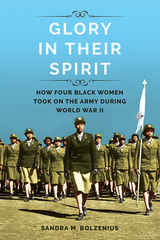

In 1918, the U.S. Army Signal Corps sent 223 women to France at General Pershing’s explicit request. They were masters of the latest technology: the telephone switchboard. While suffragettes picketed the White House and President Wilson struggled to persuade a segregationist Congress to give women of all races the vote, these courageous young women swore the army oath and settled into their new roles. Elizabeth Cobbs reveals the challenges they faced in a war zone where male soldiers wooed, mocked, and ultimately celebrated them.
The army discharged the last Hello Girls in 1920, the year Congress ratified the Nineteenth Amendment. When they sailed home, they were unexpectedly dismissed without veterans’ benefits and began a sixty-year battle that a handful of survivors carried to triumph in 1979.
“What an eye-opener! Cobbs unearths the original letters and diaries of these forgotten heroines and weaves them into a fascinating narrative with energy and zest.”
—Cokie Roberts, author of Capital Dames
“This engaging history crackles with admiration for the women who served in the U.S. Army Signal Corps during the First World War, becoming the country’s first female soldiers.”
—New Yorker
“Utterly delightful… Cobbs very adroitly weaves the story of the Signal Corps into that larger story of American women fighting for the right to vote, but it’s the warm, fascinating job she does bringing her cast…to life that gives this book its memorable charisma… This terrific book pays them a long-warranted tribute.”
—Christian Science Monitor
“Cobbs is particularly good at spotlighting how closely the service of military women like the Hello Girls was tied to the success of the suffrage movement.”
—NPR

In Islam and Me, Fazel tells her story and shares the experiences of other Muslim women living in Italy, revealing the wide variety of Muslim identities and the common prejudices they encounter. Looking at Italian school textbooks, newspapers, and TV programs, she invites us to change the way Muslim immigrants, and especially women, are depicted in both news reports and scholarly research. Islam and Me is a meditation on our multireligious, multiethnic, and multilingual reality, as well as an exploration of how we might reimagine national culture and identity so that they become more diverse, inclusive, and anti-racist.

Conley and O'Barr show how the microdynamics of the legal process and the largest questions of justice can be fruitfully explored through the field of linguistics. Each chapter covers a language-based approach to a different area of the law, from the cross-examinations of victims and witnesses to the inequities of divorce mediation. Combining analysis of common legal events with a broad range of scholarship on language and law, Just Words seeks the reality of power in the everyday practice and application of the law. As the only study of its type, the book is the definitive treatment of the topic that will be welcomed by students and specialists alike.

Many people believe that conflict in the well-disciplined Japanese society is so rare that the Japanese legal system is of minor importance. Frank Upham shows conclusively that this view is mistaken and demonstrates that the law is extensively used, on the one hand, by aggrieved groups to articulate their troubles and mobilize political support and, on the other, by the government to channel and manage conflict after it has arisen.
This is the first Western book to take law seriously as an integral part of the dynamics of Japanese business and society, and to show how an informal legal system can work in a complex industrial democracy. Upham does this by focusing on four recent controversies with broad social implications: first, how Japan dealt with the world’s worst industrial pollution and eventually became a model for Western environmental reforms; second, how the police and courts have allowed one Japanese outcast group to use carefully orchestrated physical coercion to achieve wide-ranging affirmative action programs; third, how Japanese working women used the courts to force employers to eliminate many forms of discrimination and eventually convinced the government to pass an equal employment opportunity act; and, finally, how the Ministry of International Trade and Industry and various sectors of Japanese industry have used legal doctrine to cope with the dramatic changes in Japan’s economy over the last twenty-five years.
Readers interested in the interaction of law and society generally; those interested in contemporary Japanese sociology, politics, and anthropology; and American lawyers, businessmen, and government officials who want to understand how law works in Japan will all need this unusual new book.
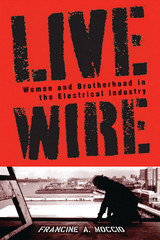
In Live Wire, Francine Moccio brings to life forty years of public policy reform and advocacy that have failed to eliminate restricted opportunities for women in highly paid, skilled blue-collar jobs. Breaking barriers into a male-only occupation and trade, women electricians have found career opportunities in nontraditional work. Yet their efforts to achieve gender equality have also collided with the prejudice and fraternal values of brotherhood and factors that have ultimately derailed women's full inclusion.
By drawing instructive comparisons of women’s entrance into the electricians’ trade and its union with those of black and other minority men, Moccio’s in-depth case study brings new insights into the ways in which divisions at work along the lines of race, gender, and economic background enhance and/or inhibit inclusion. Incorporating research based on extensive primary, secondary, and archival resources, Live Wire contributes a much-needed examination of how sex segregation is reproduced in blue-collar occupations, while also scrutinizing the complex interactions of work, unions, leisure, and family life.

As part of his attempt to secure a place for women in scientific culture, the Cartesian François Poullain de la Barre asserted as long ago as 1673 that “the mind has no sex.” In this rich and comprehensive history of women’s contributions to the development of early modern science, Londa Schiebinger examines the shifting fortunes of male and female equality in the sphere of the intellect. Schiebinger counters the “great women” mode of history and calls attention to broader developments in scientific culture that have been obscured by time and changing circumstance. She also elucidates a larger issue: how gender structures knowledge and power.
It is often assumed that women were automatically excluded from participation in the scientific revolution of early modern Europe, but in fact powerful trends encouraged their involvement. Aristocratic women participated in the learned discourse of the Renaissance court and dominated the informal salons that proliferated in seventeenth-century Paris. In Germany, women of the artisan class pursued research in fields such as astronomy and entomology. These and other women fought to renegotiate gender boundaries within the newly established scientific academies in order to secure their place among the men of science. But for women the promises of the Enlightenment were not to be fulfilled. Scientific and social upheavals not only left women on the sidelines but also brought about what the author calls the “scientific revolution in views of sexual difference.”
While many aspects of the scientific revolution are well understood, what has not generally been recognized is that revolution came also from another quarter—the scientific understanding of biological sex and sexual temperament (what we today call gender). Illustrations of female skeletons of the ideal woman—with small skulls and large pelvises—portrayed female nature as a virtue in the private realm of hearth and home, but as a handicap in the world of science. At the same time, seventeenth- and eighteenth-century women witnessed the erosion of their own spheres of influence. Midwifery and medical cookery were gradually subsumed into the newly profess ionalized medical sciences. Scientia, the ancient female personification of science, lost ground to a newer image of the male researcher, efficient and solitary—a development that reflected a deeper intellectual shift. By the late eighteenth century, a self-reinforcing system had emerged that rendered invisible the inequalities women suffered. In reexamining the origins of modern science, Schiebinger unearths a forgotten heritage of women scientists and probes the cultural and historical forces that continue to shape the course of scientific scholarship and knowledge.
Using a unique data set comparing mothers and daughters who attended Douglass College—the women's college of Rutgers University—twenty-five years apart, Krista Jenkins perceptively observes the changes in how women acquire their attitudes toward gender roles and behaviors in the post-women's movement years.
Mothers, Daughters, and Political Socialization examines the role of intergenerational transmission—the maternal influences on younger women—while also looking at differences among women in attitudes and behaviors relative to gender roles that might be attributed to the nature of the times during their formative years. How do daughters coming of age in an era when the women's movement is far less visible deal with gendered expectations compared to their mothers? Do they accept the contemporary status quo their feminist mothers fought so hard to achieve? Or, do they press forward with new goals?
Jenkins shows how contemporary women are socialized to accept or reject traditional gender roles that serve to undermine their equality.
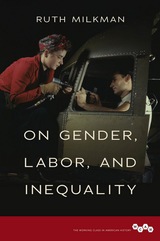
Milkman's introduction frames a career-spanning scholarly project: her interrogation of historical and contemporary intersections of class and gender inequalities in the workplace, and the efforts to challenge those inequalities. Early chapters focus on her pioneering work on women's labor during the Great Depression and the World War II years. In the book's second half, Milkman turns to the past fifty years, a period that saw a dramatic decline in gender inequality even as growing class imbalances created greater-than-ever class disparity among women. She concludes with a previously unpublished essay comparing the impact of the Great Depression and the Great Recession on women workers.
A first-of-its-kind collection, On Gender, Labor, and Inequality is an indispensable text by one of the world's top scholars of gender, equality, and work.

Messing investigates different types of occupational health issues for women, notably the controversial topics of male/female differences in jobs, health, and basic biology. The pain and suffering of women workers is illustrated in vivid case studies of research into health risks for women in the workplace, including musculoskeletal disease, the hazards of office work, emotional stress, and reproductive hazards.
No longer can employers, administrators, and health professionals ignore the very real problems women encounter in their jobs. Throughout the book, Messing captures the everyday reality of workplace tasks and stress -- from lifting boxes to juggling mental tasks under pressure to the emotional labor of caring for upset or abusive people -- by combining on-site observing with listening to the workers' descriptions of their work lives.
Responding to the tough question, why are scientists so unresponsive to the needs of women workers, Messing describes long-standing difficulties in gaining attention for the occupational health of women, ranging from the structure of the grant process and the conferences crucial to the professional life of researchers to the basic assumptions of scientific practice. Messing laments the separation of even most feminist health researchers from workplace concerns and asserts that it is time to develop a science that can prevent women workers' pain and suffering.
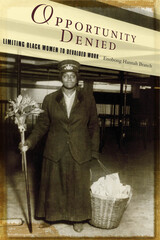
Blacks and Whites. Men and Women. Historically, each group has held very different types of jobs. The divide between these jobs was stark—clean or dirty, steady or inconsistent, skilled or unskilled. In such a rigidly segregated occupational landscape, race and gender radically limited labor opportunities, relegating Black women to the least desirable jobs. Opportunity Denied is the first comprehensive look at changes in race, gender, and women’s work across time, comparing the labor force experiences of Black women to White women, Black men and White men. Enobong Hannah Branch merges empirical data with rich historical detail, offering an original overview of the evolution of Black women’s work.
From free Black women in 1860 to Black women in 2008, the experience of discrimination in seeking and keeping a job has been determinedly constant. Branch focuses on occupational segregation before 1970 and situates the findings of contemporary studies in a broad historical context, illustrating how inequality can grow and become entrenched over time through the institution of work.

In the struggle over affirmative action, no employment setting has seen more friction than urban fire departments. Thirty years of legal and political efforts have opened the doors of this historically white male preserve, but men of color have yet to consolidate their gains, and women's progress has been even more tenuous. In this unique and compelling account of affirmative action at the "street level," Carol Chetkovich explores the ways in which this program has succeeded and failed.
Chetkovich follows the men and women of the Oakland Fire Department Class 1-91 through their academy training and eighteen-month probation. In vivid and sometimes surprising narratives, newcomers tell of their first battle with a full-fledged fire, their reactions to hazing rituals, and their relationships with veterans and fellow trainees. Real Heat explores how the process of becoming a firefighter interacts with the dimensions of race and gender to support some and discourage others. The book examines the implications of these interactions for public policy and social justice.

Informed in 1944 that she was “not of the sex” entitled to be admitted to Harvard Law School, African American activist Pauli Murray confronted the injustice she called “Jane Crow.” In the 1960s and 1970s, the analogies between sex and race discrimination pioneered by Murray became potent weapons in the battle for women’s rights, as feminists borrowed rhetoric and legal arguments from the civil rights movement. Serena Mayeri’s Reasoning from Race is the first book to explore the development and consequences of this key feminist strategy.
Mayeri uncovers the history of an often misunderstood connection at the heart of American antidiscrimination law. Her study details how a tumultuous political and legal climate transformed the links between race and sex equality, civil rights and feminism. Battles over employment discrimination, school segregation, reproductive freedom, affirmative action, and constitutional change reveal the promise and peril of reasoning from race—and offer a vivid picture of Pauli Murray, Ruth Bader Ginsburg, and others who defined feminists’ agenda.
Looking beneath the surface of Supreme Court opinions to the deliberations of feminist advocates, their opponents, and the legal decision makers who heard—or chose not to hear—their claims, Reasoning from Race showcases previously hidden struggles that continue to shape the scope and meaning of equality under the law.
Educated, white collar professional women carried the most visible banners of feminism. But working class women were a powerful force in the campaign for gender equality. Dennis A. Deslippe explores how unionized wage-earning women led the struggle to place women's employment rights on the national agenda, decisively influencing both the contemporary labor movement and second-wave feminism.
Deslippe's account unravels a complex history of how labor leaders accommodated and resisted working women's demands for change. Through case studies of unions representing packinghouse and electrical workers, Deslippe explains why gender equality emerged as an issue in the 1960s and how the activities of wage-earning women in and outside of their unions shaped the content of the debate. He also traces the fault lines separating working-class women--who sought gender equality within the parameters of unionist principles such as seniority--from middle-class women--who sought an equal rights amendment that would guarantee an abstract equality for all women.
Thoughtful and detailed, "Rights, Not Roses" offers a new look at the complexities of working-class feminism.
Speaking of Sex explores a topic that too often drops out of our discussions when we speak about sex: the persistent problem of sex-based inequality and the cultural forces that sustain it. On critical issues affecting women, most Americans deny either that gender inequality is a serious problem or that it is one that they have a personal or political responsibility to address. In tracing this “no problem” problem, Speaking of Sex examines the most fundamental causes of women’s disadvantages and the inadequacy of current public policy to combat them.
Although in the past quarter-century the United States has made major progress in addressing gender discrimination, women still face substantial obstacles in their private, public, and professional lives. On every significant measure of wealth, power, status, and security, women remain less advantaged than men. Deborah Rhode reveals the ways that the culture denies, discounts, or attempts to justify those inequalities. She shows that only by making inequality more visible can we devise an adequate strategy to confront it.
Speaking of Sex examines patterns of gender inequality across a wide array of social, legal, and public policy settings. Challenging conventional biological explanations for gender differences, Rhode explores the media images and childrearing practices that reinforce traditional gender stereotypes. On policies involving employment, divorce, custody, rape, pornography, domestic violence, sexual harassment, and reproductive choice, Speaking of Sex reveals how we continually overlook the gap between legal rights and daily experience. All too often, even Americans who condemn gender inequality in principle cannot see it in practice—in their own lives, homes, and work environments. In tracing these patterns, Rhode uncovers the deeply ingrained assumptions that obscure and perpetuate women’s disadvantages.

Click here to access the Taking the Heat teaching guide (https://d3tto5i5w9ogdd.cloudfront.net/wp-content/uploads/2021/09/02142601/Taking-the-Heat-Questions-for-Instructors.docx).
The complex and rich tapestry of narratives that comprises this book introduces us to an intergenerational group of Latina women who negotiate their place in U.S. society at the cusp of the twenty-first century. These are the stories of women who struggled to reach the echelons of higher education, often against great odds, and constructed relationships of sustenance and creativity along the way. The stories, poetry, memoirs, and reflections of this diverse group of Puerto Rican, Chicana, Native American, Mexican, Cuban, Dominican, Sephardic, mixed-heritage, and Central American women provide new perspectives on feminist theorizing, perspectives located in the borderlands of Latino cultures.
This often heart wrenching, sometimes playful, yet always insightful collection will interest those who wish to understand the challenges U.S. society poses for women of complex cultural heritages who strive to carve out their own spaces in the ivory tower.
Contributors. Luz del Alba Acevedo, Norma Alarcón, Celia Alvarez, Ruth Behar, Rina Benmayor, Norma E. Cantú, Daisy Cocco De Filippis, Gloria Holguín Cuádraz, Liza Fiol-Matta, Yvette Flores-Ortiz, Inés Hernández-Avila, Aurora Levins Morales, Clara Lomas, Iris Ofelia López, Mirtha N. Quintanales, Eliana Rivero, Caridad Souza, Patricia Zavella
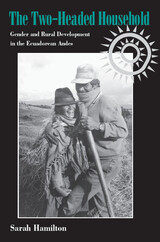
The Two-Headed Household is an ethnographic account of gender relations and intrahousehold decisionmaking as well as a policy-oriented study of gender and development in the indigenous Andean community of Chanchalo, Ecuador. Hamilton’s main argument is that the households in these farming communities are “two-headed.” Men and women participate equally in agricultural production and management, in household decisionmaking, and share in the reproductive tasks of child care, food preparation, and other chores.
Based on qualitative fieldwork and regional household survey data, this book investigates the effect on women's lives of gender bias in agricultural development programs and labor and commodities markets. Despite household economic reliance on these programs and markets, there is extraordinary evidence of social and economic gender equality. Traditional Andean kinship structures enable women and men to enter marriage as materially equal partners.
As seen in case studies of five women and their families, the author continually encounters joint decisionmaking and shared household and agricultural responsibilities. In fact, it often seems that women have the final say in many decisions. There is the belief that a dynamic balance of power between male and female heads provides an impetus toward mutually desired economic and social goals. Despite the strong influence of the patriarchal power of the hacienda system, Andean gender ideology accords women and men equal measures of physical, mental, and emotional fortitude. The belief that maintaining traditional forms of economic collaboration helped them survive on the hacienda was reinforced under the economic and political domination of the patriarchal systems of the landed elite, church, and state.
Today, these people are proud of their strong women, strong families, and community solidarity which they believe distinguishes them from Ecuadorean and American societies. Hamilton suggests that women in developing countries should not be viewed as simply, or even inevitably, victims of gender-biased structural or cultural institutions. They may resist male bias, perhaps even with the support of local-level institutions. The Two-Headed Household demonstrates that analysis of gender relations should focus on forms of cooperation among women and men, as well as on forms of conflict, and will be of interest to scholars and students in anthropology, gender and development, and Latin American Studies.


Attorney Raymond F. Gregory addresses the millions of women who think they might be facing sexual discrimination and explains federal measures enacted to assist workers in contesting unlawful employer conduct. He presents actual court cases to demonstrate the ways that women have challenged their employers. The cases illustrate legal principles in real-life experiences. Many of the cases relate compelling stories of workers caught up in a web of employer discriminatory conduct. Gregory has eliminated legal jargon, ensuring that all concepts are clear to his readers. Individuals will turn to this book again and again to obtain authoritative background on this important topic.
Topics covered include:
- The increasing incidence of sexual harassment in the workplace
- Common forms of sex discrimination
- Discrimination against older women
- Discrimination against women of color
- Discrimination against women in the professions
- Discrimination against pregnant women
- Discrimination against women with children
- Sex discrimination in hiring, promotion, termination
- Employer liability for workplace sexual harassment
- Employer retaliation against workers
- Proving sex discrimination in the courtroom
- Compensatory and punitive damages
- Back pay, front pay, and other remedies
Attorney Raymond F. Gregory addresses the millions of women who think they might be facing sexual discrimination and explains federal measures enacted to assist workers in contesting unlawful employer conduct. He presents actual court cases to demonstrate the ways that women have challenged their employers. The cases illustrate legal principles in real-life experiences. Many of the cases relate compelling stories of workers caught up in a web of employer discriminatory conduct. Gregory has eliminated legal jargon, ensuring that all concepts are clear to his readers. Individuals will turn to this book again and again to obtain authoritative background on this important topic.
Topics covered include:
- The increasing incidence of sexual harassment in the workplace
- Common forms of sex discrimination
- Discrimination against older women
- Discrimination against women of color
- Discrimination against women in the professions
- Discrimination against pregnant women
- Discrimination against women with children
- Sex discrimination in hiring, promotion, termination
- Employer liability for workplace sexual harassment
- Employer retaliation against workers
- Proving sex discrimination in the courtroom
- Compensatory and punitive damages
- Back pay, front pay, and other remedies
Women with disabilities are women first, sharing the dreams and disappointments common to women in a male-dominated society. But because society persists in viewing disability as an emblem of passivity and incompetence, disabled women occupy a devalued status in the social hierarchy. This book represents the intersection of the feminist and disability rights perspectives; it analyzes the forces that push disabled women towards the margins of social life, and it considers the resources that enable these women to resist the stereotype.
Drawing on law, social science, folklore, literature, psychoanalytic theory, and political activism, this book describes the experience of women with disabilities. The essays consider the impact of social class, race, the age at which disability occurs, and sexual orientation on the disabled woman's self esteem as well as on her life options. The contributors focus their inquiry on the self perceptions of disabled women and ask: From what sources do these women draw positive self images? How do they resist the culture's power to label them as deviant? The essays describe the ways in which disabled women face discrimination in the workplace and the failure of the mainstream women's movement to address their concerns.
In the series Health, Society, and Policy, edited by Sheryl Ruzek and Irving Kenneth Zola.
READERS
Browse our collection.
PUBLISHERS
See BiblioVault's publisher services.
STUDENT SERVICES
Files for college accessibility offices.
RECENTLY PUBLISHED







UChicago Accessibility Resources
home | accessibility | search | about | contact us
BiblioVault ® 2001 - 2024
The University of Chicago Press