
 A SCHOLARLY BOOK REPOSITORY
4 start with A start with A

This stunningly persuasive book examines the persistent, radical gap between the promise of American ideals and the performance of American politics. Samuel P. Huntington shows how Americans, throughout their history as a nation, have been united by the democratic creed of liberty, equality, and hostility to authority. At the same time he reveals how, inevitably, these ideals have been perennially frustrated through the institutions and hierarchies required to carry on the essential functions of governing a democratic society.
From this antagonism between the ideals of democracy and the realities of power have risen four great political upheavals in American history. Every third generation, Huntington argues, Americans have tried to reconstruct their institutions to make them more truly reflect deeply rooted national ideals. Moving from the clenched fists and mass demonstrations of the 1960s, to the moral outrage of the Progressive and Jacksonian Eras, back to the creative ideological fervor of the American Revolution, he incisively analyzes the dissenters’ objectives. All, he pungently writes, sought to remove the fundamental disharmony between the reality of government in America and the ideals on which the American nation was founded.
Huntington predicts that the tension between ideals and institutions is likely to increase in this country in the future. And he reminds us that the fate of liberty and democracy abroad is intrinsically linked to the strength of our power in world affairs. This brilliant and controversial analysis deserves to rank alongside the works of Tocqueville, Bryce, and Hofstadter and will become a classic commentary on the meaning of America.

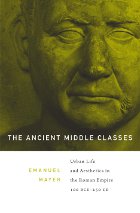
Our image of the Roman world is shaped by the writings of Roman statesmen and upper class intellectuals. Yet most of the material evidence we have from Roman times—art, architecture, and household artifacts from Pompeii and elsewhere—belonged to, and was made for, artisans, merchants, and professionals. Roman culture as we have seen it with our own eyes, Emanuel Mayer boldly argues, turns out to be distinctly middle class and requires a radically new framework of analysis.
Starting in the first century bce, ancient communities, largely shaped by farmers living within city walls, were transformed into vibrant urban centers where wealth could be quickly acquired through commercial success. From 100 bce to 250 ce, the archaeological record details the growth of a cosmopolitan empire and a prosperous new class rising along with it. Not as keen as statesmen and intellectuals to show off their status and refinement, members of this new middle class found novel ways to create pleasure and meaning. In the décor of their houses and tombs, Mayer finds evidence that middle-class Romans took pride in their work and commemorated familial love and affection in ways that departed from the tastes and practices of social elites.
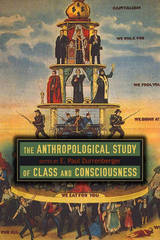
Five central ideas unify the collection: the objective basis for class in different social orders; people's understanding of class in relation to race and gender; the relation of ideologies of class to realities of class; the U.S. managerial middle-class denial of class and emphasis on meritocracy in relation to increasing economic insecurity; and personal responses to economic insecurity and their political implications.
Anthropologists who want to understand the nature and dynamics of culture must also understand the nature and dynamics of class. The Anthropological Study of Class and Consciousness addresses the role of the concept of class as an analytical construct in anthropology and how it relates to culture. Although issues of social hierarchy have been studied in anthropology, class has not often been considered as a central element. Yet a better understanding of its role in shaping culture, consciousness, and people's awareness of their social and natural world would in turn lead to better understanding of major trends in social evolution as well as contemporary society. This book will be of great interest to students and scholars of anthropology, labor studies, ethnohistory, and sociology.
READERS
Browse our collection.
PUBLISHERS
See BiblioVault's publisher services.
STUDENT SERVICES
Files for college accessibility offices.
RECENTLY PUBLISHED




UChicago Accessibility Resources
home | accessibility | search | about | contact us
BiblioVault ® 2001 - 2024
The University of Chicago Press