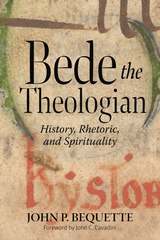

front cover of Bede the Theologian
Bede the Theologian
History, Rhetoric, and Spirituality
John P. Bequette
Catholic University of America Press, 2022
Revered by contemporaries and posterity for both his sanctity and his scholarship, Bede (672-735) is a pivotal figure in the history of the Church. Known primarily as an historian for his Ecclesiastical History of the English People, Bede was also an accomplished pedagogue, hagiographer, and biblical scholar. Bede the Theologian: History, Rhetoric, and Spirituality takes a fresh look at this classic Christian thinker, exploring the gamut of Bede’s literary corpus. The book investigates key themes, including Bede’s understanding of the theological significance of time, his conception of the relationship between the temporal and eternal orders within history, his theological use of rhetoric, his foray into narrative theology, and his spirituality. The purpose of this volume is to introduce the reader to principal theological themes in Bede’s thought. Bequette’s thesis is that Bede was a theologian writing in continuity with the Christian tradition and yet making creative, original contributions to that tradition for the sake of his contemporaries, both in the monastery and in the culture at large. The method involves a close reading and analysis of key texts within Bede’s corpus of writings. These texts include the Ecclesiastical History of the English People, the Life of St Cuthbert, and several of Bede’s biblical commentaries (On the Tabernacle, On the Temple) his homilies, and didactic treatises (On the Reckoning of Time, Concerning Figures and Tropes in Sacred Scripture). Bede the Theologian: History, Rhetoric, and Spirituality constitutes a scholarly study of Bede’s thought as an integral whole, identifying key themes and ideas that pervade his writings. Thus, it can serve as an introduction to Bede’s thought for non-specialists in the areas of theology, religious studies, and other areas of the humanities.
[more]

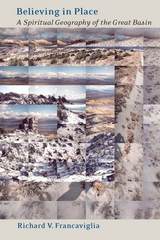
front cover of Believing In Place
Believing In Place
A Spiritual Geography Of The Great Basin
Richard V. Francaviglia
University of Nevada Press, 2016

The austere landscape of the Great Basin has inspired diverse responses from the people who have moved through or settled in it. Author Richard V. Francaviglia is interested in the connection between environment and spirituality in the Great Basin, for here, he says, "faith and landscape conspire to resurrect old myths and create new ones." As a geographer, Francaviglia knows that place means more than physical space. Human perceptions and interpretations are what give place its meaning. In Believing in Place, he examines the varying human perceptions of and relationships with the Great Basin landscape, from the region's Native American groups to contemporary tourists and politicians, to determine the spiritual issues that have shaped our connections with this place. In doing so, he considers the creation and flood myths of several cultures, the impact of the Judeo-Christian tradition and individualism, Native American animism and shamanist traditions, the Mormon landscape, the spiritual dimensions of gambling, the religious foundations of Cold War ideology, stories of UFOs and alien presence, and the convergence of science and spirituality.

Believing in Place is a profound and totally engaging reflection on the ways that human needs and spiritual traditions can shape our perceptions of the land. That the Great Basin has inspired such a complex variety of responses is partly due to its enigmatic vastness and isolation, partly to the remarkable range of peoples who have found themselves in the region. Using not only the materials of traditional geography but folklore, anthropology, Native American and Euro-American religion, contemporary politics, and New Age philosophies, Francaviglia has produced a fascinating and timely investigation of the role of human conceptions of place in that space we call the Great Basin.
[more]

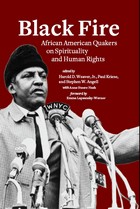
front cover of Black Fire
Black Fire
African American Quakers on Spirituality and Human Rights
Harold D. Weaver, Jr.
QuakerPress, 2011

front cover of The Bonds of Love
The Bonds of Love
St. Peter Damian's Theology of the Spiritual Life
Gordon Mursell
Catholic University of America Press, 2022
St Peter Damian (1007-1072) is an exceptional example of a paradox that is found in many saints and thinkers through the ages (St Jerome, St Bernard, St Bridget of Sweden, St Teresa of Avila and Thomas Merton come to mind) – of a lifelong tension between two competing vocations: the call to solitude and holiness and the call to prophetic social and ecclesial engagement. The author has explored this tension throughout his adult life, both in his published work and in his own life as an Episcopalian/Anglican priest and later bishop. Damian’s “The Book of ‘The Lord be with you’” is a profound exploration of the spirituality of solitude, whereas his “Book of Gomorrah” is an intense attack on clerical sexual abuse which has helped to give Damian a new recent prominence in the light of the huge challenges facing the Church today. The Bonds of Love shows that the paradox at the heart of Damian's life and everything he cared about was rooted in the remarkable theology of love which finds expression across the whole of his work and gives it both coherence and dynamism. His life and spirituality are of far more than academic interest, and will make a major contribution, not only to those committed to ecclesial reform and renewal, but to all who struggle to live with the kind of competing tensions that made St. Peter Damian who he was.
[more]

logo for CavanKerry Press
Boy
Tracy Youngblom
CavanKerry Press, 2023
A poetry collection focused on grief and the many ways it can impact a family.

The death of a youngest child. An alcoholic and distant father. A grief-stricken family. A tentative faith. These are the building blocks of Boy, a sequence of poems that explores how death and loss color memory and influence the ways family members relate to each other and to their shared history.

Inspired by the death of her own younger brother, Tracy Youngblom has written a poetry collection that serves as a companion to grief. This book is for those who love poetry and those who are intimidated by it, those interested in the way childhood experience shapes life, and those interested in the psychology of addiction.
[more]

front cover of Breaking the Mind
Breaking the Mind
Kristian S. Heal
Catholic University of America Press, 2014
This collection of sixteen new critical essays offers fresh perspectives on the Book of Steps, adding greater detail and depth to our understanding of the work's intriguing picture of early Syriac asceticism as practiced within the life of a local church and community.
[more]

front cover of A Brief Life of Aquinas
A Brief Life of Aquinas
The Theologian in His Context
Jean-Pierre Torrell
Catholic University of America Press, 2024
Jean-Pierre Torrell, OP, who has already written the most highly-regarded contemporary two-volume introduction to the life and works of Saint Thomas, has composed a shorter book that captures the essence of the career of the Angelic Doctor for a more general audience. Torrell follows a biographical outline of the saint, although he also includes brief accounts of what the author takes to be the most important features of Aquinas's teachings. Part biography, part travelogue, part theology, Jean-Pierre Torrell, OP’s A Brief Life of Thomas Aquinas is a multi-faceted look at the life and the writings of Saint Thomas Aquinas. Torrell’s hope is that his biography of the doctor communis intertwined with his theological examination of Aquinas’s writings will enable the reader to understand the person behind the writer and the writer behind the person. Aquinas’s life, Torrell claims, can shed light on his work with respect not only to their number, or to the varied topics he writes about, but to their content as well. It would be inaccurate to view Aquinas hiding behind a mountain of books in the cells he occupied in the various houses he inhabited around the Dominican world. He taught, he preached, he debated, he faced a number of conflicts of ideas that were not of his own making, but out of which would come some of his best-known writings. Torrell’s unique approach makes accessible one of the greatest minds of our tradition and the richness of the legacy he left the Church.
[more]


Send via email Share on Facebook Share on Twitter