
 A SCHOLARLY BOOK REPOSITORY
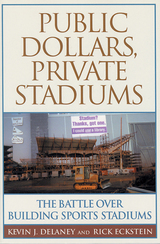
The authors provide an eye-opening account of recent battles over publicly financed stadiums in some of America’s largest cities. Their interviews with the key decision makers present a behind-the-scenes look at how and why powerful individuals and organizations foist these sports palaces on increasingly unreceptive communities.
Delaney and Eckstein show that in the face of studies demonstrating that new sports facilities don’t live up to their promise of big money, proponents are using a new tactic to win public subsidies¾intangible “social” rewards, such as prestige and community cohesion. The authors find these to be empty promises as well, demonstrating that new stadiums may exacerbate, rather than erase, social problems in cities.
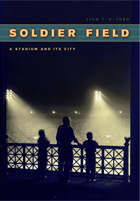
Sports fans nationwide know Soldier Field as the home of the Chicago Bears. For decades its signature columns provided an iconic backdrop for gridiron matches. But few realize that the stadium has been much more than that. Soldier Field: A Stadium and Its City explores how this amphitheater evolved from a public war memorial into a majestic arena that helped define Chicago.
Chicago Tribune staff writer Liam Ford led the reporting on the stadium’s controversial 2003 renovation—and simultaneously found himself unearthing a dramatic history. As he tells it, the tale of Soldier Field truly is the story of Chicago, filled with political intrigue and civic pride. Designed by Holabird and Roche, Soldier Field arose through a serendipitous combination of local tax dollars, City Beautiful boosterism, and the machinations of Mayor “Big Bill” Thompson. The result was a stadium that stood at the center of Chicago’s political, cultural, and sporting life for nearly sixty years before the arrival of Walter Payton and William “The Refrigerator” Perry.
Ford describes it all in the voice of a seasoned reporter: the high school football games, track and field contests, rodeos, and even NASCAR races. Photographs, including many from the Chicago Park District’s own collections, capture these remarkable scenes: the swelling crowds at ethnic festivals, Catholic masses, and political rallies. Few remember that Soldier Field hosted Billy Graham and Martin Luther King Jr., Judy Garland and Johnny Cash—as well as Grateful Dead’s final show.
Soldier Field captures the dramatic history of Chicago’s stadium on the lake and will captivate sports fans and historians alike.
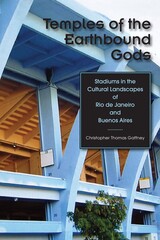
In Rio de Janeiro, the spiritual home of world football, and Buenos Aires, where a popular soccer club president was recently elected mayor, the game is an integral part of national identity. Using the football stadium as an illuminating cultural lens, Temples of the Earthbound Gods examines many aspects of urban culture that play out within these monumental architectural forms, including spirituality, violence, rigid social norms, anarchy, and also expressions of sexuality and gender.
Tracing the history of the game in Brazil and Argentina through colonial influences as well as indigenous ball courts in Mayan, Aztec, Zapotec, Mixtec, and Olmec societies, Christopher Gaffney's study spans both ancient and contemporary worlds, linking the development of stadiums to urbanization and the consolidation of nation building in two of Latin America's most intriguing megacities.
READERS
Browse our collection.
PUBLISHERS
See BiblioVault's publisher services.
STUDENT SERVICES
Files for college accessibility offices.
RECENTLY PUBLISHED


UChicago Accessibility Resources
home | accessibility | search | about | contact us
BiblioVault ® 2001 - 2024
The University of Chicago Press