
 A SCHOLARLY BOOK REPOSITORY
Though the activities of the National Association for the Advancement of Colored People (NAACP), the Southern Christian Leadership Conference (SCLC), and the Student Nonviolent Coordinating Committee (SNCC) were unified in their common idea of resistance to oppression, these groups fought their battles on multiple fronts. The NAACP filed lawsuits and aggressively lobbied Congress and state legislatures, while Martin Luther King Jr. and SCLC challenged the racial status quo through nonviolent mass action, and the SNCC focused on community empowerment activities. In Agitations, Kevin Anderson studies these various activities in order to trace the ideological foundations of these groups and to understand how diversity among African Americans created multiple political strategies.
Agitations goes beyond the traditionally acknowledged divide between integrationist and accommodationist wings of African American politics to explore the diverse fundamental ideologies and strategic outcomes among African American activists that still define, influence, and complicate political life today.

In close textual analyses of works ranging across European and American literature, including paradigmatic texts by Balzac, Flaubert, George Eliot, Zola, Henry James, and Thomas Mann, Furst shows how the handling of time, the presentation of place, and certain narrational strategies have served the realists’ claim. She demonstrates how readers today, like those a hundred years ago, are convinced of the authenticity of the created illusion by such means as framing, voice, perspective, and the slippage from metonymy to metaphor. Further, Furst reveals the pains the realists took to conceal these devices, and thus to protect their claim to be employing a simple form. Taking into account both the claims and the covert strategies of these writers, All Is True puts forward an alternative to the conventional polarized reading of the realist text—which emerges here as neither strictly an imitation of an extraneous model nor simply a web of words but a brilliantly complex imbrication of the two.
A major statement on one of the most enduring forms in cultural history, this book promises to alter not only our view of realist fiction but our understanding of how we read it.


Campaigns to win the Democratic and Republican presidential nominations are longer, more complex, and more confusing to the observer than the general election itself. The maze of delegate-selection procedures includes state primaries and caucuses as well as the traditional "smoke-filled room." Complicated federal election laws govern campaign financing. Sometimes many candidates enter and drop out of the race, while sometimes a stable two-way contest occurs: the 1976 nomination campaigns of Jimmy Carter and Gerald Ford exemplified each extreme. Is it possible to propose general principles to explain the apparent chaos of our presidential nomination system? Can those principles account for two such starkly different campaigns as occurred in 1976? In Before the Convention, political scientist John H. Aldrich presents a systematic analysis of presidential nomination politics, based on application of rational-choice models to candidate behavior. Aldrich views the candidates as decision makers with limited resources in a highly competitive environment. From this perspective, he seeks to determine why and how candidates choose to run, why some succeed and others fail, and what consequences the nomination process has for the general election and, later, for the President in office.
Aldrich begins with a brief history of the presidential selection process, focusing on the continuing shift of power from political elites to the mass electorate. He then turns to a detailed analysis of the 1976 nomination campaigns. Using data from a variety of sources, Aldrich demonstrates that the very different patterns in these races both conform to the rational-choice model. The analysis includes consideration of numerous questions of strategy. Is there a "momentum" to campaigns? How does a candidate identify and exploit this intangible quality? How do candidates decide where to contend and where not to contend? What is the nature of policy competition among candidates? When does a candidate prefer a "fuzzy" position to a clearly stated one? Other topics include reforms in campaign financing and the expanded and changed role of news coverage.
Before the Convention fills a significant gap in the literature on presidential politics, and therefore should be of particular importance to specialists in this area. It will be ofinterest also to everyone who is concerned with understanding the "rules of the game" for a complicated but vitally important exercise of American democracy.
We all know the saying, “That which does not kill us makes us stronger,” but is that really true? After all, for some people, traumatic experiences ultimately lead to genuinely debilitating outcomes. For others, though, adversity does seem to lead to “post-traumatic growth,” where individuals move through suffering and find their lives changed in positive ways. Why does this growth happen for some people and not others? How exactly does it happen? Can the positive results be purposefully replicated?
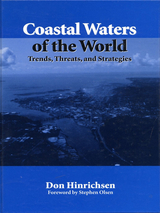
Nearly 60% of the world's population lives and works within 100 miles of a coast, and even those who don't are connected to the world's oceans through an intricate drainage of rivers and streams. Ultimately the whole of humankind is coastal.
Coastal Waters of the World is a comprehensive reference source on the state of the world's coastal areas. It focuses on the tremendous pressures facing coastal areas and the management systems and strategies needed to cope with them. Don Hinrichsen explores the origins and implications of three related issues: the overwhelming threats to our coastal resources and seas from population and pollution; the destruction of critical resources through unsustainable economic activity; and the inability of governments to craft and implement rational coastal management plans.
Introductory chapters present a concise summary of our coastal problems, including coastal habitat degradation and the fisheries crisis, along with a discussion of better management options. Three case studies of successful coastal governance focus on some of the problems and bring to life potential solutions. Following that are regional profiles that provide detailed information on the main population, resource, and management challenges facing each of the world's thirteen major coastal waters and seas. The profiles are presented in a standard format to allow for ease of comparison between regions, and accessibility of information. The book ends with a realistic and practical agenda for action that can be implemented immediately.
Safeguarding these complex, interlinked ecosystems is humanity's most challenging management job. Coastal Waters of the World will help raise our awareness of coastal area concerns and provide a constructive contribution to the ongoing debate over how to manage these ever-changing areas, both for ourselves and for future generations. It will serve as a valuable reference tool and an up-to-date resource for policymakers, management specialists, and students interested in sustainable coastal governance.
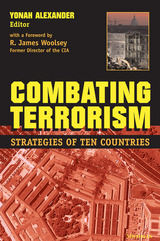
All of the essays address the same set of questions to allow for cross-national comparison of strategies and an assessment of counterterrorism practices:
What is the governmental and public perception of the sources of terrorism? How successful have the policies of governments been in combating both domestic and international terrorism? What factors influence a government's willingness and ability to cooperate with other countries in combating terrorism? To what degree are the terrorist realities and the concerns of governments interconnected with global terrorism? To what degree are certain countries "natural hosts" of either terrorist groups or propensities that target Western or closely allied interests? To what degree are terrorist organizations mainly concerned about winning political participation in their target countries? Which counterterrorism strategies work, and which do not? What are the lessons of past experiences for future counterterrorism responses at the national, regional, and global levels?
The conclusion to the volume summarizes the lessons that may be learned from the experiences of the ten countries and discusses a list of best practices in counterterrorism.
This book will be of interest to policymakers, scholars, and other individuals with professional responsibilities in the area of terrorism and security studies. Written in clear, accessible prose, this book will also appeal to the general reader who is interested in gaining insight into the array of issues facing governments that endeavor to combat terrorism, and into the possible solutions to one of the foremost threats to world peace in our time.
Yonah Alexander is Professor and Director, Inter-University Center for Terrorism Studies; Senior Fellow and Director, International Center for Terrorism Studies, Potomac Institute for Policy Studies; and Co-Director, Inter-University Center for Legal Studies, International Law Institute.


Criminal justice expenditures have more than doubled since the 1980s, dramatically increasing costs to the public. With state and local revenue shortfalls resulting from the recent recession, the question of whether crime control can be accomplished either with fewer resources or by investing those resources in areas other than the criminal justice system is all the more relevant.
The rich variety of colleges and universities included provides a wide array of models that faculty can draw upon to inspire institutional change.
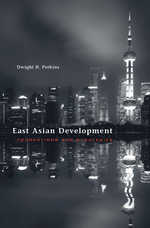
In the early 1960s, fewer than five percent of Japanese owned automobiles, China’s per capita income was among the lowest in Asia, and living standards in South Korea’s rural areas were on par with some of the world’s poorest countries. Today, these are three of the most powerful economies on earth. Dwight Perkins grapples with both the contemporary and historical causes and consequences of the turnaround, drawing on firsthand experience in the region to explain how Asian countries sustained such rapid economic growth in the second half of the twentieth century.
East Asian Development offers a comprehensive view of the region, from Japan and the “Asian Tigers” (Hong Kong, Singapore, Taiwan, South Korea) to Indonesia, Vietnam, Thailand, Malaysia, and China—a behemoth larger than all the other economies combined. While the overall picture of Asian growth is positive, no single economic policy has been effective regionwide. Interventionist policies that worked well in some countries failed elsewhere. Perkins analyzes income distribution, to uncover why initially egalitarian societies have ended up in very different places, with Japan, for example, maintaining a modest gap between rich and poor while China has become one of Asia’s most unequal economies.
Today, the once-dynamic Japanese and Korean economies are sluggish, and even China shows signs of losing steam. Perkins investigates whether this is a regional phenomenon or typical of all economies at this stage of development. His inquiry reminds us that the uncharted waters of China’s vast economy make predictions of its future performance speculative at best.

Although food-production systems for the world's rural poor typically have had devastating effects on the planet's wealth of genes, species, and ecosystems, that need not be the case in the future. In Ecoagriculture, two of the world's leading experts on conservation and development examine the idea that agricultural landscapes can be designed more creatively to take the needs of human populations into account while also protecting, or even enhancing, biodiversity. They present a thorough overview of the innovative concept of "ecoagriculture" - the management of landscapes for both the production of food and the conservation of wild biodiversity. The book:
- examines the global impact of agriculture on wild biodiversity
- describes the challenge of reconciling biodiversity conservation and agricultural goals
- outlines and discusses the ecoagriculture approach
- presents diverse case studies that illustrate key strategies
- explores how policies, markets, and institutions can be re-shaped to support ecoagriculture
Ecoagriculture explores new approaches to agricultural production that complement natural environments, enhance ecosystem function, and improve rural livelihoods. It features a wealth of real-world case studies that demonstrate the applicability of the ideas discussed and how the principles can be applied, and is an important new work for policymakers, students, researchers, and anyone concerned with conserving biodiversity while sustaining human populations.
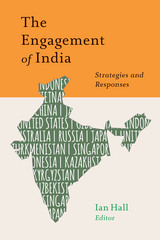
As India emerges as a significant global actor, diverse states have sought to engage India with divergent agendas and interests. Some states aspire to improve their relations with New Delhi, while others pursue the transformation of Indian foreign policy—and even India itself—to suit their interests. The Engagement of India explores the strategies that key states have employed to engage and shape the relationship with a rising and newly vibrant India, their successes and failures, and Indian responses—positive, ambivalent, and sometimes hostile—to engagement. A multinational team of contributors examine the ways in which Australia, China, Japan, Russia, and the United States have each sought to engage India for various purposes, explore the ways in which India has responded, and assess India’s own strategies to engage with Singapore, Vietnam, Indonesia, and the Central Asian republics.
This informative analysis of the foreign relations of a key rising power, and first comparative study of engagement strategies, casts light on the changing nature of Indian foreign policy and the processes that shape its future. The Engagement of India should be of interest to students and scholars of international relations, diplomacy, and South Asia.

Join Professor Helen Vendler in her course lecture on the Yeats poem "Among School Children". View her insightful and passionate analysis along with a condensed reading and student comments on the course.
How does a poet repeatedly make art over a lifetime out of an arbitrary assignment of fate? By asking this question of the work of four American poets--two men of the postwar generation, two young women writing today--Helen Vendler suggests a fruitful way of looking at a poet's career and a new way of understanding poetic strategies as both mastery of forms and forms of mastery.
Fate hands every poet certain unavoidable "givens." Of the poets Vendler studies, Robert Lowell sprang from a family famous in American and especially New England history; John Berryman found himself an alcoholic manic-depressive; Rita Dove was born black; Jorie Graham grew up trilingual, with three words for every object. In Vendler's readings, we see how these poets return again and again to the problems set out by their givens, and how each invents complex ways, both thematic and formal, of making poetry out of fate.
Compelling for its insights into the work of four notable poets, this book by a leading critic of poetry is also invaluable for what it has to tell us about the poetic process--about how art copes with the obdurate givens of life, and about the conflict in art between the whim of fate and the artist's will to choose.

This eye-opening book reports the results of a large-scale study based on extensive financial and technical analyses of more than 150 green buildings in the U.S. and ten other countries. It provides detailed findings on the costs and financial benefits of building green. According to the study, green buildings cost roughly 2% more to build than conventional buildings—far less than previously assumed—and provide a wide range of financial, health and social benefits. In addition, green buildings reduce energy use by an average of 33%, resulting in significant cost savings.
Greening Our Built World also evaluates the cost effectiveness of “green community development” and presents the results of the first-ever survey of green buildings constructed by faith-based organizations. Throughout the book, leading practitioners in green design—including architects, developers, and property owners—share their own experiences in building green. A compelling combination of rock-solid facts and specific examples, this book proves that green design is both cost-effective and earth-friendly.
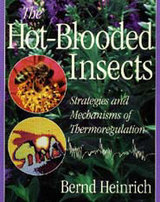
Bernd Heinrich's widely praised Bumblebee Economics set a high standard for scientifically accurate yet gracefully articulate writing about nature's ingenious patterns, specifically thermoregulation. Hot-Blooded Insects takes a giant step forward by presenting an overview of what is now known about thermoregulation in all of the major insect groups, offering new insights on physiology, ecology, and evolution.
The book is richly illustrated by the author's exquisite sketches. By describing the environmental opportunities and challenges faced by moths and butterflies, grasshoppers and locusts, dungball rollers and other beetles, a wide range of bees, and other insects, Heinrich explains their dazzling variety of physiological and behavioral adaptations to what, for them, is a world of violent extremes of temperature. These mechanisms are apparent only through precise observations, but the small body size of insects poses large technical difficulties in whole-animal experiments, engendering controversy about the reliability of the data thus derived. Emphasizing an experimental approach, Heinrich pinpoints where he believes studies have gone astray, describing in detail both groundbreaking experiments and those which leave a reasonable doubt about the mechanism being interpreted. He reviews relevant work on the major taxa to show the underlying patterns that draw diversity together, opines on current controversies, and identifies questions that call for further study.
Physiologists, ecologists, entomologists, and zoologists—in fact, all biologists—will be stimulated and challenged to further research by this masterly synthesis of a new field; it will also appeal to informed readers interested in general science.
Author Russell S. Rosen begins with the history of ASL as a foreign language in high schools, including debates about the foreign language status of ASL, the situation of deaf and hard of hearing students in classes, and governmental recognition of ASL as a language. Based on his study of five high school ASL programs, he defines the factors that motivate students, including community and culture, and analyzes strategies for promoting language processing and learning. Learning American Sign Language in High School provides strategies for teaching ASL as a second language to students with learning disabilities as well. Its thorough approach ensures the best opportunity for high school students to attain high levels of achievement in learning ASL.
Effectively marketing libraries by persuasively communicating their relevance is key to ensuring their future. Speaking directly to those in senior leadership positions, Anderson lays out the structural and organizational changes needed to help libraries answer the relevance question and maximize their marketing and communications efforts. Focusing on big-picture strategies, she shares lessons learned from her 20+ year career in library marketing and communications. No matter what type or size of library you help to lead, by reading this book you will
- gain insight into why libraries need to tell their stories more effectively than they are today;
- be able to craft a strategic roadmap for marketing your library and communicating its value in a variety of ways that resonate with key audiences;
- see why improvements to the structure of your marketing and communications team can lead to better results;
- learn practical methods for incorporating audience research into your planning;
- know how to remove customer barriers and discontinue practices that are thwarting your marketing efforts;
- receive guidance on preparing for potential crises;
- understand how to be more community-focused by forming and sustaining partnerships; and
- feel confident in engaging with stakeholders so that they become your library’s best ambassadors.
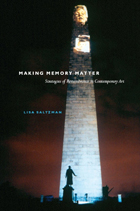
In an ancient account of painting’s origins, a woman traces the shadow of her departing lover on the wall in an act that anticipates future grief and commemoration. Lisa Saltzman shows here that nearly two thousand years after this story was first told, contemporary artists are returning to similar strategies of remembrance, ranging from vaudevillian silhouettes and sepulchral casts to incinerated architectures and ghostly processions.
Exploring these artists’ work, Saltzman demonstrates that their methods have now eclipsed painting and traditional sculpture as preeminent forms of visual representation. She pays particular attention to the groundbreaking art of Krzysztof Wodiczko, who is known for his projections of historical subjects; Kara Walker, who creates powerful silhouetted images of racial violence in American history; and Rachel Whiteread, whose work centers on making casts of empty interior spaces. Each of the artists Saltzman discusses is struggling with the roles that history and memory have come to play in an age when any historical statement is subject to question and doubt. In identifying this new and powerful movement, she provides a framework for understanding the art of our time.

Centers for hazard studies have only recently examined the interrelated aspects of disastrous events and recognized the interaction between natural hazards and human systems. As society attempts to acquire the information and develop the skills to reduce the risks and damage from disaster, an increasingly professional public service is reconsidering its strategies and policy direction. Managing Disaster addresses this problem and the need for a new approach to teaching this subject at the university level. Twenty-three professionals and scholars in public policy and administration—rom universities, government, and the private sector—examine the basic issues confronting managers and public agencies in the face of disaster.
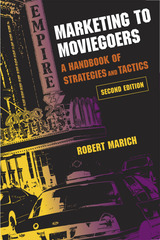
While Hollywood executives spend millions of dollars making movies, even more money is poured into selling those films to the public. In the second edition of his comprehensive guidebook, Marketing to Moviegoers, veteran film and TV journalist Robert Marich plumbs the depths of the strategies and tactics used by studios to market their films to consumers. Packed with real life examples and useful data, this new edition blends practical, up-to-date information with theory to clearly explain all aspects of promoting motion pictures.
Marketing to Moviegoers: A Handbook of Strategies and Tactics takes readers carefully through all of the key components of film marketing. From creative strategy, market research, and advertising to publicity, product placement, and distribution to theaters, Marich's book covers everything film professionals need to know to mount a successful marketing campaign. Each chapter contains a wealth of useful information—including the historical background of the business, sample market research documents and advertising budgets, comments from successful industry insiders, and over thirty-five tables—and offers intriguing insight into the strategies of modern promotion.
Most other film marketing books focus mainly on marketing by independent distributors, but Marich specifically outlines the marketing methods of the six major Hollywood studios, which are notoriously secretive about these methods, while also detailing the marketing plans of the independent and foreign film sectors. In addition, he examines in depth the effectiveness of both new and old media, especially the ways in which the advent of the Internet has both helped and hindered the movie marketing process.
While many books have been written on the business-to-business aspect of film promotion, Marich's volume is one of the few that focuses on the methods used to sell motion pictures to those who truly make or break a film's success—the public.
This essential reference contains detailed examples, more than twenty illustrations, and a comprehensive glossary of marketing terms. A highly navigable handbook that breaks down a complicated process into manageable strategies in an easy-to-read style, Marketing to Moviegoers is a must for all film professionals and filmmaking students.
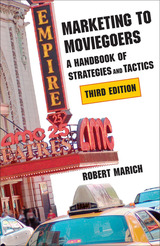
While Hollywood executives spend millions of dollars making movies, even more money is poured into selling those films to the public. In the third edition of his comprehensive guidebook, Marketing to Moviegoers: A Handbook of Strategies and Tactics, veteran film and TV journalist Robert Marich plumbs the depths of the methods used by studios to market their films to consumers. Updates to the third edition include a chapter on marketing movies using digital media; an insightful discussion of the use of music in film trailers; new and expanded materials on marketing targeted toward affinity groups and awards; fresh analysis of booking contracts between theaters and distributors; a brief history of indie film marketing; and explorations of the overlooked potential of the drive-in theater and the revival of third-party-financed movie campaigns.
While many books have been written on the business-to-business aspect of film promotion, Marich’s volume is one of the few that focuses on the techniques used to sell motion pictures to those in a position to truly make or break a film—the public. A highly navigable handbook that breaks down a complicated process into manageable strategies in an easy-to-read style, Marketing to Moviegoers is a must for all professionals and students in today’s rapidly evolving film industry.

Bonnie Ritter Book Award, National Communication Association's Feminist and Women Studies Division, 2008.
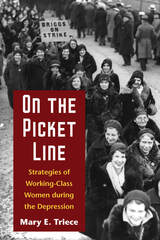
On the Picket Line uncovers the voices of working-class women, particularly those active in the Communist Party, U.S.A., in order to examine how these individuals confronted the tensions between their roles as workers, wives, mothers, and consumers. Combining critical analysis, Marxist and feminist theory, and labor history, Mary E. Triece analyzes the protest tactics employed by working class women to challenge dominant ideologies surrounding domesticity.
She details the rhetorical strategies used by women to argue for their rights as workers in the paid labor force and as caregivers in the home. Their overtly coercive tactics included numerous sit-ins, strikes, and boycotts that won tangible gains for working poor and unemployed women. The book also gives voice to influential figures in the 1930s labor movement (many of whom were members of the Communist Party, U.S.A.), such as Ella Reeve Bloor, Margaret Cowl, Anna Damon, Ann Burlak, and Grace Hutchins. Triece ultimately argues that these confrontational protest tactics of the 1930s remain relevant in today’s fights for more humane workplaces and better living conditions.
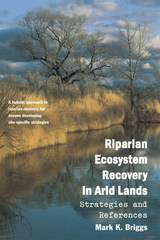
The book opens with a review of watershed characteristics and an examination of drainage systems, then proceeds to determining the causes of riparian decline. It introduces five factors that have a significant effect on the results of riparian rehabilitation--natural regeneration, water availability, channel stability, direct impacts such as livestock grazing and recreational activities, and soil salinity--and offers case studies that demonstrate how revegetation has been used both effectively and ineffectively.
It also discusses strategies other than revegetation that may be effective in improving the ecological condition of a site. Many of the strategies presented are also relevant to nonarid climates and to urban areas. By emphasizing evaluation of riparian ecosystems, so that the causes of degradation can be understood, and by offering general approaches that can be tailored to specific situations, Riparian Ecosystem Recovery in Arid Lands takes a holistic approach to riparian recovery that will enable users to better judge whether recovery expenditures are likely to produce desired results. An unprecedented work, it will substantially add to efforts across the Southwest and elsewhere to restore these unique and priceless ecosystems.
CONTENTS
1 An Overview: Background on Riparian Ecosystems / Lessons Learned from Past Riparian Recovery Efforts / An Evaluation Strategy / Defining Some Important Terms
2 Considering the Damaged Riparian Area from a Watershed Perspective: Case Study 1: Rincon Creek / Taking Advantage of Available Information / Getting to Know the Watershed / Getting to Know the Stream
3 Impacts within the Riparian Zone: Livestock / Case Study 2: Sheepshead Spring / Recreation / Competition from Nonnative Species / Wildlife
4 Natural Recovery in Riparian Ecosystems: Case Study 3: Aravaipa Creek / Factors Influencing Natural Recovery / Case Study 4: McEuen Seep / Autoecology of Selected Southwestern Riparian Tree Species / Case Study 5: Boulder Creek
5 Water Availability: Case Study 6: Box Bar / How Groundwater Decline Occurs / Evaluating Groundwater Conditions / Revegetating Riparian Ecosystems Characterized by Groundwater Decline
6 The Drainageway: Channel Instability and Riparian Ecosystems / Case Study 7: Babocomari River / Channel Dynamics / Strategies for Evaluating Channel Stability / Developing Recovery Projects along Unstable Alluvial Stream Channels
7 Soil Salinity and Riparian Ecosystems: Effects of Soil Salinity on Plant Growth / The Soil Survey / Soil Salinity and Revegetation
8 Developing the Recovery Plan: Developing Project Objectives / Selecting the Best Site / Local, State, and Federal Permit Requirements / Identifying Model Areas / Critical Components of the Recovery Plan / Community Involvement / Demonstration Sites / Postproject Evaluation and Monitoring
In Rousseau’s Reader, John T. Scott looks at the different strategies Rousseau used to engage and persuade the readers of his major philosophical works, including the Social Contract, Discourse on Inequality, and Emile. Considering choice of genre; textual structure; frontispieces and illustrations; shifting authorial and narrative voice; addresses to readers that alternately invite and challenge; apostrophe, metaphor, and other literary devices; and, of course, paradox, Scott explores how the form of Rousseau’s writing relates to the content of his thought and vice versa. Through this skillful interplay of form and content, Rousseau engages in a profoundly transformative dialogue with his readers.
While most political philosophers have focused, understandably, on Rousseau’s ideas, Scott shows convincingly that the way he conveyed them is also of vital importance, especially given Rousseau’s enduring interest in education. Giving readers the key to Rousseau’s style, Scott offers fresh and original insights into the relationship between the substance of his thought and his literary and rhetorical techniques, which enhance our understanding of Rousseau’s project and the audiences he intended to reach.
Across the world, grassroots networks of local communities are working to realize their visions of an alternative revolutionary response to planetary destruction, often pitted against the new megaprojects promoted by greenwashed alternative energy infrastructures and the neocolonialist, technocratic policies that are the forerunners of the Green New Deal.
Gelderloos interviews food sovereignty activists in Venezuela, Indigenous communities reforesting their lands in Brazil and anarchists fighting biofuel plantations in Indonesia, looking at the battles that have cancelled airports, stopped pipelines, and helped the most marginalized to fight borders and environmental racism, to transform their cities, to win a dignified survival.
All of the essays in this new collection by Thomas Schelling convey his unique perspective on individuals and society. This perspective has several characteristics: it is strategic in that it assumes that an important part of people's behavior is motivated by the thought of influencing other people's expectations; it views the mind as being separable into two or more parts (rational/irrational; present-minded/future-minded); it is motivated by policy concerns--smoking and other addictions, global warming, segregation, nuclear war; and while it accepts many of the basic assumptions of economics--that people are forward-looking, rational decision makers, that resources are scarce, and that incentives are important--it is open to modifying them when appropriate, and open to the findings and insights of other social science disciplines.
Schelling--a 2005 Nobel Prize winner-- has been one of the four or five most important social scientists of the past fifty years, and this collection shows why.

Strategies of Deconstruction was first published in 1991. Minnesota Archive Editions uses digital technology to make long-unavailable books once again accessible, and are published unaltered from the original University of Minnesota Press editions.
In the past two decades, the "movement" of deconstruction has bad tremendous impact on a number of academic, disciplines in the United States. However, its force has been rather limited in the field of philosophy, despite the fact that in Europe the practice of deconstruction emerged in the work of philosophers. Although the reasons for this can be debated, two of the more obvious explanations are the mainstream Anglo-American philosophers rarely studied the German and French philosophical traditions in great detail, and deconstruction's focus on discourse and interpretation has made it more attractive to the literary and humanistic disciplines.
With this context, Strategies of Deconstruction focuses on the early work of Jacques Derrida, the French philosopher who introduced deconstruction in Speech and Phenomena,his study of Edmund Husserl, and Of Grammatology, and whose philosophical reputation stems in no small part from his work on Husserl. In examining the philosophical import of Derrida's theories of reading, text, and language, specifically as they related to Speech and Phenomena,J. Claude Evans makes careful reference to Husserl's own texts. His analysis indicates that there are many systematic irregularities in Derrida's study and that without those irregularities Derrida's conclusions cannot be substantiated.
All bodily activity is the result of the interplay of vastly complex physiological processes, and all of these processes depend on temperature. For insects, the struggle to keep body temperature within a suitable range for activity and competition is often a matter of life and death.
A few studies of temperature regulation in butterflies can be found dating back to the late 1800s, but only recently have scientists begun to study the phenomenon in other insects. In The Thermal Warriors Bernd Heinrich explains how, when, and in general what insects regulate their body temperature and what it means to them. As he shows us, the ingenuity of the survival strategies insects have evolved in the irreducible crucible of temperature is astonishing: from shivering and basking, the construction of turrets (certain tiger beetles), and cooling with liquid feces to stilting (some desert ants and beetles), "panting" in grasshoppers and "sweating cicada," and counter- and alternating-currents of blood flow for heat retention and heat loss.
In The Thermal Warriors Heinrich distills his great reference work, The Hot-Blooded Insects, to its essence: the most significant and fascinating stories that illustrate general principles, all conveyed in the always engaging prose we have come to expect from this author.
Readers of Thriving as a Graduate Writer will:
- Learn how to establish an effective writing practice
- Discover how to position themselves as competent and engaged writers
- Learn how to structure their writing, craft effective sentences, and create movement with a text
- Develop processes for draft revisions
- Create individual writing strategies that will last throughout their careers

In Brussels, Belgium—since 1957 home to the European Union—such change is taking place. Observing the change, Alexis G. Papadopoulos explores a new geographical concept, the Central Executive District. This urban form is significantly different from the Central Business District, its conventional counterpart. Drawing on game and rational choice theories, spatial analysis, and land economics, the author analyzes how the landscape of the city's center has evolved over the last three decades under the influence of successive coalitions of local and foreign elites. He describes how foreign diplomats, international corporate executives, and real-estate developers cooperate with one another to carry out major urban projects in the face of resistance from local neighborhood groups, conservationists, and political factions.
This study makes a substantial contribution to geography and urban studies both for its implications about the future of world cities like New York, London, and Paris and for its original application of the notion of cooperative regimes.
By engaging in what Karl Marx called a workers' inquiry, workers and militant co-researchers are studying their working conditions, the technical composition of capital, and how to recompose their own power in order to devise new tactics, strategies, organisational forms and objectives. These workers' inquiries, from call centre workers to teachers, and adjunct professors, are re-energising unions, bypassing unions altogether or innovating new forms of workers' organisations.
In one of the first major studies to critically assess this new cycle of global working class struggle, Robert Ovetz collects together case studies from over a dozen contributors, looking at workers' movements in China, Mexico, the US, South Africa, Turkey, Argentina, Italy, India and the UK. The book reveals how these new forms of struggle are no longer limited to single sectors of the economy or contained by state borders, but are circulating internationally and disrupting the global capitalist system as they do.
READERS
Browse our collection.
PUBLISHERS
See BiblioVault's publisher services.
STUDENT SERVICES
Files for college accessibility offices.
RECENTLY PUBLISHED





UChicago Accessibility Resources
home | accessibility | search | about | contact us
BiblioVault ® 2001 - 2024
The University of Chicago Press