
 A SCHOLARLY BOOK REPOSITORY
Results by Title
2 books about Student - Centered Approach
2 books about Student - Centered Approach
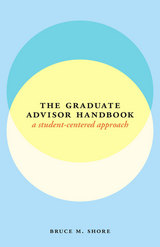
The Graduate Advisor Handbook
A Student-Centered Approach
Bruce M. Shore
University of Chicago Press, 2014
In the sink-or-swim world of academia, a great graduate advising can be a lifesaver. But with university budgets shrinking and free time evaporating, advisors often need a mentor themselves to learn how to best support their advisees. Bruce M. Shore, an award-winning advisor with more than forty years of advising experience, is just the coach that graduate advisors need. With The Graduate Advisor Handbook: A Student-Centered Approach, Shore demystifies the advisor-student relationship, providing tips and practical advice that will help both students and advisors thrive.
One of the first books to approach advising from the advisor’s point of view, the handbook highlights the importance of a partnership in which both parties need to be invested. Shore emphasizes the interpersonal relationships at the heart of advising and reveals how advisors can draw on their own strengths to create a rewarding rapport.
The Graduate Advisor Handbook moves chronologically through the advising process, from the first knock on the door to the last reference letter. Along the way it covers transparent communication, effective motivation, and cooperative troubleshooting. Its clear-eyed approach also tackles touchy subjects, including what to do when personal boundaries are crossed and how to deliver difficult news. Sample scripts help advisors find the right words for even the toughest situations.
With resources dwindling and student and advising loads increasing, graduate advisors need all the resources they can find to give their students the help they need. The Graduate Advisor Handbook has the cool-headed advice and comprehensive coverage that advisors need to make the advising relationship not just effective but also enjoyable.
[more]
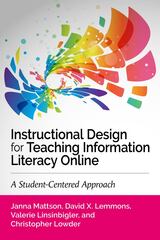
Instructional Design for Teaching Information Literacy Online
A Student-Centered Approach
Janna Mattson
Assoc of College & Research Libraries, 2025
Demand for online classes in higher education is growing. And whether you’re a seasoned library instructor adapting to more online instruction or a new librarian learning about instruction for the first time, you’re probably expected to be equally skilled in both face-to-face and online classrooms.
Instructional Design for Teaching Information Literacy Online: A Student-Centered Approach introduces light-hearted tips and advice with author-curated playlists and practical tips on rapidly designing online instruction. It offers scenarios, learning activities, lesson plan examples, rubrics, worksheets, and more, using the classic instructional design model ADDIE to frame the process and the universal design for learning framework, the community of inquiry model, and asset-based pedagogy to address the social and emotional needs of diverse online learners. Six parts offer a theoretical grounding, practical resources, and the enhanced confidence and skills needed to create successful learning experiences.
Instructional Design for Teaching Information Literacy Online: A Student-Centered Approach introduces light-hearted tips and advice with author-curated playlists and practical tips on rapidly designing online instruction. It offers scenarios, learning activities, lesson plan examples, rubrics, worksheets, and more, using the classic instructional design model ADDIE to frame the process and the universal design for learning framework, the community of inquiry model, and asset-based pedagogy to address the social and emotional needs of diverse online learners. Six parts offer a theoretical grounding, practical resources, and the enhanced confidence and skills needed to create successful learning experiences.
- Foundational Knowledge
- Analysis
- Design
- Development
- Implementation
- Evaluation
[more]
READERS
Browse our collection.
PUBLISHERS
See BiblioVault's publisher services.
STUDENT SERVICES
Files for college accessibility offices.
RECENTLY PUBLISHED


UChicago Accessibility Resources
home | accessibility | search | about | contact us
BiblioVault ® 2001 - 2026
The University of Chicago Press