
 A SCHOLARLY BOOK REPOSITORY
20 start with A start with A
Accelerating energy innovation could be an important part of an effective response to the threat of climate change. Written by a stellar group of experts in the field, this book complements existing research on the subject with an exploration of the role that public and private policy have played in enabling—and sustaining—swift innovation in a variety of industries, from agriculture and the life sciences to information technology. Chapters highlight the factors that have determined the impact of past policies, and suggest that effectively managed federal funding, strategies to increase customer demand, and the enabling of aggressive competition from new firms are important ingredients for policies that affect innovative activity.


Provides a new foundation for discussions about theater, film, and translations between the two mediums.
Adapting Performance Between Stage and Screen provides an introduction to adaptations between theater and film, establishing a framework for considering these as distinct from literary adaptation. The book places emphasis on performance and event, opening new avenues of exploration to include non-literary issues such as the treatment of space and place, mis en scène, acting styles, and star personas. The recent growth of digital theater is examined to foreground the “events” of theater and cinema—largely ignored in adaptation studies—with phenomena such as National Theatre Live analyzed for the different ways that “liveness” is adapted.
Drawing from case studies that explore distinct periods in British film and theater history, the volume looks at issues surrounding theatrical naturalism and cinematic realism and illustrates the principle that adaptations can't be divorced from the historical and cultural moment in which they are produced. Adapting Performance Between Stage and Screen explores how cultural values can be articulated in the act of translating between media, providing a new framework for the discussion of theater and film as dramatic works.

Hedman details, for example, how interdisciplinary studies of the Great Pyramids of Egypt can determine exactly when and how these incredible structures were built. He shows how the remains of humble trees can illuminate how the surface of the sun has changed over the past ten millennia. And he also explores how the origins of the earth, solar system, and universe are being discerned with help from rocks that fall from the sky, the light from distant stars, and even the static seen on television sets.
Covering a wide range of time scales, from the Big Bang to human history, The Age of Everything is a provocative and far-ranging look at how science has determined the age of everything from modern mammals to the oldest stars, and will be indispensable for all armchair time travelers.
“We are used to being told confidently of an enormous, measurable past: that some collection of dusty bones is tens of thousands of years old, or that astronomical bodies have an age of some billions. But how exactly do scientists come to know these things? That is the subject of this quite fascinating book. . . . As told by Hedman, an astronomer, each story is a marvel of compressed exegesis that takes into account some of the most modern and intriguing hypotheses.”—Steven Poole, Guardian
“If you want to understand how the latest advances in genomics and AI can completely transform your health, and to translate this promise into practical tools that you can apply today, read this book!”—Mark Hyman, author of Young Forever
Taking us to the cutting edge of the new frontier of medicine, a visionary biotechnologist and a pathbreaking researcher show how we can optimize our health in ways that were previously unimaginable.
We are on the cusp of a major transformation in healthcare—yet few people know it. At top hospitals and a few innovative health-tech startups, scientists are working closely with patients to dramatically extend their “healthspan”—the number of healthy years before disease sets in. In The Age of Scientific Wellness, two visionary leaders of this revolution in health take us on a thrilling journey to this new frontier of medicine.
Today, most doctors wait for clinical symptoms to appear before they act, and the ten most commonly prescribed medications confer little or no benefit to most people taking them. Leroy Hood and Nathan Price argue that we must move beyond this reactive, hit-or-miss approach to usher in real precision health—a form of highly personalized care they call “scientific wellness.” Using information gleaned from our blood and genes and tapping into the data revolution made possible by AI, doctors can catch the onset of disease years before symptoms arise, revolutionizing prevention. Current applications have shown startling results: diabetes reversed, cancers eliminated, Alzheimer’s avoided, autoimmune conditions kept at bay.
This is not a future fantasy: it is already happening, but only for a few patients and at high cost. It’s time to make this gold standard of care more widely available. Inspiring in its possibilities, radical in its conclusions, The Age of Scientific Wellness shares actionable insights to help you chart a course to a longer, healthier, and more fulfilling life.

Spinuzzi offers for the first time a comprehensive framework for understanding how these new groups function and thrive. His rigorous analysis tackles both the pros and cons of this evolving workflow and is based in case studies of real all-edge adhocracies at work. His provocative results will challenge our long-held assumptions about how we should be doing work.
Alternative Realities explores how these distinctions between cinematic fantasy and filmic realism are more porous than we might think. Through a close analysis of CGI-heavy blockbusters like Wonder Woman and Guardians of the Galaxy, it considers how even popular fantasies are grounded in emotional and social realities. Conversely, it examines how mockumentaries like This is Spinal Tap satirically call attention to the highly stylized techniques documentarians use to depict reality.
Alternative Realities takes us on a journey through many different genres of film, from the dream-like and subjective realities depicted in movies like Eternal Sunshine of the Spotless Mind and Memento, to the astonishing twists of movies like Shutter Island and The Matrix, which leave viewers in a state of epistemic uncertainty. Ultimately, it shows us how the power of cinema comes from the unique way it fuses together the objective and the subjective, the fantastical and the everyday.

At the beginning of the twentieth century, two British inventors, Arthur Pollen and Harold Isherwood, became fascinated by a major military question: how to aim the big guns of battleships. These warships—of enormous geopolitical import before the advent of intercontinental missiles or drones—had to shoot in poor light and choppy seas at distant moving targets, conditions that impeded accurate gunfire. Seeing the need to account for a plethora of variables, Pollen and Isherwood built an integrated system for gathering data, calculating predictions, and transmitting the results to the gunners. At the heart of their invention was the most advanced analog computer of the day, a technological breakthrough that anticipated the famous Norden bombsight of World War II, the inertial guidance systems of nuclear missiles, and the networked “smart” systems that dominate combat today. Recognizing the value of Pollen and Isherwood’s invention, the British Royal Navy and the United States Navy pirated it, one after the other. When the inventors sued, both the British and US governments invoked secrecy, citing national security concerns.
Drawing on a wealth of archival evidence, Analog Superpowers analyzes these and related legal battles over naval technology, exploring how national defense tested the two countries’ commitment to individual rights and the free market. Katherine C. Epstein deftly sets out Pollen’s and Isherwood’s pioneering achievements, the patent questions raised, the geopolitical rivalry between Britain and the United States, and the legal precedents each country developed to control military tools built by private contractors.
Epstein’s account reveals that long before the US national security state sought to restrict information about atomic energy, it was already embroiled in another contest between innovation and secrecy. The America portrayed in this sweeping and accessible history isn’t yet a global hegemon but a rising superpower ready to acquire foreign technology by fair means or foul—much as it accuses China of doing today.

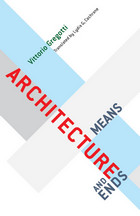
Vittorio Gregotti—the architect of Barcelona’s Olympic Stadium, Milan’s Arcimboldi Opera Theater, and Lisbon’s Centro Cultural de Belém, among many other noted constructions—is not only a designer of international repute but an acclaimed theorist and critic. Architecture, Means and Ends is his practical and imaginative reflection on the role of the technical aspects of architectural design, both as part of the larger process of innovation and in relation to the mythic opposition between vision and construction.
Interweaving the seemingly irreconcilable concerns of aesthetics, meaning, and construction, Architecture, Means and Ends reflects Gregotti’s overarching claim that buildings always have a symbolic, cultural content. In this book, he argues that by making symbolic expression a primary objective in the design of a project, the designer will produce a practical aesthetic as well as an ethical solution. Architecture, Means and Ends embraces that philosophy and will appeal to those, like Gregotti, working at the intersections of the history of design, art criticism, and architectural theory.
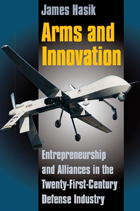
For all their advantages, small firms also face significant challenges in access to capital and customers. To overcome such problems, they can form alliances either with each other or with larger companies. Hasik traces the trade-offs of such alliances and provides crucial insight into their promises and pitfalls.
This ground-breaking study is a significant contribution to understanding both entrepreneurship and alliances, two crucial factors in business generally. It will be of interest to readers in the defense sector as well as the wider business community.
A world-leading military strategist and an IDF insider explain the improbable success of the Israeli armed forces.
When the Israel Defense Forces was established in May 1948, it was small, poorly equipped, and already at war. Lacking sufficient weaponry or the domestic industrial base to produce it, the newborn military was forced to make do with whatever it could get its hands on. That spirit of improvisation carried the IDF to a decisive victory in the First Arab-Israeli War.
Today the same spirit has made the IDF the most powerful military in the Middle East and among the most capable in the world. In The Art of Military Innovation, Edward N. Luttwak and Eitan Shamir trace the roots of this astounding success. What sets the IDF apart, they argue, is its singular organizational structure. From its inception, it has been the world’s only one-service military, encompassing air, naval, and land forces in a single institutional body. This unique structure, coupled with a young officer corps, allows for initiative from below. The result is a nimble organization inclined toward change rather than beholden to tradition.
The IDF has fostered some of the most significant advances in military technology of the past seventy years, from the first wartime use of drones to the famed Iron Dome missile defense system, and now the first laser weapon, Iron Beam. Less-heralded innovations in training, logistics, and human resources have been equally important. Sharing rich insights and compelling stories, Luttwak and Shamir reveal just what makes the IDF so agile and effective.
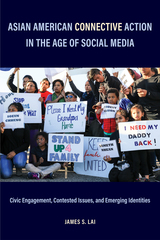
Social media provides ethno-racial immigrant groups—especially those who cannot vote due to factors such as lack of citizenship and limited English proficiency—the ability to mobilize and connect around collective issues. Online spaces and discussion forums have encouraged many Asian Americans to participate in public policy debates and take action on social justice issues. This form of digital group activism serves as an adaptive political empowerment strategy for the fastest-growing and largest foreign-born population in America. Asian American Connective Action in the Age of Social Media illuminates how associating online can facilitate and amplify traditional forms of political action.
James Lai provides diverse case studies on contentious topics ranging from affirmative action debates to textbook controversies to emphasize the complexities, limitations, and challenges of connective action that is relevant to all racial groups. Using a detailed multi-methods approach that includes national survey data and Twitter hashtag analysis, he shows how traditional immigrants, older participants, and younger generations create online consensus and mobilize offline to foment political change. In doing so, Lai provides a nuanced glimpse into the multiple ways connective action takes shape within the Asian American community.

Contributors
Ebony Coletu, Kay Dickinson, Stefano Harney, Matthew Hockenberry, Tung-Hui Hu, Shannon Mattern, Fred Moten, Michael Palm, Ned Rossiter, Nicole Starosielski, Liam Cole Young, Susan Zieger
From hidden connections in big data to bots spreading fake news, journalism is increasingly computer-generated. An expert in computer science and media explains the present and future of a world in which news is created by algorithm.
Amid the push for self-driving cars and the roboticization of industrial economies, automation has proven one of the biggest news stories of our time. Yet the wide-scale automation of the news itself has largely escaped attention. In this lively exposé of that rapidly shifting terrain, Nicholas Diakopoulos focuses on the people who tell the stories—increasingly with the help of computer algorithms that are fundamentally changing the creation, dissemination, and reception of the news.
Diakopoulos reveals how machine learning and data mining have transformed investigative journalism. Newsbots converse with social media audiences, distributing stories and receiving feedback. Online media has become a platform for A/B testing of content, helping journalists to better understand what moves audiences. Algorithms can even draft certain kinds of stories. These techniques enable media organizations to take advantage of experiments and economies of scale, enhancing the sustainability of the fourth estate. But they also place pressure on editorial decision-making, because they allow journalists to produce more stories, sometimes better ones, but rarely both.
Automating the News responds to hype and fears surrounding journalistic algorithms by exploring the human influence embedded in automation. Though the effects of automation are deep, Diakopoulos shows that journalists are at little risk of being displaced. With algorithms at their fingertips, they may work differently and tell different stories than they otherwise would, but their values remain the driving force behind the news. The human–algorithm hybrid thus emerges as the latest embodiment of an age-old tension between commercial imperatives and journalistic principles.
READERS
Browse our collection.
PUBLISHERS
See BiblioVault's publisher services.
STUDENT SERVICES
Files for college accessibility offices.
RECENTLY PUBLISHED




UChicago Accessibility Resources
home | accessibility | search | about | contact us
BiblioVault ® 2001 - 2024
The University of Chicago Press