
 A SCHOLARLY BOOK REPOSITORY
5 start with W start with W
—James R. Hansen, prizewinning aerospace historian and bestselling author of First Man: The Life of Neil A. Armstrong
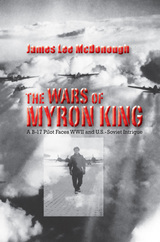
When Myron King of the U.S. Army Air Corps arrived in England in 1944, he fully expected to fly dangerous bombing missions over Nazi Germany. What the twenty-three-year-old lieutenant had no way of predicting, however, was that he would spend his last months in Europe entangled in a bizarre affair born of the mounting tensions between the United States and the Soviet Union. Ultimately, King faced three wars: the monumental conflict between the Allies and the Third Reich, the nascent Cold War, and a personal battle with the military brass to clear his name after enduring a grossly unjust court-martial.
This book presents an engrossing account of King’s early life and wartime service as part of the 401st Bombardment Group, U.S. Eighth Air Force. As a child growing up in New York and Tennessee, he was thoroughly captivated by the young field of aviation and dreamed of becoming a pilot. Attending college when Pearl Harbor was attacked, he realized his boyhood ambition by enlisting as an Air Corps cadet. After completing flight training two years later, King and his crew flew a B-17 bomber across the Atlantic to join their fellow airmen at a base near the English village of Deenethorpe—doing their first battle not with German fighters but with a raging storm during the Greenland-to-Iceland leg of the journey.
Once settled in Great Britain, the King Crew flew twenty missions from November 1944 through February 1945. It was on their last flight to Berlin that enemy fire crippled their plane and forced them to land in Poland amid the Russian forces that were advancing on Germany from the east. There events took a decidedly strange turn as King became embroiled in an incident involving a young stowaway and the increasingly complicated relations between the United States and Stalin’s regime. Scapegoated in the episode, King would leave the Air Corps with his honorable record severely soiled—a wrong that would take years to undo.
The Wars of Myron King is more than just a rattling good true-life adventure story. Based on a wide array of published and primary sources, including trial transcripts and interviews with King, the book offers a unique view of the experience of air combat, the intertwining of politics and military justice, and the complex circumstances that inaugurated the Cold War.
James Lee McDonough is professor emeritus of history at Auburn University. He is the author of ten books, including Shiloh—In Hell Before Night, Stones River—Bloody Winter in Tennessee, Chattanooga—A Death Grip on the Confederacy, War in Kentucky: From Shiloh to Perryville, and Nashville: The Western Confederacy’s Final Gamble. This is his second book on a World War II subject.
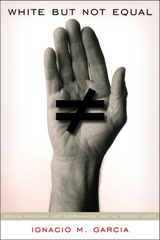
Ignacio García’s White But Not Equal explores this historic but mostly forgotten case, which became the first to recognize discrimination against Mexican Americans. Led by three dedicated Mexican American lawyers, the case argued for recognition of Mexican Americans under the 14th Amendment as a “class apart.” Despite a distinct history and culture, Mexican Americans were considered white by law during this period, yet in reality they were subjected to prejudice and discrimination. This was reflected in Hernández’s trial, in which none of the selected jurors were Mexican American. The concept of Latino identity began to shift as the demand for inclusion in the political and judicial system began.
García places the Hernández v. Texas case within a historical perspective and examines the changing Anglo-Mexican relationship. More than just a legal discussion, this book looks at the whole case from start to finish and examines all the major participants, placing the story within the larger issue of the fight for Mexican American civil rights.
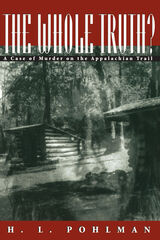
In this book, H. L. Pohlman reconstructs the dramatic story of this murder case and traces its disposition through the criminal justice system. Drawing on interviews with participants as well as court records, he closely examines competing interpretations of the evidence. Was the attack a hate crime? A sex crime? A class crime? At the same time, he shows how a broad range of substantive and procedural issues—from the rights of the accused to evaluation of potential mitigating circumstances—can influence the assessment of culpability in homicide cases.
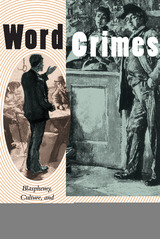
From extensive archival and literary research, Joss Marsh reconstructs a unified and particular account of blasphemy in Victorian England. Rewriting English history from the bottom up, she tells the forgotten stories of more than two hundred working-class "blasphemers," like Foote, whose stubborn refusal to silence their "hooligan" voices helped secure our rights to speak and write freely today. The new standards of criminality used to judge their "word crimes" rewrote the terms of literary judgment, demoting the Bible to literary masterpiece and raising Literature as the primary standard of Victorian cultural value.
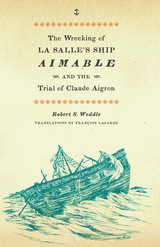
When Robert Cavelier, sieur de La Salle, landed on the Texas coast in 1685, bent on founding a French colony, his enterprise was doomed to failure. Not only was he hundreds of miles from his intended landfall—the mouth of the Mississippi—but his supply ship, Aimable, was wrecked at the mouth of Matagorda Bay, leaving the colonists with scant provisions and little protection against local Indian tribes. In anger and disgust, he struck out at the ship's captain, Claude Aigron, accusing him of wrecking the vessel purposely and maliciously.
Captain Aigron and his crew escaped the doomed colony by returning to France on the warship that had escorted the expedition on its ocean crossing. Soon after reaching France, Aigron found himself defendant in a civil suit filed by two of his officers seeking recompense for lost salary and personal effects, and then imprisoned on order of King Louis XIV while La Salle's more serious accusations were being investigated.
In this book, Robert Weddle meticulously recounts, through court documents, the known history of Aigron and the Aimable, and finds that despite La Salle's fervent accusations, the facts of the case offer no clear indictment. The court documents, deftly translated by François Lagarde, reveal Captain Aigron's successful defense and illuminate the circumstances of the wreck with Aigron's testimony. Much is also revealed about the French legal system and how the sea laws of the period were applied through the French government's L'Ordonnance de la Marine.
READERS
Browse our collection.
PUBLISHERS
See BiblioVault's publisher services.
STUDENT SERVICES
Files for college accessibility offices.
RECENTLY PUBLISHED





UChicago Accessibility Resources
home | accessibility | search | about | contact us
BiblioVault ® 2001 - 2024
The University of Chicago Press