
 A SCHOLARLY BOOK REPOSITORY
Edited by longtime Harington scholar Brian Walter, Double Toil and Trouble also includes an appendix featuring the author’s spirited correspondence with the editor who originally inspired the title novel, providing an insider’s look at the American literary scene and Harington’s own early assessment of his work. Spanning several decades of the author’s career, this volume gives readers a Harington who is at once familiar and fresh as he experiments with new formal possibilities, only to once again endear the vagaries of love, life, and folk language to us.


Offering a critical assessment of what she describes as a gender-insensitive juvenile legal system, Schaffner makes a compelling argument that current policies do not go far enough to empower disadvantaged girls so that communities can assist them in overcoming the social limitations and gender, sexual, and racial/ethnic discrimination that continue to plague young women growing up in contemporary United States.

William Goyen was a writer of startling originality and deep artistic commitment whose work attracted an international audience and the praise of such luminaries as Northrop Frye, Truman Capote, Gaston Bachelard, and Joyce Carol Oates. His subject was the land and language of his native East Texas; his desire, to preserve the narrative music through which he came to know his world. Goyen sought to transform the cherished details of his lost boyhood landscape into lasting, mythic forms. Cut off from his native soil and considering himself an “orphan,” Goyen brought modernist alienation and experimentation to Texas materials. The result was a body of work both sophisticated and handmade—and a voice at once inimitable and unmistakable.
It Starts with Trouble is the first complete account of Goyen’s life and work. It uncovers the sources of his personal and artistic development, from his early years in Trinity, Texas, through his adolescence and college experience in Houston; his Navy service during World War II; and the subsequent growth of his writing career, which saw the publication of five novels, including The House of Breath, nonfiction works such as A Book of Jesus, several short story collections and plays, and a book of poetry. It explores Goyen’s relationships with such legendary figures as Frieda Lawrence, Katherine Anne Porter, Stephen Spender, Anaïs Nin, and Carson McCullers. No other twentieth-century writer attempted so intimate a connection with his readers, and no other writer of his era worked so passionately to recover the spiritual in an age of disabling irony. Goyen’s life and work are a testament to the redemptive power of storytelling and the absolute necessity of narrative art.
New Lines takes the pulse of a society increasingly drawn to the power of the digital map, examining the conceptual and technical developments of the field of geographic information science as this work is refracted through a pervasive digital culture. Matthew W. Wilson draws together archival research on the birth of the digital map with a reconsideration of the critical turn in mapping and cartographic thought.
Seeking to bridge a foundational divide within the discipline of geography—between cultural and human geographers and practitioners of Geographic Information Systems (GIS)—Wilson suggests that GIS practitioners may operate within a critical vacuum and may not fully contend with their placement within broader networks, the politics of mapping, the rise of the digital humanities, the activist possibilities of appropriating GIS technologies, and more.
Employing the concept of the drawn and traced line, Wilson treads the theoretical terrain of Deleuze, Guattari, and Gunnar Olsson while grounding their thoughts with the hybrid impulse of the more-than-human thought of Donna Haraway. What results is a series of interventions—fractures in the lines directing everyday life—that provide the reader with an opportunity to consider the renewed urgency of forceful geographic representation. These five fractures are criticality, digitality, movement, attention, and quantification. New Lines examines their traces to find their potential and their necessity in the face of our frenetic digital life.

From the country that has added to our vocabulary such colorful terms as "purges," "pogroms," and "gulag," this collection investigates the conspicuous marks of violence in Russian history and culture.
Russians and non-Russians alike have long debated the reasons for this endemic violence. Some have cited Russia's huge size, unforgiving climate, and exposed geographical position as formative in its national character, making invasion easy and order difficult. Others have fixed the blame on cultural and religious traditions that spurred internecine violence or on despotic rulers or unfortunate episodes in the nation's history, such as the Mongol invasion, the rule of Ivan the Terrible, or the "Red Terror" of the revolution. Even in contemporary Russia, the specter of violence continues, from widespread mistreatment of women to racial antagonism, the product of a frustrated nationalism that manifests itself in such phenomena as the wars in Chechnya.
Times of Trouble is the first in English to explore the problem of violence in Russia. From a variety of perspectives, essays investigate Russian history as well as depictions of violence in the visual arts and in literature, including the works of Fyodor Dostoevsky, Isaac Babel, Mikhail Lermontov, and Nina Sadur. From the Mongol invasion to the present day, topics include the gulag, genocide, violence against women, anti-Semitism, and terrorism as a tool of revolution.
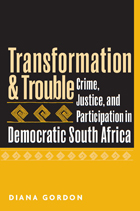
Crime is one of the major challenges to any new democracy. Violence often increases after the lifting of authoritarian control, or in the aftermath of regime change. But how can a fledgling democracy fight crime without violating the fragile rights of its citizens? In Transformation and Trouble, accomplished theorist and criminal justice scholar Diana Gordon critically examines South Africa's efforts to strike the perilous balance between democratic participation and social control.
South Africa has made great progress in pursuing the Western ideals of participatory justice and due process. Yet Gordon finds that popular concerns about crime have fostered the growth of a punitive criminal justice system that undermines the country's rights-oriented political culture. Transformation and Trouble calls for South Africa to reaffirm its commitment to public empowerment by reforming its criminal justice system-an approach, she argues, that would strengthen the country's new democracy.
"An eloquent, critical, but ultimately optimistic, analysis of the democratization of crime and justice in post-apartheid South Africa."
--Bill Dixon, School of Criminology, Education, Sociology and Social Work, Keele University
"A must read for understanding contemporary South Africa's agonizing dilemmas as it struggles to reconcile crime control with democratic values."
--Jerome H. Skolnick, New York University School of Law
"Gordon's vast experience with criminal justice illuminates her cautionary tale of the search for a new way in south Africa."
--Paul Chevigny, New York University
Diana Gordon is Professor Emerita of Political Science and Senior Research Scholar, City University of New York.

Wars over natural resources have been fiercely fought in the Humboldt Bay redwood region of Northern California, a situation made devastatingly urgent in recent decades of timber war that raised questions of economic sustainability and ecological preservation. In Trouble in the Forest, Richard Widick narrates the long and bloody history of this hostility and demonstrates how it exemplifies the key contemporary challenge facing the modern societies-the collision of capitalism, ecology, and social justice.
An innovative blend of social history, cultural theory, and ethnography, Trouble in the Forest traces the origins of the redwood conflict to the same engines of modernity that drove the region's colonial violence against American Indians and its labor struggles during the industrial revolution. Widick describes in vivid detail the infamous fight that ensued when Maxxam Inc. started clearing ancient forests in Humboldt after acquiring the Pacific Lumber Company in 1985, but he also reaches further back and investigates the local Indian clashes and labor troubles that set the conditions of the timber wars. Seizing on public flash points of each confrontation-including the massacre of Wiyot on Indian Island in 1860, the machine-gunning of redwood strikers by police and company thugs during the great lumber strike of 1935, and the car bombing of forest defenders in 1990-Widick maps how the landscape has registered the impact of this epochal struggle, and how the timber wars embody the forces of market capitalism, free speech, and liberal government.
Showing how events such as an Indian massacre and the death of a protester at the hands of a logger create the social memory and culture of timber production and environmental resistance now emblematic of Northern California's redwood region, Trouble in the Forest ultimately argues that the modern social imaginary produced a perpetual conflict over property that fueled the timber wars as it pushed toward the western frontier: first property in land, then in labor, and now in environment.
Jordan's estranged father also returns to Pee Dee on a quest of his own restoring his good name in a community which blames him for Chloe Henry's death in childbirth. Chloe was Jordan's mother and his grandmother's only child. Unresolved hostility in the family and in the community breaks out, making Jordan the unsuspecting pawn in a plot of revenge against his father. Jordan may be the only one who can free his family from the past and the equally troubled present.
Trouble the Water gains resonance from its unflinching confrontation with dualities common in the Afro-American experience: reality and myth, folklore and sophistication, North and South, rural and cosmopolitan. While sacrificing none of its complexities for the sake of simplicity, it has the relentless movement of a fairy tale that reaches deep into the unconscious roots of behavior. It is intensely lyrical and dense in realism. Trouble the Water is magical in the way it reveals the Afro-American psyche and symbolizes fundamental truths about American life.

In recent years, discoveries brought to light through analysis of ancient DNA have made headlines around the world. While ancient DNA studies may appear to be a field that is focused on objective results and laboratory science, it has also relied heavily on storytelling and is surprisingly influenced by political interests.
In The Trouble with Ancient DNA, Anna Källén explores how the parameters of genetic science influence the stories we tell about our ancient ancestors, questioning what narratives we can and should take at face value. Through accounts of migrations, warriors, and figures like Cheddar Man, we see enticing and potent narratives that reach far beyond what can be gathered from the scientific study of molecules alone. Rather, by privileging certain narratives and questions—like those about sex or eye and skin color—our stories of ancient DNA are spun around the structure of today’s methodologies, technologies, and popular and political interests. Källén considers how DNA is used to sensationalize stories, how its use poses questions of ethics and care, and who is responsible if stories of ancient DNA are adopted for dangerous political projects.


Blame society. Blame a bad upbringing. Blame the circumstances. Blame the victim--she may even blame herself. But what about the perpetrator? When the blame is all assigned, will anyone be left to take responsibility?
This powerful book takes up the disturbing topic of victimization and blame as a pathology of our time and its consequences for personal responsibility. By probing the psychological dynamics of victims and perpetrators of rape, sexual abuse, and domestic violence, Sharon Lamb seeks to answer some crucial questions: How do victims become victims and sometimes perpetrators? How can we break the psychological circle of perpetrators blaming others and victims blaming themselves? How do victims and perpetrators view their actions and reactions? And how does our social response to them facilitate patterns of excuse?
With clarity and compassion, Lamb examines the theories, excuses, and psychotherapies that strip both victims of their power and perpetrators of their agency--and thus deprive them of the means to human dignity, healing, and reparation. She shows how the current practice of painting victims as pure innocents may actually help perpetrators of abuse to shirk responsibility for their actions; they too can claim to be victims in their own right, passive and will-less in their wrongdoing.
The Trouble with Blame clarifies the social cost (quickly becoming so apparent) of letting perpetrators off too easily, and points out the dangers of over-emphasizing victimization, two problems which eclipse our dire need for accountability and recovery.

The trouble with 'community' is that this is not necessarily so; the personal social networks of individuals' actual experience crosscut collective categories, situations and institutions. Communities can prove unviable or imprisoning; the reality of community life and identity can often be very different from the ideology and the ideal.
In this provocative new book, anthropologists Vered Amit and Nigel Rapport draw on their various ethnographic experiences to reappraise the concept and the reality of 'community', in the light of globalization, religious fundamentalism, identity politics, and renascent localisms. How might anthropology better apprehend social identities which are intrinsically plural, transgressive and ironic? What has anthropology to say about the way in which civil society might hope to accommodate the on-going construction and the rightful expression of such migrant identities? Nigel Rapport and Vered Amit give their own answers to these questions before entering into dialogue to assess each other's positions.
Nigel Rapport is Professor of Anthropological and Philosophical Studies at the University of St. Andrews. He is author of Transcendent Individual (1997). Vered Amit is an Associate Professor at Concordia University in Montreal. She is the editor of Realizing Community (2002).

In the past thirty years, Americans have lost faith in their government and the politicians who lead it. They have blamed Washington for a long list of problems, ranging from poor schools to costly medical care to high rates of violent crime. After investigating these complaints and determining that many are justified, Derek Bok seeks to determine the main reasons for the failings and frustrations associated with government.
Discounting three common explanations--deteriorating leadership, the effect of the media on the political process, and the influence of interest groups--Bok identifies four weaknesses that particularly need explaining: a persistent tendency by Congress to design programs poorly; to impose expensive and often quixotic regulations that produce only modest results; to do less than other leading democracies to protect working people from illness, unemployment, and other basic hazards of life; and to leave large numbers of people, especially children, living in poverty.
Bok goes on to explore the reasons for these fundamental weaknesses and to discuss popular remedies such as term limits, devolution, "reinventing" government, and campaign finance reform. While some of these proposals have merit, Bok finds a deeper, more troubling paradox: Americans want to gain more power over their government, but are devoting less time to exerting a constructive influence. Their dissatisfaction with government is growing as their participation in the political process is declining. These contradictory trends, Bok argues, contribute to the problems of our democracy. Fortunately, there are many concrete steps that Americans can take to be politically engaged and to help their government improve its performance.
"Democracy," Bok concludes, "is a collective venture which falters or flourishes depending on the efforts citizens invest in its behalf."
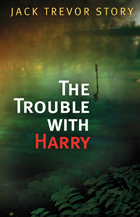
"As engaging a tale as I have encountered in months of looking for something really amusing to read.”—Kelsey Guilfoil, Chicago Tribune
“A pleasantly muted mystery that is genuinely funny fantasy as well.”—New York Times
On the outskirts of a small English town, young Arnie discovers the body of a middle-aged man in the woods. Three people are convinced they are responsible for the death: the captain thinks he accidentally shot the man while hunting rabbits; the local spinster thinks she may have done more damage than she intended when she hit him with her shoe—and Arnie’s mother, most damningly of all, reveals that the man is her long-lost husband, Harry, and that she had smashed a bottle over his head when he suddenly reappeared.
The police are called in to investigate the crime, but free-thinking artist Sam Marlowe becomes a good-natured sleuth, helping the townspeople to bury, dig up, and rebury the corpse in an effort to evade the authorities and discover the truth. While no one is particularly troubled by Harry’s death, everyone feels some guilt over the apparent murder. In the end, two couples fall in love, Arnie has a new father, and the mystery is happily solved.
First published in 1949, The Trouble with Harry was one of Jack Trevor Story’s early successes. Written with wit and insight, the novel was a bestseller and praised for both its succinct style and its original blend of mystery and humor. The story was adapted by Alfred Hitchcock for his film of the same name in 1955.


Stanley Fish is an equal opportunity antagonist. A theorist who has taken on theorists, an academician who has riled the academy, a legal scholar and political pundit who has ruffled feathers left and right, Fish here turns with customary gusto to the trouble with principle. Specifically, Fish has a quarrel with neutral principles. The trouble? They operate by sacrificing everything people care about to their own purity. And they are deployed with equal highmindedness and equally absurd results by liberals and conservatives alike.
In this bracing book, Fish argues that there is no realm of higher order impartiality--no neutral or fair territory on which to stake a claim--and that those who invoke one are always making a rhetorical and political gesture. In the end, it is history and context, the very substance against which a purportedly abstract principle defines itself, that determines a principle's content and power. In the course of making this argument, Fish takes up questions about academic freedom and hate speech, affirmative action and multiculturalism, the boundaries between church and state, and much more. Sparing no one, he shows how our notions of intellectual and religious liberty--cherished by those at both ends of the political spectrum--are artifacts of the very partisan politics they supposedly transcend. The Trouble with Principle offers a provocative challenge to the debates of our day that no intellectually honest citizen can afford to ignore.
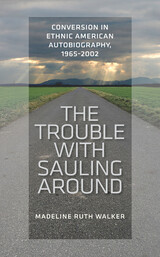
Examining autobiographical texts by Malcolm X (The Autobiography of Malcolm X), Oscar Zeta Acosta (The Autobiography of a Brown Buffalo and Revolt of the Cockroach People), Amiri Baraka (The Autobiography of LeRoi Jones), and Richard Rodriguez (Hunger of Memory, Days of Obligation, and Brown), Walker questions the often rosy views and simplistic binary conceptions of religious conversion. Her reading of these texts takes into account the conflict and serial changes the authors experience in a society that marginalizes them, the manner in which religious conversion offers ethnic Americans “salvation” through cultural assimilation or cultural nationalism, and what conversion, anticonversion, and deconversion narratives tell us about the problematic effects of religion that often go unremarked because of a code of “special respect” and political correctness.


Drawing on decades of engagement with Wagner and of experience teaching opera across disciplines, The Trouble with Wagner is packed with novel insights for experts and interested readers alike.
READERS
Browse our collection.
PUBLISHERS
See BiblioVault's publisher services.
STUDENT SERVICES
Files for college accessibility offices.
RECENTLY PUBLISHED







UChicago Accessibility Resources
home | accessibility | search | about | contact us
BiblioVault ® 2001 - 2024
The University of Chicago Press