
 A SCHOLARLY BOOK REPOSITORY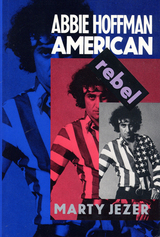
"... Abbie, more than any other radical, showed potheads how to demonstrate and radicals how to dance." -- Chicago Tribune
"... deeply sympathetic and scrupulously detached-a triumph of judicious empathy." -- MARTIN DUBERMAN, Distinguished Professor of History, Lehman/The Graduate School, C.U.N.Y.
"... details Hoffman's humor, manic energy, depressive spells, political skills, and above all, his Incurable and still contagious optimism." -- Entertainment Weekly
"Here's the Abbie I knew and loved! Marty Jezer has captured him in all his complexity, dedication, humor, and heart." -- ANITA HOFFMAN

Fought as fiercely by politicians and the public as by troops in Southeast Asia, the Vietnam War--its origins, its conduct, its consequences--is still being contested. In what will become the classic account, based on newly opened archival sources, David Kaiser rewrites what we know about this conflict. Reviving and expanding a venerable tradition of political, diplomatic, and military history, he shows not only why we entered the war, but also why our efforts were doomed to fail.
American Tragedy is the first book to draw on complete official documentation to tell the full story of how we became involved in Vietnam--and the story it tells decisively challenges widely held assumptions about the roles of Eisenhower, Kennedy, and Johnson. Using an enormous range of source materials from these administrations, Kaiser shows how the policies that led to the war were developed during Eisenhower's tenure and nearly implemented in the closing days of his administration in response to a crisis in Laos; how Kennedy immediately reversed course on Laos and refused for three years to follow recommendations for military action in Southeast Asia; and how Eisenhower's policies reemerged in the military intervention mounted by the Johnson administration. As he places these findings in the context of the Cold War and broader American objectives, Kaiser offers the best analysis to date of the actual beginnings of the war in Vietnam, the impact of the American advisory mission from 1962 through 1965, and the initial strategy of General Westmoreland.
A deft re-creation of the deliberations, actions, and deceptions that brought two decades of post-World War II confidence to an ignominious end, American Tragedy offers unparalleled insight into the Vietnam War at home and abroad--and into American foreign policy in the 1960s.
After more than four decades, the Viet Nam War continues to haunt our national memory, culture, politics, and military actions. In this probing interdisciplinary study, Susan Lyn Eastman examines a range of cultural productions—from memorials and poetry to cinematic and fictional narratives—that have tried to grapple with the psychic afterlife of traumatic violence resulting from the ill-fated conflict in Southeast Asia.
Underpinning the book is the notion of “prosthetic memory,” which involves memories acquired by those with no direct experience of the war, such as readers and filmgoers. Prosthetic memories, Eastman argues, refuse to relegate the war to the forgotten past and challenge the authenticity of experience, thus ensuring its continued relevance to debates over America’s self-conception, specifically her coinage of the “New Vietnam Syndrome,” and the country’s role in world affairs when it comes to contemporary military interventions.
With the notable exception of the Veterans’ Memorial in Washington, Eastman’s focus is on works produced from the Persian Gulf War (1990–91) through the post-9/11 “War on Terror.” She looks not only at American representations of the war—from movies like Randall Wallace’s We Were Soldiers to poems by W. D. Ehrhart, Yusef Komunyakaa, and others—but also at novels by Vietnamese authors Bao Ninh and Huong Thu Duong. The experiences of women figure prominently in the book: Eastman devotes a chapter to the Vietnam Women’s Memorial and another to Sandie Frazier’s novel I Married Vietnam and Oliver Stone’s film Heaven and Earth, based on memoirs by Le Ly Hayslip. And by examining Jessica Hagedorn’s Dream Jungle, a novel inspired by the filming of Apocalypse Now, she considers how the war’s repercussions were felt in other countries, in this case the Philippines. Her investigation of Vietnamese American authors Lan Cao, Andrew Lam, and GB Tran adds a transnational dimension to the study.
With its up-to-date perspective on recent works that have heretofore received scant critical notice, this book offers new ways of thinking about one of the most polemic chapters in U.S. history.
SUSAN LYN EASTMAN teaches in the Department of English at the University of Tennessee at Chattanooga.

After more than four decades, the Viet Nam War continues to haunt our national memory, culture, politics, and military actions. In this probing interdisciplinary study, Susan Lyn Eastman examines a range of cultural productions—from memorials and poetry to cinematic and fictional narratives—that have tried to grapple with the psychic afterlife of traumatic violence resulting from the ill-fated conflict in Southeast Asia.
Underpinning the book is the notion of “prosthetic memory,” which involves memories acquired by those with no direct experience of the war, such as readers and filmgoers. Prosthetic memories, Eastman argues, refuse to relegate the war to the forgotten past and challenge the authenticity of experience, thus ensuring its continued relevance to debates over America’s self-conception, specifically her coinage of the “New Vietnam Syndrome,” and the country’s role in world affairs when it comes to contemporary military interventions.
With the notable exception of the Veterans’ Memorial in Washington, Eastman’s focus is on works produced from the Persian Gulf War (1990–91) through the post-9/11 “War on Terror.” She looks not only at American representations of the war—from movies like Randall Wallace’s We Were Soldiers to poems by W. D. Ehrhart, Yusef Komunyakaa, and others—but also at novels by Vietnamese authors Bao Ninh and Huong Thu Duong. The experiences of women figure prominently in the book: Eastman devotes a chapter to the Vietnam Women’s Memorial and another to Sandie Frazier’s novel I Married Vietnam and Oliver Stone’s film Heaven and Earth, based on memoirs by Le Ly Hayslip. And by examining Jessica Hagedorn’s Dream Jungle, a novel inspired by the filming of Apocalypse Now, she considers how the war’s repercussions were felt in other countries, in this case the Philippines. Her investigation of Vietnamese American authors Lan Cao, Andrew Lam, and GB Tran adds a transnational dimension to the study.
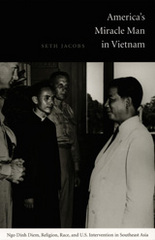
A diplomatic and cultural history, America’s Miracle Man in Vietnam draws on government archives, presidential libraries, private papers, novels, newspapers, magazines, movies, and television and radio broadcasts. Jacobs shows in detail how, in the 1950s, U.S. policymakers conceived of Cold War anticommunism as a crusade in which Americans needed to combine with fellow Judeo-Christians against an adversary dangerous as much for its atheism as for its military might. He describes how racist assumptions that Asians were culturally unready for democratic self-government predisposed Americans to excuse Diem’s dictatorship as necessary in “the Orient.” By focusing attention on the role of American religious and racial ideologies, Jacobs makes a crucial contribution to our understanding of the disastrous commitment of the United States to “sink or swim with Ngo Dinh Diem.”
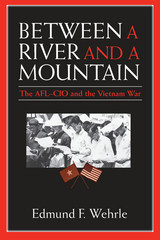
"Stunning in its research and sophisticated in its analysis, Between a River and a Mountain is one of the best studies we have of labor and the Vietnam War."
--Robert K. Brigham, Shirley Ecker Boskey Professor of History and International Relations, Vassar College
"Skillfully blending diplomatic and labor history, Wehrle's book is a valuable contribution to the ever-widening literature on the Vietnam War."
--George Herring, University of Kentucky
"Wehrle has written a compelling and original study of the AFL-CIO, the South Vietnamese labor movement and the Vietnam War."
--Judith Stein, Professor of History, City College and Graduate School of the City University of New York
"With this important book, Edmund Wehrle gives us the first full-fledged scholarly examination of organized labor's relationship to the Vietnam War. Based on deep research in U.S. and foreign archives, and presented in clear and graceful prose, Between a River and a Mountain adds a great deal to our understanding of how the AFL-CIO approached the war and in turn was fundamentally altered by its staunch support for Americanization. Nor is it merely an American story that Wehrle tells, for he also presents fascinating information on the Vietnamese Confederation of Labor and its sometimes-strained relations with U.S. labor."
--Fredrik Logevall, Cornell University
Edmund F. Wehrle is Assistant Professor of History, Eastern Illinois University.
A Guardian Best Book of the Year
“A gripping study of white power…Explosive.”
—New York Times
“Helps explain how we got to today’s alt-right.”
—Terry Gross, Fresh Air
The white power movement in America wants a revolution.
Returning to a country ripped apart by a war they felt they were not allowed to win, a small group of Vietnam veterans and disgruntled civilians who shared their virulent anti-communism and potent sense of betrayal concluded that waging war on their own country was justified. The command structure of their covert movement gave women a prominent place. They operated with discipline, made tragic headlines in Waco, Ruby Ridge, and Oklahoma City, and are resurgent under President Trump. Based on a decade of deep immersion in previously classified FBI files and on extensive interviews, Bring the War Home tells the story of American paramilitarism and the birth of the alt-right.
“A much-needed and troubling revelation… The power of Belew’s book comes, in part, from the fact that it reveals a story about white-racist violence that we should all already know.”
—The Nation
“Fascinating… Shows how hatred of the federal government, fears of communism, and racism all combined in white-power ideology and explains why our responses to the movement have long been woefully inadequate.”
—Slate
“Superbly comprehensive…supplants all journalistic accounts of America’s resurgent white supremacism.”
—Pankaj Mishra, The Guardian
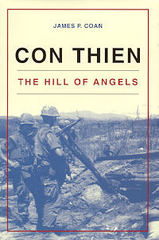
Throughout much of 1967, a remote United States Marine firebase only two miles from the demilitarized zone (DMZ) captured the attention of the world’s media. That artillery-scarred outpost was the linchpin of the so-called McNamara Line intended to deter incursions into South Vietnam by the North Vietnamese Army. As such, the fighting along this territory was particularly intense and bloody, and the body count rose daily.
Con Thien combines James P. Coan’s personal experiences with information taken from archives, interviews with battle participants, and official documents to construct a powerful story of the daily life and combat on the red clay bulls-eye known as "The Hill of Angels." As a tank platoon leader in Alpha Company, 3d Tank Battalion, 3d Marine Division, Coan was stationed at Con Thien for eight months during his 1967-68 service in Vietnam and witnessed much of the carnage.
Con Thien was heavily bombarded by enemy artillery with impunity because it was located in politically sensitive territory and the U.S. government would not permit direct armed response from Marine tanks. Coan, like many other soldiers, began to feel as though the government was as much the enemy as the NVA, yet he continued to fight for his country with all that he had. In his riveting memoir, Coan depicts the hardships of life in the DMZ and the ineffectiveness of much of the U.S. military effort in Vietnam.

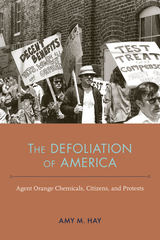
In The Defoliation of America: Agent Orange Chemicals, Citizens, and Protests, Amy M. Hay profiles the attitudes, understandings, and motivations of grassroots activists who rose to fight the use of phenoxy herbicides, or Agent Orange chemicals as they are commonly known, in various aspects of American life during the post-WWII era. Hay focuses her analysis on citizen responses to illuminate how regulatory policies were understood, challenged, and negotiated, contributing to a growing body of research on chemical regulatory policies, risk society, and hazardous chemicals. This volume uncovers new understandings about the authority of the state and its obligation to society, the role of scientific authority and expertise, and the protests made by various groups of citizens.
First introduced in 1946, phenoxy herbicides mimic hormones in broadleaf plants, causing them to “grow to death” while grass, grains, and other monocots remain unaffected. By the 1950s, millions of pounds of these chemicals were produced annually for use in brush control, weed eradication, forest management, and other agricultural applications. Pockets of skepticism and resistance began to appear by the late 1950s, and the trend intensified after 1962 when Rachel Carson’s Silent Spring directed mainstream attention to the harm modern chemicals were causing in the natural world. It wasn’t until the Vietnam War, however, when nearly 19 million gallons of Agent Orange and related herbicides were sprayed to clear the canopy and destroy crops in Southeast Asia, that the long-term damage associated with this group of chemicals began to attract widespread attention and alarm.
Using a wide array of sources and an interdisciplinary approach, Hay contributes to the robust fields of chemical toxicity, regulation, environmental management, and public health. This study of the scientists, health and environmental activists, and veterans who fought US chemical regulatory policies and practices reveals the mechanisms, obligations, and constraints of state and scientific authority in mid-twentieth-century America. Hay also shows how these disparate and mostly forgotten citizen groups challenged the political consensus and contested government and industry narratives of chemical safety.
from the front at iwo jima march 5--
Then I remembered and added two words.
under fire--
They looked great."
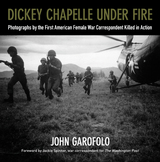
In 1965, Wisconsin native Georgette "Dickey" Chapelle became the first female American war correspondent to be killed in action. Now, "Dickey Chapelle Under Fire" shares her remarkable story and offers readers the chance to experience Dickey's wide-ranging photography, including several photographs taken during her final patrol in Vietnam.
Dickey Chapelle fought to be taken seriously as a war correspondent and broke down gender barriers for future generations of female journalists. She embedded herself with military units on front lines around the globe, including Iwo Jima and Okinawa, the Dominican Republic, and Vietnam. Dickey sometimes risked her life to tell the story--after smuggling aid to refugees fleeing Hungary, she spent almost two months in a Hungarian prison. For twenty-five years, Dickey's photographs graced the pages of "National Geographic," the "National Observer," "Life," and others. Her tenacity, courage, and compassion shine through in her work, highlighting the human impact of war while telling the bigger story beyond the battlefield.
In "Dickey Chapelle Under Fire," the American public can see the world through Dickey's lens for the first time in almost fifty years, with a foreword by Jackie Spinner, former war correspondent for "The Washington Post."

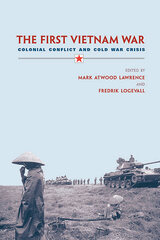
How did the conflict between Vietnamese nationalists and French colonial rulers erupt into a major Cold War struggle between communism and Western liberalism? To understand the course of the Vietnam wars, it is essential to explore the connections between events within Vietnam and global geopolitical currents in the decade after the Second World War.
In this illuminating work, leading scholars examine various dimensions of the struggle between France and Vietnamese revolutionaries that began in 1945 and reached its climax at Dien Bien Phu. Several essays break new ground in the study of the Vietnamese revolution and the establishment of the political and military apparatus that successfully challenged both France and the United States. Other essays explore the roles of China, France, Great Britain, and the United States, all of which contributed to the transformation of the conflict from a colonial skirmish to a Cold War crisis.
Taken together, the essays enable us to understand the origins of the later American war in Indochina by positioning Vietnam at the center of the grand clash between East and West and North and South in the middle years of the twentieth century.
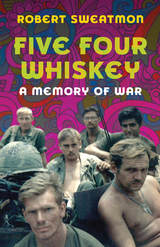
In late 1969, twenty-year-old Robert Sweatmon received a letter informing him that he had ten days to report to the United States Army. Like thousands of others, he had been drafted. Assigned as a rifleman with a mechanized unit, the author began a year-long odyssey in the Southeast Asian wilderness that would change his and his fellow soldiers’ lives forever.
Taking its title from the nighttime radio code call and response between base camp and those on ambush patrol, Five Four Whiskey: A Memory of War is a moving account of life as a combat soldier in the Vietnam War. Set mostly in the sprawling woods and rubber plantations northwest of Saigon, the author explains what his unit was asked to do and what obstacles they faced, including an elusive but deadly enemy, multiple kinds of booby traps, and antitank mines. The author, a notable television personality following the war, does not sensationalize his account; rather, his book allows a new generation to understand the emotional and physical pressures of the times. Coming of age in the maelstrom of civil rights and the free love culture, the author and his fellow soldiers saw their idealism quickly vaporize in the face of the grim realities of war. Here they learned to compartmentalize their lives as a way to survive, but it was their strong bonds that ultimately kept them from succumbing to the madness that surrounded them. Kept in the field for almost the entire time of his tour, the author was in a unit selected to conduct a clandestine reconnaissance in Cambodia and then lead the 1970 invasion, where he was wounded. Following his convalescence, he was sent to Nui Ba Den, the fabled ghost mountain haunted by the spirit of a Vietnamese princess, until he received his papers that he had completed his combat service. At that moment, his year-long mental wall between soldier and civilian fell away as he counted the last terrifying hours before he was safely out of Vietnam. A tour-de-force of military memoir, written in an objective and often literary prose, Five Four Whiskey perfectly captures how ordinary civilian-soldiers survived an ordeal set in one of the most turbulent times in American history.
Kieran focuses his analysis on the recent remembrance of six events, three of which occurred before the Vietnam War and three after it ended. The first group includes the siege of the Alamo in 1836, the incarceration of Union troops at Andersonville during the Civil War, and the experience of American combat troops during World War II. The second comprises the 1993 U.S. intervention in Somalia, the crash of United Airlines Flight 93 on September 11, 2001, and the Iraq and Afghanistan wars.
In each case a range of actors—military veterans, policymakers, memorial planners, and the general public—used memorial practices associated with the Vietnam War to reinterpret the contemporary significance of past events. A PBS program about Andersonville sought to cultivate a sense of national responsibility for the My Lai massacre. A group of Vietnam veterans occupied the Alamo in 1985, seeing themselves as patriotic heirs to another lost cause. A World War II veteran published a memoir in 1980 that reads like a narrative of combat in Vietnam. Through these and other examples, Forever Vietnam reveals not only the persistence of the past in public memory but also its malleability in the service of the political present.
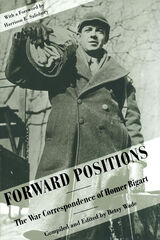
Among journalists—and particularly war correspondents—Homer Bigart was both legend and example. In a career of four decades, first with the New York Herald Tribuneand then, through 1972, with The New York Times, Bigart distinguished himself as a superb writer and tireless digger for the realities that could be learned only in the field and not at headquarters. In 1943 Bigart sailed for England to cover the air war and was soon on mule-back in Sicily, and hanging on at Anzio. He then went to the Pacific, where his dispatches won him his first Pulitzer Prize for foreign correspondence. When hostilities erupted in Korea he was again on the front lines in the front lines in the Orient, and again recipient of a Pulitzer. By the time of the American involvement in Vietnam, he was an old-timer, a seasoned correspondent admired and celebrated for his wit but regarded with awe for his masterly stories, in which straightforward prose, informed by tenacious reporting, cut to the heart of the issues.
Previously available only n crumbling library copies of the Tribune and the Times, or in microfilm repositories, his dispatches, with their rare insights into warefar and he minds of those who wage war, are now collected in Forward Positions: The War Correspondence of Home Bigart, edited by Betsy Wade and introduced by Harrison E. Salisbury, himself the winner of a Pulitzer Prize for journalism.
Forward Positions does honor to a breed of journalist that had passed into history by the time of Bigart’s death. It includes one of the first accounts of the atomic annihilation of Hiroshima, a report on the war-crimes trial of Adolf Eichmann, a number of dispatches on “hot” battles of the Cold War, and a probing dispatch on Lieutenant William Calley’s testimony on the Mỹ Lai Massacre. With this representative selection of more than fifty of Bigart’s accounts of war on the ground, in the air, and in the courtroom, Wade provides a wealth of background material about his career, as well as glimpses of his impact on journalism. The book promises hours of captivating and informative reading for journalists, historians, veterans, and anyone who likes a good story tautly told.
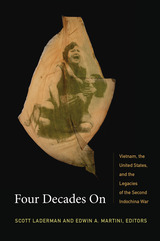
Contributors. Alex Bloom, Diane Niblack Fox, H. Bruce Franklin, Walter Hixson, Heonik Kwon, Scott Laderman, Mariam B. Lam, Ngo Vinh Long, Edwin A. Martini, Viet Thanh Nguyen, Christina Schwenkel, Charles Waugh
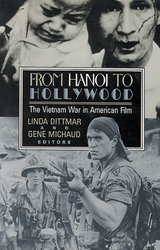
The title of this anthology calls attention to the process whereby aspects of the Vietnam War have been appropriated by the American cultural industry. Probing the large body of emotion-laden, controversial films, From Hanoi to Hollywood is concerned with the retelling of history and the retrospection that such a process involves. In this anthology, an awareness of film as a cultural artifact that molds beliefs and guides action is emphasized, an awareness that the contributors bring to a variety of films. Their essays span over one hundred documentary and fiction films, and include in-depth analyses of major commercial films, ranging from Apocalypse Now to Platoon, Rambo: First Blood Part II, and Full Metal Jacket, and documentaries from In the Year of the Pig to Dear America: Letters Home from Vietnam.
The essays in this volume deal with representations of the Vietnam war in documentary film and television reporting, examining the ways the power of film is used to deliver political messages. There are surprises here, new readings, and important insights on the ways we as a society have attempted to come to terms with the experiences of the Vietnam era. The book also contains two appendixes-a detailed chronology charting the relationship between major historical events and the release of American war films from 1954 through 1988, and a filmography listing information on over four hundred American and foreign films about the Vietnam War.
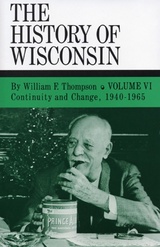
The sixth and final volume in the History of Wisconsin series examines the period from 1940-1965, in which state and nation struggled to maintain balance and traditions. Some of the major developments analyzed in this volume include: coping with three wars, racial and societal conflict, technological innovation, population shifts to and from cities and suburbs, and accompanying stress in politics, government, and society as a whole. Using dozens of photographs to visually illustrate this period in the state's history, this volume upholds the high standards set forth in the previous volumes.
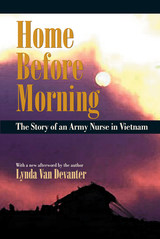
After one traumatic year, she came home, a Vietnam veteran. Coming home was nearly as devastating as the time she spent in Asia. Nothing was the same -- including Lynda herself. Viewed by many as a murderer instead of a healer, she felt isolated and angry. The anger turned to depression; like many other Vietnam veterans she suffered from delayed stress syndrome. Working in hospitals brought back chilling scenes of hopelessly wounded soldiers. A marriage ended in divorce. The war that was fought physically halfway around the world had become a personal, internal battle.
Home before Morning is the story of a woman whose courage, stamina, and personal history make this a compelling autobiography. It is also the saga of others who went to war to aid the wounded and came back wounded -- physically and emotionally -- themselves. And, it is the true story of one person's triumphs: her understanding of, and coming to terms with, her destiny.
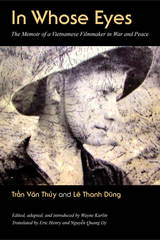
Thuy's memoir, when published in Vietnam in 2013, immediately sold out. In this translation, English-language readers are now able to learn in rich detail about the life and work of this preeminent artist. Written in a gentle and charming style, the memoir is filled with reflections on war, peace, history, freedom of expression, and filmmaking. Thuy also offers a firsthand account of the war in Vietnam and its aftermath from a Vietnamese perspective, adding a dimension rarely encountered in English-language literature.
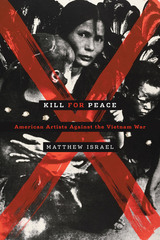
The Vietnam War (1964–1975) divided American society like no other war of the twentieth century, and some of the most memorable American art and art-related activism of the last fifty years protested U.S. involvement. At a time when Pop Art, Minimalism, and Conceptual Art dominated the American art world, individual artists and art collectives played a significant role in antiwar protest and inspired subsequent generations of artists. This significant story of engagement, which has never been covered in a book-length survey before, is the subject of Kill for Peace.
Writing for both general and academic audiences, Matthew Israel recounts the major moments in the Vietnam War and the antiwar movement and describes artists’ individual and collective responses to them. He discusses major artists such as Leon Golub, Edward Kienholz, Martha Rosler, Peter Saul, Nancy Spero, and Robert Morris; artists’ groups including the Art Workers’ Coalition (AWC) and the Artists Protest Committee (APC); and iconic works of collective protest art such as AWC’s Q. And Babies? A. And Babies and APC’s The Artists Tower of Protest. Israel also formulates a typology of antiwar engagement, identifying and naming artists’ approaches to protest. These approaches range from extra-aesthetic actions—advertisements, strikes, walk-outs, and petitions without a visual aspect—to advance memorials, which were war memorials purposefully created before the war’s end that criticized both the war and the form and content of traditional war memorials.
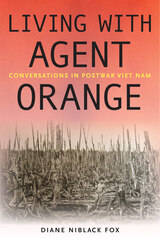
For over half a century, the Vietnamese people have endured the harmful legacies of Agent Orange, the toxic herbicide used by the American military as a type of chemical warfare. While scientists and politicians continue to debate how to best address its human and environmental consequences, the nearly three million Vietnamese whose lives have been shaped by its lingering effects have been largely left out of the conversation.
To understand how Agent Orange has impacted the lives and livelihoods of everyday Vietnamese people, Diane Niblack Fox interviewed families and individuals living with its aftereffects across the northern, central, and southern regions of the country. In powerfully written prose, Fox shares the personal accounts of villagers, as they describe caring for loved ones with chronic illnesses and disabilities and their attempts to secure medical and financial assistance. Living with Agent Orange also chronicles the moving stories of rebuilt lives, of family and community support, and of the overriding power of the human spirit.
Traditionally seen as a master of domestic politics, Lyndon Johnson is frequently portrayed as inept in foreign relations, consumed by the war in Vietnam, and unable to provide vision or leadership for the Western alliance. In this persuasive revisionist history, Thomas Alan Schwartz takes issue with many of the popular and scholarly assumptions about the president seen as the classic "ugly American."
In the first comprehensive study of Johnson's policy toward Europe--the most important theater of the Cold War--Schwartz shows a president who guided the United States with a policy that balanced the solidarity of the Western alliance with the need to stabilize the Cold War and reduce the nuclear danger. He faced the dilemmas of maintaining the cohesion of the alliance, especially with the French withdrawal from NATO, while trying to reduce tensions between eastern and western Europe, managing bitter conflicts over international monetary and trade policies, and prosecuting an escalating war in Southeast Asia.
Impressively researched and engagingly written, Lyndon Johnson and Europe shows a fascinating new side to this giant of twentieth-century American history and demonstrates that Johnson's diplomacy toward Europe deserves recognition as one of the most important achievements of his presidency.
Making Endless War is built on the premise that any attempt to understand how the content and function of the laws of war changed in the second half of the twentieth century should consider two major armed conflicts, fought on opposite edges of Asia, and the legal pathways that link them together across time and space. The Vietnam and Arab-Israeli conflicts have been particularly significant in the shaping and attempted remaking of international law from 1945 right through to the present day. This carefully curated collection of essays by lawyers, historians, philosophers, sociologists, and political geographers of war explores the significance of these two conflicts, including their impact on the politics and culture of the world’s most powerful nation, the United States of America. The volume foregrounds attempts to develop legal rationales for the continued waging of war after 1945 by moving beyond explaining the end of war as a legal institution, and toward understanding the attempted institutionalization of endless war.
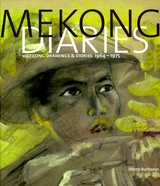
These guerrilla artists—some military officers and some civilians—lived clandestinely with the fighters, moving camp alongside them, going on reconnaissance missions, and carrying their sketchbooks, ink, and watercolors into combat. Trained by professors from the Hanoi Institute of Fine Arts who journeyed down the perilous Ho Chi Minh Trail to ensure a pictorial history of the war, they recorded battles and events from Operation Junction City to Khe Sanh to the Tet Offensive. They also sketched as the spirit moved them, rendering breathtaking landscapes, hut and bunker interiors, activities at base camps, troops on the move, portraits for the families of fallen soldiers, and the unimaginable devastation that the conflict left in its wake.
Their collective record—which Sherry Buchanan skillfully compiles here—is an extraordinary historical and artistic document of people at war. As such, it serves as a powerful response to the self-centeredness of American accounts of Vietnam, filling a profound gap in our national memory by taking us into the misunderstood worlds of those whom we once counted among our worst enemies.
In the annals of Vietnam War history, no figure has been more controversial than Ngo Dinh Diem. During the 1950s, U.S. leaders hailed Diem as “the miracle man of Southeast Asia” and funneled huge amounts of aid to his South Vietnamese government. But in 1963 Diem was ousted and assassinated in a coup endorsed by President John F. Kennedy. Diem’s alliance with Washington has long been seen as a Cold War relationship gone bad, undone either by American arrogance or by Diem’s stubbornness. In Misalliance, Edward Miller provides a convincing new explanation for Diem’s downfall and the larger tragedy of South Vietnam.
For Diem and U.S. leaders, Miller argues, the alliance was more than just a joint effort to contain communism. It was also a means for each side to pursue its plans for nation building in South Vietnam. Miller’s definitive portrait of Diem—based on extensive research in Vietnamese, French, and American archives—demonstrates that the South Vietnamese leader was neither Washington’s pawn nor a tradition-bound mandarin. Rather, he was a shrewd and ruthless operator with his own vision for Vietnam’s modernization. In 1963, allied clashes over development and reform, combined with rising internal resistance to Diem’s nation building programs, fractured the alliance and changed the course of the Vietnam War.
In depicting the rise and fall of the U.S.–Diem partnership, Misalliance shows how America’s fate in Vietnam was written not only on the battlefield but also in Washington’s dealings with its Vietnamese allies.
More than 50,000 draft-age American men and women migrated to Canada during the Vietnam War, the largest political exodus from the United States since the American Revolution. How are we to understand this migration three decades later? Was their action simply a marginal, highly individualized spin-off of the American antiwar movement, or did it have its own lasting collective meaning?
John Hagan, himself a member of the exodus, searched declassified government files, consulted previously unopened resistance organization archives and contemporary oral histories, and interviewed American war resisters settled in Toronto to learn how they made the momentous decision. Canadian immigration officials at first blocked the entry of some resisters; then, under pressure from Canadian church and civil liberties groups, they fully opened the border, providing these Americans with the legal opportunity to oppose the Vietnam draft and military mobilization while beginning new lives in Canada. It was a turning point for Canada as well, an assertion of sovereignty in its post–World War II relationship with the United States.
Hagan describes the resisters’ absorption through Toronto’s emerging American ghetto in the late 1960s. For these Americans, the move was an intense and transformative experience. While some struggled for a comprehensive amnesty in the United States, others dedicated their lives to engagement with social and political issues in Canada. More than half of the draft and military resisters who fled to Canada thirty years ago remain there today. Most lead successful lives, have lost their sense of Americanness, and overwhelmingly identify themselves as Canadians.
Finalist, National Book Critics Circle Award
Finalist, National Book Award in Nonfiction
A New York Times Book Review “The Year in Reading” Selection
All wars are fought twice, the first time on the battlefield, the second time in memory. From the author of the Pulitzer Prize–winning novel The Sympathizer comes a searching exploration of the conflict Americans call the Vietnam War and Vietnamese call the American War—a conflict that lives on in the collective memory of both nations.
“[A] gorgeous, multifaceted examination of the war Americans call the Vietnam War—and which Vietnamese call the American War…As a writer, [Nguyen] brings every conceivable gift—wisdom, wit, compassion, curiosity—to the impossible yet crucial work of arriving at what he calls ‘a just memory’ of this war.”
—Kate Tuttle, Los Angeles Times
“In Nothing Ever Dies, his unusually thoughtful consideration of war, self-deception and forgiveness, Viet Thanh Nguyen penetrates deeply into memories of the Vietnamese war…[An] important book, which hits hard at self-serving myths.”
—Jonathan Mirsky, Literary Review
“Ultimately, Nguyen’s lucid, arresting, and richly sourced inquiry, in the mode of Susan Sontag and W. G. Sebald, is a call for true and just stories of war and its perpetual legacy.”
—Donna Seaman, Booklist (starred review)
Ted Osius, former ambassador during the Obama administration, offers a vivid account, starting in the 1990s, of the various forms of diplomacy that made this reconciliation possible. He considers the leaders who put aside past traumas to work on creating a brighter future, including senators John McCain and John Kerry, two Vietnam veterans and ideological opponents who set aside their differences for a greater cause, and Pete Peterson—the former POW who became the first U.S. ambassador to a new Vietnam. Osius also draws upon his own experiences working first-hand with various Vietnamese leaders and traveling the country on bicycle to spotlight the ordinary Vietnamese people who have helped bring about their nation’s extraordinary renaissance.
With a foreword by former Secretary of State John Kerry, Nothing Is Impossible tells an inspiring story of how international diplomacy can create a better world.
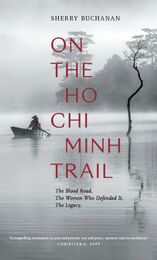
Offering both a personal and historical exploration of the Ho Chi Minh Trail, this book highlights the critical role the Trail and the young women soldiers who helped build and defend it played in the Vietnam War. Accompanied by two traveling companions, Sherry Buchanan winds her way from Hanoi in the north to Ho Chi Minh City, formerly Saigon, in the south. Driving through the spectacular scenery of Vietnam and Laos, she encounters locations from the Truong Son mountains, the Phong Nha Caves, ancient citadels, and Confucian temples to the Khmer Temple of Wat Phu at the western-most point of the Trail in Laos.
Buchanan records her interactions—both scheduled and spontaneous—with those who experienced the Vietnam War firsthand. She listens to the women who defended the Trail roads against the greatest bombing campaign in modern times, walks through minefields with the demolition teams hunting for unexploded ordnance, and meets American veterans who have returned to Vietnam with an urge to “do something.” Buchanan weaves informative, and often humorous, tales from her journey with excerpts from the accounts of others, situating the locations she visits in their historical and political context. On the Ho Chi Minh Trail brings together geography, history, and personal accounts to reveal the scale of the tragedy, its harmful legacies, and our memory of it. Buchanan challenges American exceptionalism and calls for redress for those harmed by US military actions during the Vietnam War and America’s subsequent wars.
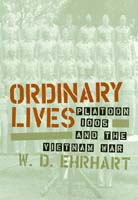
Twenty-seven years after basic training. Ehrhart began what became a five-year search for the men of his platoon. Who were these men alongside whom he trained? Why had they joined the Marines at a time when being sent to war and of the country that sent them to fight it? What does the Corps mean to them? What Ehrhart learned offers an extraordinary window into the complexities of the Vietnam Generation and the United States of America then and now.
Based on supporting materials from military records and family members as well as interviews -- some of which Ehrhart held in such active secondary roles as dairy farmhand, fishing companion, and impromptu guest at a family wedding -- this book records the more-than-30-year journey that each man took after his boot-camp graduation on August 12, 1966. Photos of the men, both then and now, accompany the profiles. Their stories are diverse, but as Ehrhart says, "It was, in short, history, and each of these men was and is a part of that history....There are, no doubt, scoundrels and liars and losers among these men, but as a group they have mostly impressed me with their decency and their loyalty and their hard work and their perseverance in the face of hardships and hurdles, the everyday obstacles that make ordinary lives extraordinary."
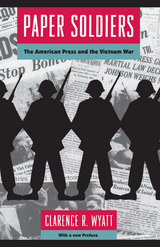
"Wyatt makes the Diem period in Saigon come to life—the primitive communications, the police crackdowns, the quarrels within the news organizations between the pessimists in Saigon and the optimists in Washington and New York."—Peter Braestrup, Washington Times
"An important, readable study of the Vietnam press corps—the most maligned group of journalists in modern American history. Clarence Wyatt's insights and assessments are particularly valuable now that the media is rapidly growing in its influence on domestic and international affairs."—Peter Arnett, CNN foreign correspondent
Peace in the Mountains analyzes student activism at the University of Pittsburgh, Ohio University, and West Virginia University during the Vietnam War era. Drawing from a wide variety of sources including memoirs, periodicals, archival manuscript collections, and college newspapers such as The Pitt News, author Thomas Weyant tracks the dynamics of a student-led campus response to the war in real time and outside the purview of the national media. Along the way, he musters evidence for an emerging social and political conscience among the student bodies of northern Appalachia, citing politics on campus, visions of patriotism and dissent, campus citizenship, antiwar activism and draft resistance, campus issues, and civil rights as major sites of contention and exploration.
Through this regional chronicle of student activism during the Vietnam War era, Weyant holds to one reoccurring and unifying theme: citizenship. His account shows that political activism and civic engagement were by no means reserved to students at elite colleges; on the contrary, Appalachian youth were giving voice to the most vexing questions of local and national responsibility, student and citizen identity, and the role of the university in civil society. Rich in primary source material from student op-eds to administrative documents, Peace in the Mountains draws a new map of student activism in the 1960s and early 1970s. Weyant’s study is a thoughtful and engaging addition to both Appalachian studies and the historiography of the Vietnam War era and is sure to appeal not only to specialists—Appalachian scholars, political historians, political scientists, and sociologists—but to college students and general readers as well.
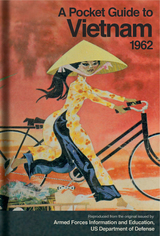
For most Americans in the 1960s, Vietnam was a faraway land of which they had little or no knowledge. Yet soon, hundreds of thousands of young American men and women would find themselves on the other side of the globe, fighting—and, in many cases, living—with the Vietnamese people. To lessen the culture shock, the Department of Defense prepared A Pocket Guide to Vietnam, 1962, a remarkably compact and surprisingly timeless crash course in Vietnamese culture for visitors to this foreign land.

Though the Vietnam War did not directly involve West Germany, it was nonetheless a decisive catalyst for the era’s wider protest movements in that country, and it gave rise to an ardent anti-war discourse. Poetry and poetic writing were key to anti-war work. Hundreds of poems and related writings about Vietnam circulated in West Germany, yet they are almost entirely forgotten today. Poetic Writing and the Vietnam War in West Germany uncovers and explores some of that rich artistic production in order to present a new history of engaged poetic writing in West Germany in the 1960s and 1970s and to draw out distinctive characteristics of wider protest culture. In doing so, it makes the case for attending to marginal, non-canonical, or neglected literary and cultural forms, and for critical thinking about why they might, over time, have been obscured. The book also offers a case study for reflection on the representation of war, on ways in which German oppositional culture could imagine its others, and on the relationship of poetry to the historical world.
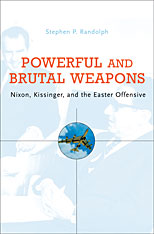
As America confronts an unpredictable war in Iraq, Stephen Randolph returns to an earlier conflict that severely tested our civilian and military leaders. In 1972, America sought to withdraw from Vietnam with its credibility intact. As diplomatic negotiations were pursued in Paris, President Richard Nixon and National Security Advisor Henry Kissinger hoped that gains on the battlefield would strengthen their position at the negotiating table--working against the relentless deadline of a presidential election year.
In retaliation for a major North Vietnamese offensive breaking over the Easter holidays, the President launched the all-out air campaign known as Linebacker--overriding his Secretary of Defense and clashing with the theater commander in whom he had lost all confidence. He intended to destroy the enemy with the full force of America's "powerful and brutal weapons" and thus shape the endgame of the war. Randolph's narrative, based not only on the Nixon White House tapes and newly declassified materials from the National Security Council, the Pentagon, and the White House but also on never before used North Vietnamese sources, re-creates how North Vietnam planned and fought this battle from Hanoi and how the U.S. planned and fought it from Washington.
Randolph's intimate chronicle of Nixon's performance as commander-in-chief gains us unprecedented access to how strategic assessments were made, transmitted through the field of command, and played out in combat and at the negotiating table. It is a compelling story about America's military decision-making in conflicts with nontraditional belligerents that speaks provocatively to our own time.
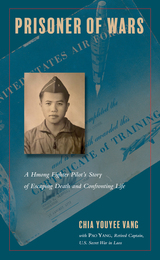
Retired Captain Pao Yang was a Hmong airman trained by the U.S. Air Force and CIA to fly T-28D aircraft for the U.S. Secret War in Laos. However, his plane was shot down during a mission in June 1972. Yang survived, but enemy forces captured him and sent him to a POW camp in northeastern Laos. He remained imprisoned for four years after the United States withdrew from Vietnam because he fought on the American side of the war.
Prisoner of Wars shows the impact the U.S Secret War in Laos had on Hmong combatants and their families. Chia Vang uses oral histories thatpoignantly recount Yang’s story and the deeply personal struggles his loved ones—who feared he had died—experienced in both Southeast Asia and the United States. As Yang eventually rebuilt his life in America, he grappled with issues of freedom and trauma.
Yang’s life provides a unique lens through which to better understand the lasting impact of the wars in Southeast Asia and the diverse journeys that migrants from Asia made over the last two centuries. Prisoner of Wars makes visible an aspect of the collateral damage that has been left out of dominant Vietnam War narratives.
The United States has both the largest, most expensive, and most powerful military and the largest, most expensive, and most punitive carceral system in the history of the world. Since the American War in Vietnam, hundreds of thousands of veterans have been incarcerated after their military service.
Identifying the previously unrecognized connections between American wars and mass incarceration, Prisoners after War reaches across lines of race, class, and gender to record the untold history of incarcerated veterans over the past six decades. Having conducted dozens of oral history interviews, Jason A. Higgins traces the lifelong effects of war, inequality, disability, and mental illness, and explores why hundreds of thousands of veterans, from Vietnam to Afghanistan, were caught up in the carceral system. This original study tells an intergenerational history of state-sanctioned violence, punishment, and inequality, but its pages also resonate with stories of survival and redemption, revealing future possibilities for reform and reparative justice.
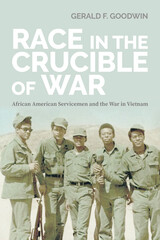
When African American servicemen went to fight in the Vietnam War, discrimination and prejudice followed them. Even in a faraway country, their military experiences were shaped by the racial environment of the home front. War is often viewed as a crucible that can transform society, but American race relations proved remarkably durable.
In Race in the Crucible of War, Gerald F. Goodwin examines how Black servicemen experienced and interpreted racial issues during their time in Vietnam. Drawing on more than fifty new oral interviews and significant archival research, as well as newspapers, periodicals, memoirs, and documentaries, Goodwin reveals that for many African Americans the front line and the home front were two sides of the same coin. Serving during the same period as the civil rights movement and the race riots in Chicago, Detroit, and dozens of other American cities, these men increasingly connected the racism that they encountered in the barracks and on the battlefields with the tensions and violence that were simmering back home.

In 1971 RAND consultant Daniel J. Ellsberg made national news by handing over to the New York Times a top secret Pentagon study on the Vietnam War. Publication of the Pentagon Papers rocked the American defense establishment and fanned the flames of the growing antiwar protest movement in the United States.
By late that year, most of the Pentagon Papers had been released to the public. Four volumes, however, were held back, Ellsberg himself conceding their special sensitivity. These so-called negotiating volumes deal with the diplomacy of the war between 1964 and 1968. Published in book form with extensive commentary, they provide an indispensable source for the study of diplomacy during the Vietnam conflict.
These documents cover thirteen major peace contacts and initiatives that took place during the presidency of Lyndon Johnson. They furnish a wealth of new information about the American bombing pauses of May 1965 and January 1966; several third-party peace initiatives; and a still virtually unknown 1965 contact, mysteriously called “xyz,” between North Vietnamese and American diplomats in Paris. They afford the most complete documentation yet available of the Polish-sponsored peace move codenamed “marigold” and the abortive peace initiative launched early in 1967 by British Prime Minister Wilson and Soviet Premier Kosygin.
The utility of this important book is greatly enhanced by Herring’s extensive annotation, highly informative introductory essays, and helpful glossaries.

Gail Hosking Gilberg's father was a hero, a valiant soldier decorated posthumously with the Medal of Honor, a man who served his country throughout his entire adult life. But Charles Hosking was a mystery to his daughter. He was killed in Vietnam a week after her seventeenth birthday. She buried the war, the protests, the medal, and her military upbringing along with her father, so much so that she felt cut off from herself. It took more than twenty years for her to recognize the stirrings of a father and a daughter not yet at peace.
Gilberg began a journey—two journeys really—to find out who her father was and in the process to find herself. She explored her buried rage, shame, and silence, and examined how war had shaped her life. In studying the photo albums that her father had left behind, Gilberg found that the photographs demanded that she give voice to her feelings, then release her silent words, words that had no meaning in war for her father yet had all the meaning in the world for her. The result was an epiphany. The photographs became the roads she took in and out of war, and her words brought her father home. Snake's Daughter reveals the crossroads where a soldier father's life and a daughter's life connect.
Snake's Daughter is an arresting and anguished narrative that gives voice to an experience Gail Hosking Gilberg shares with thousands of Americans, including military “brats” whose parents served their country and often gave their lives in the process.
When the FBI arrested twenty-eight people in connection to a break-in at a Camden, New Jersey, draft board in 1971, the Bureau celebrated. The case should have been an easy victory for the department—the perpetrators had been caught red-handed attempting to destroy conscription documents for draftees into the Vietnam War. But the results of the trial surprised everyone, and in the process shook the foundations of American law, politics, and religion.
In Spiritual Criminals, Michelle M. Nickerson shares a complex portrait of the Camden 28, a passionate group of grassroots religious progressives who resisted both their church and their government as they crusaded against the Vietnam War. Founded by priests, nuns, and devout lay Catholics, members of this coalition accepted the risks of felony convictions as the cost of challenging the nation’s military-industrial complex and exposing the illegal counterintelligence operations of the FBI. By peeling away the layers of political history, theological traditions, and the Camden 28’s personal stories, Nickerson reveals an often-unseen spiritual side of the anti-war movement. At the same time, she probes the fractures within the group, detailing important conflicts over ideology, race, sex, and gender that resonate in the church and on the political Left today.
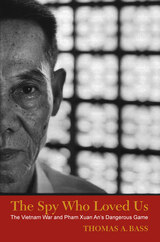
Only after Saigon fell in 1975 did An's colleagues learn that the affable raconteur in their midst, acclaimed as "dean of the Vietnamese press corps," was actually a general in the North Vietnamese Army. In recognition of his tradecraft and his ability to spin military losses—such as the Têt Offensive of 1968—into psychological gains, An was awarded sixteen military medals.
After the book's original publication, WikiLeaks revealed that Thomas A. Bass's account of An's career was distributed to CIA agents as a primer in espionage. Now available in paper with a new preface, An's story remains one of the most gripping to emerge from the era.
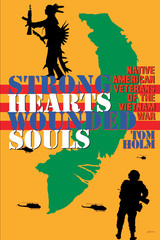
At least 43,000 Native Americans fought in the Vietnam War, yet both the American public and the United States government have been slow to acknowledge their presence and sacrifices in that conflict. In this first-of-its-kind study, Tom Holm draws on extensive interviews with Native American veterans to tell the story of their experiences in Vietnam and their readjustment to civilian life.
Holm describes how Native American motives for going to war, experiences of combat, and readjustment to civilian ways differ from those of other ethnic groups. He explores Native American traditions of warfare and the role of the warrior to explain why many young Indian men chose to fight in Vietnam. He shows how Native Americans drew on tribal customs and religion to sustain them during combat. And he describes the rituals and ceremonies practiced by families and tribes to help heal veterans of the trauma of war and return them to the "white path of peace."
This information, largely unknown outside the Native American community, adds important new perspectives to our national memory of the Vietnam war and its aftermath.
Traditional assessments of wartime strategy focus on the relationship between the military and civilians, but Bakich argues that we must take into account the information flow patterns among top policy makers and all national security organizations. By examining the fate of American military and diplomatic strategy in four limited wars, Bakich demonstrates how not only the availability and quality of information, but also the ways in which information is gathered, managed, analyzed, and used, shape a state’s ability to wield power effectively in dynamic and complex international systems.
Utilizing a range of primary and secondary source materials, Success and Failure in Limited War makes a timely case for the power of information in war, with crucial implications for international relations theory and statecraft.
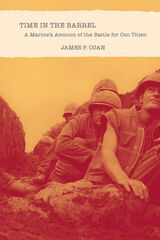
Con Thien, located only two miles from the demilitarized zone dividing North and South Vietnam, was a United States Marine Corps firebase that was the scene of fierce combat for months on end during 1967. Staving off attacks and ambushes while suffering from ineffectual leadership from Washington as well as media onslaughts, courageous American Marines protected this crucial piece of land at all costs. They would hold Con Thien, but many paid the ultimate price. By the end of the war, more than 1,400 Marines had died and more than 9,000 sustained injuries defending the “Hill of Angels.”
For eight months, James P. Coan’s five-tank platoon was assigned to Con Thien while attached to various Marine infantry battalions. A novice second lieutenant at the time, the author kept a diary recording the thoughts, fears, and frustrations that accompanied his life on “The Hill.” Time in the Barrel: A Marine’s Account of the Battle for Con Thien offers an authentic firsthand account of the daily nightmare that was Con Thien. An enticing and fascinating read featuring authentic depictions of combat, it allows readers to fully grasp the enormity of the fierce struggle for Con Thien.
The defenders of Con Thien were bombarded with hundreds of rounds of incoming rockets, mortars, and artillery that pounded the beleaguered outpost daily. Monsoon downpours turned the red laterite clay soil into a morass of oozing mud, flooded bunkers and trenches, and made Con Thien a living hell. .Being at Con Thien came to be ruefully referred to by the Marines stationed there as "time in the barrel” because they were targets as easy as fish in a barrel.
More than a retelling of military movements, Coan’s engrossing narratives focus on the sheer sacrifice and misery of one Marine’s experience in Vietnam. Through his eyes, we experience the abysmal conditions the Marines endured, from monsoon rainstorms to the constant threat of impending attack. Climatic moments in history are captured through the rare, personal perspective of one particularly astute and observant participant.
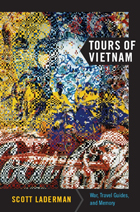
Tracing a history of ideological assertions embedded in travel discourse, Laderman analyzes the use of tourism in the Republic of Vietnam as a form of Cold War cultural diplomacy by a fledgling state that, according to one pamphlet published by the Vietnamese tourism authorities, was joining the “family of free nations.” He chronicles the evolution of the Defense Department pocket guides to Vietnam, the first of which, published in 1963, promoted military service in Southeast Asia by touting the exciting opportunities offered by Vietnam to sightsee, swim, hunt, and water-ski. Laderman points out that, despite historians’ ongoing and well-documented uncertainty about the facts of the 1968 “Hue Massacre” during the National Liberation Front’s occupation of the former imperial capital, the incident often appears in English-language guidebooks as a settled narrative of revolutionary Vietnamese atrocity. And turning to the War Remnants Museum in Ho Chi Minh City, he notes that, while most contemporary accounts concede that the United States perpetrated gruesome acts of violence in Vietnam, many tourists and travel writers still dismiss the museum’s display of that record as little more than “propaganda.”
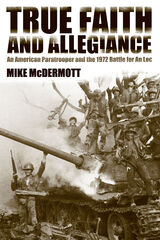
The battle for An Loc, a key component in the North Vietnamese attempt to overwhelm the South, swept Mike McDermott, then the senior advisor to an elite South Vietnamese paratrooper battalion, into some of the most horrific close-quarters fighting of the war. His in-the-trenches account is augmented by detailed descriptions of a user’s perspective on the parachute resupply, tactical airpower, and B-52 strikes that allowed the An Loc garrison to survive.
True Faith and Allegiance is a riveting recounting of the prism through which a Vietnam veteran views the war as he continues to live with the aftereffects of life-altering experiences in the service of his country.
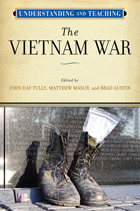
Honorable Mention, Franklin Buchanan Prize for Curricular Materials, Association for Asian Studies and the Committee for Teaching about Asia
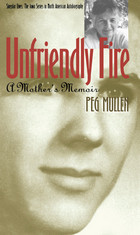
In 1968 Michael Mullen, a graduate student in biochemistry, was drafted; in 1969 he was sent to Vietnam as a foot soldier in Colonel Norman Schwarzkopf's Charlie Company; and in 1970 he was killed by the same “friendly fire” that destroyed thousands of other lives during the Vietnam War.
Back home on the family farm in Iowa, his parents made his death a crusade to awaken all parents to the insanity of war. C. D. B. Bryan's Friendly Fire and the TV movie of the same name documented these dramatic years, and Peg Mullen became a national symbol of grassroots activism. Now Peg Mullen shifts from symbol to reality as she tells her story in print for the first time.
Outspoken, fearless, and wickedly humorous, Peg Mullen had a duel mission in the years after Michael's death: to penetrate the lies and evasions behind the artillery misfire that killed her oldest son and to publicize the senseless horror of the Vietnam War. Unfriendly Fire draws on the many letters sent to the Mullens after Michael's death; in addition, Michael's own bitter, weary letters home are reprinted. In these the voices of parents, brothers, sisters, comrades, teachers, and Michael himself echo Peg Mullen's call for truth and peace.
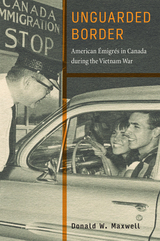
Unguarded Border tells their stories and, in the process, describes a migrant experience that does not fit the usual paradigms. Rather than treating these American refugees as unwelcome foreigners, Canada embraced them, refusing to extradite draft resisters or military deserters and not even requiring passports for the border crossing. And instead of forming close-knit migrant communities, most of these émigrés sought to integrate themselves within Canadian society.
Historian Donald W. Maxwell explores how these Americans in exile forged cosmopolitan identities, coming to regard themselves as global citizens, a status complicated by the Canadian government’s attempts to claim them and the U.S. government’s eventual efforts to reclaim them. Unguarded Border offers a new perspective on a movement that permanently changed perceptions of compulsory military service, migration, and national identity.
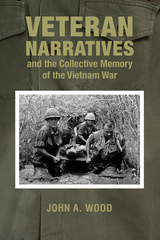
In the decades since the Vietnam War, veteran memoirs have influenced Americans’ understanding of the conflict. Yet few historians or literary scholars have scrutinized how the genre has shaped the nation’s collective memory of the war and its aftermath. Instead, veterans’ accounts are mined for colorful quotes and then dropped from public discourse; are accepted as factual sources with little attention to how memory, no matter how authentic, can diverge from events; or are not contextualized in terms of the race, gender, or class of the narrators.
Veteran Narratives and the Collective Memory of the Vietnam War is a landmark study of the cultural heritage of the war in Vietnam as presented through the experience of its American participants. Crossing disciplinary borders in ways rarely attempted by historians, John A. Wood unearths truths embedded in the memoirists’ treatments of combat, the Vietnamese people, race relations in the United States military, male-female relationships in the war zone, and veterans’ postwar troubles. He also examines the publishing industry’s influence on collective memory, discussing, for example, the tendency of publishers and reviewers to privilege memoirs critical of the war. Veteran Narratives is a significant and original addition to the literature on Vietnam veterans and the conflict as a whole.

Christopher traces the history of American stereotyping of Asians and shows how Euro-American ethnocentricity has limited most American authors' ability to represent fairly the Vietnamese in their stories. By giving us access to Vietnamese representations of the war, she creates a context for understanding the way the war was experienced from the "other" side, and she offers perceptive, well-documented analyses of how and why Americans have so emphatically excised the Vietnamese from narratives about a war fought in their own country.
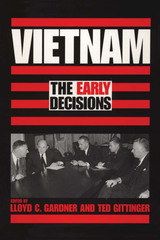
Haunting questions remain about our involvement in Vietnam. Perhaps the most persistent of these is whether President Kennedy would have ended American involvement in Vietnam if he had lived.
For many Americans, Oliver Stone's film JFK left no doubt that before his assassination Kennedy had determined to quit Vietnam. Yet the historical record offers a more complex answer. In this fresh look at the archival evidence, noted scholars take up the challenge to provide us with their conclusions about the early decisions that put the United States on the path to the greatest American tragedy since the Civil War. The tensions and turmoil that accompanied those decisions reveal the American presidency at the center of a storm of conflicting advice.
The book is divided into four sections. Parts one and two delve into the political and military contexts of the early decisions. Part three raises the intriguing questions of Kennedy's and Johnson's roles in the conflict, particularly the thorny issue of whether Kennedy did, in fact, intend to withdraw from Vietnam and whether Johnson reversed that policy. Part four reveals an uncanny parallel between early Soviet policy toward Hanoi and U.S. policy toward Saigon.
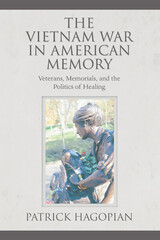
Tracing the evolution of the image of the Vietnam veteran from alienated dissenter to traumatized victim to noble warrior, Patrick Hagopian describes how efforts to commemorate the war increasingly downplayed the political divisions it spawned in favor of a more unifying emphasis on honoring veterans and promoting national "healing."
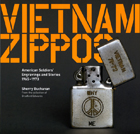
—from an engraving on a Vietnam-era Zippo lighter
In 1965, journalist Morley Safer followed the United States Marines on a search and destroy mission into Cam Ne. When the Marines he accompanied reached the village, they ordered the civilians there to evacuate their homes—grass huts whose thatched roofs they set ablaze with Zippo lighters. Safer’s report on the event soon aired on CBS and was among the first to paint a harrowing portrait of the War in Vietnam. LBJ responded to the segment furiously, accusing Safer of having “shat on the American flag.” For the first time since World War II, American boys in uniform had been portrayed as murderers instead of liberators. Our perception of the war—and the Zippo lighter—would never be the same.
But as this stunning book attests, the Zippo was far more than an instrument of death and destruction. For the American soldiers who wielded them, they were a vital form of social protest as well. Vietnam Zippos showcases the engravings made by U.S. soldiers on their lighters during the height of the conflict, from 1965 to 1973. In a real-life version of the psychedelic war portrayed in Francis Ford Coppola’s Apocalypse Now, Sherry Buchanan tells the fascinating story of how the humble Zippo became a talisman and companion for American GIs during their tours of duty. Through a dazzling array of images, we see how Zippo lighters were used during the war, and we discover how they served as a canvas for both personal and political expression during the Age of Aquarius, engraved with etchings of peace signs and marijuana leaves and slogans steeped in all the rock lyrics, sound bites, combat slang, and antiwar mottos of the time.
Death from Above. Napalm Sticks to Kids. I Love You Mom, From a Lonely Paratrooper. The engravings gathered in this copiously illustrated volume are at once searing, caustic, and moving, running the full emotional spectrum with both sardonic reflections—I Love the Fucking Army and the Army Loves Fucking Me—and poignant maxims—When the Power of Love Overcomes the Love of Power, the World Will Know Peace. Part pop art and part military artifact, they collectively capture the large moods of the sixties and the darkest days of Vietnam—all through the world of the tiny Zippo.
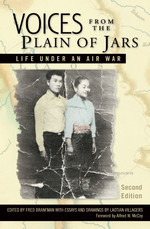
When first published in 1972, this book was instrumental in exposing the bombing. In this expanded edition, Branfman follows the story forward in time, describing the hardships that Laotians faced after the war when they returned to find their farm fields littered with cluster munitions—explosives that continue to maim and kill today.
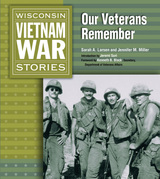
An unforgettable collection of 174 letters and diary entries written by 92 wisconsin men and women who served in Vietnam. Includes a journal kept by Menasha native Frederic Flom on cigarette wrappers during his final 16 days of captivity — the only known diary smuggled out by a Vietnam prisoner of war.
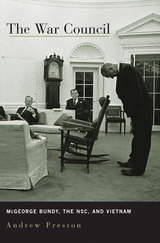
Was the Vietnam War unavoidable? Historians have long assumed that ideological views and the momentum of events made American intervention inevitable. By examining the role of McGeorge Bundy and the National Security Council, Andrew Preston demonstrates that policymakers escalated the conflict in Vietnam in the face of internal opposition, external pressures, and a continually failing strategy.
Bundy created the position of National Security Adviser as we know it today, with momentous consequences that continue to shape American foreign policy. Both today's presidential supremacy in foreign policy and the contemporary national security bureaucracy find their origins in Bundy's powers as the first National Security Adviser and in the ways in which he and his staff brought about American intervention in Vietnam. Presidents Kennedy and Johnson were not enthusiastic about waging a difficult war in pursuit of murky aims, but the NSC's bureaucratic dexterity and persuasive influence in the Oval Office skewed the debate in favor of the conflict.
In challenging the prevailing view of Bundy as a loyal but quietly doubting warrior, Preston also revises our understanding of what it meant--and means--to be a hawk or a dove. The War Council is an illuminating and compelling story with two inseparable themes: the acquisition and consolidation of power; and how that power is exercised.
In We Gotta Get Out of This Place, Doug Bradley and Craig Werner place popular music at the heart of the American experience in Vietnam. They explore how and why U.S. troops turned to music as a way of connecting to each other and the World back home and of coping with the complexities of the war they had been sent to fight. They also demonstrate that music was important for every group of Vietnam veterans—black and white, Latino and Native American, men and women, officers and "grunts"—whose personal reflections drive the book's narrative. Many of the voices are those of ordinary soldiers, airmen, seamen, and marines. But there are also "solo" pieces by veterans whose writings have shaped our understanding of the war—Karl Marlantes, Alfredo Vea, Yusef Komunyakaa, Bill Ehrhart, Arthur Flowers—as well as songwriters and performers whose music influenced soldiers' lives, including Eric Burdon, James Brown, Bruce Springsteen, Country Joe McDonald, and John Fogerty. Together their testimony taps into memories—individual and cultural—that capture a central if often overlooked component of the American war in Vietnam.
Winner of the 2020 Victor Turner Prize in Ethnographic Writing
Nearly 1,600 Americans are still unaccounted for and presumed dead from the Vietnam War. These are the stories of those who mourn and continue to search for them.
For many families the Vietnam War remains unsettled. Nearly 1,600 Americans—and more than 300,000 Vietnamese—involved in the conflict are still unaccounted for. In What Remains, Sarah E. Wagner tells the stories of America’s missing service members and the families and communities that continue to search for them. From the scientists who work to identify the dead using bits of bone unearthed in Vietnamese jungles to the relatives who press government officials to find the remains of their loved ones, Wagner introduces us to the men and women who seek to bring the missing back home. Through their experiences she examines the ongoing toll of America’s most fraught war.
Every generation has known the uncertainties of war. Collective memorials, such as the Tomb of the Unknowns in Arlington National Cemetery, testify to the many service members who never return, their fates still unresolved. But advances in forensic science have provided new and powerful tools to identify the remains of the missing, often from the merest trace—a tooth or other fragment. These new techniques have enabled military experts to recover, repatriate, identify, and return the remains of lost service members. So promising are these scientific developments that they have raised the expectations of military families hoping to locate their missing. As Wagner shows, the possibility of such homecomings compels Americans to wrestle anew with their memories, as with the weight of their loved ones’ sacrifices, and to reevaluate what it means to wage war and die on behalf of the nation.
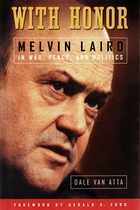
The first book ever to focus on Laird’s legacy, this authorized biography reveals his central and often unrecognized role in managing the crisis of national identity sparked by the Vietnam War—and the challenges, ethical and political, that confronted him along the way. Drawing on exclusive interviews with Laird, Henry Kissinger, Gerald Ford, and numerous others, author Dale Van Atta offers a sympathetic portrait of a man striving for open government in an atmosphere fraught with secrecy. Van Atta illuminates the inner workings of high politics: Laird’s behind-the-scenes sparring with Kissinger over policy, his decisions to ignore Nixon’s wilder directives, his formative impact on arms control and health care, his key role in the selection of Ford for vice president, his frustration with the country’s abandonment of Vietnamization, and, in later years, his unheeded warning to Donald Rumsfeld that “it’s a helluva lot easier to get into a war than to get out of one.”
READERS
Browse our collection.
PUBLISHERS
See BiblioVault's publisher services.
STUDENT SERVICES
Files for college accessibility offices.
RECENTLY PUBLISHED


UChicago Accessibility Resources
home | accessibility | search | about | contact us
BiblioVault ® 2001 - 2024
The University of Chicago Press