
 A SCHOLARLY BOOK REPOSITORY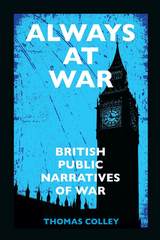
Compelling narratives are integral to successful foreign policy, military strategy, and international relations. Yet often narrative is conceived so broadly it can be hard to identify. The formation of strategic narratives is informed by the stories governments think their people tell, rather than those they actually tell. This book examines the stories told by a broad cross-section of British society about their country’s past, present, and future role in war, using in-depth interviews with 67 diverse citizens. It brings to the fore the voices of ordinary people in ways typically absent in public opinion research.
Always at War complements a significant body of quantitative research into British attitudes to war, and presents an alternative case in a field dominated by US public opinion research. Rather than perceiving distinct periods between war and peace, British citizens see their nation as so frequently involved in conflict that they consider the country to be continuously at war. At present, public opinion appears to be a stronger constraint on Western defense policy than ever.
After more than four decades, the Viet Nam War continues to haunt our national memory, culture, politics, and military actions. In this probing interdisciplinary study, Susan Lyn Eastman examines a range of cultural productions—from memorials and poetry to cinematic and fictional narratives—that have tried to grapple with the psychic afterlife of traumatic violence resulting from the ill-fated conflict in Southeast Asia.
Underpinning the book is the notion of “prosthetic memory,” which involves memories acquired by those with no direct experience of the war, such as readers and filmgoers. Prosthetic memories, Eastman argues, refuse to relegate the war to the forgotten past and challenge the authenticity of experience, thus ensuring its continued relevance to debates over America’s self-conception, specifically her coinage of the “New Vietnam Syndrome,” and the country’s role in world affairs when it comes to contemporary military interventions.
With the notable exception of the Veterans’ Memorial in Washington, Eastman’s focus is on works produced from the Persian Gulf War (1990–91) through the post-9/11 “War on Terror.” She looks not only at American representations of the war—from movies like Randall Wallace’s We Were Soldiers to poems by W. D. Ehrhart, Yusef Komunyakaa, and others—but also at novels by Vietnamese authors Bao Ninh and Huong Thu Duong. The experiences of women figure prominently in the book: Eastman devotes a chapter to the Vietnam Women’s Memorial and another to Sandie Frazier’s novel I Married Vietnam and Oliver Stone’s film Heaven and Earth, based on memoirs by Le Ly Hayslip. And by examining Jessica Hagedorn’s Dream Jungle, a novel inspired by the filming of Apocalypse Now, she considers how the war’s repercussions were felt in other countries, in this case the Philippines. Her investigation of Vietnamese American authors Lan Cao, Andrew Lam, and GB Tran adds a transnational dimension to the study.
With its up-to-date perspective on recent works that have heretofore received scant critical notice, this book offers new ways of thinking about one of the most polemic chapters in U.S. history.
SUSAN LYN EASTMAN teaches in the Department of English at the University of Tennessee at Chattanooga.

After more than four decades, the Viet Nam War continues to haunt our national memory, culture, politics, and military actions. In this probing interdisciplinary study, Susan Lyn Eastman examines a range of cultural productions—from memorials and poetry to cinematic and fictional narratives—that have tried to grapple with the psychic afterlife of traumatic violence resulting from the ill-fated conflict in Southeast Asia.
Underpinning the book is the notion of “prosthetic memory,” which involves memories acquired by those with no direct experience of the war, such as readers and filmgoers. Prosthetic memories, Eastman argues, refuse to relegate the war to the forgotten past and challenge the authenticity of experience, thus ensuring its continued relevance to debates over America’s self-conception, specifically her coinage of the “New Vietnam Syndrome,” and the country’s role in world affairs when it comes to contemporary military interventions.
With the notable exception of the Veterans’ Memorial in Washington, Eastman’s focus is on works produced from the Persian Gulf War (1990–91) through the post-9/11 “War on Terror.” She looks not only at American representations of the war—from movies like Randall Wallace’s We Were Soldiers to poems by W. D. Ehrhart, Yusef Komunyakaa, and others—but also at novels by Vietnamese authors Bao Ninh and Huong Thu Duong. The experiences of women figure prominently in the book: Eastman devotes a chapter to the Vietnam Women’s Memorial and another to Sandie Frazier’s novel I Married Vietnam and Oliver Stone’s film Heaven and Earth, based on memoirs by Le Ly Hayslip. And by examining Jessica Hagedorn’s Dream Jungle, a novel inspired by the filming of Apocalypse Now, she considers how the war’s repercussions were felt in other countries, in this case the Philippines. Her investigation of Vietnamese American authors Lan Cao, Andrew Lam, and GB Tran adds a transnational dimension to the study.
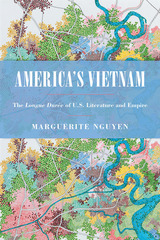
America’s Vietnam challenges the prevailing genealogy of Vietnam’s emergence in the American imagination—one that presupposes the Vietnam War as the starting point of meaningful Vietnamese-U.S. political and cultural involvements. Examining literature from as early as the 1820s, Marguerite Nguyen takes a comparative, long historical approach to interpreting constructions of Vietnam in American literature. She analyzes works in various genres published in English and Vietnamese by Monique Truong and Michael Herr as well as lesser-known writers such as John White, Harry Hervey, and Võ Phiến. The book’s cross-cultural prism spans Paris, Saigon, New York, and multiple oceans, and its departure from Cold War frames reveals rich cross-period connections.
America’s Vietnam recounts a mostly unexamined story of Southeast Asia’s lasting and varied influence on U.S. aesthetic and political concerns. Tracking Vietnam’s transition from an emergent nation in the nineteenth century to a French colony to a Vietnamese-American war zone, Nguyen demonstrates that how authors represent Vietnam is deeply entwined with the United States’ shifting role in the world. As America’s longstanding presence in Vietnam evolves, the literature it generates significantly revises our perceptions of war, race, and empire over time.
Anthropologists have a long tradition of prescient diagnoses of world events. Possessing a knowledge of culture, society, and history not always shared by the media's talking heads, anthropologists have played a crucial role in educating the general reader on the public debates from World War I to the second Gulf War.
This anthology collects over fifty commentaries by noted anthropologists such as Margaret Mead, Franz Boas, and Marshall Sahlins who seek to understand and explain the profound repercussions of U.S. involvement in the Middle East, Asia, Africa, and Latin America. Frequently drawing on their own fieldwork, the anthropologists go beyond the headlines to draw connections between indigenous cultures, corporate globalization, and contemporary political and economic crises. Venues range from the op-ed pages of internationally renowned newspapers such as the New York Times and the Washington Post to magazine articles and television interviews. Special sections entitled "Prelude to September 11" and "Anthropological Interpretations of September 11" include articles that provided many Americans with their first substantial introduction to the history of Islam, Central Asia, and the Middle East. Each article includes a brief introduction contextualizing the commentary.
Global events of the early twenty-first century have placed new stress on the relationship among anthropology, governance, and war. Facing prolonged insurgency, segments of the U.S. military have taken a new interest in anthropology, prompting intense ethical and scholarly debate. Inspired by these issues, the essays in Anthropology and Global Counterinsurgency consider how anthropologists can, should, and do respond to military overtures, and they articulate anthropological perspectives on global war and power relations.
This book investigates the shifting boundaries between military and civil state violence; perceptions and effects of American power around the globe; the history of counterinsurgency doctrine and practice; and debate over culture, knowledge, and conscience in counterinsurgency. These wide-ranging essays shed new light on the fraught world of Pax Americana and on the ethical and political dilemmas faced by anthropologists and military personnel alike when attempting to understand and intervene in our world.
Published by Bucknell University Press. Distributed worldwide by Rutgers University Press.
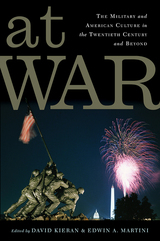
At War offers short, accessible essays addressing the central issues in the new military history—ranging from diplomacy and the history of imperialism to the environmental issues that war raises and the ways that war shapes and is shaped by discourses of identity, to questions of who serves in the U.S. military and why and how U.S. wars have been represented in the media and in popular culture.
Despite the growing interest in atomic culture and history, the body of relevant scholarship is relatively sparse. Atomic Culture opens new doors into the field by providing a substantive, engaging, and historically based consideration of the topic that will appeal to students and scholars of the Atomic Age as well as general readers.
Contributors include Michael A. Amundson, Mick Broderick, Peter Goin, John Hunner, Ferenc M. Szasz, A. Costandina Titus, Peter C. van Wyck, and Scott C. Zeman.
In the early 20th century, the diesel-electric submarine made possible a new type of unrestricted naval warfare. Such brutal practices as targeting passenger, cargo, and hospital ships not only violated previous international agreements; they were targeted explicitly at civilians. A deviant form of warfare quickly became the norm.
In Atrocity, Deviance, and Submarine Warfare, Nachman Ben-Yehuda recounts the evolution of submarine warfare, explains the nature of its deviance, documents its atrocities, and places these developments in the context of changing national identities and definitions of the ethical, at both social and individual levels. Introducing the concept of cultural cores, he traces the changes in cultural myths, collective memory, and the understanding of unconventionality and deviance prior to the outbreak of World War I. Significant changes in cultural cores, Ben-Yehuda concludes, permitted the rise of wartime atrocities at sea.
Gary Messinger shows that over the last 150 years a succession of breakthroughs in the realm of media has reshaped the making of war and peace. Along with mass newspapers, magazines, books, motion pictures, radio, television, computer software, and telecommunication satellites comes an array of strategies for exploiting these media to control popular beliefs and emotions. Images of war now arrive in many forms and reach billions of people simultaneously. Political and military leaders must react to crowd impulses that sweep around the globe. Nation-states and nongovernmental groups, including terrorists, use mass communication to spread their portrayals of reality.
Drawing on a wide range of media products, from books and articles to films and television programs, as well as his own research in the field of propaganda studies, Messinger offers a fresh and comprehensive overview. He skillfully charts the path that has led us to our current situation and suggests where we might go next.

Geographic knowledge generated for the Cold War was a form of power, Farish argues, and it was given an urgency in the panels, advisory boards, and study groups established to address the challenges of an atomic world. He investigates how the scales of the city, the continent, the region, the globe, and, by extension, outer space, were brought together as strategic spaces, categories that provided a cartographic orientation for the Cold War and influenced military deployments, diplomacy, espionage, and finance.
Farish analyzes the surprising range of knowledge production involved in the project of claiming and classifying American space. Backed by military and intelligence funding, physicists and policy makers, soldiers and social scientists came together to study and shape the United States and its place in a divided world.
Now, after fifty years as a renowned cultural historian, Franklin offers a set of hard-learned lessons about modern American history. Crash Course is essential reading for anyone who wonders how America ended up where it is today: with a deeply divided and disillusioned populace, led by a dysfunctional government, and mired in unwinnable wars. It also finds startling parallels between America’s foreign military exploits and the equally brutal tactics used on the home front to crush organized labor, antiwar, and civil rights movements.
More than just a memoir or a history book, Crash Course gives readers a unique firsthand look at the building of the American empire and the damage it has wrought. Shocking and gripping as any thriller, it exposes the endless deception of the American public, and reveals from inside how and why many millions of Americans have been struggling for decades against our own government in a fight for peace and justice.

In Cultures of Fear, a truly world-class line up of scholars explore the formation and normalisation of fear in the context of war and terrorism.
"Freedom from fear" is a universal right and fundamental for human well-being. People often look to governments, humanitarian agencies, and other institutions to further this aim. However, this book shows that these organisations often use the same "logic of fear" to monitor, control, and contain human beings in zones of violence.
This is an excellent interdisciplinary reader for students of anthropology, sociology and politics. Contributors include Noam Chomsky, Slavoj Zizek, Jean Baudrillard, Catharine MacKinnon, Neil Smith, Cynthia Enloe, David L. Altheide, Cynthia Cockburn and Carolyn Nordstrum.
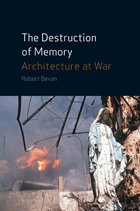
A decimated Shiite shrine in Iraq. The smoking World Trade Center site. The scorched cityscape of 1945 Dresden. Among the most indelible scars left by war is the destroyed landscapes, and such architectural devastation damages far more than mere buildings. Robert Bevan argues herethat shattered buildings are not merely “collateral damage,” but rather calculated acts of cultural annihilation.
From Hitler’s Kristallnacht to the toppling of Saddam Hussein’s statue in the Iraq War, Bevan deftly sifts through military campaigns and their tactics throughout history, and analyzes the cultural impact and catastrophic consequences of architectural destruction. For Bevan, these actions are nothing less than cultural genocide. Ultimately, Bevan forcefully argues for the prosecution of nations that purposely flout established international treaties against destroyed architecture.
A passionate and thought-provoking cri de coeur, The Destruction of Memory raises questions about the costs of war that run deeper than blood and money.
“The idea of a global inheritance seems to have fallen by the wayside and lessons that should have long ago been learned are still being recklessly disregarded. This is what makes Bevan’s book relevant, even urgent: much of the destruction of which it speaks is still under way.”—Financial Times Magazine
“The message of Robert Bevan’s devastating book is that war is about killing cultures, identities and memories as much as it is about killing people and occupying territory.”—Sunday Times
“As Bevan’s fascinating, melancholy book shows, symbolic buildings have long been targeted in and out of war as a particular kind of mnemonic violence against those to whom they are special.”—The Guardian
Even after Hiroshima and Nagasaki, most Americans may not have been sure what an atomic bomb was or how it worked. But they did sense that it had fundamentally changed the future of the human race. In this book, Robert Jacobs analyzes the early impact of nuclear weapons on American culture and society. He does so by examining a broad range of stories, or "nuclear narratives," that sought to come to grips with the implications of the bomb's unprecedented and almost unimaginable power.
Beginning with what he calls the "primary nuclear narrative," which depicted atomic power as a critical agent of social change that would either destroy the world or transform it for the better, Jacobs explores a variety of common themes and images related to the destructive power of the bomb, the effects of radiation, and ways of surviving nuclear war. He looks at civil defense pamphlets, magazines, novels, and films to recover the stories the U.S. government told its citizens and soldiers as well as those presented in popular culture.
According to Jacobs, this early period of Cold War nuclear culture—from 1945 to the banning of above-ground testing in 1963—was distinctive for two reasons: not only did atmospheric testing make Americans keenly aware of the presence of nuclear weapons in their lives, but radioactive fallout from the tests also made these weapons a serious threat to public health, separate from yet directly linked to the danger of nuclear war.
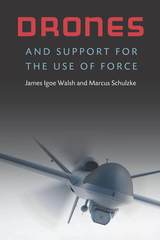
Drones and Support for the Use of Force uses experimental research to analyze the effects of combat drones on Americans’ support for the use of force. The authors’ findings—that drones have had important but nuanced effects on support for the use of force—have implications for democratic control of military action and civil-military relations and provide insight into how the proliferation of military technologies influences foreign policy.
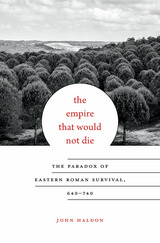
The eastern Roman Empire was the largest state in western Eurasia in the sixth century. Only a century later, it was a fraction of its former size. Surrounded by enemies, ravaged by warfare and disease, the empire seemed destined to collapse. Yet it did not die. In this holistic analysis, John Haldon elucidates the factors that allowed the eastern Roman Empire to survive against all odds into the eighth century.
By 700 CE the empire had lost three-quarters of its territory to the Islamic caliphate. But the rugged geography of its remaining territories in Anatolia and the Aegean was strategically advantageous, preventing enemies from permanently occupying imperial towns and cities while leaving them vulnerable to Roman counterattacks. The more the empire shrank, the more it became centered around the capital of Constantinople, whose ability to withstand siege after siege proved decisive. Changes in climate also played a role, permitting shifts in agricultural production that benefitted the imperial economy.
At the same time, the crisis confronting the empire forced the imperial court, the provincial ruling classes, and the church closer together. State and church together embodied a sacralized empire that held the emperor, not the patriarch, as Christendom’s symbolic head. Despite its territorial losses, the empire suffered no serious political rupture. What remained became the heartland of a medieval Christian Roman state, with a powerful political theology that predicted the emperor would eventually prevail against God’s enemies and establish Orthodox Christianity’s world dominion.
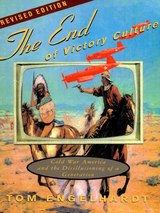
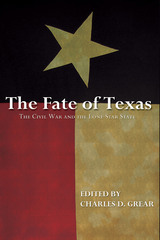
Choice Outstanding Academic Title
Texas has often been overlooked in Civil War scholarship, but this examination shows that the Lone Star State—though definitely unusual—was decidedly Southern. Eleven noted historians examine the ways the civil war touched every aspect of life in Texas and approach the subject from varied perspectives—military, social, and cultural history; public history; and historical memory—to provide a greater understanding of the roles of women and slaves during the war, and how veterans and the aftermath of loss helped pave the way for the Texas of today.
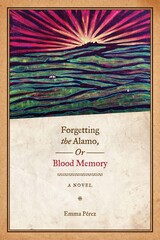
Runner-up, Best Historical Fiction in English, Latino Book Awards Competition, 2010
This literary adventure takes place in nineteenth-century Texas and follows the story of a Tejana lesbian cowgirl after the fall of the Alamo. Micaela Campos, the central character, witnesses the violence against Mexicans, African Americans, and indigenous peoples after the infamous battles of the Alamo and of San Jacinto, both in 1836. Resisting an easy opposition between good versus evil and brown versus white characters, the novel also features Micaela's Mexican-Anglo cousin who assists and hinders her progress. Micaela's travels give us a new portrayal of the American West, populated by people of mixed races who are vexed by the collision of cultures and politics. Ultimately, Micaela's journey and her romance with a black/American Indian woman teach her that there are no easy solutions to the injustices that birthed the Texas Republic.
This novel is an intervention in queer history and fiction with its love story between two women of color in mid-nineteenth-century Texas. Pérez also shows how a colonial past still haunts our nation's imagination. The battles of the Alamo and San Jacinto offered freedom and liberty to Texans, but what is often erased from the story is that common people who were Mexican, Indian, and Black did not necessarily benefit from the influx of so many Anglo immigrants to Texas. The social themes and identity issues that Pérez explores—political climate, debates over immigration, and historical revision of the American West—are current today.
When is a war not a war? When it is undertaken in the name of democracy, against the forces of racism, sexism, and religious and political persecution? This is the new world of warfare that Neda Atanasoski observes in Humanitarian Violence, different in name from the old imperialism but not so different in kind. In particular, she considers U.S. militarism—humanitarian militarism—during the Vietnam War, the Soviet-Afghan War, and the 1990s wars of secession in the former Yugoslavia.
What this book brings to light—through novels, travel narratives, photojournalism, films, news media, and political rhetoric—is in fact a system of postsocialist imperialism based on humanitarian ethics. In the fiction of the United States as a multicultural haven, which morally underwrites the nation’s equally brutal waging of war and making of peace, parts of the world are subject to the violence of U.S. power because they are portrayed to be homogeneous and racially, religiously, and sexually intolerant—and thus permanently in need of reform. The entangled notions of humanity and atrocity that follow from such mediations of war and crisis have refigured conceptions of racial and religious freedom in the post–Cold War era. The resulting cultural narratives, Atanasoski suggests, tend to racialize ideological differences—whereas previous forms of imperialism racialized bodies. In place of the European racial imperialism, U.S. settler colonialism, and pre–civil rights racial constructions that associated racial difference with a devaluing of nonwhite bodies, Humanitarian Violence identifies an emerging discourse of race that focuses on ideological and cultural differences and makes postsocialist and Islamic nations the potential targets of U.S. disciplining violence.
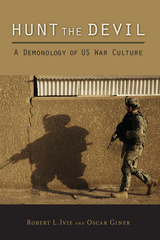
Meticulously researched, documented, and argued, Hunt the Devil opens with contemporary images of the US’s global war on terror in the aftermath of 9/11. In five chapters devoted to the demonization of evildoers, witches, Indians, dictators, and Reds by American writers, in presidential rhetoric, and in popular culture, Ivie and Giner show how the use of demonization in the war on terror is only the most recent manifestation of a process that has recurred throughout American history.
In a sixth chapter, the authors introduce the archetype of the Trickster. Though not opposed to the Devil per se, the Trickster’s democratic impulses have often provided a corrective antidote to the corrosive and distorting effects of demonization. Invoking the framework of Carl Jung’s shadow aspect, Hunt the Devil offers the Trickster as a figure who can break the cycle of demonization and war.
The role of the mythic Devil in the American psyche has profound implications, not just for American diplomacy and the use of American arms in the world, but for the possibility of domestic peace within an increasingly diverse society. Hunt the Devil provides much of interest to readers and scholars in the fields of war, rhetorical studies, American Studies, US political culture, Jungian psychology, and mythography.
Though the Revolutionary United Front (R.U.F.) ostensibly fought its war (1991–2002) against corrupt government, the people of Sierra Leone were its victims. By the time the war was over, more than fifty thousand were dead, thousands more had been maimed, and over one million were displaced. Jackson relates the stories of political leaders and ordinary people trying to salvage their lives and livelihoods in the aftermath of cataclysmic violence. Combining these with his own knowledge of African folklore, history, and politics and with S. B.’s bittersweet memories—of his family’s rich heritage, his imprisonment as a political detainee, and his position in several of Sierra Leone’s post-independence governments—Jackson has created a work of elegiac, literary, and philosophical power.
From World War II to the war in Iraq, periods of international conflict seem like unique moments in U.S. political history—but when it comes to public opinion, they are not. To make this groundbreaking revelation, In Time of War explodes conventional wisdom about American reactions to World War II, as well as the more recent conflicts in Korea, Vietnam, the Gulf, Afghanistan, and Iraq. Adam Berinsky argues that public response to these crises has been shaped less by their defining characteristics—such as what they cost in lives and resources—than by the same political interests and group affiliations that influence our ideas about domestic issues.
With the help of World War II–era survey data that had gone virtually untouched for the past sixty years, Berinsky begins by disproving the myth of “the good war” that Americans all fell in line to support after the Japanese bombed Pearl Harbor. The attack, he reveals, did not significantly alter public opinion but merely punctuated interventionist sentiment that had already risen in response to the ways that political leaders at home had framed the fighting abroad. Weaving his findings into the first general theory of the factors that shape American wartime opinion, Berinsky also sheds new light on our reactions to other crises. He shows, for example, that our attitudes toward restricted civil liberties during Vietnam and after 9/11 stemmed from the same kinds of judgments we make during times of peace.
With Iraq and Afghanistan now competing for attention with urgent issues within the United States, In Time of War offers a timely reminder of the full extent to which foreign and domestic politics profoundly influence—and ultimately illuminate—each other.
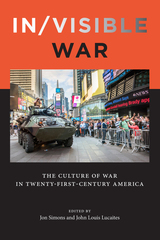
Yet, the normalization of twenty-first century war also renders it highly visible. War is made visible through popular, commercial, mediated culture. The spectacle of war occupies the contemporary public sphere in the forms of celebrations at athletic events and in films, video games, and other media, coming together as MIME, the Military-Industrial-Media-Entertainment Network.
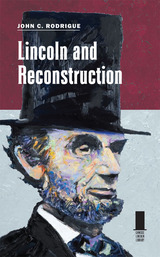
Although Abraham Lincoln dominates the literature on the American Civil War, he remains less commonly associated with reconstruction. Previous scholarly works touch on Lincoln and reconstruction, but they tend either to speculate on what Lincoln might have done after the war had he not been assassinated or to approach his reconstruction plans merely as a means of winning the war. In this thought-provoking study, John C. Rodrigue offers a succinct but significant survey of Lincoln’s wartime reconstruction initiatives while providing a fresh interpretation of the president’s plans for postwar America.
Revealing that Lincoln concerned himself with reconstruction from the earliest days of his presidency, Rodrigue details how Lincoln’s initiatives unfolded, especially in the southern states where they were attempted. He explores Lincoln’s approach to various issues relevant to reconstruction, including slavery, race, citizenship, and democracy; his dealings with Congressional Republicans, especially the Radicals; his support for and eventual abandonment of colonization; his dealings with the border states; his handling of the calls for negotiations with the Confederacy as a way of reconstructing the Union; and his move toward emancipation and its implications for his approach to reconstruction.
As the Civil War progressed, Rodrigue shows, Lincoln’s definition of reconstruction transformed from the mere restoration of the seceded states to a more fundamental social, economic, and political reordering of southern society and of the Union itself. Based on Lincoln’s own words and writings as well as an extensive array of secondary literature, Rodrigue traces the evolution of Lincoln’s thinking on reconstruction, providing new insight into a downplayed aspect of his presidency.
Finnström draws on fieldwork conducted in northern Uganda between 1997 and 2006 to describe how the Acholi—especially the younger generation, those born into the era of civil strife—understand and attempt to control their moral universe and material circumstances. Structuring his argument around indigenous metaphors and images, notably the Acholi concepts of good and bad surroundings, he vividly renders struggles in war and the related ills of impoverishment, sickness, and marginalization. In this rich ethnography, Finnström provides a clear-eyed assessment of the historical, cultural, and political underpinnings of the civil war while maintaining his focus on Acholi efforts to achieve “good surroundings,” viable futures for themselves and their families.
Making the Forever War brings Young's articles and essays on American war together for the first time, including never before published works. Moving from the first years of the Cold War to Korea, Vietnam, and more recent "forever" wars in Iraq and Afghanistan, Young reveals the ways in which war became ever-present, yet more covert and abstract, particularly as aerial bombings and faceless drone strikes have attained greater strategic value. For Young, U.S. empire persisted because of, not despite, the inattention of most Americans. The collection concludes with an afterword by prominent military historian Andrew Bacevich.
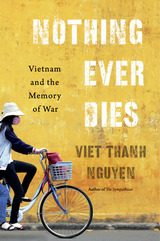
Finalist, National Book Critics Circle Award
Finalist, National Book Award in Nonfiction
A New York Times Book Review “The Year in Reading” Selection
All wars are fought twice, the first time on the battlefield, the second time in memory. From the author of the Pulitzer Prize–winning novel The Sympathizer comes a searching exploration of the conflict Americans call the Vietnam War and Vietnamese call the American War—a conflict that lives on in the collective memory of both nations.
“[A] gorgeous, multifaceted examination of the war Americans call the Vietnam War—and which Vietnamese call the American War…As a writer, [Nguyen] brings every conceivable gift—wisdom, wit, compassion, curiosity—to the impossible yet crucial work of arriving at what he calls ‘a just memory’ of this war.”
—Kate Tuttle, Los Angeles Times
“In Nothing Ever Dies, his unusually thoughtful consideration of war, self-deception and forgiveness, Viet Thanh Nguyen penetrates deeply into memories of the Vietnamese war…[An] important book, which hits hard at self-serving myths.”
—Jonathan Mirsky, Literary Review
“Ultimately, Nguyen’s lucid, arresting, and richly sourced inquiry, in the mode of Susan Sontag and W. G. Sebald, is a call for true and just stories of war and its perpetual legacy.”
—Donna Seaman, Booklist (starred review)
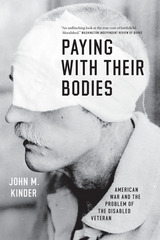
America has grappled with the questions posed by injured veterans since its founding, and with particular force since the early twentieth century: What are the nation’s obligations to those who fight in its name? And when does war’s legacy of disability outweigh the nation’s interests at home and abroad? In Paying with Their Bodies, John M. Kinder traces the complicated, intertwined histories of war and disability in modern America. Focusing in particular on the decades surrounding World War I, he argues that disabled veterans have long been at the center of two competing visions of American war: one that highlights the relative safety of US military intervention overseas; the other indelibly associating American war with injury, mutilation, and suffering. Kinder brings disabled veterans to the center of the American war story and shows that when we do so, the history of American war over the last century begins to look very different. War can no longer be seen as a discrete experience, easily left behind; rather, its human legacies are felt for decades.
The first book to examine the history of American warfare through the lens of its troubled legacy of injury and disability, Paying with Their Bodies will force us to think anew about war and its painful costs.
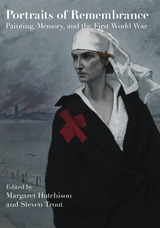
Although photography and moving pictures achieved ubiquity during the First World War as technological means of recording history, the far more traditional medium of painting played a vital role in the visual culture of combatant nations. The public’s appetite for the kind of up-close frontline action that snapshots and film footage could not yet provide resulted in a robust market for drawn or painted battle scenes.
Painting also figured significantly in the formation of collective war memory after the armistice. Paintings became sites of memory in two ways: first, many governments and communities invested in freestanding panoramas or cycloramas that depicted the war or featured murals as components of even larger commemorative projects, and second, certain paintings, whether created by official artists or simply by those moved to do so, emerged over time as visual touchstones in the public’s understanding of the war.
Portraits of Remembrance: Painting, Memory, and the First World War examines the relationship between war painting and collective memory in Australia, Austria, Belgium, Canada, Croatia, France, Germany, Great Britain, New Zealand, Russia, Serbia, Turkey, and the United States. The paintings discussed vary tremendously, ranging from public murals and panoramas to works on a far more intimate scale, including modernist masterpieces and crowd-pleasing expressions of sentimentality or spiritualism. Contributors raise a host of topics in connection with the volume’s overarching focus on memory, including national identity, constructions of gender, historical accuracy, issues of aesthetic taste, and connections between painting and literature, as well as other cultural forms.

With the collapse of the Cold War following the Eastern European revolutions and the ongoing democratization of the Soviet republics, optimism about peace has transformed the international political climate. Incidents such as the Gulf War, however, have tempered this optimism and cast doubts on the prospects for demilitarization. In this book, Martin Shaw examines some of the developments that lie behind the recent momentous changes and argues that, despite the Gulf War and other regional wars, militarism is in decisive retreat.
Writing from a broadly sociological perspective, Shaw examines the roles of war and military institutions in human society and the ways in which preoccupation with war has affected domestic, regional, and international politics in the twentieth century. In doing so, he asks: When does the post-war era end? How have nuclear weapons altered the perception of war by society? What is the relationship between industrialism and militarism?
The author contends that, despite the militarism of some Third World countries, societies in the advanced industrial world (especially in Europe) have been undergoing a profound demilitarization. These societies have become politically insulated from war preparation, have recognized the effect of social movements on inter-state relations, and are experiencing a "revolution of rising expectations."
Offering evidence of "post-military citizenship," Shaw describes the increasing resistance to military conscription throughout the Western world, the replacement of blind obedience with demand for accountability in Eastern bloc countries, and the simultaneous rise of nationalism and communitarianism among common market members. And, in light of the collapse of Stalinist militarism in Europe and the USSR, Shaw suggests some of the changes that face Soviet society.
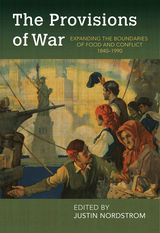
The Provisions of War examines how soldiers, civilians, communities, and institutions have used food and its absence as both a destructive weapon and a unifying force in establishing governmental control and cultural cohesion during times of conflict. Historians as well as scholars of literature, regional studies, and religious studies problematize traditional geographic boundaries and periodization in this essay collection, analyzing various conflicts of the nineteenth and twentieth centuries through a foodways lens to reveal new insights about the parameters of armed interactions.
The subjects covered are as varied and inclusive as the perspectives offered—ranging from topics like military logistics and animal disease in colonial Africa, Indian vegetarian identity, and food in the counterinsurgency of the Malayan Emergency, to investigations of hunger in Egypt after World War I and American soldiers’ role in the making of US–Mexico borderlands. Taken together, the essays here demonstrate the role of food in shaping prewar political debates and postwar realities, revealing how dietary adjustments brought on by military campaigns reshape national and individual foodways and identities long after the cessation of hostilities
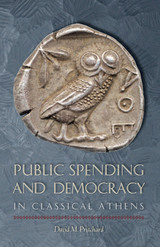
In his On the Glory of Athens, Plutarch complained that the Athenian people spent more on the production of dramatic festivals and “the misfortunes of Medeas and Electras than they did on maintaining their empire and fighting for their liberty against the Persians.” This view of the Athenians’ misplaced priorities became orthodoxy with the publication of August Böckh’s 1817 book Die Staatshaushaltung der Athener [The Public Economy of Athens], which criticized the classical Athenian dēmos for spending more on festivals than on wars and for levying unjust taxes to pay for their bloated government. But were the Athenians’ priorities really as misplaced as ancient and modern historians believed?
Drawing on lines of evidence not available in Böckh’s time, Public Spending and Democracy in Classical Athens calculates the real costs of religion, politics, and war to settle the long-standing debate about what the ancient Athenians valued most highly. David M. Pritchard explains that, in Athenian democracy, voters had full control over public spending. When they voted for a bill, they always knew its cost and how much they normally spent on such bills. Therefore, the sums they chose to spend on festivals, politics, and the armed forces reflected the order of the priorities that they had set for their state. By calculating these sums, Pritchard convincingly demonstrates that it was not religion or politics but war that was the overriding priority of the Athenian people.
Winner of the Bancroft Prize
Winner of the Gilder Lehrman Lincoln Prize
Winner of the Merle Curti award
Winner of the Frederick Douglass Prize
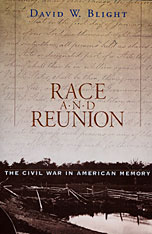
No historical event has left as deep an imprint on America's collective memory as the Civil War. In the war's aftermath, Americans had to embrace and cast off a traumatic past. David Blight explores the perilous path of remembering and forgetting, and reveals its tragic costs to race relations and America's national reunion.In 1865, confronted with a ravaged landscape and a torn America, the North and South began a slow and painful process of reconciliation. The ensuing decades witnessed the triumph of a culture of reunion, which downplayed sectional division and emphasized the heroics of a battle between noble men of the Blue and the Gray. Nearly lost in national culture were the moral crusades over slavery that ignited the war, the presence and participation of African Americans throughout the war, and the promise of emancipation that emerged from the war. Race and Reunion is a history of how the unity of white America was purchased through the increasing segregation of black and white memory of the Civil War. Blight delves deeply into the shifting meanings of death and sacrifice, Reconstruction, the romanticized South of literature, soldiers' reminiscences of battle, the idea of the Lost Cause, and the ritual of Memorial Day. He resurrects the variety of African-American voices and memories of the war and the efforts to preserve the emancipationist legacy in the midst of a culture built on its denial.
Blight's sweeping narrative of triumph and tragedy, romance and realism, is a compelling tale of the politics of memory, of how a nation healed from civil war without justice. By the early twentieth century, the problems of race and reunion were locked in mutual dependence, a painful legacy that continues to haunt us today.
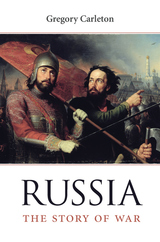
No nation is a stranger to war, but for Russians war is a central part of who they are. Their “motherland” has been the battlefield where some of the largest armies have clashed, the most savage battles have been fought, the highest death tolls paid. Having prevailed over Mongol hordes and vanquished Napoleon and Hitler, many Russians believe no other nation has sacrificed so much for the world. In Russia: The Story of War Gregory Carleton explores how this belief has produced a myth of exceptionalism that pervades Russian culture and politics and has helped forge a national identity rooted in war.
While outsiders view Russia as an aggressor, Russians themselves see a country surrounded by enemies, poised in a permanent defensive crouch as it fights one invader after another. Time and again, history has called upon Russia to play the savior—of Europe, of Christianity, of civilization itself—and its victories, especially over the Nazis in World War II, have come at immense cost. In this telling, even defeats lose their sting. Isolation becomes a virtuous destiny and the whole of its bloody history a point of pride.
War is the unifying thread of Russia’s national epic, one that transcends its wrenching ideological transformations from the archconservative empire to the radical-totalitarian Soviet Union to the resurgent nationalism of the country today. As Putin’s Russia asserts itself in ever bolder ways, knowing how the story of its war-torn past shapes the present is essential to understanding its self-image and worldview.
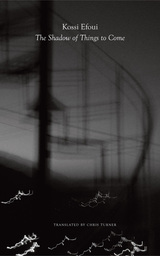
In an unnamed African nation, the people are subject to a state of perpetual warfare and to an Orwellian abuse of language that strips from language its meaning and renders life senseless. And in a bare room lit only by moonlight, a young man hides, waiting for the mysterious crocodile-men to come and help him escape from the violent tyranny of the state. While he waits, he tells his story.
This is Kossi Efoui’s catastrophic and carnivalesque dreamscape, the dark setting of The Shadow of Things to Come. Here, men and women are taken in the night, spirited away from their families, and sent to plantation penal colonies to be worked to the edge of madness. When they return, they are empty shells, their lost time referred to as the “Time of Annexation.” But though his parents were taken, our protagonist survived, first in the care of a quirky benefactress named Mama Maize, then under the wing of the state itself, as a student at one of its elite schools. When he meets a bookseller named Axis Kemal, however, he has found a surrogate father, an eccentric and wise man who can bring him out of the meaningless confusion and tell him the truth about the society he lives in.
Through his characters, Efoui speaks out against atrocity and the abuse of power, but more, he writes against political rhetoric and the destruction of meaning by government. This novel is a love letter to language and, in Chris Turner’s dazzling translation, it becomes a stunning introduction for English-language readers to an exciting new talent.
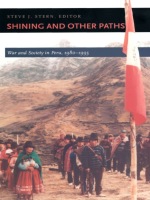
The contributors—a team of Peruvian and U.S. historians, social scientists, and human rights activists—explore the origins, social dynamics, and long-term consequences of the effort by Shining Path to effect an armed communist revolution. The book begins by interpreting Shining Path’s emergence and decision for war as one logical culmination, among several competing culminations, of trends in oppositional politics and social movements. It then traces the experiences of peasants and refugees to demonstrate how human struggle and resilience came together in grassroots determination to defeat Shining Path, and explores the unsuccessful efforts of urban shantytown dwellers, as well as rural and urban activists, to build a “third path” to social justice. Integral to this discussion is an examination of women’s activism and consciousness during the years of the crisis. Finally, this book analyzes the often paradoxical and unintended legacies of this tumultuous period for social and human rights movements, and for presidential and military leadership in Peru.
Extensive field research, broad historical vision, and strong editorial coordination enable the authors to write a coherent and deeply humanistic account, one that draws out the inner tragedies, ambiguities, and conflicts of the war.
Providing historically grounded explication of the conflicts that reshaped contemporary Peru, Shining and Other Paths will be widely read by Latin Americanists, historians, anthropologists, gender theorists, sociologists, political scientists, and human rights activists.
Contributors. Jo-Marie Burt, Marisol de la Cadena, Isabel Coral Cordero, Carlos Iván Degregori, Iván Hinojosa, Carlos Basombrío Iglesias, Florencia E. Mallon, Nelson Manrique, Hortensia Muñoz, Enrique Obando, Patricia Oliart, Ponciano del Pino H., José Luis Rénique, Orin Starn, Steve J. Stern
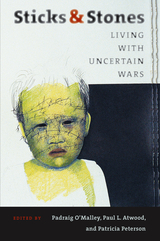
Following an introduction by Padraig O'Malley, the book is divided into four sections: "Understanding the World as We Have Known It"; "Global Uncertainties"; "Whose Values? Whose Justice?"; and "Shaping a New World." The first section reviews what we have learned about war and establishes benchmarks for judging whether that knowledge is being translated into changes in the behavior of our political cultures. It suggests that the world's premier superpower, in its effort to promote Western-style democracy, has taken steps that have inhibited rather than facilitated democratization.
The second section examines the war on terror and the concept of global war. From the essays in this section emerges a consensus that democracy as practiced in the West cannot be exported to countries with radically different cultures, traditions, and values. The third section visits the question of means and ends in the context of varying value systems and of theocracy, democracy, and culture. In the final section, the focus shifts to our need for global institutions to maintain order and assist change in the twenty-first century.
Although each contributor comes from a different starting point, speaks with a different voice, and has a different ideological perspective, the essays reach startlingly similar conclusions. In sum, they find that the West has not absorbed the lessons from the wars of the last century and is inadequately prepared to meet the new challenges that now confront us.
Contributors to the volume include J. Brian Atwood, Susan J. Atwood, John Cooley, Romeo Dallaire, Ramu Damodaran, Valerie Epps, Michael J. Glennon, Stanley Heginbotham, Robert Jackson, Winston Langley, Alfred W. McCoy, Greg Mills, Jonathan Moore, Chris Patten, Gwyn Prins, Jonathan Schell, John Shattuck, Cornelio Sommargua, Brian Urquhart, Stephen Van Evera, and Robert Weiner.
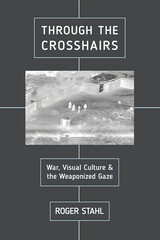
Through the Crosshairs traces the genealogy of this weapon’s-eye view across a wide range of genres, including news reports, military public relations images, action movies, video games, and social media posts. As he tracks how gun-camera footage has spilled from the battlefield onto the screens of everyday civilian life, Roger Stahl exposes how this raw video is carefully curated and edited to promote identification with military weaponry, rather than with the targeted victims. He reveals how the weaponized gaze is not only a powerful propagandistic frame, but also a prime site of struggle over the representation of state violence.
Another significant focus of the collection is the U.S. military's exploitation of ethnographic research, particularly through its controversial Human Terrain Systems (HTS) Program, which embeds anthropologists as cultural experts in military units. Several pieces address the ethical dilemmas that HTS and other counterinsurgency projects pose for anthropologists. Other essays reveal the relatively small scale of those programs in relation to the military's broader use of, and ambitions for, social scientific data.
Contributors. Robertson Allen, Brian Ferguson, Sverker Finnström, Roberto J. González, David H. Price, Antonius Robben, Victoria Sanford, Jeffrey Sluka, Koen Stroeken, Matthew Sumera, Neil L. Whitehead
An engaging collection of essays focusing on American veterans.
War and American Life is a book of essays and reflections by celebrated historian and former marine James Wright, who has been active as an advocate, teacher, and scholar. Featuring both previously published pieces and new essays, the book considers veterans in America and the ways in which our society needs better to understand who they are and what they have done on the nation’s behalf—and the responsibilities that follow this recognition.
In order to understand the history of twentieth-century Europe, we must first appreciate and accept how different societies and cultures remember their national conflicts. We must also be aware of the ways that those memories evolve over time. In War and Public Memory: Case Studies in Twentieth-Century Europe, Messenger outlines the relevant history of war and its impact on different European nations and assesses how and where the memory of these conflicts emerges in political and public discourse and in the public sphere and public spaces of Europe.
The case studies presented emphasize the major wars fought on European soil as well as the violence perpetrated against civilian populations. Each chapter begins with a brief overview of the conflict and then proceeds with a study of how memory of that struggle has entered into public consciousness in different national societies. The focus throughout is on collective social, cultural, and public memory, and in particular how memory has emerged in public spaces throughout Europe, such as parks, museums, and memorial sites.
Messenger discusses memories of the First World War for both the victors and the vanquished as well as their successor states. Other events discussed include the Bolshevik Revolution and subsequent conflicts in the former Soviet Union, the Armenian genocide, the collapse of Yugoslavia, the legacy of the civil war in Spain, Germanys reckoning with its Nazi past, and the memory of occupation and the Holocaust in France and Poland.

War Culture and the Contest of Images analyzes the relationships among contemporary war, documentary practices, and democratic ideals. Dora Apel examines a wide variety of images and cultural representations of war in the United States and the Middle East, including photography, performance art, video games, reenactment, and social media images. Simultaneously, she explores the merging of photojournalism and artistic practices, the effects of visual framing, and the construction of both sanctioned and counter-hegemonic narratives in a global contest of images.
As a result of the global visual culture in which anyone may produce as well as consume public imagery, the wide variety of visual and documentary practices present realities that would otherwise be invisible or officially off-limits. In our digital era, the prohibition and control of images has become nearly impossible to maintain. Using carefully chosen case studies—such as Krzysztof Wodiczko’s video projections and public works in response to 9/11 and the wars in Iraq and Afghanistan, the performance works of Coco Fusco and Regina Galindo, and the practices of Israeli and Palestinian artists—Apel posits that contemporary war images serve as mediating agents in social relations and as a source of protection or refuge for those robbed of formal or state-sanctioned citizenship.
While never suggesting that documentary practices are objective translations of reality, Apel shows that they are powerful polemical tools both for legitimizing war and for making its devastating effects visible. In modern warfare and in the accompanying culture of war that capitalism produces as a permanent feature of modern society, she asserts that the contest of images is as critical as the war on the ground.

The War of My Generation is the first essay collection to focus specifically on how the terrorist attacks and their aftermath have shaped these new generations of Americans. Drawing from a variety of disciplines, including anthropology, sociology, cultural studies, and literary studies, the essays cover a wide range of topics, from graphic war images in the classroom to computer games designed to promote military recruitment to emails from parents in the combat zone. The collection considers what cultural factors and products have shaped young people's experience of the 9/11 attacks, the wars that have followed, and their experiences as emerging citizen-subjects in that moment. Revealing how young people understand the War on Terror—and how adults understand the way young people think—The War of My Generation offers groundbreaking research on catastrophic events still fresh in our minds.
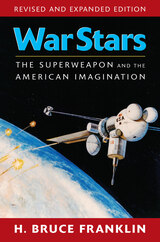
Sweeping through two centuries of American culture and military history, Franklin traces the evolution of superweapons from Robert Fulton's eighteenth-century submarine through the strategic bomber, atomic bomb, and Star Wars to a twenty-first century dominated by "weapons of mass destruction," real and imagined. Interweaving culture, science, technology, and history, he shows how and why the American pursuit of the ultimate defensive weapon—guaranteed to end all war and bring universal triumph to American ideals—has led our nation and the world into an epoch of terror and endless war.
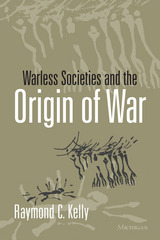
Kelly addresses fundamental questions concerning the trinity of interrelationship between human nature, war, and the constitution of society: Is war a primordial and pervasive feature of human existence or a set of practices that arose at a certain time in our recent prehistoric past? Are there peaceful societies in which war is absent and, if so, what are they like and how do they differ from warlike societies? Do the critical differentiating features pertain to child-rearing practices, to modes of conflict resolution, to social and economic inequality, to resource competition, or to the constitution of social groups?
As the conclusions of such an inquiry are central to our conceptions of human nature, the book will interest a wide range of readers, from those curious about the origins of collective violence to those studying the roles social institutions play in society.
Raymond C. Kelly is Professor of Anthropology, University of Michigan.

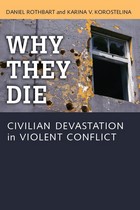
Why do civilians suffer most during times of violent conflict? Why are civilian fatalities as much as eight times higher, calculated globally for current conflicts, than military fatalities? In Why They Die, Daniel Rothbart and Karina V. Korostelina address these questions through a systematic study of civilian devastation in violent conflicts. Pushing aside the simplistic definition of war as a guns-and-blood battle between two militant groups, the authors investigate the identity politics underlying conflicts of many types. During a conflict, all those on the opposite side are perceived as the enemy, with little distinction between soldiers and civilians. As a result, random atrocities and systematic violence against civilian populations become acceptable.
Rothbart and Korostelina devote the first half of the book to case studies: deportation of the Crimean Tatars from the Ukraine, genocide in Rwanda, the Lebanon War, and the war in Iraq. With the second half, they present new methodological tools for understanding different types of violent conflict and discuss the implications of these tools for conflict resolution.
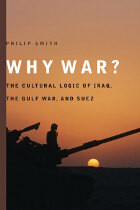
Comprised of case studies of the War in Iraq, the Gulf War, and the Suez Crisis, Why War? decodes the cultural logic of the narratives that justify military action. Each nation, Smith argues, makes use of binary codes—good and evil, sacred and profane, rational and irrational, to name a few. These codes, in the hands of political leaders, activists, and the media, are deployed within four different types of narratives—mundane, tragic, romantic, or apocalyptic. With this cultural system, Smith is able to radically recast our "war stories" and show how nations can have vastly different understandings of crises as each identifies the relevant protagonists and antagonists, objects of struggle, and threats and dangers.
The large-scale sacrifice of human lives necessary in modern war, according to Smith, requires an apocalyptic vision of world events. In the case of the War in Iraq, for example, he argues that the United States and Britain replicated a narrative of impending global doom from the Gulf War. But in their apocalyptic account they mistakenly made the now seemingly toothless Saddam Hussein once again a symbol of evil by writing him into the story alongside al Qaeda, resulting in the war's contestation in the United States, Britain, and abroad.
Offering an innovative approach to understanding how major wars are packaged, sold, and understood, Why War? will be applauded by anyone with an interest in military history, political science, cultural studies, and communication.
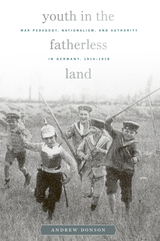
The first comprehensive history of German youth in the First World War, this book investigates the dawn of the great era of mobilizing teenagers and schoolchildren for experiments in state-building and extreme political movements like fascism and communism. It investigates how German teachers could be legendary for their sarcasm and harsh methods but support the world’s most vigorous school reform movement and most extensive network of youth clubs. As a result of the war mobilization, teachers, club leaders, and authors of youth literature instilled militarism and nationalism more deeply into young people than before 1914 but in a way that, paradoxically, relaxed discipline.
In Youth in the Fatherless Land, Andrew Donson details how Germany had far more military youth companies than other nations—as well as the world’s largest Socialist youth organization, which illegally agitated for peace and a proletarian revolution. Mass conscription also empowered female youth, particularly in Germany’s middle-class youth movement, the only one anywhere that fundamentally pitted itself against adults. Donson addresses discourses as well as practices and covers a breadth of topics, including crime, work, sexuality, gender, family, politics, recreation, novels and magazines, social class, and everyday life.
READERS
Browse our collection.
PUBLISHERS
See BiblioVault's publisher services.
STUDENT SERVICES
Files for college accessibility offices.
RECENTLY PUBLISHED


UChicago Accessibility Resources
home | accessibility | search | about | contact us
BiblioVault ® 2001 - 2024
The University of Chicago Press