
 A SCHOLARLY BOOK REPOSITORY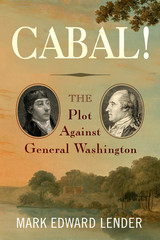
In the spring of 1778, General George Washington wrote to his friend Landon Carter about a rumored “disposition in the Northern Officers to see me superceded in my Command.” This was as candid a statement as the general ever made about the so-called “Conway Cabal” of patriot officers and politicians critical of his leadership. Most early historians of the Revolution took the threat to Washington seriously, but by the mid-twentieth century interpretations had reversed, with the plot—if one existed—posing no real danger to the commander-in-chief. Yet, as historian Mark Edward Lender reveals in his compelling Cabal! The Plot Against General Washington, clues found in original new research provide a more comprehensive understanding of the personalities and political maneuverings of those involved in the Cabal, and the real nature of the challenge to Washington.
Rather than the “classic Cabal” of Generals Horatio Gates, Thomas Mifflin, and Thomas Conway in a plot to remove Washington quickly, the threat to Washington’s command was a gradual administrative attempt by the Board of War and political allies to take over the war effort. Reorganized in late 1777 under the leadership of Mifflin, with Gates assuming the board presidency in January 1778, the Board of War sought authority to determine military policy and strategic goals, all training, organizational, personnel, and logistical functions, and even the assignment of theater commanders. Had they succeeded, Washington’s title of commander-in-chief would have been utterly hollow. The Cabal tested Washington as few other things did during the war and perhaps tempered him into the man we remember today. Washington adroitly navigated the challenges to his leadership, meeting and defeating every attempt to curtail his authority. His response revealed a leadership style that saw him safely through the war, and gave him overwhelming support from his countrymen to become their first president.
Winner of the Daughters of the American Revolution’s Excellence in American History Book Award
Winner of the Thomas J. Wilson Memorial Prize
“Cogent, lucid, and concise…An indispensable guide to the creation of the cabinet…Groundbreaking…we can now have a much greater appreciation of this essential American institution, one of the major legacies of George Washington’s enlightened statecraft.”
—Ron Chernow
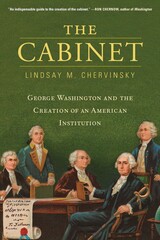
On November 26, 1791, George Washington convened his department secretaries—Alexander Hamilton, Thomas Jefferson, Henry Knox, and Edmund Randolph—for the first cabinet meeting. Why did he wait two and a half years into his presidency to call his cabinet? Because the US Constitution did not create or provide for such a body. Faced with diplomatic crises, domestic insurrection, and constitutional challenges—and finding congressional help distinctly lacking—he decided he needed a group of advisors he could turn to for guidance.
Authoritative and compulsively readable, The Cabinet reveals the far-reaching consequences of this decision. To Washington’s dismay, the tensions between Hamilton and Jefferson sharpened partisan divides, contributing to the development of the first party system. As he faced an increasingly recalcitrant Congress, he came to treat the cabinet as a private advisory body, greatly expanding the role of the executive branch and indelibly transforming the presidency.
“Important and illuminating…an original angle of vision on the foundations and development of something we all take for granted.”
—Jon Meacham
“Fantastic…A compelling story.”
—New Criterion
“Helps us understand pivotal moments in the 1790s and the creation of an independent, effective executive.”
—Wall Street Journal
How American Colonial Ideals Shaped Command, Discipline, and Honor in the U.S. Armed Forces
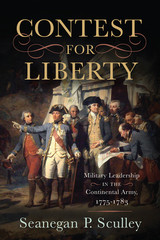
In the summer of 1775, a Virginia gentleman-planter was given command of a New England army laying siege to British-occupied Boston. With his appointment, the Continental Army was born. Yet the cultural differences between those serving in the army and their new commander-in-chief led to conflicts from the very beginning that threatened to end the Revolution before it could start. The key challenge for General George Washington was establishing the standards by which the soldiers would be led by their officers. What kind of man deserved to be an officer? Under what conditions would soldiers agree to serve? And how far could the army and its leaders go to discipline soldiers who violated those enlistment conditions? As historian Seanegan P. Sculley reveals in Contest for Liberty: Military Leadership in the Continental Army, 1775–1783, these questions could not be determined by Washington alone. His junior officers and soldiers believed that they too had a part to play in determining how and to what degree their superior officers exercised military authority and how the army would operate during the war. A cultural negotiation concerning the use of and limits to military authority was worked out between the officers and soldiers of the Continental Army; although an unknown concept at the time, it is what we call leadership today. How this army was led and how the interactions between officers and soldiers from the various states of the new nation changed their understandings of the proper exercise of military authority was finally codified in General Friedrich Wilhelm von Steuben’s The Regulations for the Order and Discipline of the Troops of the United States, first published in 1779. The result was a form of military leadership that recognized the autonomy of the individual soldiers, a changing concept of honor, and a new American tradition of military service.
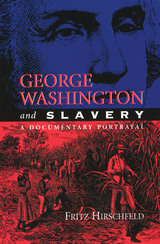
"I never mean (unless some particular circumstance should compel me to it) to possess another slave by purchase; it being among my first wishes to see some plan adopted, by which slavery in this country may be abolished by slow, sure and imperceptible degrees."—George Washington, September 9, 1786
No history of racism in America can be considered complete without taking into account the role that George Washington—the principal founding father—played in helping to mold the racist cast of the new nation. Because General Washington—the universally acknowledged hero of the Revolutionary War—in the postwar period uniquely combined the moral authority, personal prestige, and political power to influence significantly the course and the outcome of the slavery debate, his opinions on the subject of slaves and slavery are of crucial importance to understanding how racism succeeded in becoming an integral and official part of the national fabric during its formative stages.The successful end of the War for Independence in 1783 brought George Washington face-to-face with a fundamental dilemma: how to reconcile the proclaimed ideals of the revolution with the established institution of slavery. So long as black human beings in America could legally be considered the chattel property of whites, the rhetoric of equality and individual freedom was hollow. Progressive voices urged immediate emancipation as the only way to resolve the contradiction; the Southern slave owners, of course, stood firm for the status quo. Washington was caught squarely in the middle.
As a Virginia plantation proprietor and a lifelong slaveholder, Washington had a substantial private stake in the economic slave system of the South. However, in his role as the acknowledged political leader of the country, his overriding concern was the preservation of the Union. If Washington publicly supported emancipation, he would almost certainly have to set an example and take steps to dispose of his Mount Vernon slaves. If he spoke out on the side of slavery, how could he legitimately and conscientiously expect to uphold and defend the humanistic goals and moral imperatives of the new nation as expressed in the Declaration of Independence and embodied in the Constitution and the Bill of Rights? His was a balancing act that became more and more difficult to sustain with the passing years.
Relying primarily on Washington's own words—his correspondence, diaries, and other written records—supplemented by letters, comments, and eyewitness reports of family members, friends, employees, aides, correspondents, colleagues, and visitors to Mount Vernon, together with contemporary newspaper clippings and official documents pertaining to Washington's relationships with African Americans, Fritz Hirschfeld traces Washington's transition from a conventional slaveholder to a lukewarm abolitionist. George Washington and Slavery will be an essential addition to the historiography of eighteenth-century America and of Washington himself.

George Washington: Revolutionary general, Father of His Country, first president, authentic hero, prime mover in establishing a constitutional government, squire of Mount Vernon, itself a national shrine. The sheer ubiquity of his persona makes him an excellent focus for understanding how Americans from the centennial of the nation's birth to the present have rediscovered their colonial origins and have manipulated what they found for a variety of social, economic, and political purposes. The more modern we become, says Karal Ann Marling, the more desperately we cling to our Washingtons, to our old-fashioned heroes, to an imaginary lost paradise chock-full of colonial furniture.
Marling has pursued the figure of Washington from flea markets to World's Fairs in order to understand his significance in American culture and iconography. Of all American heroes, she points out, Washington is the one most closely tied to artifacts, relics, material possessions, style. She describes the Philadelphia Centennial Exposition of 1876, where the federal government exhibited a scene of camp life at Valley Forge, complete with Washington's coat, pants, and other personal objects that lent a strong domestic flavor to the nascent colonial revival. When the restoration of Mount Vernon was begun in the late nineteenth century, it was financed and directed by women, as was much of the historic preservation of the period. Thanks to these efforts, the American home became the scene of successive waves of a revivalism that is still very alive in the 1980s.
In describing Washington's talismanic importance, Marling shows the efforts of twentieth-century politicians to co-opt his incorruptible image. When Harding wanted to convince Americans of his reliability and probity, he campaigned from the Colonial Revival porch of his house on Mount Vernon Avenue in Marion, Ohio. The Washington image was mined for the campaigns that celebrated Calvin Coolidge's Puritan simplicity and Herbert Hoover's engineering talents, said to be related to George Washington's career as a surveyor; more recently, Ronald Reagan at his second inaugural invoked the vision of the humble general praying in the snow at Valley Forge. The neutral and flexible Washington became whatever people wanted him to be—the decorators' darling, the doyen of the D.A.R., the model citizen held up as an example to unruly children and immigrants.
But Marling's book is about more than George Washington and the different ways in which Americans have made use of their past. In her quest for the unhistorical George, Marling has examined the subculture of American life—magazine fiction, historical romances, movies (both silent and talking), and journalism. She traces the descent of high art into such popular forms as posters, plaques, packages, and billboards, all to illuminate how Washington's iconic meaning has influenced styles and tastes on many levels.
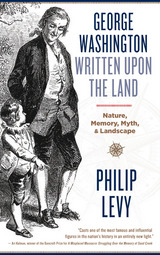
George Washington’s childhood is famously the most elusive part of his life story. For centuries biographers have struggled with a lack of period documentation and an absence of late-in-life reflection in trying to imagine Washington’s formative years.
In George Washington Written upon the Land, Philip Levy explores this most famous of American childhoods through its relationship to the Virginia farm where much of it took place. Using approaches from biography, archaeology, folklore, and studies of landscape and material culture, Levy focuses on how different ideas about Washington’s childhood functioned—what sorts of lessons they sought to teach and how different epochs and writers understood the man and the past itself.
In a suggestive and far-reaching final chapter, Levy argues that Washington was present at the onset of the Anthropocene—the geologic era when human activity began to have a significant impact on world ecosystems. Interpreting Washington’s childhood farm through the lens of “big” history, he encourages scholars to break down boundaries between science and social science and between human and nonhuman.
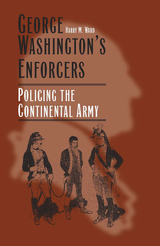
A well-disciplined army was vital to win American independence, but policing soldiers during the Revolution presented challenges. George Washington’s Enforcers: Policing the Continental Army examines how justice was left to the overlapping duties of special army personnel and how an improvised police force imposed rules and regulations on the common soldier. Historian Harry M. Ward describes these methods of police enforcement, emphasizing the brutality experienced by the enlisted men who were punished severely for even light transgressions. This volume explores the influences that shaped army practice and the quality of the soldiery, the enforcement of military justice, the use of guards as military police, and the application of punishment.
Washington’s army, which adopted the organization and justice code of the British army, labored under the direction of ill-trained and arrogant officers. Ward relates how the enlisted men, who had a propensity for troublemaking and desertion, not only were victims of the double standard that existed between officers and regular troops but also lacked legal protection in the army. The enforcement of military justice afforded the accused with little due process support.
Ward discusses the duties of the various personnel responsible for training and enforcing the standards of behavior, including duty officers, adjutants, brigade majors, inspectors, and sergeant majors. He includes the roles of life guards, camp guards, quarter guards, picket men, and safe guards, whose responsibilities ranged from escorting the commander in chief, intercepting spies and stragglers, and protecting farmers from marauding soldiers to searching for deserters, rounding up unauthorized personnel, and looking for delinquents in local towns and taverns.
George Washington’s Enforcers, which includes sixteen illustrations, also addresses the executions of the period, as both ritual and spectacle, and the deterrent value of capital punishment. Ward explains how Washington himself mixed clemency with severity and examines how army policies tested the mettle of this chief disciplinarian, who operated by the dictates of military necessity as perceived at the time.

George Washington is remembered for leading the Continental Army to victory, presiding over the Constitution, and forging a new nation, but few know the story of his involvement in the establishment of a capital city and how it nearly tore the United States apart.
In George Washington’s Final Battle, Robert P. Watson brings this tale to life, telling how the country's first president tirelessly advocated for a capital on the shores of the Potomac. Washington envisioned and had a direct role in planning many aspects of the city that would house the young republic. In doing so, he created a landmark that gave the fledgling democracy credibility, united a fractious country, and created a sense of American identity.
Although Washington died just months before the federal government's official relocation, his vision and influence live on in the city that bears his name.
This little-known story of founding intrigue throws George Washington’s political acumen into sharp relief and provides a historical lesson in leadership and consensus-building that remains relevant today. This book will fascinate anyone interested in the founding period, the American presidency, and the history of Washington, DC.
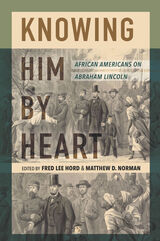
An unprecedented collection of African American writings on Lincoln
Though not blind to Abraham Lincoln's imperfections, Black Americans long ago laid a heartfelt claim to his legacy. At the same time, they have consciously reshaped the sixteenth president's image for their own social and political ends. Frederick Hord and Matthew D. Norman's anthology explores the complex nature of views on Lincoln through the writings and thought of Frederick Douglass, Ida B. Wells-Barnett, Mary McLeod Bethune, Thurgood Marshall, Malcolm X, Gwendolyn Brooks, Barbara Jeanne Fields, Barack Obama, and dozens of others. The selections move from speeches to letters to book excerpts, mapping the changing contours of the bond--emotional and intellectual--between Lincoln and Black Americans over the span of one hundred and fifty years.
A comprehensive and valuable reader, Knowing Him by Heart examines Lincoln’s still-evolving place in Black American thought.
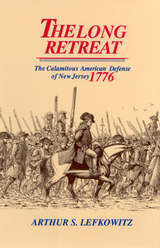
On the morning of November 20, 1776, General Charles Cornwallis overran patriot positions at Fort Lee, on the New Jersey side of the Hudson River. The attack threw George Washington's army into turmoil. Thus began an American retreat across the state, which ended only after the battered rebels crossed the Delaware river at Trenton on December 7. It was a three-week campaign that marked the most dramatic and desperate period of the War for Independence. In The Long Retreat, Arthur Lefkowitz has written the first book-length study of this critical campaign. He adds compelling new detail to the narrative, and offers the most comprehensive account in the literature of the American retreat to the Delaware and of the British pursuit. What emerges is a history misconceptions about the movements of the armies, the intentions of their leaders, and the choices available to rebel commanders and their British counterparts. Lefkowitz presents a patriot military pounded into desperate straights by the forces of the Crown, but in the end more resilient and wily than most previous scholarship has allowed. If brought low over November and December of 1776, Washington's battalions were still a force to reckon with as they pulled away from the advancing British. Despite serious losses in material and personnel, Washington managed to keep his units operational; and even while making mistakes, he sought to consolidate patriot regiments and longed for a chance to counterattack. The Christmas night riposte at Trenton, a dramatic reversal of fortune in any case, stemmed from measures the rebel Commander-in-Chief had initiated even as he completed his retrograde across New Jersey. How all of this came about emerges and crisp narrative of The Long Retreat. It is the definitive book on a crucial chapter in the history of American Arms.
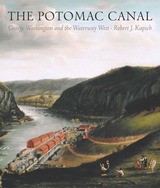
The Potomac Canal: George Washington and the Waterway West is a history of a new nation’s first effort to link the rich western agricultural lands with the coastal port cities of the east. The Potomac Canal Company was founded in 1785, and was active until it was overtaken by the Chesapeake and Ohio Canal Company in 1828. During its operation, the canal system was used to ship flour from mills in the foothills of Appalachia to the tidewater of the Chesapeake, where the flour was shipped to the Caribbean as trade for sugar and other goods. This trade soon became the basis of agricultural wealth in West Virginia’s eastern panhandle and throughout the Appalachian Piedmont. Coal was also shipped via the canal system from the upper reaches of the Potomac River to workshops at Harpers Ferry and beyond. This industrial trade route laid the foundation for what would eventually become the Chesapeake and Ohio Canal and the Baltimore and Ohio Railroad.
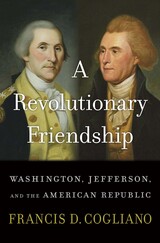
The first full account of the relationship between George Washington and Thomas Jefferson, countering the legend of their enmity while drawing vital historical lessons from the differences that arose between them.
Martha Washington’s worst memory was the death of her husband. Her second worst was Thomas Jefferson’s awkward visit to pay his respects subsequently. Indeed, by the time George Washington had died in 1799, the two founders were estranged. But that estrangement has obscured the fact that for most of their thirty-year acquaintance they enjoyed a productive relationship. Precisely because they shared so much, their disagreements have something important to teach us.
In constitutional design, for instance: Whereas Washington believed in the rule of traditional elites like the Virginia gentry, Jefferson preferred what we would call a meritocratic approach, by which elites would be elected on the basis of education and skills. And while Washington emphasized a need for strong central government, Jefferson favored diffusion of power across the states. Still, as Francis Cogliano argues, common convictions equally defined their relationship: a passion for American independence and republican government, as well as a commitment to westward expansion and the power of commerce. They also both evolved a skeptical view of slavery, eventually growing to question the institution, even as they took only limited steps to abolish it.
What remains fascinating is that the differences between the two statesmen mirrored key political fissures of the early United States, as the unity of revolutionary zeal gave way to competing visions for the new nation. A Revolutionary Friendship brilliantly captures the dramatic, challenging, and poignant reality that there was no single founding ideal—only compromise between friends and sometime rivals.
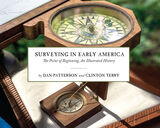
In Surveying Early America: The Point of Beginning, An Illustrated History, award-winning photographer Dan Patterson and American historian Clinton Terry vividly and succinctly unpack the profession of surveying during the eighteenth century. Over 100 full color photographs exclusively shot for the book depict authentic and historically accurate reproductions of techniques and tools through the use of American reenactors from the Department of Geographer, which provide an interpretive look at surveying as a primary means to building the American nation.
Through the lens of Patterson’s camera and Terry’s narrative, readers see what Washington saw as he learned his trade, explored the vast American wilderness, and occasionally laid personal claim to great expanses of land. Readers are visually and intellectually immersed in the historically accurate details of the surveying practices of George Washington, Virginia’s first surveyor and his team.
Step-by-step, readers learn how early America, in particular the east to the Ohio River Valley was initially divided and documented. Terry characterizes both the profession and methods of land measurement and surveying in British colonial North America—techniques that did not substantially change until the invention of GPS technology 200 years later. Along the way Terry details the various tools of the trade early surveyors used.
Photographer Dan Patterson, working with the Department of the Geographer, restages Washington’s actual expeditions during his time with the Geographers to the Army, the technical staff department consisting of American and French soldiers, whose work in the field supported the Continental Army. Patterson brilliantly displays the processes and instruments Washington used 260 years ago.
Together Ohio based photographer and author team up to create a single story, expanding the understanding of primary source material for general readers and those with a passion for early American history.
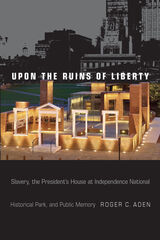
In Upon the Ruins of Liberty, Roger Aden offers a compelling account that explores the development of this important historic site and how history, space, and public memory intersected with contemporary racial politics. Aden constructs this engrossing tale by drawing on archival material and interviews with principal figures in the controversy-including historian Ed Lawler, site activist Michael Coard, and site designer Emanuel Kelly.
Upon the Ruins of Liberty chronicles the politically-charged efforts to create a fitting tribute to the place where George Washington (and later, John Adams) shaped the presidency while denying freedom to the nine enslaved Africans in his household. From design to execution, the plans prompted advocates to embrace stories informed by race, and address difficulties that included how to handle the results of the site excavation. As such, this landmark project raised concerns and provided lessons about the role of public memory and how places are made to shape the nation's identity.
Winner of the George Washington Prize
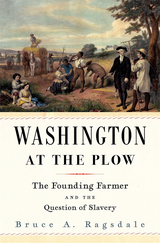
A fresh, original look at George Washington as an innovative land manager whose singular passion for farming would unexpectedly lead him to reject slavery.
George Washington spent more of his working life farming than he did at war or in political office. For over forty years, he devoted himself to the improvement of agriculture, which he saw as the means by which the American people would attain the “respectability & importance which we ought to hold in the world.”
Washington at the Plow depicts the “first farmer of America” as a leading practitioner of the New Husbandry, a transatlantic movement that spearheaded advancements in crop rotation. A tireless experimentalist, Washington pulled up his tobacco and switched to wheat production, leading the way for the rest of the country. He filled his library with the latest agricultural treatises and pioneered land-management techniques that he hoped would guide small farmers, strengthen agrarian society, and ensure the prosperity of the nation.
Slavery was a key part of Washington’s pursuits. He saw enslaved field workers and artisans as means of agricultural development and tried repeatedly to adapt slave labor to new kinds of farming. To this end, he devised an original and exacting system of slave supervision. But Washington eventually found that forced labor could not achieve the productivity he desired. His inability to reconcile ideals of scientific farming and rural order with race-based slavery led him to reconsider the traditional foundations of the Virginia plantation. As Bruce Ragsdale shows, it was the inefficacy of chattel slavery, as much as moral revulsion at the practice, that informed Washington’s famous decision to free his slaves after his death.
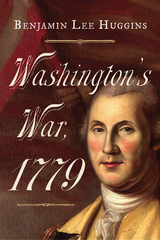
Despite great limits of money and manpower, George Washington sought to wage an aggressive war in 1779. He launched the Sullivan–Clinton campaign against Britain’s Iroquois allies in upstate New York, and in response to British attacks up the Hudson River and against coastal Connecticut, he authorized raids on British outposts at Stony Point and Paulus Hook. But given power by Congress to plan and execute operations with the French on a continental scale, Washington planned his boldest campaign. When it appeared that the French would bring a fleet and an army to America, and supported by intelligence from his famed “Culper” spy network, the American commander proposed a joint Franco-American attack on the bastion of British power in North America—New York City—to capture its garrison. Such a blow, he hoped, would end the war in 1779.
Based on extensive primary source material, Washington’s War 1779, by historian Benjamin Lee Huggins, describes Washington’s highly detailed plans and extensive preparations for his potentially decisive Franco-American campaign to defeat the British at New York in the fall of 1779. With an emphasis on Washington's generalship in that year—from strategic and operational planning to logistics to diplomacy—and how it had evolved since the early years of the war, the book also details the other offensive operations in 1779, including the attacks in upstate New York, Stony Point, and Paulus Hook. Although the American and French defeat at Savannah, Georgia, prevented Washington from carrying out his New York offensive, Washington gained valuable experience in planning for joint operations that would help him win at Yorktown two years later.
Winner of the 2005 Thomas Fleming Award for the Best Book in American Revolutionary War History
Finalist for the Army Historical Foundation Distinguished Writing Award
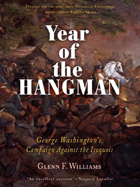
After two years of fighting, Great Britain felt confident that the American rebellion would be crushed in 1777, the "Year of the Hangman." Britain devised a bold new strategy. Turning its attention to the colonial frontiers, especially those of western New York, Pennsylvania, and Virginia, Britain enlisted its provincial rangers, Tories, and allied warriors, principally from the Iroquois Confederacy, to wage a brutal backwoods war in support of General John Burgoyne's offensive as it swept southward from Canada in an attempt to cut the colonies in half, divert the Continental Army, and weaken its presence around British-occupied New York City and Philadelphia.
Burgoyne's defeat at Saratoga sent shock waves through the British command. But the efforts along the frontier under the direction of Sir John Johnson, Colonel John Butler, and the charismatic Mohawk leader, Joseph Brant, appeared to be impairing the American ability to conduct the war. Destroying Patriot settlements and farms across hundreds of miles of frontier, the British and Indian forces threatened to reduce Continental army enlistment, and more importantly, precious food supplies. Following the massacres at the well-established colonial settlements of Wyoming, Pennsylvania, and Cherry Valley, New York, the Continental Congress persuaded General George Washington to conduct a decisive offensive to end the threat once and for all. Brewing for years, the conflict between the Iroquois and colonists would now reach its deadly climax.
Charging his troops "to not merely overrun, but destroy," Washington devised a two-prong attack to exact American revenge. The largest coordinated American military action against American Indians in the war, the campaign shifted the power in the east, ending the political and military influence of the Iroquois, forcing large numbers of loyalist to flee to Canada, and sealing Britain's fateful decision to seek victory in the south. In Year of the Hangman: George Washington's Campaign Against the Iroquois, historian Glenn F. Williams recreates the riveting events surrounding the action, including the checkered story of European and Indian alliances, the bitter frontier wars, and the bloody battles of Oriskany and Newtown.
READERS
Browse our collection.
PUBLISHERS
See BiblioVault's publisher services.
STUDENT SERVICES
Files for college accessibility offices.
RECENTLY PUBLISHED



UChicago Accessibility Resources
home | accessibility | search | about | contact us
BiblioVault ® 2001 - 2024
The University of Chicago Press