
 A SCHOLARLY BOOK REPOSITORY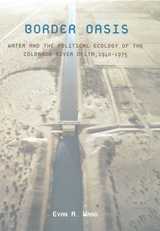
Evan Ward explores the rapid development of this region, examining the ways in which regional politics and international relations created a garden in the Mexicali, Yuma, and Imperial Valleys while simultaneously threatening the life of the Colorado River. Tracing the transformation of the delta by irrigated agribusiness through the twentieth century, he draws on untapped archival resources from both sides of the border to offer a new look at one of the world's most contested landscapes.
Border Oasis tells how two very different nations developed the delta into an agricultural oasis at enormous environmental cost. Focusing on the years 1940 to 1975—including the disastrous salinity crisis of the 1960s and 1970s—it combines Mexican, Native American, and U.S. perspectives to demonstrate that the political and diplomatic influences on the delta played as much a part in the region's transformation as did irrigation. Ward reveals how mistrust among political and economic participants has been fueled by conflict between national and local officials on both sides of the border, by Mexican nationalism, and by a mutual recognition that water is the critical ingredient for regional economic development.
With overemphasis on development in both nations leading to an ecological breaking point, Ward demonstrates that conflicting interests have made sound binational management of the delta nearly impossible. By weaving together all of these threads that have produced the fabric of today's lower Colorado, his study shows that the environmental history of the delta must be understood as a whole, not from the standpoint of only one of many competing interests.
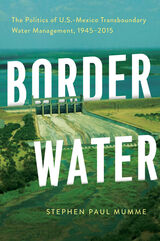
The international boundary between the United States and Mexico spans more than 1,900 miles. Along much of this international border, water is what separates one country from the other. Border Water provides a historical account of the development of governance related to transboundary and border water resources between the United States and Mexico in the last seventy years.
This work examines the phases and pivot points in the development of U.S.-Mexico border water resources and reviews the theoretical approaches and explanation that impart a better understanding of these events. Author Stephen Paul Mumme, a leading expert in water policy and border studies, describes three important periods in the chronology of transboundary water management. First, Mumme examines the 1944 Water Treaty, the establishment of the International Boundary and Water Commission (IBWC) in 1945, and early transborder politics between the two governments. Next, he describes the early 1970s and the rise of environmentalism. In this period, pollution and salinization of the Colorado River Delta come into focus. Mumme shows how new actors, now including environmentalists and municipalities, broadened and strengthened the treaty’s applications in transboundary water management. The third period of transborder interaction described covers the opening and restricting of borders due to NAFTA and then 9/11.
Border Water places transboundary water management in the frame of the larger binational relationship, offering a comprehensive history of transnational water management between the United States and Mexico. As we move into the next century of transnational water management, this important work offers critical insights into lessons learned and charts a path for the future.
International water expert Brian Richter argues that sustainable water sharing in the twenty-first century can only happen through open, democratic dialogue and local collective action. In Chasing Water, Richter tells a cohesive and complete story of water scarcity: where it is happening, what is causing it, and how it can be addressed. Through his engaging and nontechnical style, he strips away the complexities of water management to its bare essentials, providing information and practical examples that will empower community leaders, activists, and students to develop successful and long-lasting water programs.
Chasing Water will provide local stakeholders with the tools and knowledge they need to take an active role in the watershed-based planning and implementation that are essential for water supplies to remain sustainable in perpetuity.
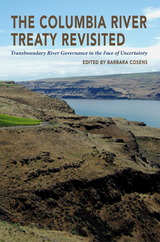
The Columbia River Treaty Revisited, with contributions from historians, geographers, environmental scientists, and other experts, is intended to facilitate conversation about the impending expiration. It allows the reader, through the close inspection of the Columbia River Basin, to better grasp the uncertainty of water governance. It aids efforts, already underway, to understand changes in the basin since the treaty was passed, to predict future changes, and to determine whether alteration of the treaty is ultimately advisable.
The Columbia River Treaty Revisited will appeal to those interested in water basin management–scholars, stakeholders, and residents of the Columbia River basin alike.
A Project of the Universities Consoritum on Columbia River Governance
The Universities Consortium on Columbia River Governance, with representatives from universities in the U.S. and Canada, formed to offer a nonpartisan platform to facilitate an informed, inclusive, international dialogue among key decision-makers and other interested people and organizations; to connect university research to problems faced within the basin; and to expose students to a complex water resources problem. The Consortium organized the symposium on which this volume is based.

Precisely because they lived in a midsize, midwestern city, Columbus residents could learn from the earlier experiences of their counterparts in older, larger coastal metropolises, and then go beyond them. Not having large sunk costs in pre-existing water systems, Columbus residents could, for instance, develop new, world-class, state-of-the-art methods for treating water and sewage, steps essential for urban expansion. Columbus, Ohio explores how city residents approached urban challenges—especially economic and environmental ones—and how they solved them.
Columbus, Ohio: Two Centuries of Business and Environmental Change concludes that scholars and policy makers need to pay much more attention to environmental issues in the shaping of cities, and that they need to look more closely at what midwestern metropolises accomplished, as opposed to simply examining coastal cities.
Founded in 1902, the Bureau became enmeshed in the US State Department’s push for geopolitical power following World War II, a response to the Soviet Union’s increasing global sway. By offering technical and water resource management advice to the world’s underdeveloped regions, the Bureau found that it could not only provide them with economic assistance and the United States with investment opportunities, but also forge alliances and shore up a country’s global standing in the face of burgeoning communist influence. Drawing on a number of international case studies—from the Bureau’s early forays into overseas development and the launch of its Foreign Activities Office in 1950 to the Blue Nile investigation in Ethiopia—Concrete Revolution offers insights into this historic damming boom, with vital implications for the present. If, Sneddon argues, we can understand dams as both technical and political objects rather than instruments of impartial science, we can better participate in current debates about large dams and river basin planning.
No fewer than forty million people have come to rely on the Colorado River system in modern times—a river system immersed in an unprecedented, unrelenting megadrought for more than two decades. Attempting to navigate this “new normal,” policymakers are in the midst of negotiating new management rules for the river system, a process coinciding with the compact’s centennial that must be completed by 2026.
Animated by this remarkable confluence of events, Cornerstone at the Confluence leverages the centennial year to reflect on the compact and broader “Law of the River” to envision the future. It is a volume inviting dialogue about how the Colorado River system’s flows should be apportioned given climate change, what should be done about environmental issues such as ecosystem restoration and biodiversity protection, and how long-standing issues of water justice facing Native American communities should be addressed.
In one form or another, all these topics touch on the concept of “equity” embedded within the compact—a concept that tees up what is perhaps the foundational question confronted by Cornerstone at the Confluence: Who should have a seat at the table of Colorado River governance?

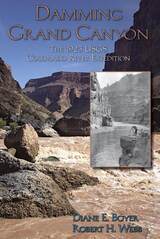
In 1923, America paid close attention, via special radio broadcasts, newspaper headlines, and cover stories in popular magazines, as a government party descended the Colorado to survey Grand Canyon. Fifty years after John Wesley Powell's journey, the canyon still had an aura of mystery and extreme danger. At one point, the party was thought lost in a flood.
Something important besides adventure was going on. Led by Claude Birdseye and including colorful characters such as early river-runner Emery Kolb, popular writer Lewis Freeman, and hydraulic engineer Eugene La Rue, the expedition not only made the first accurate survey of the river gorge but sought to decide the canyon's fate. The primary goal was to determine the best places to dam the Grand. With Boulder Dam not yet built, the USGS, especially La Rue, contested with the Bureau of Reclamation over how best to develop the Colorado River. The survey party played a major role in what was known and thought about Grand Canyon.
The authors weave a narrative from the party's firsthand accounts and frame it with a thorough history of water politics and development and the Colorado River. The recommended dams were not built, but the survey both provided base data that stood the test of time and helped define Grand Canyon in the popular imagination.
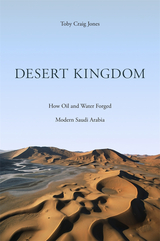
Oil and water, and the science and technology used to harness them, have long been at the heart of political authority in Saudi Arabia. Oil’s abundance, and the fantastic wealth it generated, has been a keystone in the political primacy of the kingdom’s ruling family. The other bedrock element was water, whose importance was measured by its dearth. Over much of the twentieth century, it was through efforts to control and manage oil and water that the modern state of Saudi Arabia emerged.
The central government’s power over water, space, and people expanded steadily over time, enabled by increasing oil revenues. The operations of the Arabian American Oil Company proved critical to expansion and to achieving power over the environment. Political authority in Saudi Arabia took shape through global networks of oil, science, and expertise. And, where oil and water were central to the forging of Saudi authoritarianism, they were also instrumental in shaping politics on the ground. Nowhere was the impact more profound than in the oil-rich Eastern Province, where the politics of oil and water led to a yearning for national belonging and to calls for revolution.
Saudi Arabia is traditionally viewed through the lenses of Islam, tribe, and the economics of oil. Desert Kingdom now provides an alternative history of environmental power and the making of the modern Saudi state. It demonstrates how vital the exploitation of nature and the roles of science and global experts were to the consolidation of political authority in the desert.

Water is in the air we breathe and beneath the ground we walk on. The very substance of life, it makes up as much as 60 percent of the human body. And yet, for one billion people there is such a thing as life without water. These are the people we meet in Dry--those who live in the dry lands of Africa, Asia, the Pacific, and the Americas, eking out an existence at once remarkable and mundane between craggy mountains, near oases, or close to well-springs surrounded by cracked earth or shifting sands.
From the ingenuity of the highland people of Chile's Atacama desert who use giant nets to capture water from clouds of fog, to the ancient wisdom that protects the grazing lands of Kenya's Masai, this beautifully illustrated book tells the diverse stories about people in very hot, very cold, or very high places, who spend their lives collecting, chasing, piping, and trapping the water that life requires--all the while taking great care that no form of life, plant or animal, benefits at the expense of another.
In a world of finite resources, where the struggle for shrinking sources of water intensifies daily, these stories--collected over three years by photographers, writers, and scientists from four continents--are a source of hope and wonder. This book contains a wealth of information and images designed to further awareness of the vast array of life that is carried on precariously yet proudly on the earth's dryest lands.
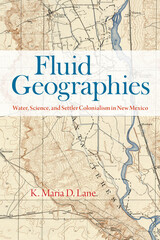
Maria Lane’s Fluid Geographies traces New Mexico’s transition from a community-based to an expert-led system of water management during the pre-statehood era. To understand this major shift, Lane carefully examines the primary conflict of the time, which pitted Indigenous and Nuevomexicano communities, with their long-established systems of irrigation management, against Anglo-American settlers, who benefitted from centralized bureaucratic management of water. The newcomers’ system eventually became settled law, but water disputes have continued throughout the district courts of New Mexico’s Rio Grande watershed ever since.
Using a fine-grained analysis of legislative texts and nearly two hundred district court cases, Lane analyzes evolving cultural patterns and attitudes toward water use and management in a pivotal time in New Mexico’s history. Illuminating complex themes for a general audience, Fluid Geographies helps readers understand how settler colonialism constructed a racialized understanding of scientific expertise and legitimized the dispossession of nonwhite communities in New Mexico.
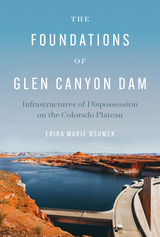
2024 Southwest Book of the Year, Pima County Public Library
A history of how the construction of the Glen Canyon Dam was built and sustained by social inequalities
The second highest concrete-arch dam in the United States, Glen Canyon Dam was built to control the flow of the Colorado River throughout the Western United States. Completed in 1966, the dam continues to serve as a water storage facility for residents, industries, and agricultural use across the American West. The dam also generates hydroelectric power for residents in Colorado, Wyoming, New Mexico, Utah, Nevada, Arizona, and Nebraska. More than a massive piece of physical infrastructure and an engineering feat, the dam exposes the cultural structures and complex regional power relations that relied on Indigenous knowledge and labor while simultaneously dispossessing the Indigenous communities of their land and resources across the Colorado Plateau.
Erika Marie Bsumek reorients the story of the dam to reveal a pattern of Indigenous erasure by weaving together the stories of religious settlers and Indigenous peoples, engineers and biologists, and politicians and spiritual leaders. Infrastructures of dispossession teach us that we cannot tell the stories of religious colonization, scientific exploration, regional engineering, environmental transformation, or political deal-making as disconnected from Indigenous history. This book is a provocative and essential piece of modern history, particularly as water in the West becomes increasingly scarce and fights over access to it continue to unfold.
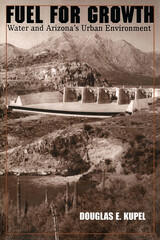
Fuel for Growth describes and interprets the history of water resource development and its relationship to urban development in Arizona's three signature cities: Phoenix, Tucson, and Flagstaff. These three urban areas could hardly be more different: a growth-oriented metropolis, an environmentally conscious city with deep cultural roots, and an outdoor-friendly mountain town. Despite these differences, their community leaders and public officials have taken similar approaches to developing water resources with varying degrees of success and acceptance.
Douglas Kupel has created a new vision of water history based on the Arizona experience. He challenges many of the traditional assumptions of environmental history by revealing that the West's aridity has had relatively little impact on the development of municipal water infrastructure in these cities. While urban growth in the West is often characterized as the product of an elite group of water leaders, the development of Arizona's cities is shown to reflect the broad aspirations of all their citizens.
The book traces water development from the era of private water service to municipal ownership of water utilities and examines the impact of the post-World War II boom and subsequent expansion. Taking in the Salt River Project, the Central Arizona Project, and the Groundwater Management Act of 1980, Kupel explores the ongoing struggle between growth and environmentalism. He advocates public policy measures that can sustain a water future for the state.
As the urban West enters a new century of water management, Arizona's progress will increasingly be tied to that of its ever-expanding cities. Fuel for Growth documents an earlier era of urban water use and provides important recommendations for the future path of water development in the West's key population centers.
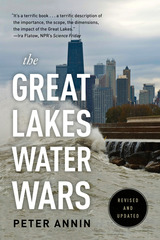
Journalist Peter Annin delves deeply into the fraught history of water use in the Great Lakes region and recaps the story of the Chicago River diversion, which reversed the flow of the river, fundamentally transforming the Great Lakes ecosystem. A century later it remains “the poster child of bad behavior in the Great Lakes.” Today, with growing communities and a warming climate, tensions over water use are high, and controversies on the perimeter of the Great Lakes Basin are on the rise. In this new and expanded edition of The Great Lakes Water Wars, Annin shares the stories of New Berlin and Waukesha, two Wisconsin communities straddling the Basin boundary whose recent legal battles have tested the legislative strength of the newly signed Compact. Annin devotes a new chapter to the volatile issue of the invasive Asian carp—a voracious species that reproduces at a disturbing rate—which is transforming the ecology of the river as it makes its way through the Chicago River diversion and ever closer to Lake Michigan.
With three new chapters and significant revisions to existing chapters that bring the story up-to-date over the past decade, this is the definitive behind-the-scenes account of the people and stories behind hard-fought battles to protect this precious resource that makes the region so special for the millions who call it home.
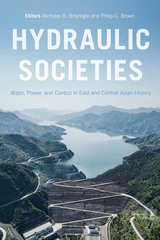
Hydraulic Societies explores the linked themes of water, power, state-building, and hydraulic control. Bringing together a range of ecological, geographical, chronological, and methodological perspectives, the essays in this book address the how humans have long harnessed water and sought to contain its destructive power for political, economic and social ends. Water defines every aspect of life and remains at the center of human activity: in irrigation and agriculture; waste and sanitation; drinking and disease; floods and droughts; religious beliefs and practices; fishing and aquaculture; travel and discovery; scientific study; water pollution and conservation; multi-purpose dam building; boundaries and borders; politics and economic life; and wars and diplomacy.
From the earliest large irrigation works thousands of years ago, control over water has involved control over people, as the essays in this volume reflect. The intersections of water and political, economic, and social power historically span international as well as domestic politics and operate at scales ranging from the local to the global. The authors consider the role of water in national development schemes, water distribution as a tool of political power, international disputes over waterways and water supplies, and the place of water in armed conflicts. They explore the ways in which political power and social hierarchies have themselves been defined and redefined by water and its control, how state leaders legitimized their rule both culturally and economically through the control of water, and how water management schemes were a means to impose and refine colonial power.
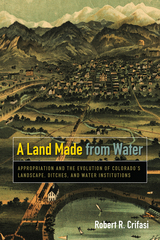
A Land Made from Water chronicles how the appropriation and development of water and riparian resources in Colorado changed the face of the Front Range—an area that was once a desert and is now an irrigated oasis suitable for the habitation and support of millions of people. This comprehensive history of human intervention in the Boulder Creek and Lefthand Creek valleys explores the complex interactions between environmental and historical factors to show how thoroughly the environment along the Front Range is a product of human influence.
Author Robert Crifasi examines the events that took place in nineteenth-century Boulder County, Colorado, and set the stage for much of the water development that occurred throughout Colorado and the American West over the following century. Settlers planned and constructed ditches, irrigation systems, and reservoirs; initiated the seminal court decisions establishing the appropriation doctrine; and instigated war to wrest control of the region from the local Native American population. Additionally, Crifasi places these river valleys in the context of a continent-wide historical perspective.
By examining the complex interaction of people and the environment over time, A Land Made from Water links contemporary issues facing Front Range water users to the historical evolution of the current water management system and demonstrates the critical role people have played in creating ecosystems that are often presented to the public as “natural” or “native.” It will appeal to students, scholars, professionals, and general readers interested in water history, water management, water law, environmental management, political ecology, or local natural history.
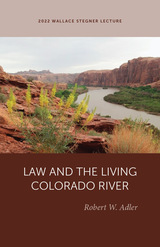
Law and the Living Colorado River asserts that the so-called Law of the River—the vast assemblage of interstate compacts, international treaties, federal and state statutes, regulations, contracts, and other legal documents governing use and management of the Colorado River—ignores the needs of the river as a nested system of aquatic and aquatic-dependent ecosystems. Although society now recognizes and appreciates the natural values of the Colorado River, the Law of the River remains fixed in service of human economies like irrigation and hydropower. Robert W. Adler contends that the law must respond to changing values that prioritize natural systems alongside human ones. He proposes acknowledging the legal rights of the river itself, following the recent movement to recognize rights of nature in other ecosystems around the world. Recognizing that U.S. law has significant barriers to that proposal, however, Adler borrows from aspects of international water law to propose as a shorter-term strategy amendments to the Colorado River Compact that would enhance protection of the river’s environmental needs and values.
Adler delivered this lecture on March 17, 2022, at the 27th annual symposium of the Wallace Stegner Center for Land, Resources and the Environment, jointly sponsored by the Wallace Stegner Center and the Water & Tribes Initiative | Colorado River Basin.
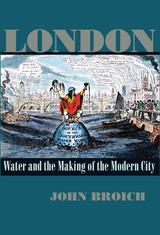
As people crowded into British cities in the nineteenth century, industrial and biological waste byproducts and then epidemic followed. Britons died by the thousands in recurring plagues. Figures like Edwin Chadwick and John Snow pleaded for measures that could save lives and preserve the social fabric.
The solution that prevailed was the novel idea that British towns must build public water supplies, replacing private companies. But the idea was not an obvious or inevitable one. Those who promoted new waterworks argued that they could use water to realize a new kind of British society—a productive social machine, a new moral community, and a modern civilization. They did not merely cite the dangers of epidemic or scarcity. Despite many debates and conflicts, this vision won out—in town after town, from Birmingham to Liverpool to Edinburgh, authorities gained new powers to execute municipal water systems.
But in London local government responded to environmental pressures with a plan intended to help remake the metropolis into a collectivist society. The Conservative national government, in turn, sought to impose a water administration over the region that would achieve its own competing political and social goals. The contestants over London’s water supply matched divergent strategies for administering London’s water with contending visions of modern society. And the matter was never pedestrian. The struggle over these visions was joined by some of the most colorful figures of the late Victorian period, including John Burns, Lord Salisbury, Bernard Shaw, and Sidney and Beatrice Webb.
As Broich demonstrates, the debate over how to supply London with water came to a head when the climate itself forced the endgame near the end of the nineteenth century. At that decisive moment, the Conservative party succeeded in dictating the relationship between water, power, and society in London for many decades to come.
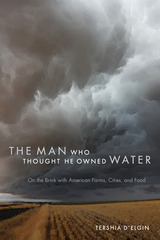
When her father bought his farm—Big Bend Station—he also bought the ample water rights associated with the land and the South Platte River, confident that he had secured the necessary resources for a successful endeavor. Yet water immediately proved fickle, hard to defend, and sometimes dangerous. Eventually those rights were curtailed without compensation. Through her family’s story, d’Elgin dramatically frames the personal-scale implications of water competition, revealing how water deals, infrastructure, transport, and management create economic growth but also sever human connections to Earth’s most vital resource. She shows how water flows to cities at the expense of American-grown food, as rural land turns to desert, wildlife starves, the environment degrades, and climate change intensifies.
Depicting deep love, obsession, and breathtaking landscape, The Man Who Thought He Owned Water is an impassioned call to rebalance our relationship with water. It will be of great interest to anyone seeking to understand the complex forces affecting water resources, food supply, food security, and biodiversity in America.
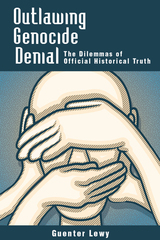
Holocaust denial can be viewed as another form of hatred against the Jews and preventing it can be understood as a form of warding off hate speech. Germany has made it a crime punishable by law. Other European countries have similar laws. While the rationale for such laws seems reasonable, Lewy asks readers to look again and to consider carefully the dangers that these laws could present. His discussion neither dismisses the ramifications of genocide denial nor justifies it; he instead looks closely at the possible risks of government-enforced interpretations of history.
Outlawing genocide denial sets a precedent of allowing governments to dictate historical truth and how events should be interpreted. Such government restrictions can be counterproductive in a democratic society which values freedom of speech. Lewy examines these and related ideas through the analysis of historical and current examples. He posits his own conclusion but leaves it up to readers to view the evidence and arguments and form their own opinions.
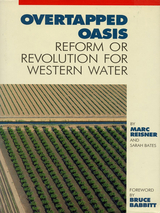
Overtapped Oasis analyzes the West's water allocation system from top to bottom and offers dozens of revolutionary proposals for increased efficiency and policy reform. Marc Reisner and Sarah Bates argue that the West's underlying problem is not a shortage of water but the inefficient use of it, a problem caused by a bewildering tangle of federal subsidy programs, restrictive state water codes, anachronistic irrigation practices and -- perhaps most important -- resistance to reform.
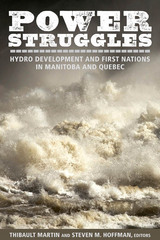
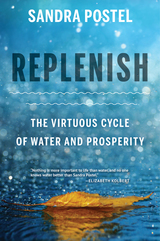
"Remarkable." —New York Times Book Review
"Clear-eyed treatise...Postel makes her case eloquently." —Booklist, starred review
"An informative, purposeful argument." —Kirkus
We have disrupted the natural water cycle for centuries in an effort to control water for our own prosperity. Yet every year, recovery from droughts and floods costs billions of dollars, and we spend billions more on dams, diversions, levees, and other feats of engineering. These massive projects not only are risky financially and environmentally, they often threaten social and political stability. What if the answer was not further control of the water cycle, but repair and replenishment?
Sandra Postel takes readers around the world to explore water projects that work with, rather than against, nature’s rhythms. In New Mexico, forest rehabilitation is safeguarding drinking water; along the Mississippi River, farmers are planting cover crops to reduce polluted runoff; and in China, “sponge cities” are capturing rainwater to curb urban flooding.
Efforts like these will be essential as climate change disrupts both weather patterns and the models on which we base our infrastructure. We will be forced to adapt. The question is whether we will continue to fight the water cycle or recognize our place in it and take advantage of the inherent services nature offers. Water, Postel writes, is a gift, the source of life itself. How will we use this greatest of gifts?
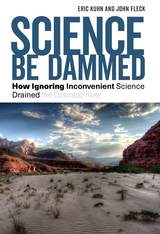
Arguing that the science of the early twentieth century can shed new light on the mistakes at the heart of the over-allocation of the Colorado River, authors Eric Kuhn and John Fleck delve into rarely reported early studies, showing that scientists warned as early as the 1920s that there was not enough water for the farms and cities boosters wanted to build. Contrary to a common myth that the authors of the Colorado River Compact did the best they could with limited information, Kuhn and Fleck show that development boosters selectively chose the information needed to support their dreams, ignoring inconvenient science that suggested a more cautious approach.
Today water managers are struggling to come to terms with the mistakes of the past. Focused on both science and policy, Kuhn and Fleck unravel the tangled web that has constructed the current crisis. With key decisions being made now, including negotiations for rules governing how the Colorado River water will be used after 2026, Science Be Dammed offers a clear-eyed path forward by looking back.
Understanding how mistakes were made is crucial to understanding our contemporary problems. Science Be Dammed offers important lessons in the age of climate change about the necessity of seeking out the best science to support the decisions we make.
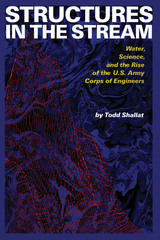
As the Mississippi and other midwestern rivers inundated town after town during the summer of 1993, concerned and angry citizens questioned whether the very technologies and structures intended to "tame" the rivers did not, in fact, increase the severity of the floods. Much of the controversy swirled around the apparent culpability of the U.S. Army Corps of Engineers, the builder of many of the flood control systems that failed.
In this book, Todd Shallat examines the turbulent first century of the dam and canal building Corps and follows the agency's rise from European antecedents through the boom years of river development after the American Civil War. Combining extensive research with a lively style, Shallat tells the story of monumental construction and engineering fiascoes, public service and public corruption, and the rise of science and the army expert as agents of the state.
More than an institutional history, Structures in the Stream offers significant insights into American society, which has alternately supported the public works projects that are a legacy of our French heritage and opposed them based on the democratic, individualist tradition inherited from Britain. It will be important reading for a wide audience in environmental, military, and scientific history, policy studies, and American cultural history.
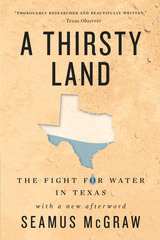
As a changing climate threatens the whole country with deeper droughts and more furious floods that put ever more people and property at risk, Texas has become a bellwether state for water debates. Will there be enough water for everyone? Is there the will to take the steps necessary to defend ourselves against the sea? Is it in the nature of Americans to adapt to nature in flux?
The most comprehensive—and comprehensible—book on contemporary water issues, A Thirsty Land delves deep into the challenges faced not just by Texas but by the nation as a whole, as we struggle to find a way to balance the changing forces of nature with our own ever-expanding needs. Part history, part science, part adventure story, and part travelogue, this book puts a human face on the struggle to master that most precious and capricious of resources, water. Seamus McGraw goes to the taproots, talking to farmers, ranchers, businesspeople, and citizen activists, as well as to politicians and government employees. Their stories provide chilling evidence that Texas—and indeed the nation—is not ready for the next devastating drought, the next catastrophic flood. Ultimately, however, A Thirsty Land delivers hope. This deep dive into one of the most vexing challenges facing Texas and the nation offers glimpses of the way forward in the untapped opportunities that water also presents.

In Transforming Rural Water Governance Sarah T. Romano explains the bottom-up development and political impact of community-based water and sanitation committees (CAPS) in Nicaragua. Romano traces the evolution of CAPS from rural resource management associations into a national political force through grassroots organizing and strategic alliances.
Resource management and service provision is inherently political: charging residents fees for service, determining rules for household water shutoffs and reconnections, and negotiating access to water sources with local property owners constitute just a few of the highly political endeavors resource management associations like CAPS undertake as part of their day-to-day work in their communities. Yet, for decades in Nicaragua, this local work did not reflect political activism. In the mid-2000s CAPS’ collective push for social change propelled them onto a national stage and into new roles as they demanded recognition from the government.
Romano argues that the transformation of Nicaragua’s CAPS into political actors is a promising example of the pursuit of sustainable and equitable water governance, particularly in Latin America. Transforming Rural Water Governance demonstrates that when activism informs public policy processes, the outcome is more inclusive governance and the potential for greater social and environmental justice.
Michael DiLeo and Eleanor Smith look closely and discover that there are profound truths embedded in the folk tradition. And equally profound misconceptions. Probing the surprising and little-known history of the split-state movement, the authors find that its underlying sentiments have been part of California politics and culture since territorial days. What the issues are today, what their implications are for our lives in the 1980s, and what we can do about them are the focus of this fascinating book.
The current water controversy, perhaps the most crucial in the state's history, cannot be resolved until the two Californias make peace with each other. No other book confronts the environmental and philosophical problems that plague California and have nationwide echoes as thoroughly and as intelligently as Two Californias does. Two Californias is entertaining – and it also thought-provoking. It is very likely to change the ways we think about living together and sharing resources in the 1980s.
Nearly every human endeavor on the planet was conceived and constructed with a relatively stable climate in mind. But as new climate disasters remind us every day, our world is not stable—and it is changing in ways that expose the deep dysfunction of our relationship with water. Increasingly severe and frequent floods and droughts inevitably spur calls for higher levees, bigger drains, and longer aqueducts. But as we grapple with extreme weather, a hard truth is emerging: our development, including concrete infrastructure designed to control water, is actually exacerbating our problems. Because sooner or later, water always wins.
In this quietly radical book, science journalist Erica Gies introduces us to innovators in what she calls the Slow Water movement who start by asking a revolutionary question: What does water want? Using close observation, historical research, and cutting-edge science, these experts in hydrology, restoration ecology, engineering, and urban planning are already transforming our relationship with water.
Modern civilizations tend to speed water away, erasing its slow phases on the land. Gies reminds us that water’s true nature is to flex with the rhythms of the earth: the slow phases absorb floods, store water for droughts, and feed natural systems. Figuring out what water wants—and accommodating its desires within our human landscapes—is now a crucial survival strategy. By putting these new approaches to the test, innovators in the Slow Water movement are reshaping the future.
According to some estimates, at least 1.7 billion people do not have an adequate supply of drinking water and as many as 40% of the world's population face chronic shortages. Yet water scarcity is more than a matter of terrain, increased population, and climate. It can also be a byproduct or end result of water management, where the building of dams, canals, and complicated delivery systems provide water for some at the cost of others, and result in short-term gains that wreak long-term ecological havoc. Water scarcity can also be a product of the social systems in which we live.
Water, Culture, and Power presents a series of case studies from around the world that examine the complex culture and power dimensions of water resources and water resource management. Chapters describe highly contested and contentious cases that span the continuum of water management concerns from dam construction and hydroelectric power generation to water quality and potable water systems. Sections examine: impact of water resource development on indigenous peoples varied cultural meanings of water and water resources political process of funding and building water resource projects tensions between culture and power as they structure perceptions and experiences of water scarcity, transforming water from natural resource to social constructio.
Case studies include Lummi nation challenges to water rights in the northwest United States; drinking water quality issues in Oaxaca de Juarez, Mexico; the effects of tourism development in the Bay Islands, Honduras; water scarcity on St. Thomas, the Virgin Islands; the role of water in the Arab-Israeli conflict; and other national and regional situations including those from Zimbabwe, Japan, and Bangladesh.
While places and cases vary, all chapters address the values and meanings associated with water and how changes in power result in changes in both meaning and in patterns of use, access, and control. Water, Culture, and Power provides an important look at water conflicts and crises and is essential reading for students, researchers, and anyone interested in the role of cultural factors as they affect the political economy of natural resource use and control.
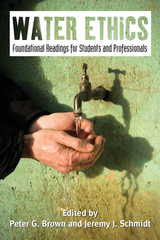
According to the editors of this collection of foundational essays, questions surrounding water are inherently ethical. Peter Brown and Jeremy Schmidt contend that all approaches to managing water, no matter how grounded in empirical data, involve value judgments and cultural assumptions. Each of the six sections of the book discuses a different approach to thinking about the relationship between water and humanity, from utilitarianism to eco-feminism to religious beliefs, including Islam, Hinduism, and Christianity. Contributors range from Bartholemew, Ecumenical Patriarch of the Orthodox Church to Nobel Laureate economist Elinor Ostrom and water policy expert Sandra Postel. Each section is framed by an original introductory essay written by the editors.
Water Ethics will help readers understand how various moral perspectives, even when unstated, have guided and will continue to guide water policy around the globe.
This set of eleven essays addresses the tightening water resource problems of the Arab region’s twenty countries. The authors discuss themes of water conflict and provide detailed looks at four sub-areas: the Maghreb, the Nile countries, the Arabian Peninsula, and the Mashrek.
This century has seen a technological drive to enlarge traditional surface and groundwater supplies and to expand irrigated farming for rapidly growing and progressively more prosperous populations. But now the region is facing absolute limits on its fresh water. Water in the Arab World focuses on today’s need to move toward rationalized new patterns of using water within the national economies, a transition often described as moving from supply to demand management. The change calls for intensified national legislative and planning efforts concerning water, with serious consideration of desalination and conservation, as well as of pricing and market approaches to the allocation of a very constrained supply.
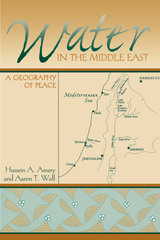
Finding "streams in the desert" has never been more urgent for the peoples of the Middle East. Rapid population growth and a rising standard of living are driving water demand inexorably upward, while the natural supply has not increased since Biblical times. Ensuring a fair and adequate distribution of water in the region is vitally important for building a lasting peace among the nations of the Middle East.
Addressing water needs from a geographical perspective, the contributors to this book analyze and assess the impact of scarce water resources in the Jordan River basin countries and territories (Israel, Jordan, Lebanon, Palestine, and Syria) as these long-time antagonists work toward peace. After geographical and historical overviews, the authors envision the future-what the water issues may be when Israel and Syria begin negotiating, the "hydro-security" needs of each nation, and the difficulties of planning for uncertainty. Without proposing any one ideal scheme, they discuss the possibilities for cooperative sharing of water resources, while honestly acknowledging the political constraints that may limit such projects. The final essay speaks to the needs of the one party so rarely represented at the negotiating table—the Jordan River itself.
WIRED's Required Science Reading 2016
When we think of water in the West, we think of conflict and crisis. In recent years, newspaper headlines have screamed, “Scarce water and the death of California farms,” “The Dust Bowl returns,” “A ‘megadrought’ will grip U.S. in the coming decades.” Yet similar stories have been appearing for decades and the taps continue to flow. John Fleck argues that the talk of impending doom is not only untrue, but dangerous. When people get scared, they fight for the last drop of water; but when they actually have less, they use less.
Having covered environmental issues in the West for a quarter century, Fleck would be the last writer to discount the serious problems posed by a dwindling Colorado River. But in that time, Fleck has also seen people in the Colorado River Basin come together, conserve, and share the water that is available. Western communities, whether farmers and city-dwellers or US environmentalists and Mexican water managers, have a promising record of cooperation, a record often obscured by the crisis narrative.
In this fresh take on western water, Fleck brings to light the true history of collaboration and examines the bonds currently being forged to solve the Basin’s most dire threats. Rather than perpetuate the myth “Whiskey's for drinkin', water's for fightin' over," Fleck urges readers to embrace a new, more optimistic narrative—a future where the Colorado continues to flow.
Water Politics in Northern Nevada examines the Newlands Project, its unintended consequences, and decades of litigation over the abatement of these problems and fair allocation of water. Negotiations and federal legislation brought about the Truckee River Operating Agreement in 2008. This revised edition brings the reader up to date on the implementation of the agreement, including ongoing efforts to preserve and enhance Pyramid Lake. The second edition now also includes a discussion of the Walker River basin, following a major project undertaken to address concerns about the health and viability of Walker Lake. The approaches taken to save these two desert treasures, Pyramid Lake and Walker Lake, are offered as models for resolving similar water-resource conflicts in the West.
Leah J. Wilds’s study is crucial reading for students and scholars of water politics and environmental issues, not just in Nevada but throughout the western United States.
In the past, water development has often proceeded in a single-sector fashion, with each group of users implementing its own plans without coordination with other groups, resulting in both conflict and inefficiency. Now, Anisfeld writes, the challenge of water management is figuring out how to balance all the different demands for water, from sanitation to energy generation to ecosystem protection.
For inquiring students of any level, Water Resources provides a comprehensive one-volume guide to a complex but vital field of study.
Directed by UN Secretary General Ban Ki-Moon at the 2008 Davos Annual Meeting, the World Economic Forum assembled the world’s foremost group of public, private, non-governmental-organization and academic experts to examine the water crisis issue from all perspectives. The result of their work is this forecast—a stark, non-technical overview of where we will be by 2025 if we take a business-as-usual approach to (mis)managing our water resources. The findings are shocking. Perhaps equally stunning are the potential solutions and the recommendations that the group presents. All are included in this landmark publication.
Water Security contains compelling commentary from leading decision-makers, past and present. The commentary is supported by analysis from leading academics of how the world economy will be affected if world leaders cannot agree on solutions. The book suggests how business and politics need to manage the energy-food-water-climate axis as leaders negotiate the details of the climate regime that replace Kyoto Protocols.
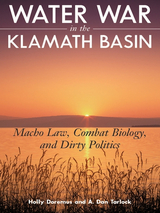
In Water War in the Klamath Basin, legal scholars Holly Doremus and A. Dan Tarlock examine the genesis of the crisis and its fallout, offering a comprehensive review of the event, the history leading up to it, and the lessons it holds for anyone seeking to understand conflicts over water use in the arid West. The authors focus primarily on the legal institutions that contributed to the conflict—what they call “the accretion of unintegrated resource management and environmental laws” that make environmental protection so challenging, especially in politically divided regions with a long-standing history of entitlement-based resource allocation.
Water War in the Klamath Basin explores common elements fundamental to natural resource conflicts that must be overcome if conflicts are to be resolved. It is a fascinating look at a topic of importance for anyone concerned with the management, use, and conservation of increasingly limited natural resources.
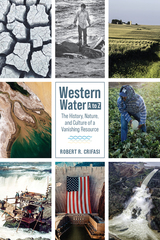
Organized as a collection of terms, the book addresses the most salient water issues and provides helpful background information regarding their origins and implications. Photographs serve a vital role in the cultural dialogue on water and stand as an equal partner to the text. Each subject is covered in about one page and is accompanied by one or two striking images from famous photographers like Margaret Bourke-White, Carleton E. Watkins, Arthur Rothstein, William Henry Jackson, and Dorothea Lang as well as Crifasi’s own work. Water often finds itself at the center of our cultural discourse in art, cinema, and literature, which play essential roles in shaping our understanding and experience of Western water. Crifasi also engages personalities that are nearly synonymous with Western water—John Wesley Powell, Elwood Mead, and Floyd Dominy, among others—to show how their lives intertwined with and often influenced the course of water development across the region.
Travelers, adventurers, students, and anyone interested in water will find Western Water A to Z a handy and entertaining reference guide.
Where fresh water appears to be abundant and generally accessible, chronic pollution may be relatively ignored as a public issue. Yet there are those whose lives, livelihoods, and traditions are touched directly by the destructive albeit essential relationship between humans and water.
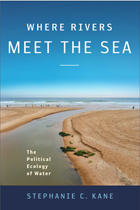
In her passionate and persuasively argued Where Rivers Meet the Sea, Stephanie Kane compares two cities and nations—Salvador, Brazil and Buenos Aires, Argentina—as she tells the stories of those who organize in the streets, petition the courts, and challenge their governments to implement and enforce existing laws designed to protect springs, lakes, harbors, and rivers.
Illuminating the complex and distinctive cultural forces in the South Atlantic that shape conflicts and collaborations pertaining to particular waterfront settings, Kane shows the dilemmas, inventiveness, and persistence that provide the foundation for environmental and social justice movements writ large.
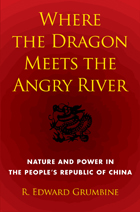
Ed Grumbine traveled to the far corners of China’s Yunnan province to find out. He was driven by a single question: could this last fragment of wild nature withstand China’s unrelenting development? But as he hiked through deep-cut emerald mountains, backcountry villages, and burgeoning tourist towns, talking with trekking guides, schoolchildren, and rural farmers, he discovered that the problem wasn’t as simple as growth versus conservation.
In its struggle to "build a well-off society in an all-round way," Beijing juggles a host of competing priorities: health care for impoverished villagers; habitat for threatened tigers; cars for a growing middle class; clean air for all citizens; energy to power new cities; rubber for the global marketplace.
Where the Dragon Meets the Angry River is an incisive look at the possible fates of China and the planet. Will the Angry River continue to flow? Will Tibetan girls from subsistence farming families learn to read and write? Can China and the United States come together to lead action on climate change? Far-reaching in its history and scope, this unique book shows us the real-world consequences of conservation and development decisions now being made in Beijing and beyond.
READERS
Browse our collection.
PUBLISHERS
See BiblioVault's publisher services.
STUDENT SERVICES
Files for college accessibility offices.
RECENTLY PUBLISHED






UChicago Accessibility Resources
home | accessibility | search | about | contact us
BiblioVault ® 2001 - 2024
The University of Chicago Press