
 A SCHOLARLY BOOK REPOSITORY

The impact of the AIDS pandemic on health systems and entire societies in the 1990s will be much more severe than it was in the last decade; up-to-date information about the disease is now crucial. Yet even though readers are deluged by technical publications and popularizations, no single book tracks, on an annual basis, the evolution of the pandemic, its effects, and the worldwide response.
To fill this gap, Jonathan Mann, founding director of the World Health Organization's Global Progam on AIDS and currently director of the International AIDS Center at Harvard University, has assembled a team of experts to produce an unprecedented document for our time. AIDS in the World will synthesize the best possible information, data, and thinking about AIDS into a volume that is destined to become a landmark publication. AIDS in the World will provide a vital guide to rekindling the worldwide assault on AIDS. To ensure that AIDS in the World 1992 is both timely and authoritative, the editors have enlisted the support of an extensive team of researchers, specialists, scientists, writers, and experts to provide a solid basis for new and original thinking on a wide range of topics.
This book reviews the status of the disease, including numbers of AIDS cases and deaths; AIDS and HIV prevalence; mortality rates; links between other infections and HlV breakthroughs in biomedical, clinical, and behavioral areas; prevention and care; legislation and human rights issues; and economic and demographic aspects. AIDS in the World 1992 provides a global assessment for where we are now and where we are headed; it spotlights critical issues and highlights communities and countries that may be especially vulnerable to the dissemination of HIV. With publication scheduled before the VIIIth International Conference on AIDS in July 1992, this work will be indispensable for governments, policymakers, scientists, health care workers, and journalists around the world who will rely on this book to make the crucial decisions of this decade and the next.
The Global Burden of Disease and Injury Series details and analyzes global patterns of death and disability, providing a bold, comprehensive examination of the state of the world's health.
The Global Burden of Disease (GBD) provides systematic epidemiological estimates for an unprecedented 150 major health conditions. Its methods and results are presented here, including: disaggregated death and disability data; projections to the year 2020; and risk factor evaluations. While it minutely examines causes of death, the GBD is unique in its inclusion of disability. The authors explore the technical bases and moral implications of incorporating social, physical, and mental disabilities in health assessments, explicating the indicator they have developed, the disability-adjusted life-year (DALY). The GBD provides indispensable global and regional data for health planning, research, and education.
Among the study's results: Depression was the fourth leading cause of disease-burden in 1990 and by 2020 will be the single leading cause. Injuries cause over 15 percent of death and disability. HIV will by 2010 inflict as great a burden as the age-old epidemic tuberculosis. By 2020, tobacco use will account for 9 million deaths annually. Ultimately, pneumonia and diarrhea, both primarily diseases of childhood, will continue to inflict the greatest health burden of all.
The goals of health and human security are fundamentally valued in all societies, yet the breadth of their interconnections are not properly understood. This volume explores the evolving relationship between health and security in today's interdependent world, and offers policy guidelines for global health action.
This volume underscores three basic principles. First, recent developments in the changing security landscape present enormous challenges for human security and global health. Second, although the connections between health and security are long-standing, the current context of new conflicts, pervasive poverty, and accelerating global flows has brought the fields closer together. Finally, a human security approach dependent upon individual and collective action can identify new strategies for meeting the goals of global health and security.
The distinguished contributions to this volume were commissioned by Harvard University's Global Equity Initiative, a research unit supporting the work of the International Commission on Human Security.
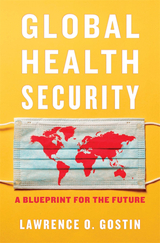
With lessons learned from COVID-19, a world-leading expert on pandemic preparedness proposes a pragmatic plan urgently needed for the future of global health security.
The COVID-19 pandemic revealed how unprepared the world was for such an event, as even the most sophisticated public health systems failed to cope. We must have far more investment and preparation, along with better detection, warning, and coordination within and across national boundaries. In an age of global pandemics, no country can achieve public health on its own. Health security planning is paramount.
Lawrence O. Gostin has spent three decades designing resilient health systems and governance that take account of our interconnected world, as a close advisor to the Centers for Disease Control and Prevention (CDC), the World Health Organization (WHO), and many public health agencies globally. Global Health Security addresses the borderless dangers societies now face, including infectious diseases and bioterrorism, and examines the political, environmental, and socioeconomic factors exacerbating these threats. Weak governance, ineffective health systems, and lack of preparedness are key sources of risk, and all of them came to the fore during the COVID-19 crisis, even—sometimes especially—in wealthy countries like the United States. But the solution is not just to improve national health policy, which can only react after the threat is realized at home. Gostin further proposes robust international institutions, tools for effective cross-border risk communication and action, and research programs targeting the global dimension of public health.
Creating these systems will require not only sustained financial investment but also shared values of cooperation, collective responsibility, and equity. Gostin has witnessed the triumph of these values in national and international forums and has a clear plan to tackle the challenges ahead. Global Health Security therefore offers pragmatic solutions that address the failures of the recent past, while looking toward what we know is coming. Nothing could be more important to the future health of nations.
Health and Social Change in International Perspective brings together an unprecedented interdisciplinary series of approaches to understanding the social dimensions of health change around the world. The seventeen contributors—demographers, epidemiologists, economists, anthropologists, public health scientists—are among the intellectual leaders of efforts to respond to the world’s health challenges.
Moving beyond the limits of established theories about demographic and epidemiologic transition, this book offers broad explorations of the social causes and consequences of health change. Consensus is reached on some matters, but critical debate and controversy predominate in others. The authors address several critical questions: What are the forms and structures of health transitions? Do these changes assume universally consistent patterns, or are health transitions particularistic, reflecting space, time, and community? What are the methodological issues in definition and measurement? And how can understanding improve health policy, interventions, and the research agenda?
Exploring new frontiers of a vital topic, Health and Social Change in International Perspective is an invaluable resource for social and health scientists working to understand world health change.
From the health risks of sexual activity to those of pregnancy, abortion, and childbirth, reproduction constitutes enormous risks to a woman’s health. Ill-health conditions related to sex and reproduction account for 25 percent of the global disease burden in adult women. In sub-Saharan Africa, they account for over 40 percent. The catastrophic effects of reproductive ill-health, however, are not limited to women; for infants and adult men, they inflict 25 percent and 1 percent respectively of the global burden.
This volume offers comprehensive data and detailed discussions of the epidemiologies of three sexually transmitted diseases, HIV, and five specific maternal conditions, as well as those of congenital anomalies and perinatal conditions. Projections of the HIV epidemic are provided: by 2020 HIV is projected to double to 2.5 percent of the global disease burden.
Health Dimensions of Sex and Reproduction will serve as a comprehensive reference for epidemiologists, public health specialists, practitioners and advocates of STD and HIV prevention, and reproductive and neonatal health.
The decade of the 1990s witnessed enormous changes in the international environment. The Cold War conclusively ended. Biotechnology and communications technology made rapid advances. Barriers to international trade and investment declined. Taken together, these developments created many opportunities for peace and prosperity.
At the same time, with the end of superpower domination, ethnically based intranational conflicts brought on widespread suffering. And while globalization expanded opportunity, growth, and incomes, it increased inequality of incomes and decreased human security. Moreover, as countries have become more closely linked, insecurity in one country has affected security in other countries.
"With a clear and engaging narrative that delves into complex and debatable issues and, at the same time, tells very entertaining stories, this book is a wonderful addition to the historiography of international health."
---Diego Armus, Swarthmore College
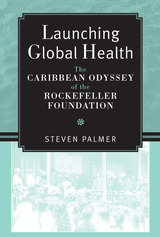
From the Rockefeller Foundation to the Bill and Melinda Gates Foundation, U.S. philanthropies have played a leading role in the evolution of international health. Launching Global Health examines one of the earliest of these initiatives abroad, the Rockefeller Foundation's International Health Board. The flagship agency made its first call in British Guiana in 1914 to experiment with its new "American method" for the treatment of hookworm disease. Within months it was involved in ambitious hookworm programs in six Central American and Caribbean sites, its directors self-consciously choosing to test run the prototype for their global project in the nearest and clearest domain of American imperial influence. These efforts continued until 1930, when most of the International Health Board hookworm campaigns had evolved into public health projects of a different nature.
Launching Global Health is the first book to explore the inaugural Rockefeller Foundation campaigns in depth and to treat them as an ensemble---as a laboratory for discovering and testing the elements of a global health system for the twentieth century. Orienting the study according to the priorities and perspectives of the social and cultural history of medicine and marrying the results with social science and institutional approaches, Steven Palmer rediscovers elements and dynamics in the original history of global health that were either discarded or that have continued to operate beneath the radar of scholarship.
In particular, Palmer examines the extraordinary encounters that took place between the Rockefeller proselytizers of biomedicine and public health and the diverse populations whom they were attempting to help. Launching Global Health devotes special attention to the health narratives and practices of laboring people of different ethnicities and how they clashed and blended with the stories and rituals being promoted by the Rockefeller Foundation, ultimately showing the locally assembled health teams of microscopists, inspectors, and dispensers to have been active agents in the shaping of encounters between imperial and popular medicine.
Steven Palmer is Canada Research Chair in the History of International Health at the University of Windsor and author of From Popular Medicine to Medical Populism: Doctors, Healers, and Public Power in Costa Rica, 1800-1940.
Illustration: Lecture on hookworm disease on public building porch. Courtesy Rockefeller Archive Center.
A volume in the series Conversations in Medicine and Society.
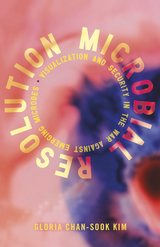
Why the global health project to avert emerging microbes continually fails
In 1989, a group of U.S. government scientists met to discuss some surprising findings: new diseases were appearing around the world, and viruses that they thought long vanquished were resurfacing. Their appearance heralded a future perpetually threatened by unforeseeable biological risks, sparking a new concept of disease: the “emerging microbe.” With the Cold War nearing its end, American scientists and security experts turned to confront this new “enemy,” redirecting national security against its risky horizons. In order to be fought, emerging microbes first needed to be made perceptible; but how could something immaterial, unknowable, and ever mutating be coaxed into visibility, knowability, and operability?
Microbial Resolution charts the U.S.-led war on the emerging microbe to show how their uncertain futures were transformed into objects of global science and security. Moving beyond familiar accounts that link scientific knowledge production to optical practices of visualizing the invisible, Gloria Chan-Sook Kim develops a theory of “microbial resolution” to analyze the complex problematic that arises when dealing with these entities: what can be seen when there is nothing to see? Through a syncretic analysis of data mining, animal-tracking technologies, media networks, computer-modeled futures, and global ecologies and infrastructures, she shows how a visual impasse—the impossibility of seeing microbial futures—forms the basis for new modes of perceiving, knowing, and governing in the present.
Timely and thought provoking, Microbial Resolution opens up the rich paradoxes, irreconcilabilities, and failures inherent in this project and demonstrates how these tensions profoundly animate twenty-first-century epistemologies, aesthetics, affects, and ecologies.
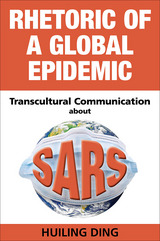
2016 CCCC Best Book Award in Technical and Scientific Communication
In the past ten years, we have seen great changes in the ways government organizations and media respond to and report on emerging global epidemics. The first outbreak to garner such attention was SARS (severe acute respiratory syndrome). In Rhetoric of a Global Epidemic, Huiling Ding uses SARS to explore how various cultures and communities made sense of the epidemic and communicated about it. She also investigates the way knowledge production and legitimation operate in global epidemics, the roles that professionals and professional communicators, as well as individual citizens, play in the communication process, points of contention within these processes, and possible entry points for ethical and civic intervention.
Focusing on the rhetorical interactions among the World Health Organization, the United States, China, and Canada, Rhetoric of a Global Epidemic investigates official communication and community grassroots risk tactics employed during the SARS outbreak. It consists of four historical cases, which examine the transcultural risk communication about SARS in different geopolitical regions at different stages. The first two cases deal with risk communication practices at the early stage of the SARS epidemic when it originated in southern China. The last two cases move to transcultural rhetorical networks surrounding SARS.
With such threats as SARS, avian flu, and swine flu capturing the public imagination and prompting transnational public health preparedness efforts, the need for a rhetoric of global epidemics has never been greater. Government leaders, public health officials, health care professionals, journalists, and activists can learn how to more effectively craft and manage transcultural risk communication from Ding’s examination of the complex and varied modes of communication around SARS. In addition to offering a detailed case study, Rhetoric of a Global Epidemic provides a critical methodology that professional communicators can use in their investigations of epidemics and details approaches to facilitating more open, participatory risk communication at all levels.
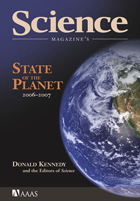
Science Magazine's State of the Planet 2006-2007 is a unique contribution that brings together leading environmental scientists and researchers to give readers a comprehensive yet accessible overview of current issues. Included are explanatory essays from Science magazine editor-in-chief Donald Kennedy that tie together the issues and explore the relationships among them. Each of the book's 18 chapters is written by the world's leading experts, such as:
Joel Cohen on population
Peter Gleick on water
Daniel Pauly on fisheries
Thomas Karl on climate change science
Paul Portney on energy and development
Elinor Ostrom and Thomas Dietz on commons management
Interspersed throughout are Science news pieces that highlight particular issues and cases relevant to the main scientific findings. An added feature is the inclusion of definitions of key terms and concepts that help students and nonspecialists understand the issues. Published biennially, State of the Planet is a clear, accessible guide for readers of all levels-from students to professionals.
READERS
Browse our collection.
PUBLISHERS
See BiblioVault's publisher services.
STUDENT SERVICES
Files for college accessibility offices.
RECENTLY PUBLISHED







UChicago Accessibility Resources
home | accessibility | search | about | contact us
BiblioVault ® 2001 - 2024
The University of Chicago Press