
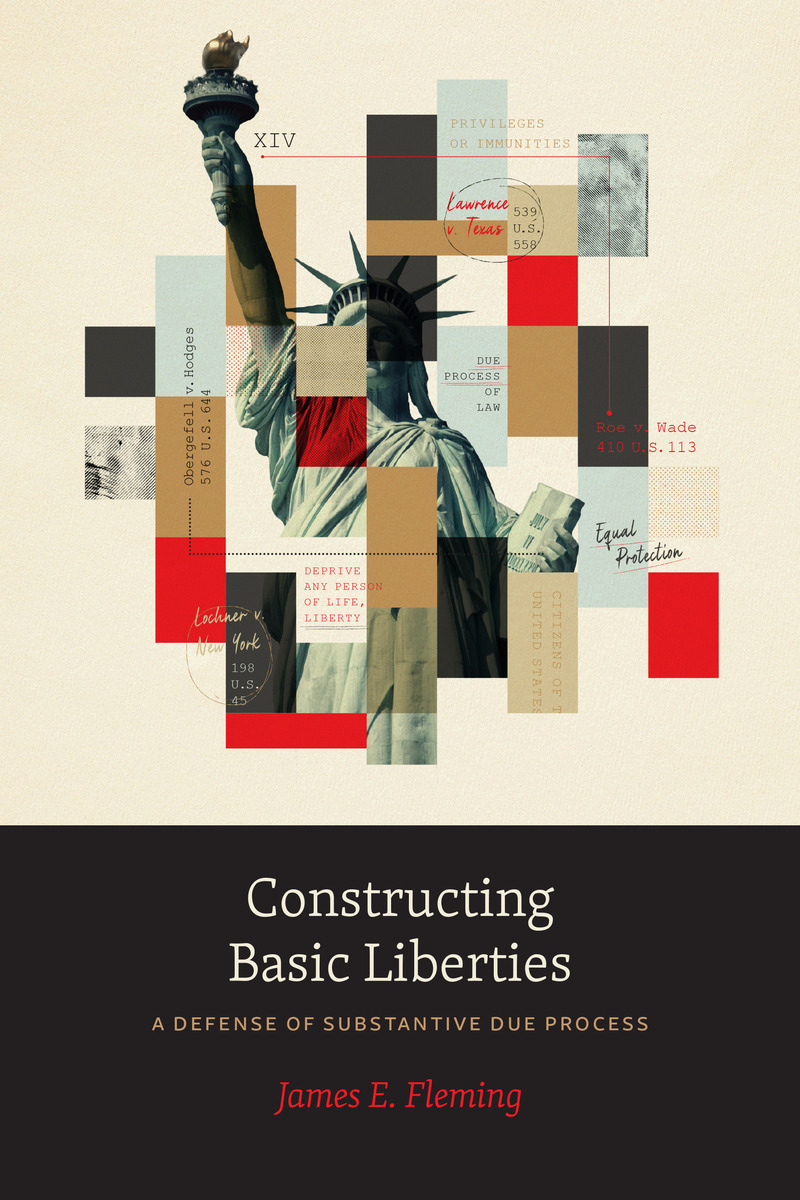
Constructing Basic Liberties: A Defense of Substantive Due Process
by James E. Fleming
University of Chicago Press, 2022
Cloth: 978-0-226-82139-9 | Paper: 978-0-226-82140-5 | eISBN: 978-0-226-82141-2 (all)
Library of Congress Classification KF4765.F54 2022
Dewey Decimal Classification 347.7305
ABOUT THIS BOOK
A strong and lively defense of substantive due process.
From reproductive rights to marriage for same-sex couples, many of our basic liberties owe their protection to landmark Supreme Court decisions that have hinged on the doctrine of substantive due process. This doctrine is controversial—a battleground for opposing views around the relationship between law and morality in circumstances of moral pluralism—and is deeply vulnerable today.
Against recurring charges that the practice of substantive due process is dangerously indeterminate and irredeemably undemocratic, Constructing Basic Liberties reveals the underlying coherence and structure of substantive due process and defends it as integral to our constitutional democracy. Reviewing the development of the doctrine over the last half-century, James E. Fleming rebuts popular arguments against substantive due process and shows that the Supreme Court has constructed basic liberties through common law constitutional interpretation: reasoning by analogy from one case to the next and making complex normative judgments about what basic liberties are significant for personal self-government.
Elaborating key distinctions and tools for interpretation, Fleming makes a powerful case that substantive due process is a worthy practice that is based on the best understanding of our constitutional commitments to protecting ordered liberty and securing the status and benefits of equal citizenship for all.
See other books on: Defense | Due process of law | Law and ethics | Liberty | United States. Supreme Court
See other titles from University of Chicago Press