
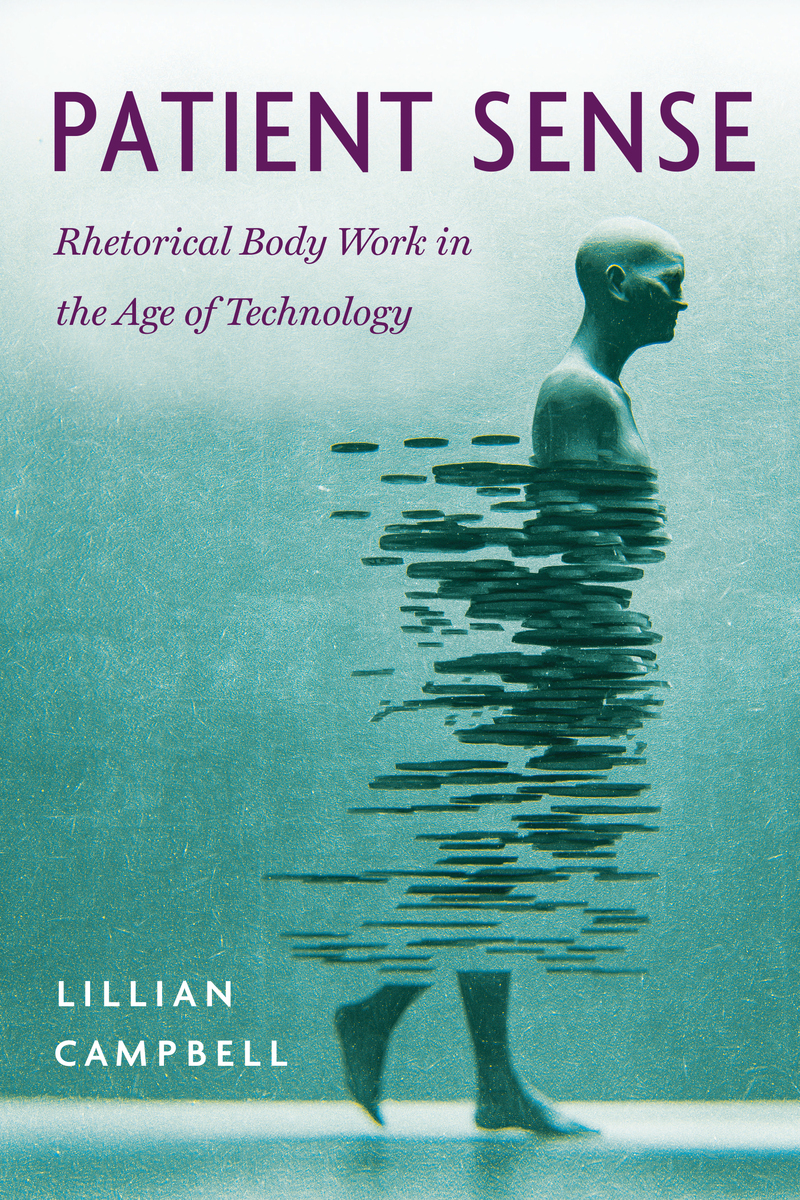
Patient Sense: Rhetorical Body Work in the Age of Technology
by Lillian Campbell
The Ohio State University Press, 2025
Cloth: 978-0-8142-1591-3 | Paper: 978-0-8142-5950-4 | eISBN: 978-0-8142-8420-9 (individual)
Library of Congress Classification HM636.C36 2025
Dewey Decimal Classification 306.461
ABOUT THIS BOOK
Technological innovations are rapidly changing the healthcare landscape. When nurses can complete portions of their clinical hours in virtual simulations and medical assistants might spend their entire careers providing patient care mediated by a screen, their understandings of their professional roles change. For future providers, rhetoric is at the heart of learning to communicate with patients and reframing their understandings of expertise.
In Patient Sense, Lillian Campbell introduces a theory of rhetorical body work and applies it to three distinct healthcare contexts: clinical nursing simulations, physical therapy labs, and tele-observation in a virtual intensive care unit. Drawing on sociological frameworks, she defines rhetorical body work as paid physical, emotional, or discursive labor performed at the material or technological interface of worker–client bodies. Such work is devalued within social and institutional systems and often gendered and racialized. Campbell captures the value of providers’ intuitive patient sense in the face of increasingly technology-mediated healthcare and intervenes in conversations about the future of healthcare training. Ultimately, she demonstrates that we will always need responsive healthcare providers whose rhetorical body work and patient sense cannot be replaced by technicians or algorithms.
In Patient Sense, Lillian Campbell introduces a theory of rhetorical body work and applies it to three distinct healthcare contexts: clinical nursing simulations, physical therapy labs, and tele-observation in a virtual intensive care unit. Drawing on sociological frameworks, she defines rhetorical body work as paid physical, emotional, or discursive labor performed at the material or technological interface of worker–client bodies. Such work is devalued within social and institutional systems and often gendered and racialized. Campbell captures the value of providers’ intuitive patient sense in the face of increasingly technology-mediated healthcare and intervenes in conversations about the future of healthcare training. Ultimately, she demonstrates that we will always need responsive healthcare providers whose rhetorical body work and patient sense cannot be replaced by technicians or algorithms.
See other books on: Allied Health Services | Human body | Medical care | Technological innovations | Technology
See other titles from The Ohio State University Press