
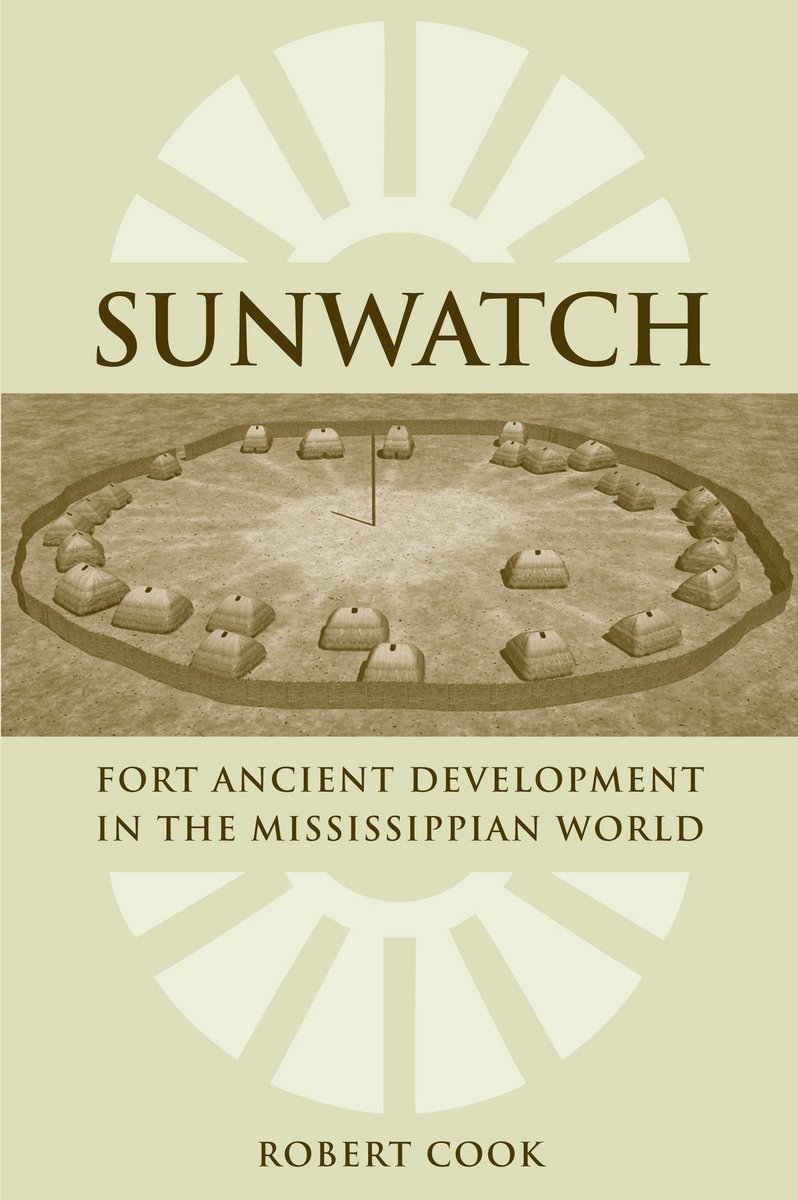
SunWatch: Fort Ancient Development in the Mississippian World
by Robert A. Cook
University of Alabama Press, 2007
Cloth: 978-0-8173-1590-0 | Paper: 978-0-8173-5458-9 | eISBN: 978-0-8173-8177-6
Library of Congress Classification E99.F67C66 2008
Dewey Decimal Classification 973.173
ABOUT THIS BOOK
Focuses on the development of village social structure within a broad geographic and temporal framework, recognizing border areas as particularly dynamic contexts of social change
The last prehistoric cultures to inhabit the Middle Ohio Valley (ca. A.D. 1000–1650) are referred to as Fort Ancient societies, which exhibited a wide variety of Mississippian period characteristics. What is less well-known and little understood are the social processes by which Mississippian characteristics spread to Fort Ancient communities. Through a comprehensive study of SunWatch, one of the few thoroughly excavated Fort Ancient settlements, the author focuses on the development of village social structure within a broad geographic and temporal framework, recognizing border areas as particularly dynamic contexts of social change. As a fundamental study of social patterning of Fort Ancient villages, this work reveals the interrelationships of small social units in culture change and social structure development and provides a full reconsideration of the Mississippian dimensions of Fort Ancient societies and a model for future investigations of larger patterning in the lateprehistory of the region.
The last prehistoric cultures to inhabit the Middle Ohio Valley (ca. A.D. 1000–1650) are referred to as Fort Ancient societies, which exhibited a wide variety of Mississippian period characteristics. What is less well-known and little understood are the social processes by which Mississippian characteristics spread to Fort Ancient communities. Through a comprehensive study of SunWatch, one of the few thoroughly excavated Fort Ancient settlements, the author focuses on the development of village social structure within a broad geographic and temporal framework, recognizing border areas as particularly dynamic contexts of social change. As a fundamental study of social patterning of Fort Ancient villages, this work reveals the interrelationships of small social units in culture change and social structure development and provides a full reconsideration of the Mississippian dimensions of Fort Ancient societies and a model for future investigations of larger patterning in the lateprehistory of the region.
See other books on: Cook, Robert A. | Fort Ancient culture | Mississippian culture | Ohio River Valley | Social archaeology
See other titles from University of Alabama Press