
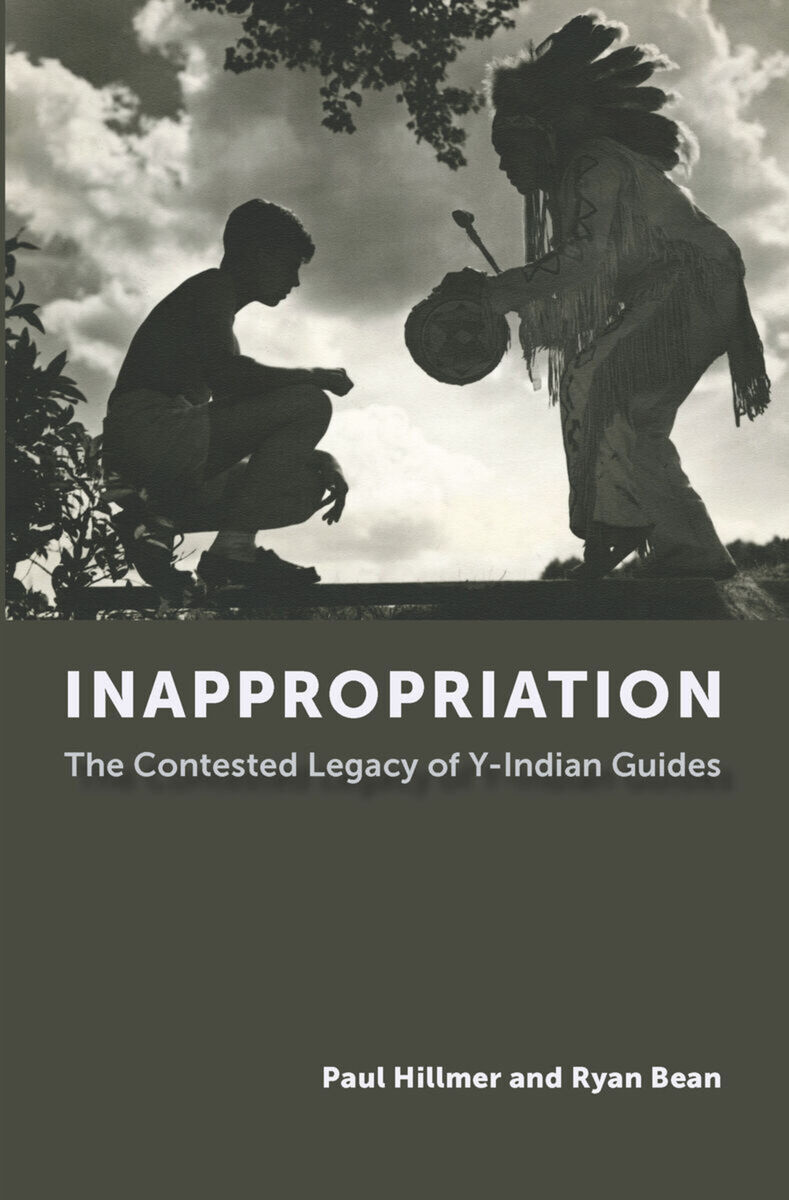
Inappropriation: The Contested Legacy of Y-Indian Guides
by Paul Hillmer and Ryan Bean
University of Missouri Press, 2023
Cloth: 978-0-8262-2279-4 | Paper: 978-0-8262-2321-0 | eISBN: 978-0-8262-7484-7
Library of Congress Classification BV1172
Dewey Decimal Classification 267.3973
ABOUT THIS BOOK
In 1926, Harold Keltner, a YMCA Boys Work secretary from St. Louis, and Joe Friday, a member of the Canadian Ojibwe First Peoples, channeled white middle-class fascination with Native Americans into what became the Y-Indian Guides youth program, engaging over a half million participants across the nation at the height of its 77-year history. Intended to soften the stereotypical stern father, the program traced a complicated thread of American history, touching upon themes of family, race, class, and privilege.
The Y-Indian Guides was a father-son (and later parent-child) program that encouraged real and enduring bonds through play and an authentic appreciation of family. While “playing Indian” seemed harmless to most participants during the program’s heyday, Paul Hillmer and Ryan Bean demonstrate the problematic nature of its methods. In the process of seeking to admire and emulate Indigenous Peoples, Y-Indian Guide participants often misrepresented American Indians and reinforced harmful stereotypes. Ultimately, this history demonstrates many ways in which American culture undermines and harms its Indigenous communities.
The Y-Indian Guides was a father-son (and later parent-child) program that encouraged real and enduring bonds through play and an authentic appreciation of family. While “playing Indian” seemed harmless to most participants during the program’s heyday, Paul Hillmer and Ryan Bean demonstrate the problematic nature of its methods. In the process of seeking to admire and emulate Indigenous Peoples, Y-Indian Guide participants often misrepresented American Indians and reinforced harmful stereotypes. Ultimately, this history demonstrates many ways in which American culture undermines and harms its Indigenous communities.
See other books on: Cultural appropriation | Ethnocentrism | Fathers and sons | Parent and child | Societies and clubs
See other titles from University of Missouri Press