
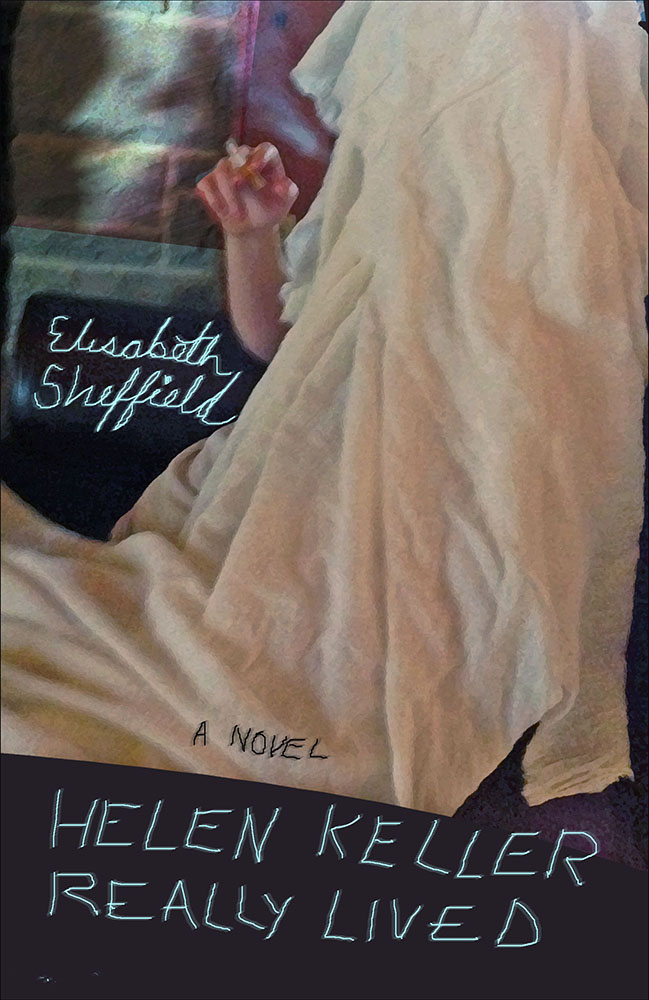
Helen Keller Really Lived: A Novel
by Elisabeth Sheffield
University of Alabama Press, 2014
Paper: 978-1-57366-181-2 | eISBN: 978-1-57366-848-4
Library of Congress Classification PS3619.H4515H45 2014
Dewey Decimal Classification 813.6
ABOUT THIS BOOK
The newest novel by Elisabeth Sheffield, the award-winning author of Gone and Fort Da
What does it mean to really live? Or not?
Set in eastern, upstate New York, Helen Keller Really Lived features a fortyish former barfly and grifter who must make a living in the wake of her wealthy husband’s death, and who finds work in a clinic helping women seeking reproductive assistance. The other main character is the grifter’s dead ex-husband, a Ukrainian hooker-to-healer success story, who prior to his demise was a gynecologist and after, an amateur folklorist, or ghostlorist, who collected and provided scholarly commentary on the stories of his fellow “revenants.”
Their intertwined stories explore the mistakes, miscarriages, inadequacies, and defeats that may have led to their divorce, including his failure (according to her) to “fully live.”
As it investigates the theme of what it means to “really live” or not, Elisabeth Sheffield’s brilliant new novel is also an exploration of virtual reality in the sense of the experience provided by literature. It is a novel awash in a multitude of voices, from the obscenity-laced, Nabokovian soliloquys of the dead Ukrainian doctor, to the trade-school / midcentury-romance-novel-constrained style of his dead mother-in-law.
See other titles from University of Alabama Press