
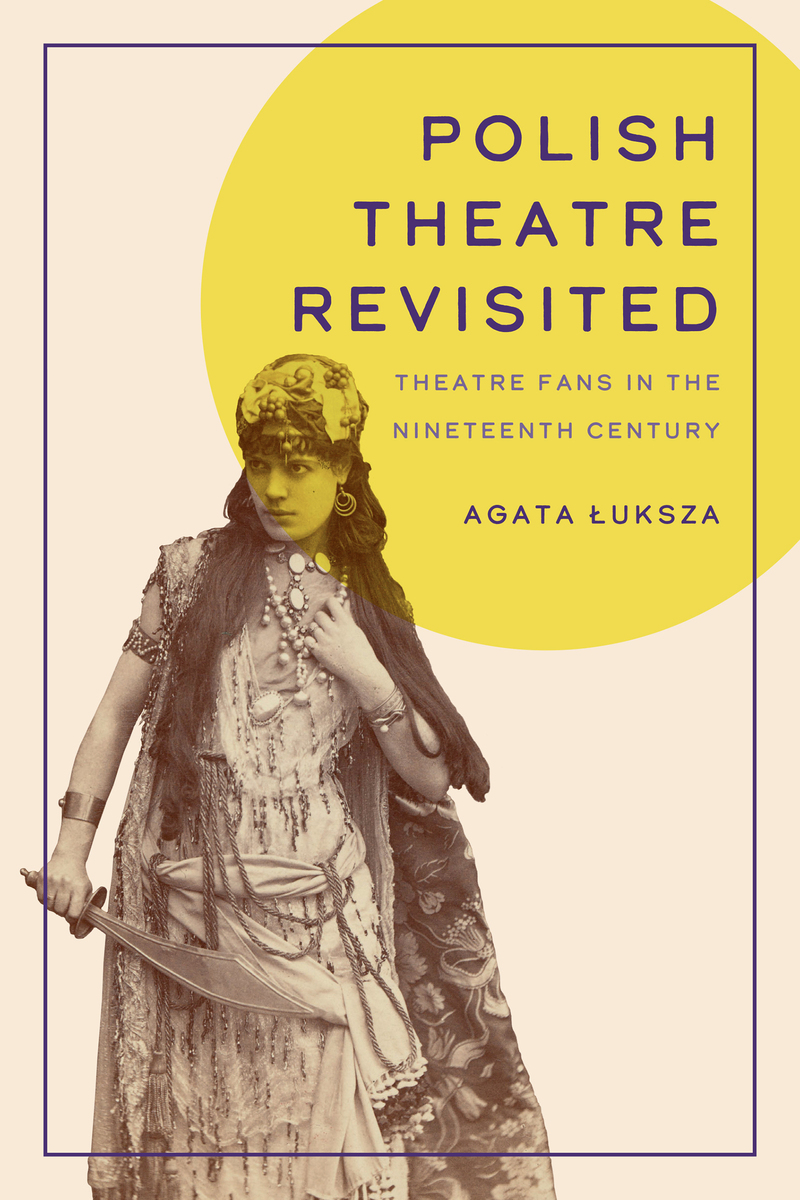
Polish Theatre Revisited: Theatre Fans in the Nineteenth Century
by Agata Luksza
University of Iowa Press, 2023
Paper: 978-1-60938-929-1 | eISBN: 978-1-60938-930-7
Library of Congress Classification PN2859.P6
Dewey Decimal Classification 792.0943803
ABOUT THIS BOOK
2024 PIASA Waclaw Lednicki Humanities Award (Polish Institute of Arts and Sciences in America), winner
ASTR Barnard Hewitt Award, Finalist
Polish Theatre Revisited explores nineteenth-century Polish theatre through the lens of theatre audiences. Agata Łuksza places special emphasis on the most engaged spectators, known as “theatremaniacs”—from what they wore, to what they bought, to what they ate. Her source material is elusive ephemera from fans’ lives, such as notes scribbled on a weekly list of shows in the Warsaw theatres, collections of theatre postcards, and recipes for sweets named after famous actors.
The fannish behavior of theatremaniacs was usually deemed excessive or in poor taste by people in positions of power, as it clashed with the ongoing embourgeoisement of the theatre and the disciplining of audiences. Nevertheless, the theatre was one of the key areas where early fan cultures emerged, and theatremaniacs indulged in diverse fan practices in opposition to the forces reforming the theatre and its spectatorship.
See other titles from University of Iowa Press