
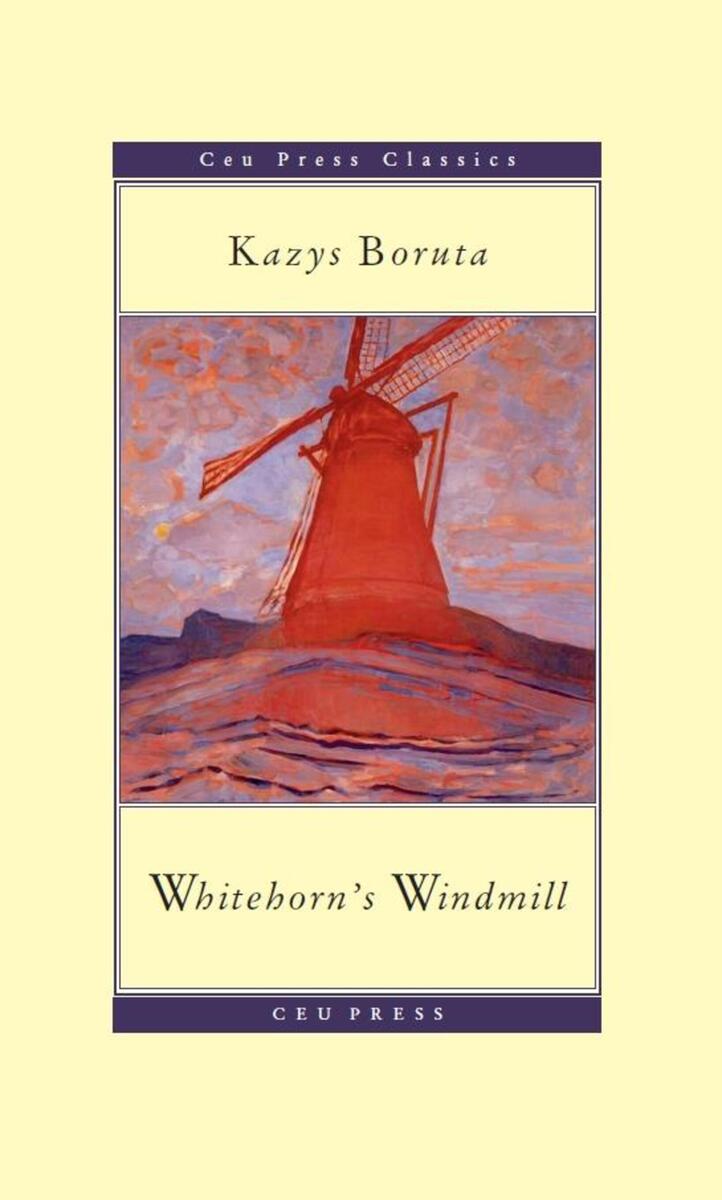
Whitehorn's Windmill
by Kazys Boruta
edited by Elizabeth Novickas
Central European University Press, 2009
Paper: 978-963-9776-71-5 | eISBN: 978-615-5053-28-3 (PDF)
Library of Congress Classification PG8721.B6B313 2010
Dewey Decimal Classification 891.9233
ABOUT THIS BOOK
Because of his political views, Kazys Boruta spent years in prison both before and after WWII. In the last phase of his life in Soviet Lithuania, he earned a living by translations published under a pseudonym. Most of Whitehorn’s Windmill (Baltaragio malunas) was written in 1942, during the German occupation. Bearing a lyrical style that gives full rein to the oral folktale tradition Lithuania is famous for, the novel is by turns romantic, farcical, fantastic, and tragic. The sense of spirituality that permeates the work reflects Lithuania’s pagan roots that were overlaid with an occasionally over-zealous Catholicism not so very long ago. The story is about Whitehorn the miller’s efforts to find a match for his beautiful daughter, Jurga, against various calamities with and among suitors, neighbors, priests and other inhabitants of the village, and ultimately against the devil’s spell. The interesting plot made the novel popular as juvenile literature, too.
See other titles from Central European University Press