front cover of book

This title is no longer available from this publisher at this time. To let the publisher know you are interested in the title, please email bv-help@uchicago.edu.

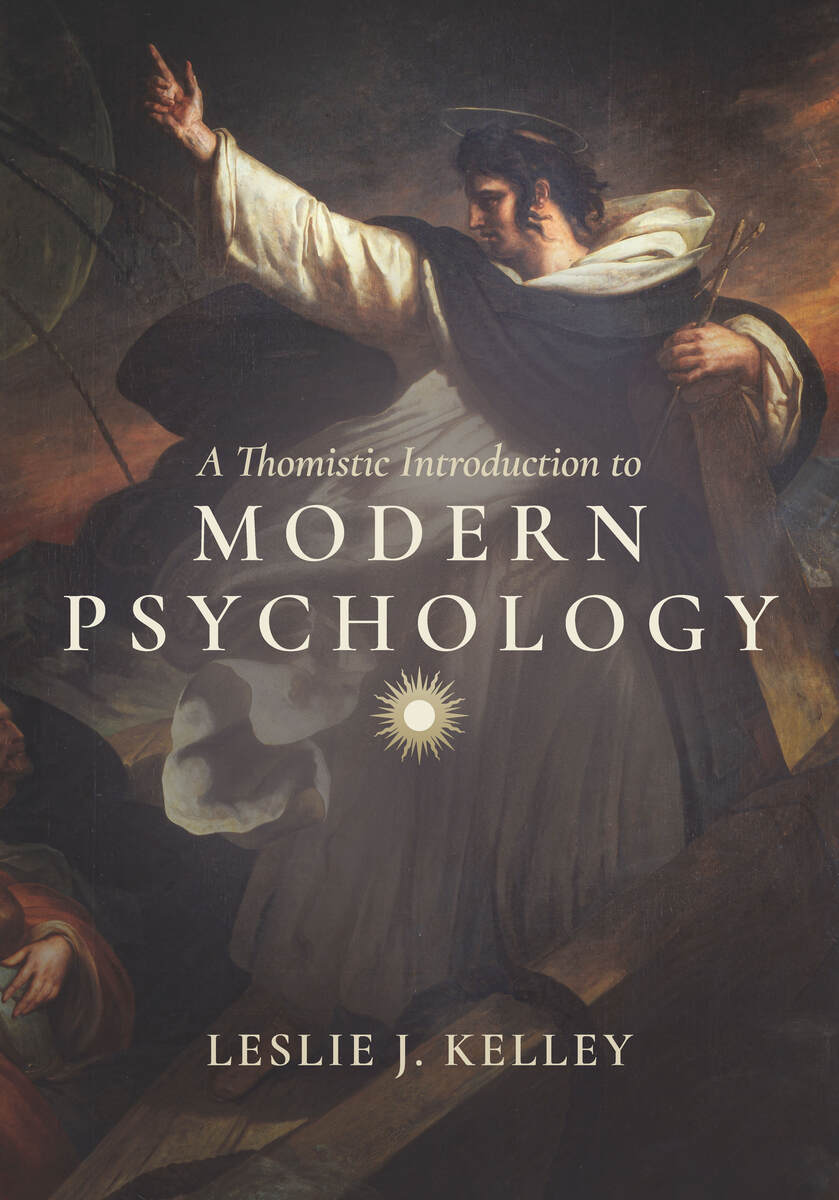
A Thomistic Introduction to Modern Psychology

by Leslie Kelley
Catholic University of America Press, 2026
Paper: 978-0-8132-3997-2, eISBN: 978-0-8132-3998-9

ABOUT THIS BOOK
Modern psychology has garnered an abundance of data, but how do the dis­crete studies of psychology fit together into a clear picture of the human person. Chesterton quips, “. . . what is pompously called induction is simply collecting more of the data. And Aristotle or Aquinas, or anybody in his five wits, would of course agree that the conclusion could only be true if the premises were true; and that the more true premises there were the better.” A Thomistic philosophical framework can provide important insights into the meaning and value of modern psychological theories and research. Thomistic anthropology allows us to develop a holistic vision of the human person, avoiding the modern tendencies toward determinism and reductionism. St. Thomas provides clear direction regarding the role and purpose of man’s var­ious powers, and using a Thomistic philosophical framework allows for ob­jectivity in our understanding of human adaptive and dysfunctional behavior, and helps to specify the unique and unified roles of body and mind. The place of psychology, in relation to philosophy and the natural sciences has been unclear throughout psychology’s short history, and Thomistic distinctions can clarify the distinctive position of psychology. In addition to describing Thomistic anthropology as a framework for modern psychology, Leslie Kelly also demonstrates examples of evidence from the social sciences that supports the Thomistic view of the human person. And last of all, a Thomistic frame­work allows investigators of psychology to develop a teleological perspective, so as to see the results of modern research in relation to the final end of the human person. Whether you are academically seasoned or a beginner, you will enjoy this fresh take on modern psychology through the perspective of St. Thomas.
AUTHOR BIOGRAPHY
Leslie J. Kelley is associate professor of psychology at the University of Dallas.
TABLE OF CONTENTS
Contents
Illustrations
Acknowledgements
Abbreviations
Introduction
1. A Thomistic Anthropological Framework
2. Modern Theories of Human Function and Disorder
Part I: Disorder in Aquinas and Aristotle
Part II: Modern and Contemporary Approaches to Disorder and Treatment
3. Researching the Human Person
4. Hylomorphism: Biological and Neurological Influences. .
5. Hylomorphism: Sensitive and Locomotive Influences. .
Part I: External and Internal Senses
Part II: Emotions and Appetites
6. Hylomorphism: Rationality and Will
Part I: Man’s logos—Intelligence and Language
Part II: Temperament, Sociability, and Personality
Part III: The Intellectual Appetite (Will)
7. The Teleological Human Person
Bibliography
Index

Recently published