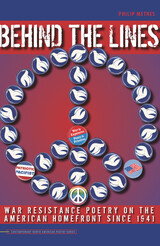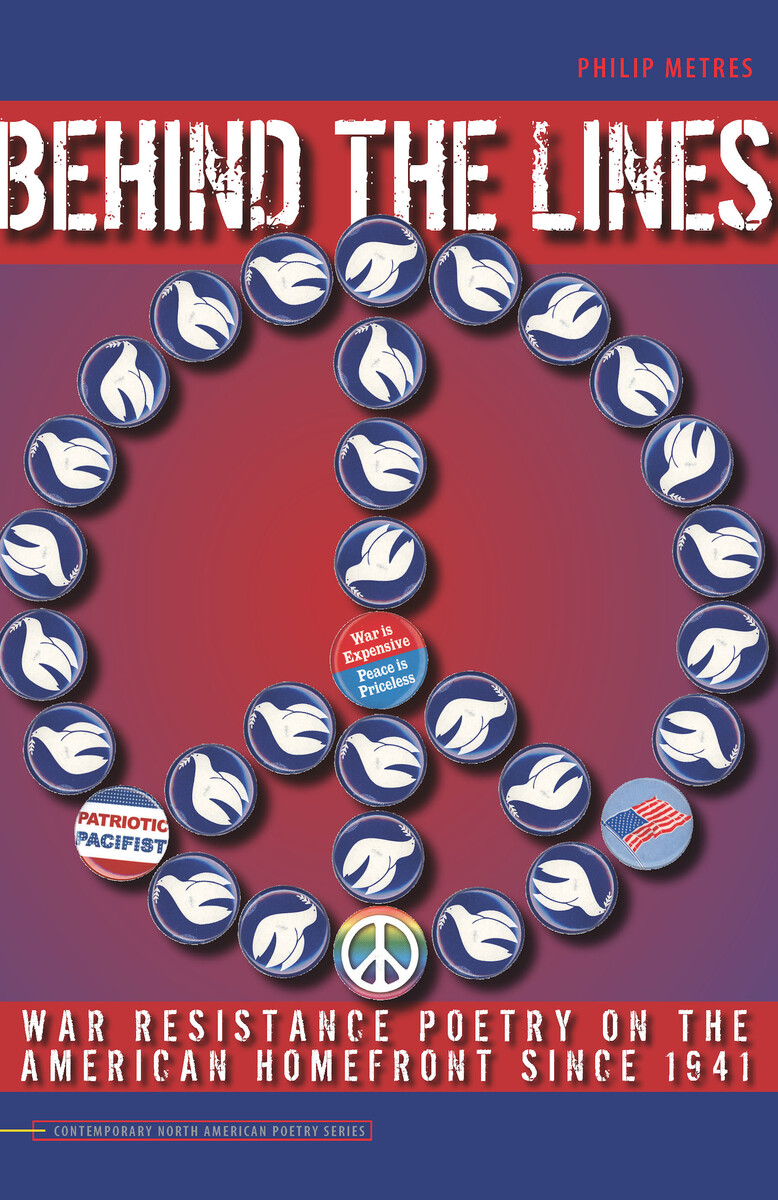
Behind the Lines: War Resistance Poetry on the American Home Front since 1941
University of Iowa Press, 2007
eISBN: 978-1-58729-738-0 | Cloth: 978-0-87745-998-9
Library of Congress Classification PS309.P7M45 2007
See other books on: Anti-war poetry, American | Behind | Lines | Protest poetry, American | War in literature
See other titles from University of Iowa Press
eISBN: 978-1-58729-738-0 | Cloth: 978-0-87745-998-9
Library of Congress Classification PS309.P7M45 2007
ABOUT THIS BOOK | AUTHOR BIOGRAPHY | REVIEWS | TOC | REQUEST ACCESSIBLE FILE
ABOUT THIS BOOK
Whether Thersites in Homer’s Iliad, Wilfred Owen in “Dulce et Decorum Est,” or Allen Ginsberg in “Wichita Vortex Sutra,” poets have long given solitary voice against the brutality of war. The hasty cancellation of the 2003 White House symposium “Poetry and the American Voice” in the face of protests by Sam Hamill and other invited guests against the coming “shock and awe” campaign in Iraq reminded us that poetry and poets still have the power to challenge the powerful.
Behind the Lines investigates American war resistance poetry from the Second World War through the Iraq wars. Rather than simply chronicling the genre, Philip Metres argues that this poetry gets to the heart of who is authorized to speak about war and how it can be represented. As such, he explores a largely neglected area of scholarship: the poet’s relationship to dissenting political movements and the nation.
In his elegant study, Metres examines the ways in which war resistance is registered not only in terms of its content but also at the level of the lyric. He proposes that protest poetry constitutes a subgenre that—by virtue of its preoccupation with politics, history, and trauma—probes the limits of American lyric poetry. Thus, war resistance poetry—and the role of what Shelley calls unacknowledged legislators—is a crucial, though largely unexamined, body of writing that stands at the center of dissident political movements.
Behind the Lines investigates American war resistance poetry from the Second World War through the Iraq wars. Rather than simply chronicling the genre, Philip Metres argues that this poetry gets to the heart of who is authorized to speak about war and how it can be represented. As such, he explores a largely neglected area of scholarship: the poet’s relationship to dissenting political movements and the nation.
In his elegant study, Metres examines the ways in which war resistance is registered not only in terms of its content but also at the level of the lyric. He proposes that protest poetry constitutes a subgenre that—by virtue of its preoccupation with politics, history, and trauma—probes the limits of American lyric poetry. Thus, war resistance poetry—and the role of what Shelley calls unacknowledged legislators—is a crucial, though largely unexamined, body of writing that stands at the center of dissident political movements.
See other books on: Anti-war poetry, American | Behind | Lines | Protest poetry, American | War in literature
See other titles from University of Iowa Press