Results by title
3 books match the query '1909-1955'
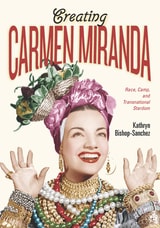
Creating Carmen Miranda
Race, Camp, and Transnational StardomKathryn Bishop-Sanchez
Vanderbilt University Press, 2016
Carmen Miranda got knocked down and kept going. Filming an appearance on The Jimmy Durante Show on August 4, 1955, the "ambassadress of samba" suddenly took a knee during a dance number, clearly in distress. Durante covered without missing a beat, and Miranda was back on her feet in a matter of moments to continue with what she did best: performing. By the next morning, she was dead from heart failure at age 46.
This final performance in many ways exemplified the power of Carmen Miranda. The actress, singer, and dancer pursued a relentless mission to demonstrate the provocative theatrical force of her cultural roots in Brazil. Armed with bare-midriff dresses, platform shoes, and her iconic fruit-basket headdresses, Miranda stole the show in films like That Night in Rio and The Gang's All Here. For American film audiences, her life was an example of the exoticism of a mysterious, sensual South America. For Brazilian and Latin American audiences, she was an icon. For the gay community, she became a work of art personified and a symbol of courage and charisma.
In Creating Carmen Miranda, Kathryn Bishop-Sanchez takes the reader through the myriad methods Miranda consciously used to shape her performance of race, gender, and camp culture, all to further her journey down the road to becoming a legend.
[more]

James Agee - American Writers 95
University of Minnesota Pamphlets on American WritersErling Larsen
University of Minnesota Press, 1971
James Agee - American Writers 95 was first published in 1971. Minnesota Archive Editions uses digital technology to make long-unavailable books once again accessible, and are published unaltered from the original University of Minnesota Press editions.
[more]
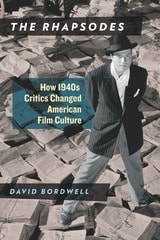
The Rhapsodes
How 1940s Critics Changed American Film CultureDavid Bordwell
University of Chicago Press, 2016
Pauline Kael, Andrew Sarris, and Roger Ebert were three of America’s most revered and widely read film critics, more famous than many of the movies they wrote about. But their remarkable contributions to the burgeoning American film criticism of the 1960s and beyond were deeply influenced by four earlier critics: Otis Ferguson, James Agee, Manny Farber, and Parker Tyler. Throughout the 1930s and ’40s, Ferguson, Agee, Farber, and Tyler scrutinized what was on the screen with an intensity not previously seen in popular reviewing. Although largely ignored by the arts media of the day, they honed the sort of serious discussion of films that would be made popular decades later by Kael, Sarris, Ebert and their contemporaries.
With The Rhapsodes, renowned film scholar and critic David Bordwell—an heir to both those legacies—restores to a wider audience the work of Ferguson, Agee, Farber, and Tyler, critics he calls the “Rhapsodes” for the passionate and deliberately offbeat nature of their vernacular prose. Each broke with prevailing currents in criticism in order to find new ways to talk about the popular films that contemporaries often saw at best as trivial, at worst as a betrayal of art. Ferguson saw in Hollywood an engaging, adroit mode of popular storytelling. Agee sought in cinema the lyrical epiphanies found in romantic poetry. Farber, trained as a painter, brought a pictorial intelligence to bear on film. A surrealist, Tyler treated classic Hollywood as a collective hallucination that invited both audience and critic to find moments of subversive pleasure. With his customary clarity and brio, Bordwell takes readers through the relevant cultural and critical landscape and considers the critics’ writing styles, their conceptions of films, and their quarrels. He concludes by examining the profound impact of Ferguson, Agee, Farber, and Tyler on later generations of film writers.
The Rhapsodes allows readers to rediscover these remarkable critics who broke with convention to capture what they found moving, artful, or disappointing in classic Hollywood cinema and explores their robust—and continuing—influence.
[more]