Results by title

5 books match the query 'Dean'
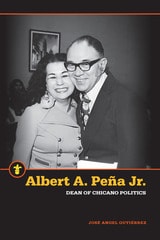
cover of Albert A. Peña Jr.: Dean of Chicano Politics

Albert A. Peña Jr.

Dean of Chicano Politics

José Angel Gutiérrez

Michigan State University Press, 2017
The political and social impact that Albert A. Peña Jr. had on the lives of Mexican Americans, and later Chicanos, is by all counts immeasurable. However, in part because Chicano biography has traditionally been a neglected research area among academics generally and Chicano Studies scholars specifically, his life’s work has not featured prominently in any biographical work to date, making this volume the first of its kind. It provides a richly detailed documentation of Peña’s life and career, from blue collar worker to judge and essay writer, spanning nearly ninety years. Readers will find that at the heart of his story is a focus on grassroots organizing and politics, sharing leadership, and a commitment to social justice.
[more]
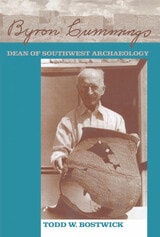
cover of Byron Cummings: Dean of Southwest Archaeology

Byron Cummings

Dean of Southwest Archaeology

Todd W. Bostwick

University of Arizona Press, 2006

Byron Cummings, known to students and colleagues as “The Dean,” had a profound influence on the archaeology of Arizona and Utah during its early development. An explorer, archaeologist, anthropologist, teacher, museum director, university administrator, and state parks commissioner, Cummings was involved in many important discoveries in the American Southwest over the first half of the twentieth century and was a pioneer in the education of generations of archaeologists and anthropologists.

This book presents the first comprehensive examination of Cummings’ life, offering readers a greater understanding of his trailblazing work. Todd Bostwick elucidates Cummings’ many intellectual and cultural contributions, investigates the controversies in which he was embroiled, and describes his battles to wrest control of Arizona archaeology from eastern institutions that had long dominated Southwest archaeology.

Cummings saw the Southwest as an American wilderness where the story of cultural development revealed by the archaeologist and anthropologist was as important as it was in Europe. Bostwick’s meticulous account of his life reflects his great reverence for the region and pays tribute to a man whose dedication, mentoring, and friendship have forever sealed his place as The Dean.
[more]
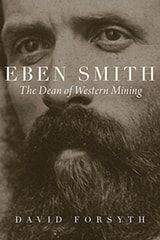
cover of Eben Smith: The Dean of Western Mining

Eben Smith

The Dean of Western Mining

David Forsyth

University Press of Colorado, 2021

David Forsyth recounts the life of Eben Smith, an integral but little-known figure in Colorado mining history. Smith was one of the many fortune seekers who traveled to California during the gold rush and one of the few who found what he sought. He moved to Colorado in 1860 with business partner Jerome Chaffee and over the next forty-six years was involved in mining in nearly every major camp in the state, from Central City to Cripple Creek, and in the development of mines such as the Bobtail, Little Jonny, and Victor. He was eulogized by the Denver Post and Denver Times as the “dean of mining in Colorado.”
 
The mining teams Smith formed with Chaffee and with industrialist David Moffat were among the most successful and respected in Colorado, and many in the state held Smith in high regard. Yet despite the credit he received during his lifetime for establishing Colorado’s mining industry, Smith has not received much attention from historians, perhaps because he was content to leave public-facing duties to his partners while he concerned himself with managing mine operations.
 
From Smith’s early years and his labor in the mines to his rise to prominence as an investor and developer, Forsyth shows how Smith used the mining and milling knowledge he acquired in California to become a leader in technological innovation in Colorado’s mining industry.
 
[more]
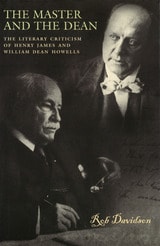
cover of The Master and the Dean: The Literary Criticism of Henry James and William Dean Howells

The Master and the Dean

The Literary Criticism of Henry James and William Dean Howells

Rob Davidson

University of Missouri Press, 2005

Henry James (1843–1916) and William Dean Howells (1837–1920) are best known for the central roles they played as nineteenth-century American novelists, penning such classics as James’s Portrait of a Lady and Howells’s The Rise of Silas Lapham. Their importance as literary critics, however, has been underplayed for decades. Although certain aspects of James’s and Howells’s criticism have been carefully considered—James’s “Prefaces” and Howells’s Criticism and Fiction, for example—no scholar has previously undertaken a comprehensive comparative study of their respective critical oeuvres. In The Master and the Dean, Rob Davidson presents the first book-length study of James’s literary criticism to be published since the early 1980s and the first-ever book-length study of Howells’s criticism. Considering Howells’s commonly accepted position among scholars as the most influential American literary critic of the period, such a study is long overdue.
            Beginning with a detailed examination of the European and domestic sources that led James and Howells toward realism, Davidson examines the interrelationships between the two writers, with special emphasis on their diverging aesthetic concerns and attitudes toward the market and audience, their beliefs concerning the moral value of fiction and the United States as a literary subject, and their various writings about each other. A rigorous, intertextual reading of their work as critics reveals both deeper rifts and more intimate similarities between the two writers than have been recognized previously. Of special note is Davidson’s careful attention to the frequently overlooked final two decades of Howells’s career.
            This close look at the lesser-known critical work of James and Howells will appeal both to scholars of the period and to anyone seeking an exceptional introduction to a crucially important era of American literary criticism.
[more]
cover of Wallace Stegner: Dean of Western Writers

Wallace Stegner

Dean of Western Writers

Beam, Alex

Signature Books, 2025

In this brisk and riveting biography, Alex Beam takes readers on a journey through Wallace Stegner’s life and complicated legacy as one of the twentieth century’s best storytellers and chroniclers of the American West. 

In a career that spanned half a century, Stegner wrote fourteen novels and seventeen works of nonfiction. Reared on the Canadian-American frontier and educated in Salt Lake City, Utah, this quintessential Man of the West won both the Pulitzer Prize and the National Book Award. He landed a coveted teaching job at Harvard but, eager to get back to the West, left it for a professorship at Stanford.

Stegner was a full-throated environmentalist who served on the board of the Sierra Club, worked for the Secretary of the Interior, and wrote the famous Wilderness Letter on the healing power of open spaces. He founded Stanford University’s legendary Stegner Writing Fellowship, where his students included Edward Abbey, Wendell Berry, Ken Kesey, Larry McMurtry, Sandra Day O'Connor, Tillie Olsen, and Scott Turow.

In his later years Stegner wondered if he had lived too deep into the wrong century. He left Stanford when he felt students no longer accorded professors the respect they deserved, and later became embroiled in a plagiarism scandal that tarred his Pulitzer Prize-winning Angle of Repose.

Stegner ended his career with his valedictory masterpiece, Crossing to Safety. It was his rare Eastern novel, set in his adopted home of Greensboro, Vermont, where he chose to be buried.
[more]