Results by title
3 books match the query 'Husbands'

Families at Work
Expanding the BoundsNaomi Gerstel
Vanderbilt University Press, 2002
To discuss work and family is also to discuss gender. Ranging from California's Silicon Valley to a remote fishing village in the northeast, part one shows how new work arrangements have created new expectations for what it means to be a woman or a man, and how slow and uneven the pace of change can be. Nowhere are the tensions of work and family more potent than around childcare. Part two takes up these tensions, showing how various "solutions" to caring for children of all ages (whether infants or teenagers) create new problems. Parts three and four turn outward to show how the new relationships between families and work are changing the relationships between families and the communities in which they live and generating new social policy dilemmas.
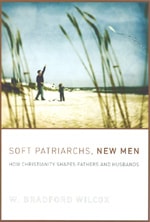
Soft Patriarchs, New Men
How Christianity Shapes Fathers and HusbandsW. Bradford Wilcox
University of Chicago Press, 2004
According to W. Bradford Wilcox, the divergent family ideologies of evangelical and mainline churches do not translate into large differences in family behavior between evangelical and mainline Protestant men who are married with children. Mainline Protestant men, he contends, are "new men" who take a more egalitarian approach to the division of household labor than their conservative peers and a more involved approach to parenting than men with no religious affiliation. Evangelical Protestant men, meanwhile, are "soft patriarchs"—not as authoritarian as some would expect, and given to being more emotional and dedicated to their wives and children than both their mainline and secular counterparts. Thus, Wilcox argues that religion domesticates men in ways that make them more responsive to the aspirations and needs of their immediate families.
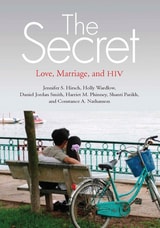
The Secret
Love, Marriage, and HIVJennifer S. Hirsch
Vanderbilt University Press, 2009
For many women around the world, their greatest risk of HIV infection comes from having sex with the very person with whom they are supposed to have sex: their spouse. The Secret situates marital HIV risk within a broader exploration of marital and extramarital sexuality in five diverse settings: Mexico, Nigeria, Uganda, Vietnam, and Papua New Guinea. In these settings, the authors write, men's extramarital sex is an officially secret but actually widespread (and widely acknowledged) social practice, rather than something men do because their bodies demand it and women can't stop them.
Drawing on research conducted as part of an innovative comparative ethnographic study, and modeling a novel approach to collaborative anthropological scholarship, the authors show men's extramarital sex to be a fundamental aspect of gendered social organization. Through theoretically sophisticated yet lucid writing and vivid ethnographic description, drawing on rich data from the marital case studies conducted by research teams in each country, they trace how extramarital opportunity structures, sexual geographies, and concerns about social risk facilitate men's participation in extramarital sex. Also documented throughout is the collision between traditional ways and the new practices of romantic companionate marriage.