Results by title
6 books match the query 'Retirees'
Insights in the Economics of Aging
Edited by David A. Wise
University of Chicago Press, 2017
The contributions to Insights in the Economics of Aging uncover how financial, physical, and emotional well-being are integrally related. The authors consider the interactions between financial circumstances in later life, such as household savings and home ownership, physical circumstances such as health and disability, and emotional well-being, including happiness and mental health.
Investigations in the Economics of Aging
Edited by David A. Wise
University of Chicago Press, 2012
One of the most well-established relationships in the economics of aging is that between health and wealth. Yet this relationship is also changing in conjunction with a rapidly aging population as well as a broad evolution in how people live later in life.
Building on findings from earlier editions in this National Bureau of Economic Research series, Investigations in the Economics of Aging focuses on the changing financial circumstances of the elderly and the relationship of these circumstances to health and health care. Among the topics addressed are the significance of out-of-pocket health care costs, the effects of inflation on social security, and the impact of the recent financial crisis on Americans’ well-being. Encompassing new data and advances in research methodology, the developments presented in this volume will have important implications for economies worldwide.
Purpose & Power In Retirement
New Opportunities for Meaning and SignificanceHarold Koenig
Templeton Press, 2003
Eighty million baby boomers are heading toward retirement. Some are retiring now, either out of choice or because they have been laid off. Others will work for a few more years until their retirement plans kick in, until they feel they can retire, or until they're forced to retire. Whatever their age at retirement, they will have better health and live longer than their parents. And each of them will face these questions:
•Do I want a reason to get up in the morning and be excited about the day ahead?•Do I still want to make a difference in the world?
They need a vision—a goal that takes into account their experience, wisdom, strengths, and limitations, and gives purpose to their lives.
Dr. Harold G. Koenig, with expertise in the fields of geriatrics, mental health, and religion, explains that the notion of retirement was in fact a marketing tool developed in the post–World War II period. Continuing today, society's image of retirement is based largely on myths, such as: things will get better when you retire—you'll be able to do everything you wanted to but couldn't when you worked. In fact, these beliefs can be harmful, leading to emotional issues, identity crises, and problems with physical health.
Citing current scientific and medical research, Koenig illustrates how having a purpose motivates and energizes people in their retirement years. He presents a step-by-step guide to identifying a goal toward which they can strive. And he shows how striving for that goal in itself brings meaning, satisfaction, and a sense of reward to retirement years.
"Finding purpose is more urgent than ever during the retirement years, when the search for purpose becomes one of the deepest of human longings," says Koenig. His Purpose and Power in Retirement is an invaluable resource for everyone heading toward retirement, and for anyone seeking meaning in life.

Social Security Programs and Retirement Around the World
Pension Reforms and the Health Distribution of RetireesEdited by Axel Börsch-Supan and Courtney C. Coile
University of Chicago Press, 2027
A wide-ranging comparative analysis of the effects of pension reforms on health outcomes among retirees.
Pension reforms enacted in many developed economies since the late 1990s have raised statutory retirement ages and reduced benefit generosity, prompting concerns that working longer, especially in physically demanding jobs, could widen health disparities among retirees. Social Security Programs and Retirement Around the World: Pension Reforms and the Health Distribution of Retirees examines whether these reforms have altered the distribution of health outcomes in nine countries—Belgium, Canada, Denmark, Germany, Italy, Japan, the Netherlands, Spain, and the United States. Drawing on harmonized longitudinal data spanning roughly two decades and measuring health along five dimensions—functional, diagnosed, comprehensive, mental, and cognitive—the country studies find a remarkably consistent picture: in every country but the United States, health inequality among retirees has not increased significantly over the period in which benefits fell and retirement ages rose. The United States, in contrast to the other nations, shows rising inequality in functional and comprehensive health, particularly among women. The findings suggest that in most countries, pension reforms have not so far come at the cost of a widening health gap between richer and poorer retirees, although noisy data and the still-short observation window admit the possibility of effects that have yet to fully emerge.
Social Security Programs and Retirement around the World
Working LongerEdited by Courtney C. Coile, Kevin Milligan, and David A. Wise
University of Chicago Press, 2019
This eighth phase of the International Social Security project, which compares the social security and retirement experiences of twelve developed countries, documents trends in participation and employment and explores reasons for the rising participation rates of older workers. The chapters use a common template for analysis, which facilitates comparison of results across countries. Using within-country natural experiments and cross-country comparisons, the researchers study the impact of improving health and education, changes in the occupation mix, the retirement incentives of social security programs, and the emergence of women in the workplace, on labor markets. The findings suggest that social security reforms and other factors such as the movement of women into the labor force have played an important role in labor force participation trends.
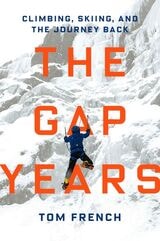
The Gap Years
Climbing, Skiing, and the Journey BackTom French
Brandeis University Press, 2026
At the end of 2019, Tom French retired from a four-decade career in business, determined to return to interests that had defined his youth and see what meaning they still held. One of these interests was mountaineering. Another was adventure travel, with a particular focus on Nepal. A third was cross-country ski racing. Having taken “gap years” between school and university, and again before he started work, he decided to take a gap year before settling into the expectations of retirement. One year turned into three as he rebuilt his athletic strength, competed in cross-country ski marathons, and climbed some of the world’s highest mountains, including two expeditions to Mount Everest. On the first Everest climb, a cyclone forced him to turn around high on the mountain and descend the treacherous Lhotse Face in a blizzard. On the second, he approached the mountain through the remote Makalu Barun region, the first climber ever to do so, and climbed to the summit on a moonlit night.
But this is a book about much more than Everest. It is about beauty and joy found in wild places, about cross-country ski racing and mountaineering more broadly, and—most of all—about a journey to find meaning in life and reconnect with the passions of youth.