Results by title
4 books match the query 'Unlearning'
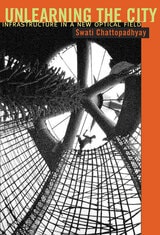
Unlearning the City
Infrastructure in a New Optical FieldSwati Chattopadhyay
University of Minnesota Press, 2012
Cities are more than concrete and steel infrastructure. But modern urban theory does not have the language to describe and debate the vital component of urban life that is lived on the streets of cities and towns. Swati Chattopadhyay has written a nuanced argument for a new vocabulary of the city in Unlearning the City, proposing a way of analyzing the materiality of the urban that captures the ever-changing element of human experience.
Urban life is intrinsically messy and usually refuses to conform to the rigid views laid down in much of urban studies theory. Chattopadhyay looks at urban life in India with a fresh perspective that incorporates the everyday and the unstructured. As the first to apply the theories of subalternity for an understanding of urban history, Chattopadhyay provides an in-depth study of vehicular art, street cricket, political wall writing, and religious festivities that link the visual and spatial attributes of these popular cultural forms with the imagination and practices of urban life. She contends that these practices have a direct impact on the configuration and knowledge of public space, and the political potential of the people inhabiting cities.
Unlearning the City uses the popular culture of Indian cities to question the dominant conception of urban infrastructure and encourage a conceptual realignment in how the city is seen, discussed, and even experienced.
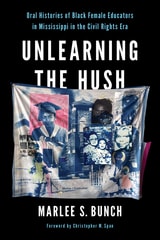
Unlearning the Hush
Oral Histories of Black Female Educators in Mississippi in the Civil Rights EraMarlee S. Bunch Foreword by Christopher M. Span
University of Illinois Press, 2025
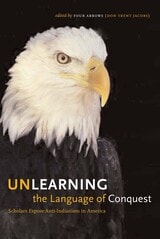
Unlearning the Language of Conquest
Scholars Expose Anti-Indianism in AmericaEdited by Four Arrows (Don Trent Jacobs)
University of Texas Press, 2006
Responding to anti-Indianism in America, the wide-ranging perspectives culled in Unlearning the Language of Conquest present a provocative account of the contemporary hegemony still at work today, whether conscious or unconscious. Four Arrows has gathered a rich collection of voices and topics, including:
- Waziyatawin Angela Cavender Wilson's "Burning Down the House: Laura Ingalls Wilder and American Colonialism," which probes the mentality of hatred woven within the pages of this iconographic children's literature.
- Vine Deloria's "Conquest Masquerading as Law," examining the effect of anti-Indian prejudice on decisions in U.S. federal law.
- David N. Gibb's "The Question of Whitewashing in American History and Social Science," featuring a candid discussion of the spurious relationship between sources of academic funding and the types of research allowed or discouraged.
- Barbara Alice Mann's "Where Are Your Women? Missing in Action," displaying the exclusion of Native American women in curricula that purport to illuminate the history of Indigenous Peoples.
Bringing to light crucial information and perspectives on an aspect of humanity that pervades not only U.S. history but also current sustainability, sociology, and the ability to craft accurate understandings of the population as a whole, Unlearning the Language of Conquest yields a liberating new lexis for realistic dialogues.
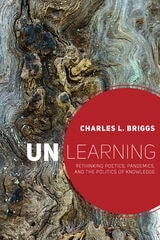
Unlearning
Rethinking Poetics, Pandemics, and the Politics of KnowledgeCharles L. Briggs
Utah State University Press, 2021
Eschewing narrow Eurocentric modes of explanation and research foci, Briggs brings together colonialism, health, media, and psychoanalysis to rethink classic work on poetics and performance that revolutionized linguistic anthropology, folkloristics, media studies, communication, and other fields. Beginning with a candid memoir that credits the mentors whose disconcerting insights prompted him to upend existing scholarly approaches, Briggs combines his childhood experiences in New Mexico with his work in graduate school, his ethnography in Venezuela working with Indigenous peoples, and his contemporary work—which is heavily weighted in medical folklore.
Unlearning offers students, emerging scholars, and veteran researchers alike a guide for turning ethnographic objects into provocations for transforming time-worn theories and objects of analysis into sources of scholarly creativity, deep personal engagement, and efforts to confront unconscionable racial inequities. It will be of significant interest to folklorists, anthropologists, and social theorists and will stimulate conversations across these disciplines.