Results by title
4 books match the query 'Voicing'

Gender Politics And MTV
Voicing the DifferenceLisa Lewis
Temple University Press, 1991
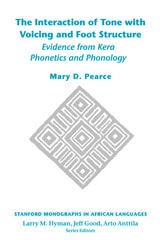
The Interaction of Tone with Voicing and Foot Structure
Evidence from Kera Phonetics and PhonologyMary D. Pearce
CSLI, 2013
This book investigates the topics of tone, vowel harmony, and metrical structure, with special reference to Kera, a Chadic language spoken in Chad and Cameroon. Kera is a tone language where a change in the pitch of the word can make a difference to its meaning. Drawing on a decade of experience living and working with the Kera, Mary D. Pearce looks at both the phonetics and phonology to examine how tone interacts with the vowel quality and rhythm of the language. The implications arising from this research are relevant for phonologists and Africanists far beyond the boundaries of Chad and should be useful to anyone working on languages with interesting tonal and rhythmic properties.
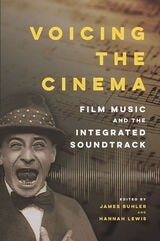
Voicing the Cinema
Film Music and the Integrated SoundtrackEdited by James Buhler and Hannah Lewis
University of Illinois Press, 2020
The collection is divided into four sections. The first explores historical approaches to technology in the silent film, French cinema during the transition era, the films of the so-called New Hollywood, and the post-production sound business. The second investigates the practice of the singing voice in diverse repertories such as Bergman's films, Eighties teen films, and girls' voices in Brave and Frozen. The third considers the auteuristic voice of the soundtrack in works by Kurosawa, Weir, and others. A last section on narrative and vococentrism moves from The Martian and horror film to the importance of background music and the state of the soundtrack at the end of vococentrism.
Contributors: Julie Brown, James Buhler, Marcia Citron, Eric Dienstfrey, Erik Heine, Julie Hubbert, Hannah Lewis, Brooke McCorkle, Cari McDonnell, David Neumeyer, Nathan Platte, Katie Quanz, Jeff Smith, Janet Staiger, and Robynn Stilwell
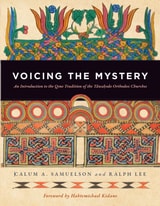
Voicing the Mystery
An Introduction to the Q?ne Tradition of the Täwa??do Orthodox ChurchesCalum A. Samuelson and Ralph Lee
Bridwell Press, 2026
This volume presents a new study of Qǝne, the extemporaneous sacred oral poetry of the Ethiopian and Eritrean Täwaḥǝdo churches. It discusses the technique of “Wax and Gold” used to compose Qǝne through which poets construct multilayered meaning using complex grammatical structures, polysemous vocabulary, and oblique allusions to texts and customs. The Introduction outlines the history of the Qǝne tradition, its liturgical function, and the challenges involved in understanding its multiple layers of meaning, and it provides a detailed account of the translation method developed for this study.
Aimed at both scholars of the Täwaḥǝdo tradition and a wider audience, this book exposes readers to an ancient poetic practice previously inaccessible without a comprehensive knowledge of Gǝʿǝz. The book introduces the new approach of Integrative Translation: each poem is presented through paired Plain and Poetic translations, enabling readers to perceive the branching meanings of the original Gǝʿǝz text and the diverse connections they evoke. A selection of fifteen qǝne poems is included, drawn from published collections compiled by notable traditional scholars of the churches, each featuring the Gǝʿǝz text and paired translations on facing pages.
Extensive annotations guide readers through the interpretive world in which Qǝne is composed, tracing the scriptural, liturgical, exegetical, hagiographical, and cultural sources that shape the tradition and illuminate the multiple meanings embedded in each poem. A Glossary also explains key terms and concepts. This is the first volume to make the Qǝne tradition accessible in English while preserving the distinctive multilayered character of the poetry.