Results by title
22 books match the query 'models'

Battery State Estimation
Methods and modelsShunli Wang
The Institution of Engineering and Technology, 2022
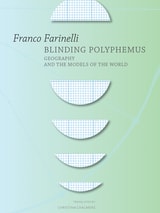
Blinding Polyphemus
Geography and the Models of the WorldFranco Farinelli
Seagull Books, 2016
Following the lessons of nineteenth-century critical German geography, this is a manual of geography without any map. To indicate where things are means already responding, in implicit and unreflective ways, to prior questions about their nature. Blinding Polyphemus not only takes account of the present state of the Earth and of human geography, it redefines the principal models we possess for the description of the world: the map, above all, as well as the landscape, subject, place, city, and space.
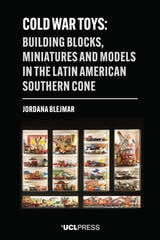
Cold War Toys
Building blocks, miniatures and models in the Latin American Southern ConeJordana Blejmar
University College London, 2026
A decolonial study of the toys that were produced and collected in Latin America during the Cold War.
Cold War Toys examines playthings manufactured, promoted, and commercialized in Argentina, Chile, and Uruguay during the second half of the twentieth century. Establishing connections and conversations with toys produced in earlier periods, including nineteenth-century dollhouses and building blocks created in the 1920s by Joaquín Torres-García, it goes on to analyze, among other items, construction sets made in 1970s Chile during Salvador Allende’s Popular Unity government, scale-model household appliances distributed by the Eva Perón Foundation, and more recent figurines such as the Latin American versions of G.I. Joe and Latin Barbie dolls.
The book approaches toys as “dispositifs”—cultural formations that condense the discourses, institutions, architectural forms, scientific statements, and philosophical propositions of Latin America’s Cold War. Drawing on a rich compendium of objects, many inspired by European or US brands, it shows how South American toys incorporated local characters, designs, messages, and materials through a process of creative adaptation, thereby acquiring new identities. These and other original artifacts are examined variously as commodities from a once-flourishing industry, works of art, originators of cultural myths, and training tools for Cold War childhoods. They are also seen as undervalued expressions of children’s material culture, imbued with the collective memory of a turbulent and contested era.

Edge Computing
Models, technologies and applicationsJavid Taheri
The Institution of Engineering and Technology, 2020

Enhanced Living Environments
From models to technologiesRossitza Ivanova Goleva
The Institution of Engineering and Technology, 2018
Foundations for Model-based Systems Engineering
From patterns to modelsJon Holt
The Institution of Engineering and Technology, 2016

Matrix Factorization for Multimedia Clustering
Models, techniques, optimization and applicationsHangjun Che
The Institution of Engineering and Technology, 2025
Models of Management
Work, Authority, and Organization in a Comparative PerspectiveMauro F. Guillén
University of Chicago Press, 1994
Guillén's study of two liberal-democratic societies (the United States and Great Britain) and two corporatist societies (Germany and Spain) reveals significant differences in the way managerial elites and firms have adopted the three models. His data show that ideas themselves—independent of material interests and technology—can cause organizational change. Throughout the book, contrasts between modernist-technocratic and liberal-humanist mentalities, as well as between Protestant and Catholic religious backgrounds, emerge as decisive factors in determining managerial ideology and practice.
In addition to analyzing management methods in organizations, Guillén explores larger issues: the interaction among managerial, government, and labor elites; the impact of the state and the professions on managerial behavior; and the role that managers play in modern societies.
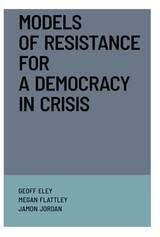
Models of Resistance for a Democracy in Crisis
Geoff Eley
Disobedience Press, 2026
Models of Resistance for a Democracy in Crisis features three historians who examine how political opposition, anti-racist struggle, and artistic intervention serve as vital blueprints for safeguarding our precarious democracy.
Geoff Eley deconstructs Trump-era politics by identifying a dual crisis: the withering of democratic practices and a pervasive cynicism toward government. By analyzing how Germans of the 1930s might have resisted fascism, he reveals the specific forms of opposition needed to uphold democratic accountability today.
Jamon Jordan traces a lineage of anti-racist protest, from the rebellions of the enslaved to the legal and moral defiance of the abolitionist movement. By weaving public tactics, such as demonstrations and boycotts, with the enduring labor of building Black-led institutions and preserving cultural traditions, Jordan reveals a comprehensive framework for contemporary activists.
Megan Flattley examines how artworks challenge repressive regimes. These creative interventions bear witness to traumatic and unjust conditions, use cultural institutions as cover for political action, and stage provocations in public spaces to reveal latent violence and advocate for social change.

Models of Strategic Choice in Politics
Peter C. Ordeshook, Editor
University of Michigan Press, 1989

Models of Value
Eighteenth-Century Political Economy and the NovelJames Thompson
Duke University Press, 1996
In this account, political economy and the novel clearly arise as solutions to a crisis in the notion of value. Exploring the ways in which these different genres responded to the crisis—political economy by reconceptualizing wealth as capital, and the novel by refiguring intrinsic or human worth in the form of courtship narratives—Thompson rereads several literary works, including Defoe’s Roxana, Fielding’s Tom Jones, and Burney’s Cecilia, along with influential contemporary economic texts. Models of Value also traces the discursive consequences of this bifurcation of value, and reveals how history and theory participate in the very novelistic and economic processes they describe. In doing so, the book bridges the opposition between the interests of Marxism and feminism, and the distinctions which, newly made in the eighteenth century, continue to inform our discourse today.
An important reformulation of the literary and cultural production of the eighteenth century, Models of Value will attract students of the novel, political economy, and of literary history and theory.

Models of the Mind
A Psychoanalytic TheoryJohn E. Gedo and Arnold Goldberg
University of Chicago Press, 1976
Gedo and Goldberg apply their theory to four classic psychoanalytic case studies to demonstrate its effectiveness: Freud's Rat Man, his Wolf Man, the case of Daniel Paul Schreber, and a case of arrested development. For each of these cases the authors show how it would have been both possible and advantageous to apply a variety of different theories as facts about each continued to accumulate.
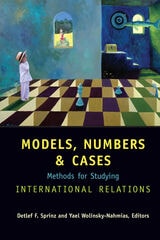
Models, Numbers, and Cases
Methods for Studying International RelationsDetlef F. Sprinz and Yael Wolinsky-Nahmias, Editors
University of Michigan Press, 2004
Detlef Sprinz is a Senior Fellow at the Department of Global Change and Social Systems of the Potsdam Institute for Climate Impact Research and teaches on the Faculty of Social Science at the University of Potsdam, Germany.
Yael Wolinsky-Nahmias is Senior Lecturer and Associate Chair in the Department of Political Science at Northwestern University.
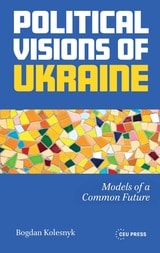
Political Visions of Ukraine
Models of a Common FutureBogdan Kolesnyk
Central European University Press, 2026
Drawing on intellectual discourses from 2013 onwards, this book maps those collisions, reconstructing Ukraine’s “noumenal parliament” — the constellation of voices that have vied to define the nation’s future. Bogdan Kolesnyk explains why Ukraine’s is not a single story but a composite of many, why neither liberal consolidation nor national stories alone provide a sufficient answer, and suggests how justice, reason and republican institutions might be the anchors for plural polity to endure.
In attempting to understand Ukrainian socio-political reality on its own terms from beyond its borders, this book urgently enquires what kind of future is worth fighting for?

Primate Encounters
Models of Science, Gender, and SocietyEdited by Shirley C. Strum and Linda Marie Fedigan
University of Chicago Press, 2000
"[A] fascinating study . . . on how and why ideas about primate society have changed. The volume consists of dialogues among scientists from different disciplines, national traditions, scientific culture, generations, standpoints, and genders. . . . A wonderful reflection on the discipline of primatology and on science in general."—Science Books and Films
"Primate Encounters should be required reading for anyone about to embark on a career in the field. But it equally valuable for its miscellany of opinions, recollections and off-the-cuff remarks, as well as for its thoughtful observations, 'outrageous ravings' and humour (from the elders in the field). It gives us a glimpse of how scientists work together to understand their place in the world."—Deborah L. Mazolillo, Times Literary Supplement
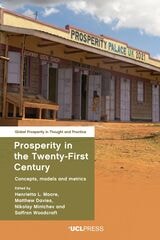
Prosperity in the Twenty-First Century
Concepts, Models and MetricsEdited by Henrietta L. Moore, Matthew Davies, Nikolay Mintchev, and Saffron Woodcraft
University College London, 2023
Prosperity in the Twenty-First Century sets out a new vision for prosperity in the twenty-first century and how it can be achieved for all. The volume challenges orthodox understandings of economic models but goes beyond contemporary debates to show how social innovation drives economic value. Drawing on substantive research in the UK, Lebanon, and Kenya, it develops new concepts, frameworks, models, and metrics for prosperity across a wide range of contexts, emphasizing commonalities and differences. Departing from general propositions about post-growth to delineate pathways to prosperity, the volume emphasizes that visions of the good life are diverse and require empirical work co-designed with local communities and stakeholders to drive change. It will be essential reading for policymakers who are stuck, local government officers who need new tools, activists who wonder what is next, academics in need of refreshment, and students and people of all ages who want a way forward.

Removing the Educational Silos
Models of Interdisciplinary and Multi-disciplinary EducationEdited by Wiline Pangle, et al.
Intellect Books, 2025
This book is designed as a source of inspiration, replication, and adaptation. Each chapter, in varying modalities, addresses interdisciplinary course development and implementation in institutions of higher education. The essays focus on common issues like navigating administrative systems and solving the challenges encountered when crossing departments or colleges, whether regarding course listings or the intricacies of course loads on each professor. Chapters also provide detailed information on the nuts and bolts of the specific course or courses taught, including syllabi, lesson examples, and both formal and informal assessments implemented.
Contributors candidly offer discussions of the failures and successes of their interdisciplinary collaborations, including course design, lesson planning, or complications brought in by unforeseen pandemics. Most chapters end with a summary of lessons learned, where experiences from the field provide opportunities for growth and continued exploration. An excellent resource for educators, this volume offers readers guidance and encouragement to implement the approaches described and inspiration to forge their own paths in the world of multi- and interdisciplinary teaching and research.

Rendering Life Molecular
Models, Modelers, and Excitable MatterNatasha Myers
Duke University Press, 2015
Seeing Underground
Maps, Models, and Mining Engineering in AmericaEric C. Nystrom
University of Nevada Press, 2014
Starting in the late nineteenth century, mining engineers developed a new set of practices, artifacts, and discourses to visualize complex, pitch-dark three-dimensional spaces. These maps and models became necessary tools in creating and controlling those spaces. They made mining more understandable, predictable, and profitable. Nystrom shows that this new visual culture was crucial to specific developments in American mining, such as implementing new safety regulations after the Avondale, Pennsylvania fire of 1869 killed 110 men and boys; understanding complex geology, as in the rich ores of Butte, Montana; and settling high-stakes litigation, such as the Tonopah, Nevada, Jim Butler v. West End lawsuit, which reached the US Supreme Court.
Nystrom demonstrates that these neglected artifacts of the nineteenth and early twentieth centuries have much to teach us today. The development of a visual culture helped create a new professional class of mining engineers and changed how mining was done. Seeing Undergound is the winner of the 2015 Mining History Association’s Clark Spence Award for the best book on mining history.
The Scenographic Model
Third EditionDarwin Reid Payne, Ronald Naversen, and Brad M. Carlson
Southern Illinois University Press, 2025
An authoritative guide to modelmaking for theater
This third edition of noted scenographer Darwin Reid Payne’s landmark text builds upon Payne’s theories and exercises to provide a modern exploration of the practice of theatrical modelmaking. With chapters on traditional and contemporary materials, tools, and techniques, the book serves as a foundational guide to understanding the historical, theoretical, and practical aspects of scenographic modelmaking, making it essential for the beginner, generalist, and professional design practitioner.
The volume begins with a brief history of the scenographic model and explores how modelmaking has adapted to changes in materials, technology, and commercial influences over time. It details setting up a safe, productive model-building studio before introducing the types and purposes of various scenographic models. It then instructs the reader in constructing common model elements and accessories. Later chapters explore how the models reveal stage space and create mood and atmosphere through tonal shading and lighting; discuss the use of found objects, collage techniques, and projection models in scenic design; and delve into 3D printing and computer routering. The final chapter provides information on various aspects of photography and image sharing related to design and production communication.
This comprehensive text provides information not just from theater but also from other modeling disciplines and sources, including architecture, film, dioramas, dollhouse modeling, and model railroading. A useful resource for high school, community college, university, and community theater enthusiasts, it is an excellent reference book for theater designers throughout the country.

Theory and Craft of the Scenographic Model, Revised Edition
Darwin Reid Payne
Southern Illinois University Press, 1985
Through diagrams, sketches, and models, along with explications of the essential tools and materials required, Payne defines and delineates the precise step-by-step procedures of scenographic modelmaking: the basic preparations of construction, the process of making the model, and the experimental aspects of modelmaking. This new edition with 50 additional illustrations and other new information offers teachers, students, and beginning professionals alike a complete and comprehensive approach to creating and constructing the scenographic model.
Writing-Enriched Curricula
Models of Faculty-Driven and Departmental Transformationedited by Chris M. Anson, and Pamela Flash
University Press of Colorado, 2022