
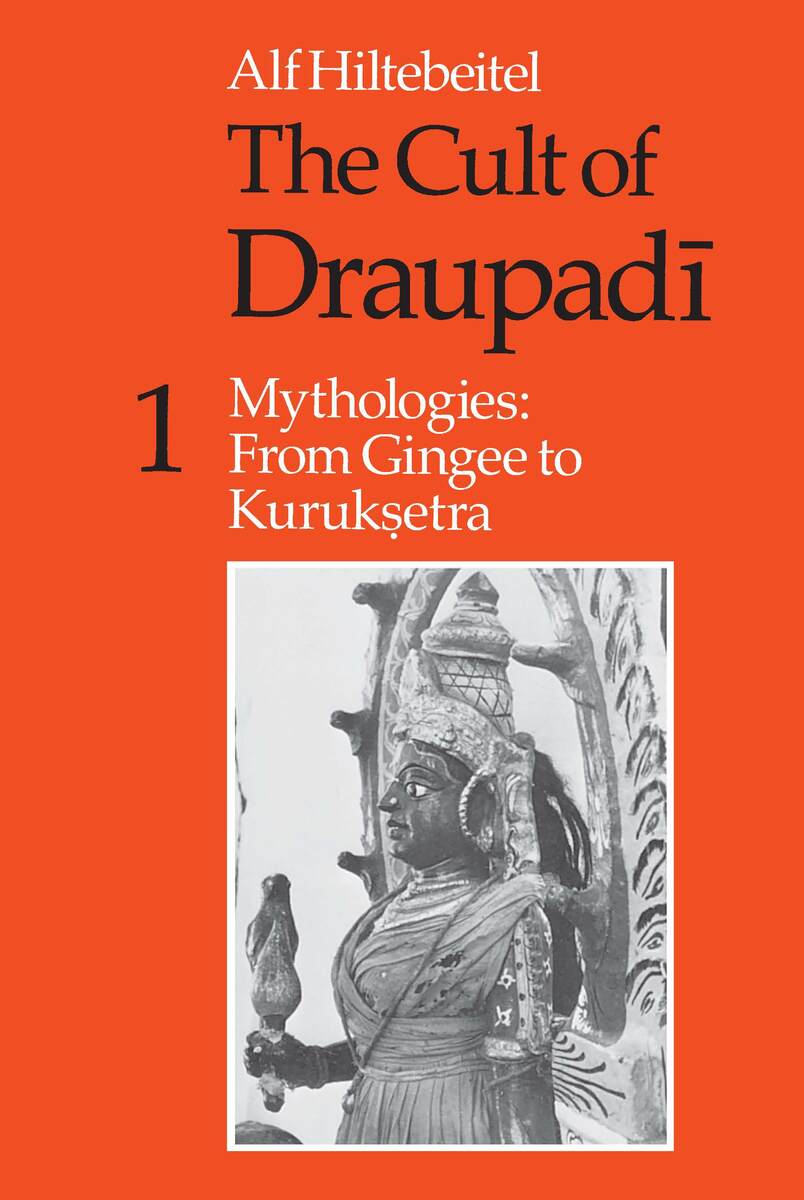
The Cult of Draupadi, Volume 1: Mythologies: From Gingee to Kuruksetra
by Alf Hiltebeitel
University of Chicago Press, 1988
Cloth: 978-0-226-34045-6 | Paper: 978-0-226-34046-3
Library of Congress Classification BL1138.4.D72H55 1988
Dewey Decimal Classification 294.52114
ABOUT THIS BOOK
This is the first volume of a three-volume work on the little-known South Indian folk cult of the goddess Draupadi and on the classical epic, the Mahabharata, that the cult brings to life in mythic, ritual, and dramatic forms. Draupadi, the chief heroine of the Sanskrit Mahābhārata, takes on many unexpected guises in her Tamil cult, but her dimensions as a folk goddess remain rooted in a rich interpretive vision of the great epic. By examining the ways that the cult of Draupadi commingles traditions about the goddess and the epic, Alf Hiltebeitel shows the cult to be singularly representative of the inner tensions and working dynamics of popular devotional Hinduism.
Volume 1 focuses on the Draupadī cult’s own double mythology, moving from its stories about Draupadī’s “primal temple” near the capital of the medieval South Indian Kingdom of Gingee to its version of the Mahābhārata war on the North Indian plain of Kurukṣetra. Throughout, Hiltebeitel intertwines “regional” data, gathered from both oral and written sources, with the “epic,” drawn from the cult’s own performative traditions as well as from classical versions of the Mahābhārata in both Tamil and Sanskrit. Pivotal to the overlap of these Gingee and Kurukṣetra mythologies are two folk figures unknown to classical epic traditions: Draupadī’s two guardians, Pōttu Rāja and Muttāl Rāvuttaṉ.
See other titles from University of Chicago Press