Results by title
36 books match the query 'Cult'
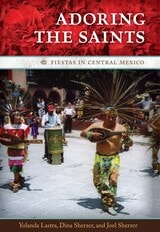
Adoring the Saints
Fiestas in Central MexicoBy Yolanda Lastra, Dina Sherzer, and Joel Sherzer
University of Texas Press, 2009
Mexico is famous for spectacular fiestas that embody its heart and soul. An expression of the cult of the saint, patron saint fiestas are the centerpiece of Mexican popular religion and of great importance to the lives and cultures of people and communities. These fiestas have their own language, objects, belief systems, and practices. They link Mexico's past and present, its indigenous and European populations, and its local and global relations.
This work provides a comprehensive study of two intimately linked patron saint fiestas in the state of Guanajuato, near San Miguel de Allende—the fiesta of the village of Cruz del Palmar and that of the town of San Luis de la Paz. These two fiestas are related to one another in very special ways involving both religious practices and their respective pre-Hispanic origins.
A mixture of secular and sacred, patron saint fiestas are multi-day affairs that include many events, ritual specialists, and performers, with the participation of the entire community. Fiestas take place in order to honor the saints, and they are the occasion for religious ceremonies, processions, musical performances, dances, and dance dramas. They feature spectacular costumes, enormous puppets, masked and cross-dressed individuals, dazzling fireworks, rodeos, food stands, competitions, and public dances. By encompassing all of these events and performances, this work displays the essence of Mexico, a lens through which this country's complex history, religion, ethnic mix, traditions, and magic can be viewed.
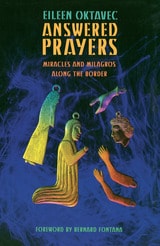
Answered Prayers
Miracles and Milagros along the BorderEileen Oktavec
University of Arizona Press, 1995
In Answered Prayers, the Mexicans, Mexican Americans, Tohono O'odham, and Yaquis who practice this tradition share their stories of unwavering faith and divine intervention. Anthropologist and photographer Eileen Oktavec has spent more than two decades documenting this fascinating tradition in the Arizona-Mexico borderlands. Quoting extensive interviews, she explains the beliefs of the people who perform this ancient folk ritual and the many rules guiding this practice. She also describes the many places where milagros are offered—from the elaborate Mexican baroque Mission San Xavier near Tucson, Arizona, to tiny household shrines and hospitals on both sides of the border. Oktavec also explains how milagros are made, where they are bought, and how they are used in jewelry, sculpture, and art.

Conquest and Community
The Afterlife of Warrior Saint Ghazi MiyanShahid Amin
University of Chicago Press, 2016
Conquest and Community is Shahid Amin's answer. Covering more than eight hundred years of history, the book centers on the enduringly popular saint Ghazi Miyan, a youthful soldier of Islam whose shrines are found all over India. Amin details the warrior saint’s legendary exploits, then tracks the many ways he has been commemorated in the centuries since. The intriguing stories, ballads, and proverbs that grew up around Ghazi Miyan were, Amin shows, a way of domesticating the conquest—recognizing past conflicts and differences but nevertheless bringing diverse groups together into a community of devotees. What seems at first glance to be the story of one mythical figure becomes an allegory for the history of Hindu-Muslim relations over an astonishingly long period of time, and a timely contribution to current political and historical debates.
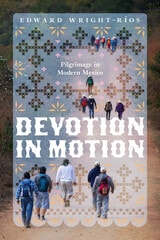
Devotion in Motion
Pilgrimage in Modern MexicoEdward Wright-Ríos
University of Chicago Press, 2025
For many, pilgrimage conjures ideas about ancient traditions and somber journeys of self-discovery—an escape from modern life. In Devotion in Motion, Edward Wright-Ríos argues that we misunderstand pilgrimage (past and present) if we ignore its dynamic relationship with the rhythms of daily life and community.
Through the story of a centuries-old, ever-changing Catholic shrine to Our Lady of Juquila in Oaxaca, Mexico, Wright-Ríos reveals how tradition, innovation, marketing, and devotion coexist and interact in pilgrimage. Devotees, he shows, are not dissuaded by the embeddedness of the sacred site in the complexities, hierarchies, or conflicts of their lives. In fact, the truckers, accountants, and health-care workers we meet in this book actively seek new resources (including social media) to aid and share their devotion. Part microhistory, part ethnography, Devotion in Motion is a celebration of pilgrimage as a living experience in every generation.
Education and the Cult of Efficiency
Raymond E. Callahan
University of Chicago Press, 1964
From Stone to Flesh
A Short History of the BuddhaDonald S. Lopez Jr.
University of Chicago Press, 2013
Imperium and Cosmos
Augustus and the Northern Campus MartiusPaul Rehak; Edited by John G. Younger
University of Wisconsin Press, 2006
Rehak closely examines the artistic imagery on these monuments, providing numerous illustrations, tables, and charts. In an analysis firmly contextualized by a thorough discussion of the earlier models and motifs that inspired these Augustan monuments, Rehak shows how the princeps used these on such an unprecedented scale as to truly elevate himself above the common citizen.
In the Sun King's Cosmos
Comets and the Cultural Imagination of Seventeenth-Century FranceClaire Goldstein
Northwestern University Press, 2025
Offering a new history of a formative cultural and political era through the cosmic phenomena that captured the public’s imagination
In the winters of 1664–65 and 1680–81, the French public was galvanized by two bright comets whose elliptical orbits could not be mapped with contemporary geometry and that thus seemed to appear in random and unpredictable locations. Bookending the period during which Louis XIV’s sun king mythology was created, these comets defied the heliocentric order to which French politics and culture aspired. As Claire Goldstein demonstrates, literary texts, cultural institutions, and architecture inspired by comets offer a different perspective on the relationship between sensory experience, ideology, and artistic form.
In the Sun King’s Cosmos: Comets and the Cultural Imagination of Seventeenth-Century France presents an alternative view of a formative era in cultural and political history, when distinctly modern forms of power and control were established through a regime of the spectacular. Goldstein shows how comets allow us to see the seventeenth century in ways that complicate the narrative of a race toward rationalization, classicism, and modernity, indexing instead a messy period in which the spectacular was sometimes also inscrutable.
Juan Soldado
Rapist, Murderer, Martyr, SaintPaul J. Vanderwood
Duke University Press, 2004
In addition to conducting extensive archival research, Vanderwood interviewed central actors in the events of 1938, including Olga Camacho’s mother, citizens who rioted to demand Morales’s release to a lynch mob, those who witnessed his execution, and some of the earliest believers in his miraculous powers. Vanderwood also interviewed many present-day visitors to the shrine at Morales’s grave. He describes them, their petitions—for favors such as health, a good marriage, or safe passage into the United States—and how they reconcile their belief in Juan Soldado with their Catholicism. Vanderwood puts the events of 1938 within the context of Depression-era Tijuana and he locates people’s devotion, then and now, within the history of extra-institutional religious activity. In Juan Soldado, a gripping true-crime mystery opens up into a much larger and more elusive mystery of faith and belief.
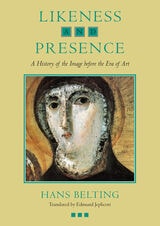
Likeness and Presence
A History of the Image before the Era of ArtHans Belting
University of Chicago Press, 1993
Likeness and Presence looks at the beliefs, superstitions, hopes, and fears that come into play as people handle and respond to sacred
images, and presents a compelling interpretation of the place of the image in Western history.
"A rarity within its genre—an art-historical analysis of iconography which is itself iconoclastic. . . . One of the most intellectually exciting and historically grounded interpretations of Christian iconography." —Graham Howes, Times Literary Supplement
"Likeness and Presence offers the best source to survey the facts of what European Christians put in their churches. . . . An impressively detailed contextual analysis of medieval objects." —Robin Cormack, New York Times Book Review
"I cannot begin to describe the richness or the imaginative grandeur of Hans Belting's book. . . . It is a work that anyone interested in art, or in the history of thought about art, should regard as urgent reading. It is a tremendous achievement."—Arthur C. Danto, New Republic

Medicine and the Saints
Science, Islam, and the Colonial Encounter in Morocco, 1877-1956By Ellen J. Amster
University of Texas Press, 2013
The colonial encounter between France and Morocco took place not only in the political realm but also in the realm of medicine. Because the body politic and the physical body are intimately linked, French efforts to colonize Morocco took place in and through the body. Starting from this original premise, Medicine and the Saints traces a history of colonial embodiment in Morocco through a series of medical encounters between the Islamic sultanate of Morocco and the Republic of France from 1877 to 1956.
Drawing on a wealth of primary sources in both French and Arabic, Ellen Amster investigates the positivist ambitions of French colonial doctors, sociologists, philologists, and historians; the social history of the encounters and transformations occasioned by French medical interventions; and the ways in which Moroccan nationalists ultimately appropriated a French model of modernity to invent the independent nation-state. Each chapter of the book addresses a different problem in the history of medicine: international espionage and a doctor’s murder; disease and revolt in Moroccan cities; a battle for authority between doctors and Muslim midwives; and the search for national identity in the welfare state. This research reveals how Moroccans ingested and digested French science and used it to create a nationalist movement and Islamist politics, and to understand disease and health. In the colonial encounter, the Muslim body became a seat of subjectivity, the place from which individuals contested and redefined the political.
Passionate Journeys
Why Successful Women Joined a CultMarion S. Goldman
University of Michigan Press, 2001
Passionate Journeys explores the fascinating stories behind the Bhagwan Rajneesh phenomenon of the 1970s and 1980s, focusing on women who left families, careers, and identities to join the community of Rajneeshpuram. Rajneesh was a spiritual leader for thousands of young Americans, and in rural Oregon his devotees established a thriving community. Marion S. Goldman's extensive interviews with women who participated at Rajneeshpuram provide a fascinating picture of the cultural and social climate that motivated successful, established women to join such a movement.
Passionate Journeys will appeal to specialists in feminist theory and women's studies, sociology, religious studies, American studies, and the history of the Northwest.
Marion S. Goldman is Professor of Sociology, University of Oregon. She is also the author of Gold Diggers and Silver Miners: Prostitution and Social Life on the Comstock Lode.
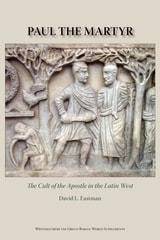
Paul the Martyr
The Cult of the Apostle in the Latin WestDavid L. Eastman
SBL Press, 2011
Ancient iconography of Paul is dominated by one image: Paul as martyr. Whether he is carrying a sword—the traditional instrument of his execution—or receiving a martyr's crown from Christ, the apostle was remembered and honored for his faithfulness to the point of death. As a result, Christians created a cult of Paul, centered on particular holy sites and characterized by practices such as the telling of stories, pilgrimage, and the veneration of relics. This study integrates literary, archaeological, artistic, and liturgical evidence to describe the development of the Pauline cult within the cultural context of the late antique West.

Peasants on the Edge
Crop, Cult, and Crisis in the AndesBy William P. Mitchell
University of Texas Press, 1991
Throughout Latin America and the rest of the Third World, profound social problems are growing in response to burgeoning populations and unstable economic and political systems. In Peru, terrorist acts by the Shining Path guerilla movement are the most visible manifestation of social discontent, but rapid economic and religious changes have touched the lives of almost everyone, radically altering traditional lifeways. In this twenty-year study of the community of Quinua in the Department of Ayacucho, William Mitchell looks at changes provoked by population growth within a severely limited ecological and economic setting, including increasing conversion to a cash economy and out-migration, the decline of the Catholic fiesta system and the rise of Protestantism, and growing poverty and revolution.
When Mitchell first began his field studies in Quinua in 1966, farming was still the Quinueños' principal means of livelihood. But while the population was increasing rapidly, the amount of arable land in the community remained the same, creating increased food shortfalls. At the same time, government controls on food prices and subsidies of cheap food imports drove down the value of rural farm production. These ecological and economic factors forced many people to enter the nonfarm economy to feed themselves.
Using a materialist approach, Mitchell charts the new economic strategies that Quinueños use to confront the harsh pressures of their lives, including ceramic production, wage labor, petty commerce, and migration to cash work on the coat and in the eastern tropical forests. In addition, he shows how the growing conversion from Catholicism to Protestantism is also an economic strategy, since Protestant ideology offers acceptable reasons for redirecting the money that used to be spent on elaborate religious festivals to household needs and education.
The twenty-year span of this study makes it especially valuable for students of social change. Mitchell's unique, interdisciplinary approach, considering ecological, economic, and population factors simultaneously, offers a model that can be widely applied in many Third World areas. Additionally, the inclusion of an entire chapter of family histories reveals how economic and ecological forces are played out at the individual level.
Poetry and the Cult of the Martyrs
The Liber Peristephanon of PrudentiusMichael Roberts
University of Michigan Press, 1993
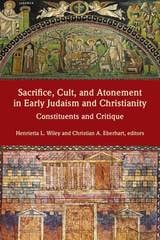
Sacrifice, Cult, and Atonement in Early Judaism and Christianity
Constituents and CritiqueHenrietta L. Wiley
SBL Press, 2016
Critical and creative studies that offer fresh perspectives on ancient ideas and practices
The contributions to this volume deal in various ways with the cult at the Jerusalem Temple that epitomized the religious, cultural, and socio-political identity of Judaism for many centuries. Some essays examine ancient constitutive practices and concepts, such as purification rituals, sacrifices, atonement, or sacred authorities at the temple, with the goal of interpreting their meanings for modern readers. Other essays explore alternatives to ancient cultic meaning and practice. Essays critique established traditions, attempt to renegotiate them, or use metaphor and spiritualization to expand the potential of these phenomena to serve as terminological and ideological resources. Thus they examine and affirm the continuing relevance of ancient Jewish cultic notions long after the destruction of the Second Temple in 70 CE.
- An international group of scholars representing different fields and diverse religious backgrounds
- A thorough examination of traditions as through the lens of contemporaneous interpretive traditions such as Jewish prophecy, the Dead Sea Scrolls, and Early Christian literature
- Examination of topics such as purification, sacrifice, and atonement, and the depiction and development of sacred authority throughout the Bible
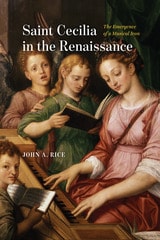
Saint Cecilia in the Renaissance
The Emergence of a Musical IconJohn A. Rice
University of Chicago Press, 2022
Until the fifteenth century, Saint Cecilia was not connected with music. She was perceived as one of many virgin martyrs, with no obvious musical skills or interests. During the next two centuries, however, she inspired many musical works written in her honor and a vast number of paintings that depicted her singing or playing an instrument.
In this book, John A. Rice argues that Cecilia’s association with music came about in several stages, involving Christian liturgy, visual arts, and music. It was fostered by interactions between artists, musicians, and their patrons and the transfer of visual and musical traditions from northern Europe to Italy. Saint Cecilia in the Renaissance explores the cult of the saint in Medieval times and through the sixteenth century when musicians’ guilds in the Low Countries and France first chose Cecilia as their patron. The book then turns to music and the explosion of polyphonic vocal works written in Cecilia’s honor by some of the most celebrated composers in Europe. Finally, the book examines the wealth of visual representations of Cecilia especially during the Italian Renaissance, among which Raphael’s 1515 painting, The Ecstasy of Saint Cecilia, is but the most famous example. Thoroughly researched and beautifully illustrated in color, Saint Cecilia in the Renaissance is the definitive portrait of Saint Cecilia as a figure of musical and artistic inspiration.
Saints and Society
The Two Worlds of Western Christendom, 1000-1700Donald Weinstein and Rudolph M. Bell
University of Chicago Press, 1986
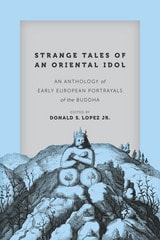
Strange Tales of an Oriental Idol
An Anthology of Early European Portrayals of the BuddhaEdited by Donald S. Lopez Jr.
University of Chicago Press, 2016
Featuring writings by soldiers, adventurers, merchants, missionaries, theologians, and colonial officers, this volume contains a wide range of portraits of the Buddha. The descriptions are rarely flattering, as all manner of reports—some accurate, some inaccurate, and some garbled—came to circulate among European savants and eccentrics, many of whom were famous in their day but are long forgotten in ours. Taken together, these accounts present a fascinating picture, not only of the Buddha as he was understood and misunderstood for centuries, but also of his portrayers.
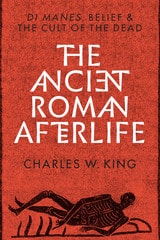
The Ancient Roman Afterlife
Di Manes, Belief, and the Cult of the DeadBy Charles W. King
University of Texas Press, 2020
In ancient Rome, it was believed some humans were transformed into special, empowered beings after death. These deified dead, known as the manes, watched over and protected their surviving family members, possibly even extending those relatives’ lives. But unlike the Greek hero-cult, the worship of dead emperors, or the Christian saints, the manes were incredibly inclusive—enrolling even those without social clout, such as women and the poor, among Rome's deities. The Roman afterlife promised posthumous power in the world of the living.
While the manes have often been glossed over in studies of Roman religion, this book brings their compelling story to the forefront, exploring their myriad forms and how their worship played out in the context of Roman religion’s daily practice. Exploring the place of the manes in Roman society, Charles King delves into Roman beliefs about their powers to sustain life and bring death to individuals or armies, examines the rituals the Romans performed to honor them, and reclaims the vital role the manes played in the ancient Roman afterlife.
The Cult Of The Court
John Brigham
Temple University Press, 1991
In recent years widespread attention has been focused on decisions handed down by the Supreme Court that grapple with passionate issues: integration, school prayer, abortion, affirmative action. The appointment of new justices is a highly charged political event although the Court is supposed to be "above" politics. Amidst the bicentennial celebration of the Constitution and almost daily reports of major confrontations awaiting the highest court’s judicial review, John Brigham presents a fresh and innovative examination of the U.S. Supreme Court as the final arbiter of constitutional interpretation.
Drawing on philosophy and anthropology, The Cult of the Court offers a social scientific investigation of an institution whose authority has come to be taken for granted. The author emphasizes that the Court is an institution and that its authority is founded less in the claim of legal expertise than in hierarchical finality—the assertion of political will, not of legal judgment. He shows how the Court has supplanted the Constitution as the authority in our political world and that what makes legal "sense" is affected by these factors of institutionalization, bureaucratization, and court-dominated constitutionalism.
The Cult of Creativity
A Surprisingly Recent HistorySamuel W. Franklin
University of Chicago Press, 2023
Creativity is one of American society’s signature values, but the idea that there is such a thing as “creativity”—and that it can be cultivated—is surprisingly recent, entering our everyday speech in the 1950s. As Samuel W. Franklin reveals, postwar Americans created creativity, through campaigns to define and harness the power of the individual to meet the demands of American capitalism and life under the Cold War. Creativity was championed by a cluster of professionals—psychologists, engineers, and advertising people—as a cure for the conformity and alienation they feared was stifling American ingenuity. It was touted as a force of individualism and the human spirit, a new middle-class aspiration that suited the needs of corporate America and the spirit of anticommunism.
Amid increasingly rigid systems, creativity took on an air of romance; it was a more democratic quality than genius, but more rarified than mere intelligence. The term eluded clear definition, allowing all sorts of people and institutions to claim it as a solution to their problems, from corporate dullness to urban decline. Today, when creativity is constantly sought after, quantified, and maximized, Franklin’s eye-opening history of the concept helps us to see what it really is, and whom it really serves.
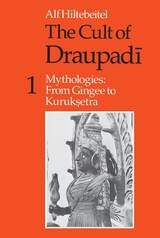
The Cult of Draupadi, Volume 1
Mythologies: From Gingee to KuruksetraAlf Hiltebeitel
University of Chicago Press, 1988
Volume 1 focuses on the Draupadī cult’s own double mythology, moving from its stories about Draupadī’s “primal temple” near the capital of the medieval South Indian Kingdom of Gingee to its version of the Mahābhārata war on the North Indian plain of Kurukṣetra. Throughout, Hiltebeitel intertwines “regional” data, gathered from both oral and written sources, with the “epic,” drawn from the cult’s own performative traditions as well as from classical versions of the Mahābhārata in both Tamil and Sanskrit. Pivotal to the overlap of these Gingee and Kurukṣetra mythologies are two folk figures unknown to classical epic traditions: Draupadī’s two guardians, Pōttu Rāja and Muttāl Rāvuttaṉ.
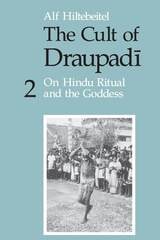
The Cult of Draupadi, Volume 2
On Hindu Ritual and the GoddessAlf Hiltebeitel
University of Chicago Press, 1991
Volume 2 looks at the cultic rituals and argues that these rituals cannot be interpreted independent of other Hindu traditions. Hiltebeitel draws upon his recent fieldwork to demonstrate the remarkable regional and local variations in the practice of the Draupadī cult rituals, from the core area around the ancient center of gingee to the thanjavur area just to the south. He brings to the forefront the differences between the complex rituals of cities, towns, and villages and discusses variations related to their proximity to the central temple in gingee and to the castes from which their customs are derived. using as its model the festival of the Tindivanam temple, Hiltebeitel’s study follows the order of the festival itself and investigates in turn the festival’s four interrelated arenas: the Draupadī temple, a drama stage, a ritual battlefield (paṭukaḷam), and a firewalking area. He explains how the Draupadī festival orchestrates movements back and forth between these arenas to produce a “ritual of battle” in which Draupadī emerges as the victorious goddess.
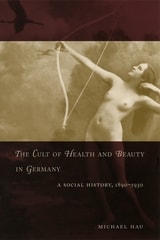
The Cult of Health and Beauty in Germany
A Social History, 1890-1930Michael Hau
University of Chicago Press, 2003
Hau argues that the obsession with personal health and fitness was often rooted in anxieties over professional and economic success, as well as fears that modern industrialized civilization was causing Germany and its people to degenerate. He also examines how different social groups gave different meanings to the same hygienic practices and aesthetic ideals. What results is a penetrating look at class formation in pre-Nazi Germany that will interest historians of Europe and medicine and scholars of culture and gender.

The Cult of Pharmacology
How America Became the World's Most Troubled Drug CultureRichard DeGrandpre
Duke University Press, 2006
Exploring how this rather benign relationship with psychoactive drugs was transformed into one of confusion and chaos, The Cult of Pharmacology tells the dramatic story of how, as one legal drug after another fell from grace, new pharmaceutical substances took their place. Whether Valium or OxyContin at the pharmacy, cocaine or meth purchased on the street, or alcohol and tobacco from the corner store, drugs and drug use proliferated in twentieth-century America despite an escalating war on “drugs.”
Richard DeGrandpre, a past fellow of the National Institute on Drug Abuse and author of the best-selling book Ritalin Nation, delivers a remarkably original interpretation of drugs by examining the seductive but ill-fated belief that they are chemically predestined to be either good or evil. He argues that the determination to treat the medically sanctioned use of drugs such as Miltown or Seconal separately from the illicit use of substances like heroin or ecstasy has blinded America to how drugs are transformed by the manner in which a culture deals with them.
Bringing forth a wealth of scientific research showing the powerful influence of social and psychological factors on how the brain is affected by drugs, DeGrandpre demonstrates that psychoactive substances are not angels or demons irrespective of why, how, or by whom they are used. The Cult of Pharmacology is a bold and necessary new account of America’s complex relationship with drugs.
The Cult of Statistical Significance
How the Standard Error Costs Us Jobs, Justice, and LivesStephen T. Ziliak and Deirdre N. McCloskey
University of Michigan Press, 2010
“McCloskey and Ziliak have been pushing this very elementary, very correct, very important argument through several articles over several years and for reasons I cannot fathom it is still resisted. If it takes a book to get it across, I hope this book will do it. It ought to.”
—Thomas Schelling, Distinguished University Professor, School of Public Policy, University of Maryland, and 2005 Nobel Prize Laureate in Economics
“With humor, insight, piercing logic and a nod to history, Ziliak and McCloskey show how economists—and other scientists—suffer from a mass delusion about statistical analysis. The quest for statistical significance that pervades science today is a deeply flawed substitute for thoughtful analysis. . . . Yet few participants in the scientific bureaucracy have been willing to admit what Ziliak and McCloskey make clear: the emperor has no clothes.”
—Kenneth Rothman, Professor of Epidemiology, Boston University School of Health
The Cult of Statistical Significance shows, field by field, how “statistical significance,” a technique that dominates many sciences, has been a huge mistake. The authors find that researchers in a broad spectrum of fields, from agronomy to zoology, employ “testing” that doesn’t test and “estimating” that doesn’t estimate. The facts will startle the outside reader: how could a group of brilliant scientists wander so far from scientific magnitudes? This study will encourage scientists who want to know how to get the statistical sciences back on track and fulfill their quantitative promise. The book shows for the first time how wide the disaster is, and how bad for science, and it traces the problem to its historical, sociological, and philosophical roots.
Stephen T. Ziliak is the author or editor of many articles and two books. He currently lives in Chicago, where he is Professor of Economics at Roosevelt University. Deirdre N. McCloskey, Distinguished Professor of Economics, History, English, and Communication at the University of Illinois at Chicago, is the author of twenty books and three hundred scholarly articles. She has held Guggenheim and National Humanities Fellowships. She is best known for How to Be Human* Though an Economist (University of Michigan Press, 2000) and her most recent book, The Bourgeois Virtues: Ethics for an Age of Commerce (2006).

The Cult of the Goddess Pattini
Gananath Obeyesekere
University of Chicago Press, 1984
The Cult of the Saints
Its Rise and Function in Latin ChristianityPeter Brown
University of Chicago Press, 1982
"Brown has an international reputation for his fine style, a style he here turns on to illuminate the cult of the saints. Christianity was born without such a cult; it took rise and that rise needs chronicling. Brown has a gift for the memorable phrase and sees what the passersby have often overlooked. An eye-opener on an important but neglected phase of Western development."—The Christian Century
"Brilliantly original and highly sophisticated . . . . [The Cult of the Saints] is based on great learning in several disciplines, and the story is told with an exceptional appreciation for the broad social context. Students of many aspects of medieval culture, especially popular religion, will want to consult this work."—Bennett D. Hill, Library Journal
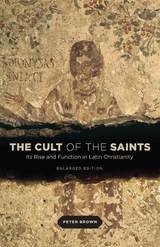
The Cult of the Saints
Its Rise and Function in Latin Christianity, Enlarged EditionPeter Brown
University of Chicago Press, 2014
In this groundbreaking work, Peter Brown explores how the worship of saints and their corporeal remains became central to religious life in Western Europe after the fall of the Roman Empire. During this period, earthly remnants served as a heavenly connection, and their veneration is a fascinating window into the cultural mood of a region in transition.
Brown challenges the long-held “two-tier” idea of religion that separated the religious practices of the sophisticated elites from those of the superstitious masses, instead arguing that the cult of the saints crossed boundaries and played a dynamic part in both the Christian faith and the larger world of late antiquity. He shows how men and women living in harsh and sometimes barbaric times relied upon the holy dead to obtain justice, forgiveness, and power, and how a single sainted hair could inspire great thinkers and great artists.
An essential text by one of the foremost scholars of European history, this expanded edition includes a new preface from Brown, which presents new ideas based on subsequent scholarship.
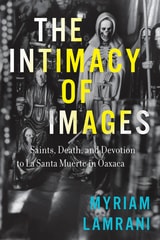
The Intimacy of Images
Saints, Death, and Devotion to La Santa Muerte in OaxacaMyriam Lamrani
University of Texas Press, 2024
2026 Edie Turner First Book Prize in Ethnographic Writing, Society for Humanistic Anthropology
La Santa Muerte becomes a lens for understanding how Oaxacans relate to saints, loved ones, and other “special dead.”
In Oaxaca, images of saints and loved ones, as well as of victims of political or criminal violence, are seemingly everywhere. While Oaxacans relate to all sorts of “special dead,” they are particularly devoted to La Santa Muerte (Saint Death), a female reaper-like figure whose popularity has risen in tandem with violence throughout Mexico.
The Intimacy of Images recontextualizes Oaxacans’ relationships with their “special dead” through the lens of La Santa Muerte, examining how devotees closely interact with what Lamrani terms “intimate images”: not only devotional effigies but also photographs, films, tattoos, and murals, and even dreams and visions. Though Mexicans have a well-known cultural familiarity with death, Lamrani argues that devotion to La Santa Muerte builds upon this intimacy even as it also participates in the production of terror and reflects political and criminal violence. Ultimately, Lamrani finds that these human-image interactions represent more than Catholic devotion; they reveal the secrets of Oaxacan political, religious, and social life, embody changing relationships to mortality and violence, and even offer insight into the practice of anthropology itself.
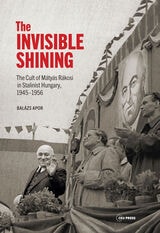
The Invisible Shining
The Cult of Mátyás Rákosi in Stalinist Hungary, 19451956Balazs Apor
Central European University Press, 2018
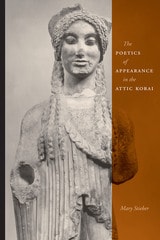
The Poetics of Appearance in the Attic Korai
By Mary Stieber
University of Texas Press, 2004
Some of the loveliest works of Archaic art were the Athenian korai—sculptures of beautiful young women presenting offerings to the goddess Athena that stood on the Acropolis. Sculpted in the sixth and early fifth centuries B.C., they served as votives until Persians sacked the citadel in 480/79 B.C. Subsequently, they were buried as a group and forgotten for nearly twenty-four centuries, until archaeologists excavated them in the 1880s. Today, they are among the treasures of the Acropolis Museum.
Mary Stieber takes a fresh look at the Attic korai in this book. Challenging the longstanding view that the sculptures are generic female images, she persuasively argues that they are instead highly individualized, mimetically realistic representations of Archaic young women, perhaps even portraits of real people. Marshalling a wide array of visual and literary evidence to support her claims, she shows that while the korai lack the naturalism that characterizes later Classical art, they display a wealth and realism of detail that makes it impossible to view them as generic, idealized images. This iconoclastic interpretation of the Attic korai adds a new dimension to our understanding of Archaic art and to the distinction between realism and naturalism in the art of all periods.
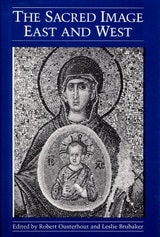
The Sacred Image East and West
Edited by Robert Ousterhout and Leslie Brubaker
University of Illinois Press, 1995
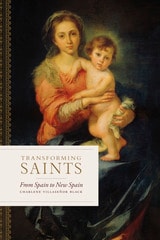
Transforming Saints
From Spain to New SpainCharlene Villaseñor Black
Vanderbilt University Press, 2022
The chapters here examine the rise of the cults of the lactating Madonna, St. Anne, St. Librada, St. Mary Magdalene, and the Suffering Virgin. Concerned with holy figures presented as feminine archetypes—images that came under Inquisition scrutiny—as well as with cults suspected of concealing Indigenous influences, Charlene Villaseñor Black argues that these images would come to reflect the empowerment and agency of women in viceregal Mexico. Her close analysis of the imagery additionally demonstrates artists' innovative responses to Inquisition censorship and the new artistic demands occasioned by conversion.
The concerns that motivated the twenty-first century protests against Chicana artists Yolanda López in 2001 and Alma López in 2003 have a long history in the Hispanic world, in the form of anxieties about the humanization of sacred female bodies and fears of Indigenous influences infiltrating Catholicism. In this context Black also examines a number of important artists in depth, including El Greco, Murillo, Jusepe de Ribera, Pedro de Mena, Baltasar de Echave Ibía, Juan Correa, Cristóbal de Villalpando, and Miguel Cabrera.
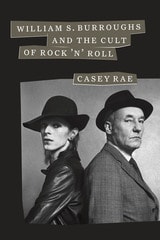
William S. Burroughs and the Cult of Rock 'n' Roll
By Casey Rae
University of Texas Press, 2019
William S. Burroughs's fiction and essays are legendary, but his influence on music's counterculture has been less well documented—until now. Examining how one of America's most controversial literary figures altered the destinies of many notable and varied musicians, William S. Burroughs and the Cult of Rock 'n' Roll reveals the transformations in music history that can be traced to Burroughs.
A heroin addict and a gay man, Burroughs rose to notoriety outside the conventional literary world; his masterpiece, Naked Lunch, was banned on the grounds of obscenity, but its nonlinear structure was just as daring as its content. Casey Rae brings to life Burroughs's parallel rise to fame among daring musicians of the 1960s, '70s, and '80s, when it became a rite of passage to hang out with the author or to experiment with his cut-up techniques for producing revolutionary lyrics (as the Beatles and Radiohead did). Whether they tell of him exploring the occult with David Bowie, providing Lou Reed with gritty depictions of street life, or counseling Patti Smith about coping with fame, the stories of Burroughs's backstage impact will transform the way you see America's cultural revolution—and the way you hear its music.