
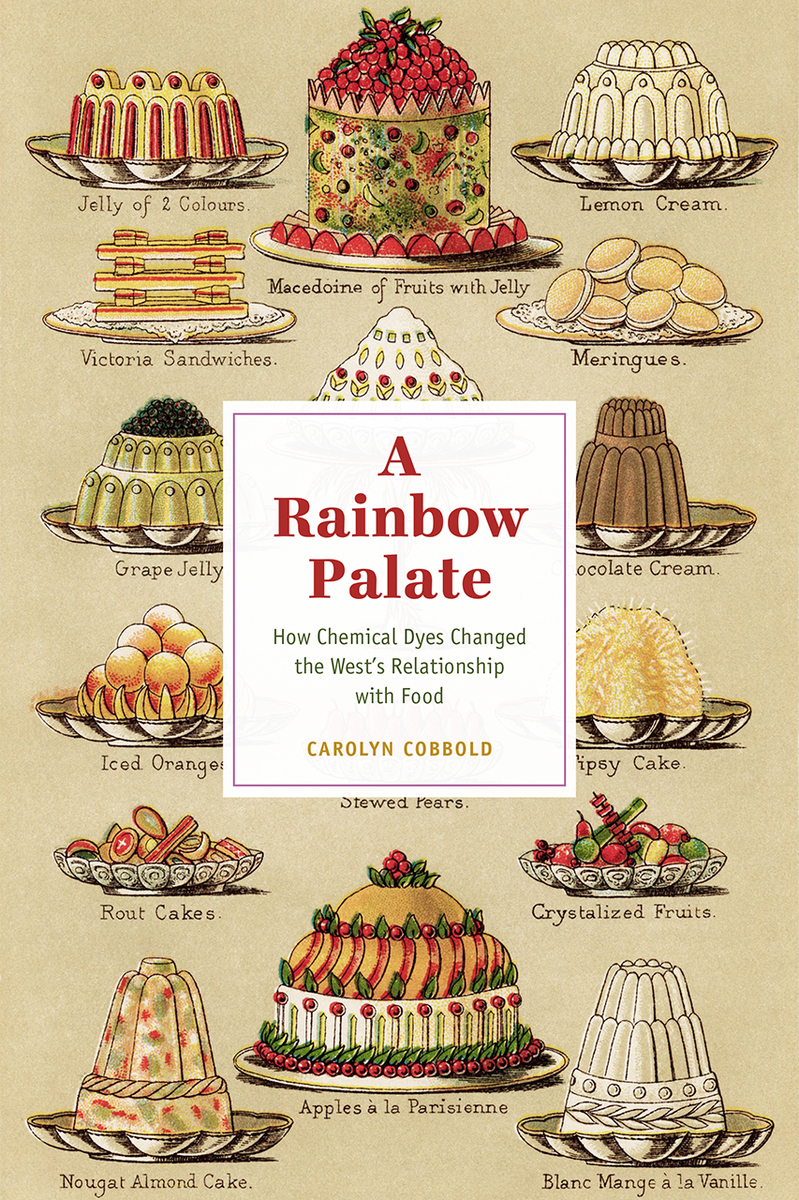
A Rainbow Palate: How Chemical Dyes Changed the West’s Relationship with Food
by Carolyn Cobbold
University of Chicago Press, 2020
Cloth: 978-0-226-72705-9 | Paper: 978-0-226-84553-1 | eISBN: 978-0-226-72719-6 (all)
Library of Congress Classification TP456.C65C633 2020
Dewey Decimal Classification 664.062
ABOUT THIS BOOK
Shows how the widespread use of food dyes influenced understanding of food, science, and technology, as well as trust in science.
We live in a world saturated by chemicals—our food, our clothes, and even our bodies play host to hundreds of synthetic chemicals that did not exist before the nineteenth century. By the 1900s, a wave of bright coal tar dyes had begun to transform the Western world. Originally intended for textiles, the new dyes soon permeated daily life in unexpected ways, and by the time the risks and uncertainties surrounding the synthesized chemicals began to surface, they were being used in everything from clothes and home furnishings to cookware and food.
In A Rainbow Palate, Carolyn Cobbold explores how the widespread use of new chemical substances influenced perceptions and understanding of food, science, and technology, as well as trust in science and scientists. Because the new dyes were among the earliest contested chemical additives in food, the battles over their use offer striking insights and parallels into today’s international struggles surrounding chemical, food, and trade regulation.
See other titles from University of Chicago Press