
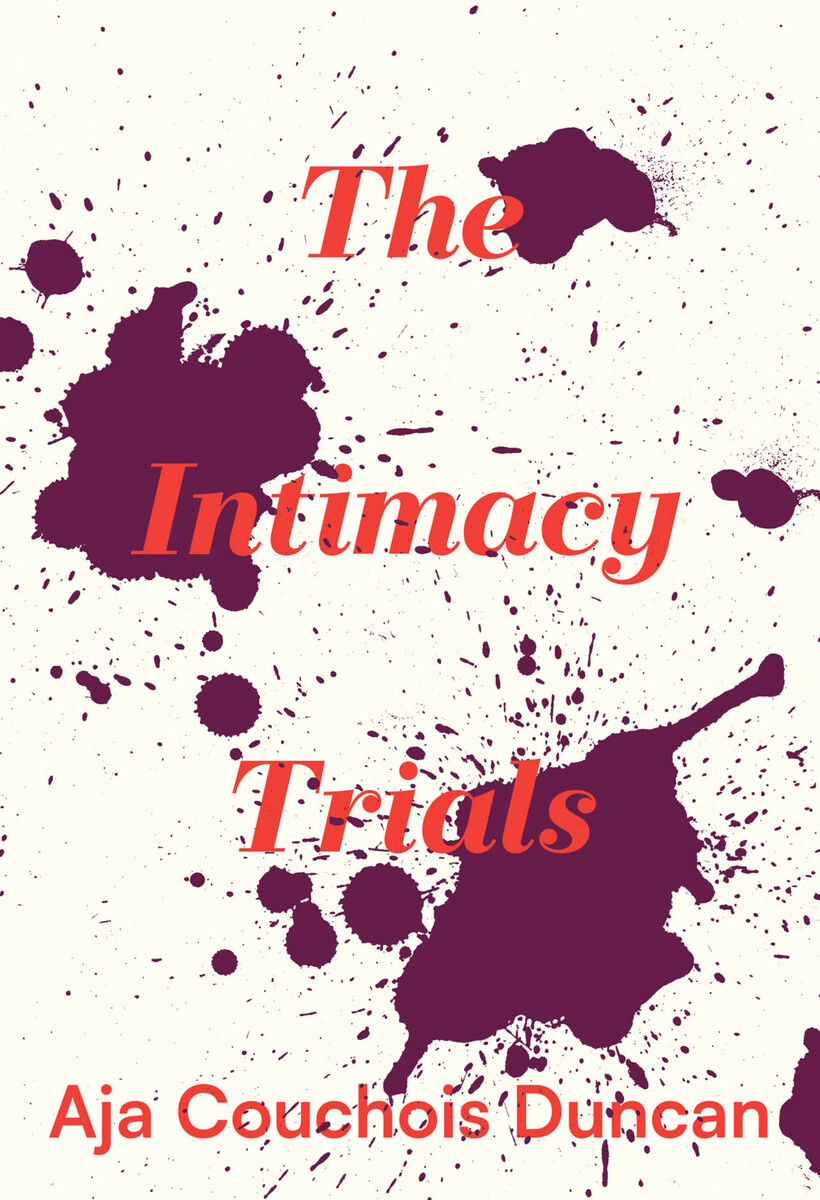
The Intimacy Trials
by Aja Couchois Duncan
University of Chicago Press, 2026
Paper: 978-0-226-84810-5 | eISBN: 978-0-226-84811-2 (all)
Library of Congress Classification PS3604.U523I58 2026
ABOUT THIS BOOK
A post-apocalyptic Native poetry collection that creates possibility for repair and reconciliation by holding the simultaneity of a violent past and a hopeful future.
Aja Couchois Duncan’s third book of poetry, The Intimacy Trials, explores cycles of violence, loss, and love that arc across history. Composed of intersecting narratives, this collection follows a post-apocalyptic collective of survivors living in a state of gratitude, shame, and awe amid desecrated ecosystems. The present tense of The Intimacy Trials carries the magnitude of a historic past tense filled with land theft, genocide, settler colonialism, and the vicissitudes of romantic love. Couchois Duncan’s lyrical, concomitant stories produce a space that holds in balance the complexities of life—joy, despair, intimacy, and irreconcilable grief.
In language that is prophetic, lush, and unequivocal, The Intimacy Trials is a loving accountability letter to our past, present, and future selves, holding both our yearning for connection and the remembrance of what has driven us apart.
See other titles from University of Chicago Press