
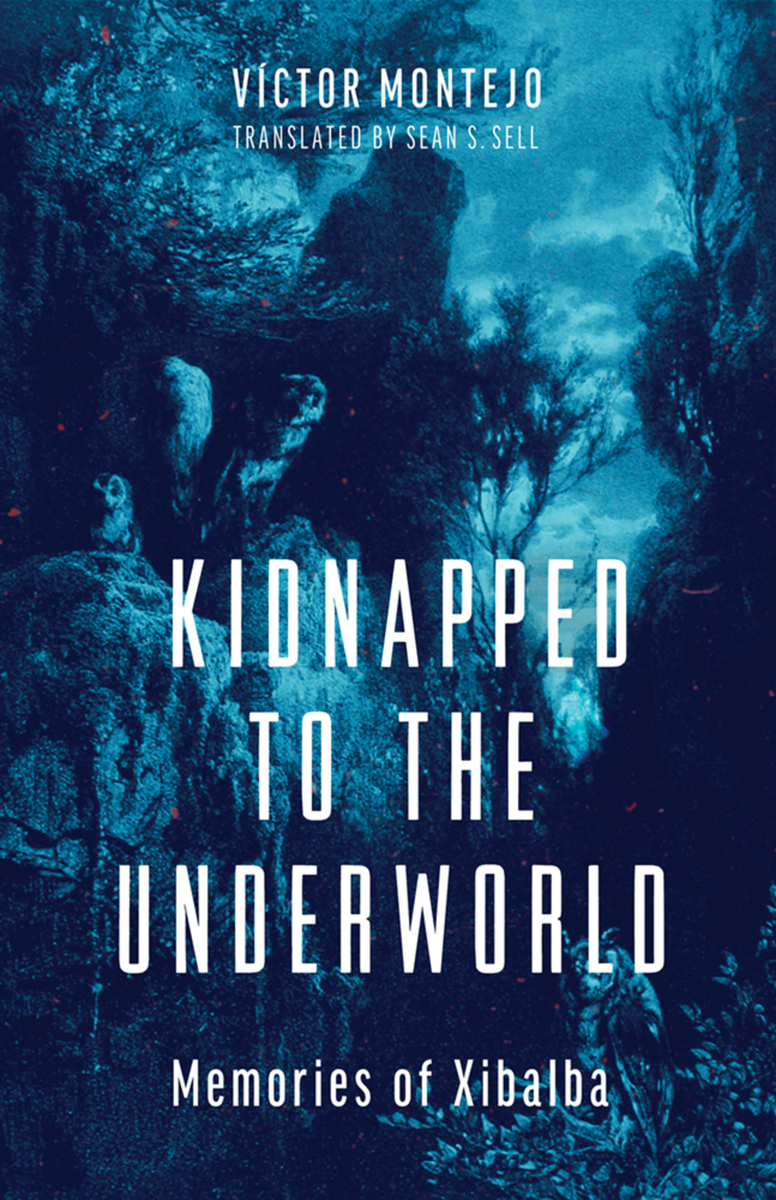
Kidnapped to the Underworld: Memories of Xibalba
by Víctor Montejo
translated by Sean S. Sell
University of Arizona Press, 2024
Paper: 978-0-8165-5259-7 | eISBN: 978-0-8165-5260-3 (standard)
Library of Congress Classification PQ7499.2.M66K5313 2024
Dewey Decimal Classification 863.64
ABOUT THIS BOOK
Víctor Montejo’s story recounts the near-death experience of his grandfather, Antonyo Mekel Lawuxh (Antonio Esteban), who fell gravely ill in Guatemala in the late 1920s but survived to tell his family and community what he had witnessed of the afterlife.
Narrated from Antonio’s perspective, the reader follows along on a journey to the Maya underworld of Xibalba, accompanied by two spirit guides. Antonio traverses Xibalba’s levels of heaven and hell, encountering instructive scenes of punishment and reward: in one chapter, conquistadors are perpetually submerged in a pool of their victims’ blood; in another, the souls of animal abusers are forever unable to cross a crocodile-infested river. Infused with memory, the author illustrates Guatemala’s unique religious syncretism, exploring conceptions of heaven and hell shared between Catholicism and Indigenous Maya spirituality. In the tradition of both the Popol Vuh and the Divine Comedy, Montejo’s narrative challenges easy categorization—this is a work of family history, religious testimony, political allegory, and sacred literature.
Narrated from Antonio’s perspective, the reader follows along on a journey to the Maya underworld of Xibalba, accompanied by two spirit guides. Antonio traverses Xibalba’s levels of heaven and hell, encountering instructive scenes of punishment and reward: in one chapter, conquistadors are perpetually submerged in a pool of their victims’ blood; in another, the souls of animal abusers are forever unable to cross a crocodile-infested river. Infused with memory, the author illustrates Guatemala’s unique religious syncretism, exploring conceptions of heaven and hell shared between Catholicism and Indigenous Maya spirituality. In the tradition of both the Popol Vuh and the Divine Comedy, Montejo’s narrative challenges easy categorization—this is a work of family history, religious testimony, political allegory, and sacred literature.
See other titles from University of Arizona Press