
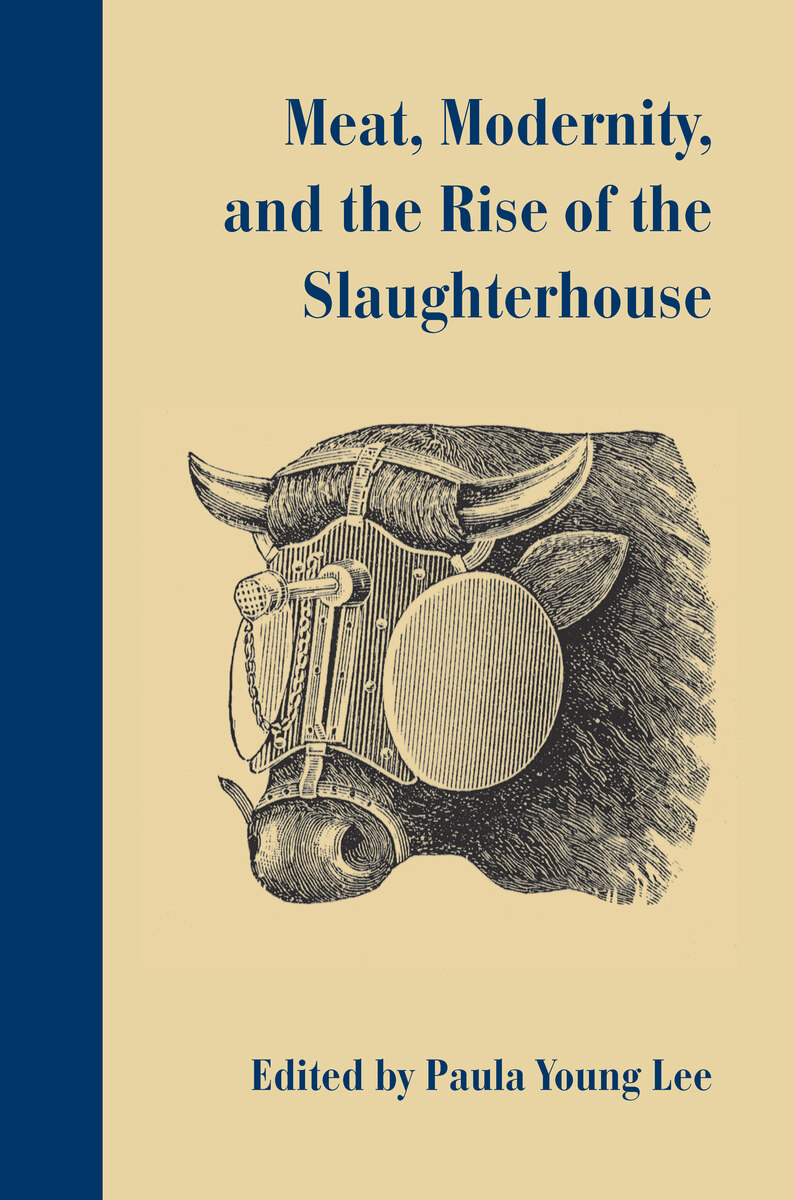
Meat, Modernity, and the Rise of the Slaughterhouse
edited by Paula Young Lee
University of New Hampshire Press, 2008
Cloth: 978-1-58465-698-2
Library of Congress Classification TS1963.M385 2008
Dewey Decimal Classification 664.902909
ABOUT THIS BOOK
Over the course of the nineteenth century, factory slaughterhouses replaced the hand-slaughter of livestock by individual butchers, who often performed this task in back rooms, letting blood run through streets. A wholly modern invention, the centralized municipal slaughterhouse was a political response to the public's increasing lack of tolerance for "dirty" butchering practices, corresponding to changing norms of social hygiene and fear of meat-borne disease. The slaughterhouse, in Europe and the Americas, rationalized animal slaughter according to capitalist imperatives. What is lost and what is gained when meat becomes a commodity? What do the sites of animal slaughter reveal about our relationship to animals and nature? Essays by the best international scholars come together in this cutting-edge interdisciplinary volume to examine the cultural significance of the slaughterhouse and its impact on modernity.
Contributors include: Dorothee Brantz, Kyri Claflin, Jared Day, Roger Horowitz, Lindgren Johnson, Ian MacLachlan, Christopher Otter, Dominic Pacyga, Richard Perren, Jeffrey Pilcher, and Sydney Watts.
Contributors include: Dorothee Brantz, Kyri Claflin, Jared Day, Roger Horowitz, Lindgren Johnson, Ian MacLachlan, Christopher Otter, Dominic Pacyga, Richard Perren, Jeffrey Pilcher, and Sydney Watts.
See other books on: Agriculture & Food | Meat | Modernity | Slaughterhouse | Slaughtering and slaughter-houses
See other titles from University of New Hampshire Press