
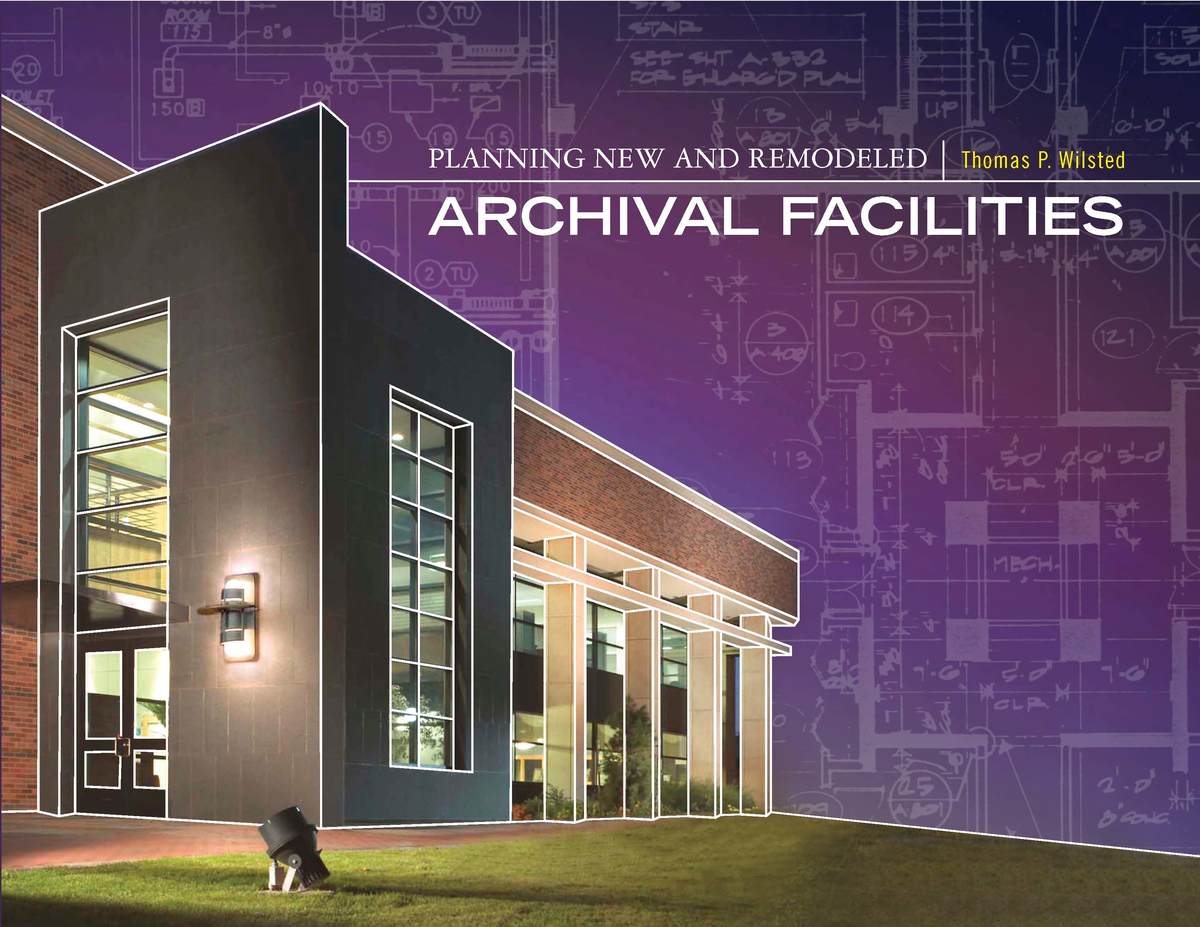
Planning New and Remodeled Archival Facilities
by Thomas P. Wilsted
Society of American Archivists, 2007
Paper: 978-1-931666-25-1 | eISBN: 978-1-945246-33-3 (ePub) | eISBN: 978-1-945246-34-0 (PDF)
Library of Congress Classification CD981.W55 2007
Dewey Decimal Classification 725.15
TOC
table of contents
Acknowledgments
1. Introduction to Archival Facilities 1
Archival Buildings: Symbolic and Functional 1
History of Archival Building Development 1
Today¿s Archival Buildings 5
Building for the Future 7
Additional Reading 9
Chapter 1 Notes 9
2. The Building Site and Its Role in Creation of Archival Facilities 10
Site Selection¿Physical Characteristics 11
Economic Issues 12
The Site Selection Process 13
Making Good Use of the Building Site 14
Conclusion 15
Additional Reading 15
Chapter 2 Notes 15
3. Elements of the Building Structure 16
The Building Fabric 16
Building Components and Their Functional Requirements 19
Areas Not Open to the Public 20
Public Spaces 27
Additional Reading 37
Chapter 3 Notes 37
4. The Building Program 38
Before the Architect Arrives 38
The Value and Use of Specialized Consultants 41
What Is a Building Program? 42
Sources of Data 46
User Input 47
Planning for the Future 47
Technical Requirements 47
Summary 52
Additional Reading 52
Chapter 4 Notes 52
5. The Building Process: Working with Architects and Contractors 53
Building Planning Team 53
Establishing a Budget 55
Architect/Contractor versus Design/Build Companies 57
Selecting an Architect 57
Design Competitions 59
The Role of the Architect 59
Client-Architect Communication 60
Working with Contractors 61
Job Meetings 63
Building Planning Stages: Schematic Design 63
Building Planning Stages: Design Development 64
The Construction Phase: Working with the Architect and Contractor 67
Conclusion 68
Additional Reading 68
Chapter 5 Notes 68
6. Creating the Optimum Environment 69
The Role of Temperature and Relative Humidity 69
Recent Research on Temperature and Relative Humidity 71
Optimizing the Structure to Create Ideal Conditions 72
The North American Environment 73
Optimum Conditions 74
Air Pollution 75
Air Movement 76
Heating, Ventilation, and Air-Conditioning Systems (HVAC) 76
Maintaining a Conservation Environment 78
The Importance of Light 79
Lighting Guide Establishing Light Standards 81
Conclusion 82
Additional Reading 82
Chapter 6 Notes 82
7. Protecting Collections: Creating a Secure and Fire-Resistant Environment 83
Protecting Collections from Fire 84
Fire Safety Codes and Standards 85
Creating a Sound Structure 86
Managing the System 86
Fire Detection Equipment 86
Smoke Detector Types Fire Suppression Systems 88
Before the Fire Department Arrives 91
Building Security 92
Conclusion 99
Additional Reading 100
Chapter 7 Notes 100
8. Building Renovation for Archival Use 101
Renovating Existing Spaces 101
Construction Issues in an Existing Building 102
Moving to Temporary Quarters 104
Building Evaluation 104
The Building Fabric 105
Building Functionality 106
Renovating Historic Buildings 107
Building Costs 110
Additional Reading 111
Chapter 8 Notes 111
9. Purchasing Equipment to Complete the New Facility 112
The Equipment Planning Process 112
The Equipment Budget 114
Purchasing Equipment 115
Current Equipment Review 116
Archival Storage¿The Planning Process 116
Archival Shelving 116
Reading Room 125
Processing Area 126
Staff Offices 127
Information Technology 128
Moving Equipment 129
Additional Reading 130
Chapter 9 Notes 130
10. Moving Collections, Furnishings, and Offices 131
Staffing the Move 131
Communication 132
Establishing a Budget 132
Preparing the Collection Move 133
Selecting a Moving Company 135
Planning the Collection Move 135
Carrying Out the Move 138
Moving Furniture and Staff 139
Move Cleanup 139
Conclusion 141
Additional Reading 141
Chapter 10 Notes 141
11. Managing Facilities on a Daily Basis 142
Adjusting to New Quarters 142
Building and Equipment Warranty 142
Facilities Management 143
Outsourced Staff 144
Developing a Maintenance Program 144
Maintenance Contracts 145
Energy Management and Conservation 145
Preventive Maintenance 147
Housekeeping 148
Fire Safety 150
Accident Prevention 150
Indoor Air Quality 151
Pest Management 152
Disaster Preparedness 153
Conclusion 154
Additional Reading 154
Chapter 11 Notes 154
Appendices
1. New and Remodeled Archival Facilities Completed Since 1990 155
2. Glossary of Building and Construction Terms and Acronyms 163
3. Archival and Library Moving Specialists 169
4. Building Equipment Suppliers and Services 171
Bibliography 177
Index 183
See other books on: Archival materials | Archives | Building | Conservation and restoration | Planning
See other titles from Society of American Archivists