89 books match the query 'Building' and 8 start with a

cover of A Building History of Northern New England

A Building History of Northern New England

James L. Garvin

University Press of New England, 2002
This is a book about understanding old buildings. In an era in which much of the US landscape has been littered by unimaginative, prefabricated structures, James L. Garvin tells owners and would-be owners of old buildings in Maine, New Hampshire, and Vermont what they need to know before they begin the restoration process. In wonderfully lucid prose, Garvin describes the production of the materials from which the buildings of northern New England were built, outlines the stylistic evolution of the region's structures from the early 1700s to World War II, and offers guidelines for dating old buildings. Focusing on domestic architecture, but including examples of public, commercial, religious, and industrial buildings, he offers custodians of buildings an understanding of the technologies embodied in these structures, answers questions about stylistic changes, and allows the architecture of northern New England to be understood for the first time with a technical depth that is already available for buildings in better-studied parts of the US. Written for both homeowners and those responsible for public and museum structures, this volume provides an understanding of the region's building history even as it specifically answers questions that most often perplex architects and preservationists. By offering all custodians of northern New England buildings a richer understanding of architectural style and structure, the book encourages the use of appropriate methods and materials in building conservation and rehabilitation. Generously illustrated throughout, the book is also an essential resource for anyone who is interested in American and New England architecture and the building trades, and for anyone who has ever wondered about the secrets and stories of old buildings.
[more]
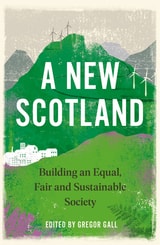
cover of A New Scotland: Building an Equal, Fair and Sustainable Society

A New Scotland

Building an Equal, Fair and Sustainable Society

Gregor Gall

Pluto Press, 2022

Inequality and unfairness still stalk Scotland after more than twenty years of devolution. Having done little to shield against austerity, Brexit and an increasingly right-wing Westminster agenda, calls for further constitutional reform to solve pressing political, economic and social problems grow ever louder. The debate over further devolution or independence continues to split the population.

In A New Scotland, leading activists and academics lay out the blueprints for radical reform, showing how society can be transformed by embedding values of democracy, social justice and environmental sustainability into a coherent set of policy ideas.

Structured in two parts, the book takes to task the challenges to affect radical change, before exploring new approaches to key questions such as healthcare, education, public ownership, race, gender and human rights.
[more]
cover of Aesthetics and Technology in Building: The Twenty-First-Century Edition

Aesthetics and Technology in Building

The Twenty-First-Century Edition

Pier Luigi Nervi; Edited by Cristiana Chiorino, Elisabetta Margiotta Nervi, and Thomas Leslie

University of Illinois Press, 2018

The UNESCO headquarters in Paris. The Pirelli skyscraper in Milan. The Palazetto dello Sport in Rome. The "soaring beauty" of Pier Luigi Nervi's visionary designs and buildings changed cityscapes in the twentieth century. His uncanny ingenuity with reinforced concrete, combined with a gift for practical problem solving, revolutionized the use of open internal space in structures like arenas and concert halls.

Aesthetics and Technology in Building: The Twenty-First-Century Edition introduces Nervi's ideas about architecture and engineering to a new generation of students and admirers. More than 200 photographs, details, drawings, and plans show how Nervi put his ideas into practice. Expanding on the seminal 1961 Norton Lectures at Harvard, Nervi analyzes various functional and construction problems. He also explains how precast and cast-in-place concrete can answer demands for economy, technical and functional soundness, and aesthetic perfection. Throughout, he uses his major projects to show how these now-iconic buildings emerged from structural truths and far-sighted construction processes.

This new edition features dozens of added images, a new introduction, and essays by Joseph Abram, Roberto Einaudi, Alberto Bologna, Gabriele Neri, and Hans-Christian Schink on Nervi's life, work, and legacy.

[more]
cover of Alexander Dallas Bache: Building the American Nation through Science and Education in the Nineteenth Century

Alexander Dallas Bache

Building the American Nation through Science and Education in the Nineteenth Century

Axel Jansen

Campus Verlag, 2011

Alexander Dallas Bache (1806–1867) was one of the leaders of American science in the nineteenth century. Driven by a vision of science as a key component of an integrated U.S. nation-state, he guided the nascent American Association for the Advancement of Science and also led what was at that point the nation’s largest scientific enterprise, the U.S. Coast Survey. In this analytical biography, Axel Jansen explains and explores Bache’s efforts to build and shape public institutions as aids to his goal of creating a national foundation for a shared culture—efforts that culminated in his work during the Civil War as one of the founders of the National Academy of Sciences, which he saw as a key symbol of the continued viability of a unified American nation.
[more]
cover of An Illini Place: Building the University of Illinois Campus

An Illini Place

Building the University of Illinois Campus

Incoronata Inserra

University of Illinois Press, 2017
Why does the University of Illinois campus at Urbana-Champaign look as it does today? Drawing on a wealth of research and featuring more than one hundred color photographs, An Illini Place provides an engrossing and beautiful answer to that question. Lex Tate and John Franch trace the story of the university's evolution through its buildings. Oral histories, official reports, dedication programs, and developmental plans both practical and quixotic inform the story. The authors also provide special chapters on campus icons and on the buildings, arenas and other spaces made possible by donors and friends of the university. Adding to the experience is a web companion that includes profiles of the planners, architects, and presidents instrumental in the campus's growth, plus an illustrated inventory of current and former campus plans and buildings.
[more]
cover of Arabs in America: Building a New Future

Arabs in America

Building a New Future

edited by Michael W. Suleiman

Temple University Press, 1999

For many North Americans, Arab Americans are invisible, recalled only when words like "terrorism" or "anti-American sentiments" arise. However, people of Arab descent have been contributing to U. S. an d  Canadian culture since the 1870s in fields as diverse as literature, science, politics, medicine, and commerce -- witness surgeon Michael DeBakey, former Oregon governor Victor Atiyeh, consumer advocate Ralph Nader, and Canadian M.P. Mac Harb. Yet while Arab American contributions to our society are significant and Arab Americans surpass the U.S. average in both education and economics, they still struggle for recognition and acceptance.

In this volume, editor Michael Suleiman brings together 21 prominent scholars from a wide range of perspectives -- including anthropology, economics, history, law, literature and culture, political science, and sociology -- to take a close look at the status of Arabs in North America. Topics range from the career of Arab American singer, dancer, and storyteller Wadeeha Atiyeh to a historical examination of Arab Americans and Zionism. The contributors discuss in Detroit, a group of well-educated Jordanian men, and the Shi'a Muslims -- to illustrate the range of Arab emigre experience. More broadly, they examine Arab American identity, political activism, and attempts by Arab immigrants to achieve respect and recognition in their new homes. They address both the  present situation for Arab Americans and prospects for their future.

Arabs in America will engage anyone interested in Arab American studies, ethnic studies, and American studies.

[more]
cover of Architects of Globalism: Building a New World Order during WWII

Architects of Globalism

Building a New World Order during WWII

Patrick J. Hearden

University of Arkansas Press, 2002
Architects of Globalism provides the first comprehensive analysis of American Blueprints for the reconstruction of the world after the defeat of Hitler and his allies. Working closely with Roosevelt and Truman, State Department officials assumed primary responsibility for drafting these plans. Hearden shows that bitter rivalries frequently divided these officials, but that there was remarkable agreement among them on fundamental principles. These architects of globalism sought to create a liberal capitalist world system, in which foreign markets would absorb the surplus products of American farms and factories so that the United States would be able to maintain high levels of employment without further government intervention in the economy. Hearden shows these men contending with the vital issues of the day: decolonization and the dismantling of empires, relations with the Soviet Union, the formation of the United Nations, the economic reconstruction of war-torn countries, the forging of new relations with Germany and Japan, the twin problems of Palestine and petroleum. Based on extensive new research in primary sources — from policymakers' private letters and personal diaries to official correspondence — this exciting book documents the formation of the postwar world.
[more]
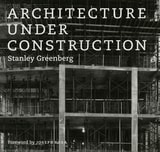
cover of Architecture under Construction

Architecture under Construction

Stanley Greenberg

University of Chicago Press, 2010

Mies van der Rohe once commented, “Only skyscrapers under construction reveal their bold constructive thoughts, and then the impression made by their soaring skeletal frames is overwhelming.” Never has this statement resonated more than in recent years, when architectural design has undergone a radical transformation, and when powerful computers allow architects and engineers to design and construct buildings that were impossible just a few years ago.  At the same time, what lies underneath these surfaces is more mysterious than ever before. 

In Architecture under Construction, photographer Stanley Greenberg explores the anatomy and engineering of some of our most unusual new buildings, helping us to understand our own fascination with what makes buildings stand up, and what makes them fall down. As designs for new constructions are revealed and the public watches closely as architects and engineers challenge each other with provocative new forms and equally audacious ideas, Greenberg captures penetrating images that reveal the complex mystery—and beauty—found in the transitory moments before the skin of a building covers up the structures that hold it together.  

Framed by a historical and critical essay by Joseph Rosa and including an afterword by the author, the eighty captivating and thought-provoking images collected here—which focus on some of the most high-profile design projects of the past decade, including buildings designed by Norman Foster, Frank Gehry, Steven Holl, Daniel Libeskind, Thom Mayne, and Renzo Piano, among others —are not to be missed by anyone with an eye for the almost invisible mechanisms that continue to define our relationship with the built world.

[more]