
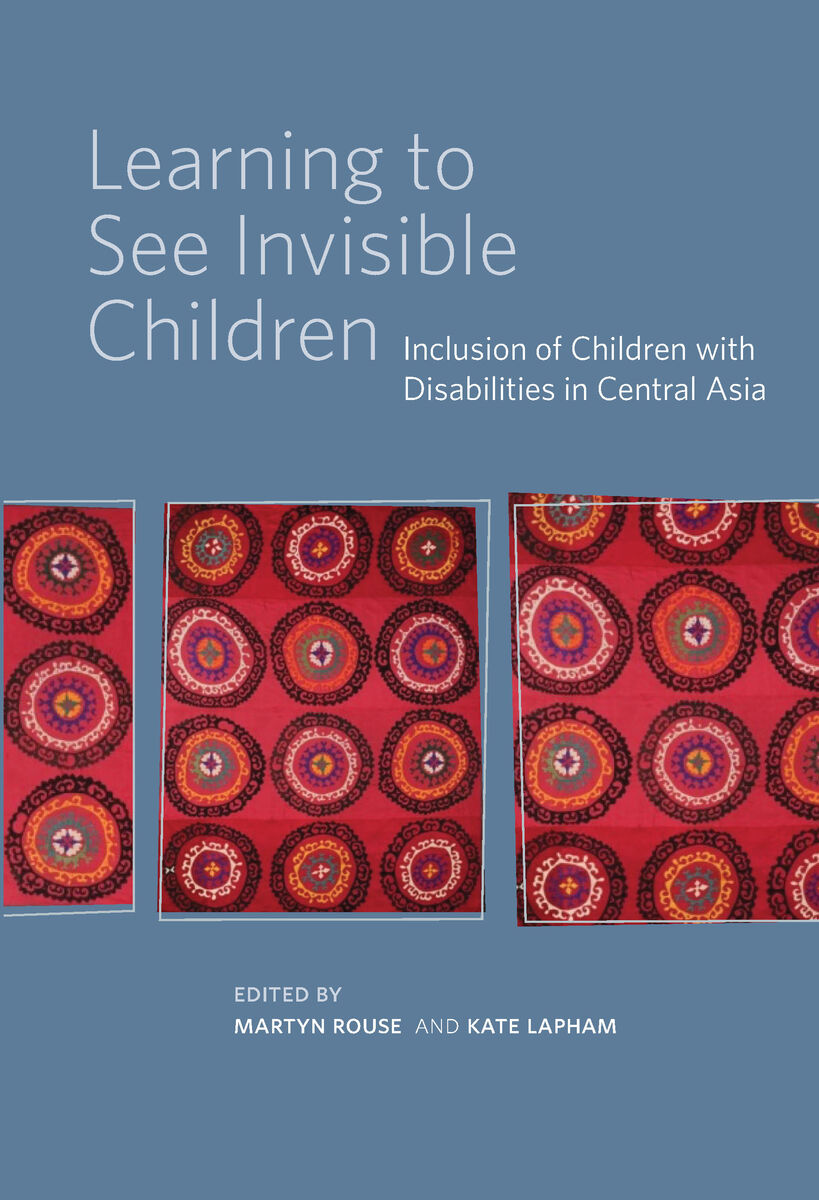
Learning to See Invisible Children: Inclusion of Children with Disabilities in Central Asia
edited by Kate Lapham and Martyn Rouse
Central European University Press, 2013
Paper: 978-615-5225-67-3 | eISBN: 978-615-5225-68-0 (PDF)
Library of Congress Classification LC4037.A783L43 2013
Dewey Decimal Classification 371.90958
ABOUT THIS BOOK
The path to inclusion for children with disabilities and other special education needs is long and complex. It has been claimed that inclusion is not a destination, but a process of increasing participation and reducing exclusion from the culture, curriculum and community of mainstream schools. This volume chronicles the journey toward greater inclusion of children with disabilities in Central Asia. Setting out upon this journey is an acknowledged policy goal in Kazakhstan, Kyrgyzstan, and Tajikistan so that all children are to participate in education, but it raises many questions and quandaries. It stirs the ghosts of social norms and traditions from the past that differ from place to place, even within the former Soviet Union. Central Asia presents particular challenges because of the economic, social, political and educational upheaval and disruption that has affected the region in the past two decades. These six case studies document the progress and challenges along the way through the stories of specific children, families, schools, and organizations across the region with the goal of keeping inclusion on policy agendas and in public discourses. It is a resource for scholars of the region, education researchers, and practitioners alike.
See other titles from Central European University Press